The Problem of [Un]Answered Prayer

When it’s not your kid you can think of all kinds of lofty, theologically correct arguments or reasons for why God answers one prayer and not another–for why one person is healed and not another–for why one person survives a devastating-should-have-killed-him accident but not another.

But when it is your child that doesn’t survive or isn’t healed or is stolen through the violent actions of someone else…well, that’s a different matter entirely.

I prayed every day for my children.  I asked God to protect them, to give them wisdom, to draw them to Himself and to guide their steps.

I never thought I was “giving orders” to God, but I did expect that my prayers would be honored-that by praying in obedience to biblical commands and in accord with scriptural principles I was making a difference in the heavenlies.

Like Daniel, who received word that his prayers had helped Gabriel fight against the prince of the air opposing him, I sent my petitions as weapons and armor against any schemes of the evil one  that might threaten to undo my family. (Daniel 10: 1-13)

Herein lies the problem:   when things go well, when the job comes through, the test score is great and the person walks out of the hospital, healed and whole, we say, “God answered prayers.”

And I believe that He does.

But if we ascribe glory and praise and honor and thanksgiving for the blessings received, how are we to understand and talk about the ones denied?

The nation of Israel was looking for Messiah-expecting Him.

Yet when He came, most missed Him.  They had decided for themselves what He would look like, what He would do and how He would rescue them from bondage.

God’s ways are inscrutable.

I’m not arguing that prayer doesn’t matter.

It does.

I am commanded to pray. And God’s faithfulness to answer prayer is documented from Genesis through Revelation.

But I would argue that the way we speak about prayer, as if we understand how it works and how God works in it and through it, is often unhelpful.

The book of Job pulls back the curtain on what was happening in the heavenlies when God allowed Satan access to Job’s life.  We know that Job’s earthly suffering represented a testimony for God against the Accuser.

But there’s no evidence that Job ever knew.

There was no dramatic revelation by God to this man that had lost EVERYTHING except his own life (which he would have gladly given up) and his wife (who, it seems, went on to bear him more children-oh joy!). Instead, God confronts Job with questions, not answers.

My heart wants answers, not more questions.

I doubt that I will have them this side of heaven.

So I have decided to speak more honestly about my experience with prayer, to refuse to pretend I understand how it works any more than I understand how God breathes life into bodies or takes souls to heaven.

I will pray, as best I can-mostly recalling God’s own words to Him-and resist my desire to think that because I pray, I can direct His hand.

When Jesus was in agony at Gethsemene, He asked His Father to take the bitter cup from HIm, but in the end, submitted to God’s will and plan.

That is all I have left for me as well-to submit and be made into whatever God has ordained.

I will trust in the goodness and faithful love of my Heavenly Father, because He IS my Father.

I will lean into His heart even when I cannot see or understand the work of His hands and follow because He is the One Who will lead me Home.

he is faithful who has promised

How the Church Can Serve Grieving Parents and Other Hurting People: Loving Well Series

When I first shared this post,  I received a lot of feedback from readers and much of it went something like this:  “I wish my pastor would read this.” or “I’d love to share this on my own FaceBook page but I’m afraid someone might be offended.”

I didn’t write this post to point fingers but I did write it to drag into the light a hidden place of pain and division within churches.  

There are so many hurting people in our pews and we cannot continue to ignore our responsibility to minister to them.  So to you who are timid, I say, “Be brave!  Share! There is no shame in sharing the truth in love!”

“I am a shepherd.  My goats and sheep depend on me for food, for guidance and for their security.

And every day I am reminded that a shepherd’s heart is revealed by the way he or she cares for the weakest and most vulnerable of the flock.”

Read the rest here:  Loving Well: How the Church Can Serve Grieving Parents and Other Hurting People

Understanding the Grieving Heart: Loving Well Series

I don’t want pity.

I don’t want people passing me in the street or in the sanctuary secretly shaking their head and thinking, “poor woman”.

I would like to be understood-at least as well as anyone standing on the outside of child loss can understand…

A bereaved parent’s grief doesn’t fit an easy-to-understand narrative. And it flies in the face of the American “pull yourself up by your bootstraps” mentality.

Read the rest here:  Loving Well: Understanding the Grieving Heart

Transitioning from “Good-bye” to Grief: Loving Well Series

I wrote this post in an effort to help the nonbereaved understand that funerals and memorials and other outward symbols of “good-bye” are only the BEGINNING to our sense of loss and sorrow.  And that while everyone else walks away and goes back to the life they had the day before, we stand on the threshold to a different life we are unprepared for, know nothing about and do not want.

“A funeral or memorial service seems like a final chapter.  We close the coffin, close the doors and everyone goes home.

But for bereaved parents and their surviving children, it’s not an end, it is a beginning.

Much like a wedding or birth serves as the threshold to a new way of life, a new commitment, a new understanding of who you are, burying a child does the same.

I walked away from the cemetary overwhelmed by the finality of death–not in a theological sense–I believe firmly that my son lives with Jesus–but with the undeniable fact that he is no longer available to me on this earth.”

Read more: Loving Well: Transitioning From “Good-bye” to Grief

Some Things Hurt: Loving Well Series

“Before I lost Dominic, I know that I, like others who had never experienced the death of a child, undoubtedly said and did things that were hurtful instead of helpful.

I painfully remember sharing at a Thanksgiving women’s gathering and, meaning to encourage the ladies, said something like, “I think we are able to better face the big disappointments or trials in life, but find the daily drip, drip, drip of unfulfilled expectations to be a greater challenge.”  A bereaved mom in attendance set me straight (in a very kind and gracious manner!).

That exchange has come often to my mind in these months after burying my son. I wish I could go back and have a do-over.”

Read more: Loving Well: Some Things Hurt

31 Practical Ways to Love Grieving Parents: Loving Well Series

I asked other bereaved parents to share from their experience the things that were helpful and not so helpful to them after losing a child.  I was amazed by the answers!

What follows is a combination of their words and mine–blended together to help others in this journey.

If you are a bereaved parent, and have wanted to gently remind amily and friends what is helpful and what isn’t-sharing a post to Facebook can be a non-threatening way to let them know using someone else’s voice.

“When Dominic died, I didn’t get a manual on what to do.  I didn’t get an orientation into how to be a grieving parent.  So when some people asked how they could help me and my family, I really didn’t know.”

Read the rest here:  31 Practical Ways to Love Grieving Parents in the First Few Days

The First Days After Loss: Loving Well Series

I asked other bereaved parents to share from their experience the things that were helpful and not so helpful to them after losing a child.  I was amazed by the answers!

What follows is a combination of their words and mine–blended together to help others in this journey.

If you are a bereaved parent, and you have wanted to gently remind amily and friends what is helpful and what isn’t-sharing a post to Facebook can be a non-threatening way to let them know using someone else’s voice.

“The death of any loved one opens a door and forces you to pass through.

You cannot procrastinate, cannot refuse, cannot ignore or pretend it away.

Suddenly, you find yourself where you absolutely do not want to be.  And there is no going back.”

Read the rest here:

Loving Well in the First Days After Loss

Replay: Loving Well Series

Beginning today and through the next week, I will be sharing again a series of posts written to help those journeying the valley of grief and those walking with them on the journey.  I asked other bereaved parents to share from their experience the things that were helpful and not so helpful to them after losing a child.

Many of these insights are useful for blessing anyone in any difficult situation–we can all use a little help from our friends.

If you are a bereaved parent, and you have wanted to let family and friends know what’s helpful and what isn’t-sharing a post to Facebook can be a non-threatening way to let them know using someone else’s voice.

“No one is prepared to bury their child.

But some of us have to.”

Read the rest: Loving Well: Meaningful Ministry to Grieving Parents

Choosing Transparency

I’ve had two conversations in as many days that revolved around how hard it is to be transparent in relationships.

And it seems that the difficulty lies not only in our own desire to present ourselves in a way that casts a positive light on our actions, thoughts and feelings but also because of an unspoken rule in social transactions that demands (and I don’t think “demand”is too strong a word) we conform to the “I’m doing just fine” standard that is prevalent everywhere you turn.

All around me, people are faking life.

They are acting as if there are no hurdles, no burdens, no wounded places in their own hearts.  They run around proclaiming, “this is my best life now!” somehow convinced that if they say it loud enough and long enough it will be true.

But everyone sees what we think we are hiding.

Many know what we think we’re not saying.

And we all walk around, seeing and knowing but never acknowledging the truth:  we are not as strong or as perfect as we wish we were.

All this fake life is costly.  It’s costly to us who try so very hard to keep up appearances-it robs our lives of energy that would be better used in loving and serving others.  It is costly to the people around us because as long as we play the game, they feel like they must play along too.

And everywhere, hurting people hurt alone.  Scared people remain isolated in their fear.

That is not the life Jesus came to give us.  That is not the way to build true community among His called-out ones.  That is not the way to teach our children how to lean into and hold onto the strength and hope that Christ died to bring.

When I lost Dominic, many feelings overwhelmed me-sorrow, pain, disbelief-and, to my surprise, humility.

For the first time in my life it made sense to me why in many cultures bereaved people sit in the dirt and tear their clothes.  Because I remember saying over and over, “I am cast to the ground, and ashes are my food.”

And while that feeling is no longer as strong as it once was, it still echoes in my heart and mind.  I carry it with me wherever I go.  It has freed me from the game of “let’s pretend” that held me hostage to other people’s expectations of how I should act or what I should hide from public view.

Let’s just STOP.

Let’s be honest.

Let’s refuse to hide our scars, our tears, our fears and our failures.

If those of us who love Jesus refuse to acknowledge our weakness, how do we expect others to acknowledge their need for a Savior?

“The Christian often tries to forget his weakness; God wants us to remember it, to feel it deeply. The Christian wants to conquer his weakness and to be freed from it; God wants us to rest and even rejoice in it. The Christian mourns over his weakness; Christ teaches His servant to say, ‘I take pleasure in infirmities. Most gladly …will I…glory in my infirmities’ (2 Cor. 12:9)’ The Christian thinks his weaknesses are his greatest hindrance in the life and service of God; God tells us that it is the secret of strength and success. It is our weakness, heartily accepted and continually realized, that gives our claim and access to the strength of Him who has said, ‘My strength is made perfect in weakness”

― Andrew Murray, Abide in Christ

Who is the Keeper of my Faith?

No one has dared to say it to my face, but they don’t have to.  In the darkness, whispers abound and they taunt me:  “Where’s God now?”

“What has this faith in Jesus done for you?”

And my first response is to add up the “good” things that have happened in my life and weigh them against the “bad”.

How do I balance scales that on one side include burying my child?

How many good things would have to be piled up to outweigh the heartbreak of losing my son?

But then my heart reminds me that this is the wrong equation.  The underlying premise of this arithmetic is that I can give proper value to the things I’m adding up.  Even more, that the scales I am using are correctly balanced, unbiased and trustworthy.

I want my relationship with God to be one I can comprehend.  I want to be able to explain Who He is and what He is doing.  I want to KNOW.

Adam and Eve KNEW-they walked in the cool of the Garden with the Lord God.  And even that was not enough to keep them from doubting His goodness, His promise, His heart.

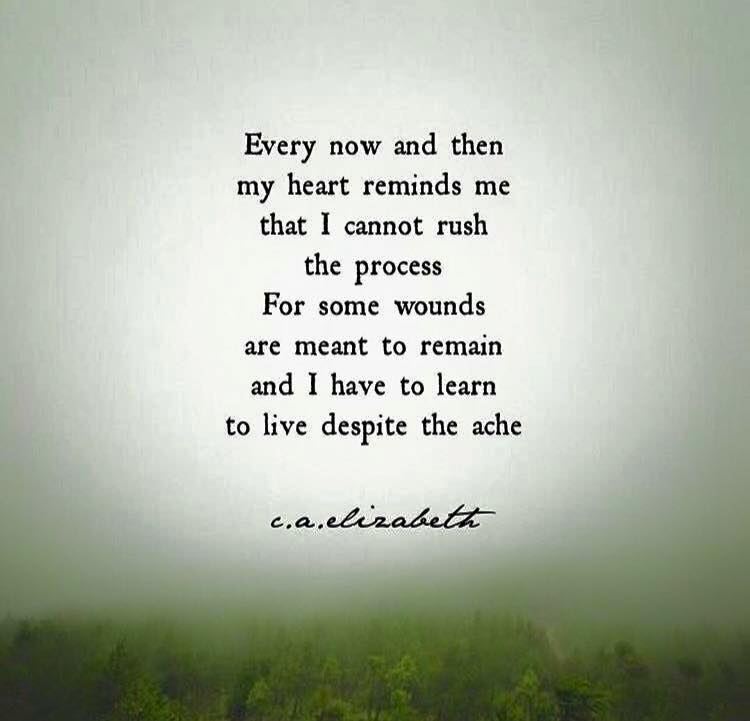
So is it any wonder that on my weakest days, in my most broken moments I doubt what God is doing as I walk this valley?

If my faith depended on me, there would be no hope.  If my feelings were the measure of truth, there would be no way to gauge falsehood.  If my future is in my hands, I am doomed.

But all is not lost–because from before the foundation of the world, God planned my redemption,  He arranged my adoption and He keeps my faith and my future secure:

Praise be to God for giving us through Christ every possible spiritual benefit as citizens of Heaven! For consider what he has done—before the foundation of the world he chose us to become, in Christ, his holy and blameless children living within his constant care. He planned, in his purpose of love, that we should be adopted as his own children through Jesus Christ—that we might learn to praise that glorious generosity of his which has made us welcome in the everlasting love he bears towards the Son.

Ephesians 1:4-6 PHILLIPS