Understanding Bereaved Parents Month

There are so many competing causes it’s a wonder anyone can keep up with them.

But when one or more of them become near and dear to your heart, it’s easy.

July is Bereaved Parents Month. A designation I knew nothing about until several years into my own journey as a bereaved parent.

And while I’m unsure about the necessity for declarations like National Trivia Day or National Bubble Wrap Appreciation Day I am absolutely convinced of the need for Bereaved Parents Month.

This is why: Child loss is unlike any other loss a person may experience. It is out-of-order death, unnatural, unexpected and unfathomable.

Every day, bereaved parents are walking in the world, going to work , doing all that life requires and often caring for their other children while carrying a very heavy burden that mostly goes unnoticed.

Many parents desperately want to speak about their missing child but feel constrained by fear others will think they are vying for sympathy or attention. Sometimes they don’t say anything because they’ve been shamed or shushed by negative comments on their social media posts. Still others are longing to find a community where their uniquely painful experience is understood.

Bereaved Parents Month is an opportunity for these parents to share their child with the world without fear or condemnation.

It’s a chance to post articles, information and personal experience that can help those outside the circle of child loss understand the ongoing struggle of walking this path.

Hopefully it is also a season where newly bereaved parents can find resources so their own hearts feel heard, understood and encouraged.

So if you ARE a bereaved parent, please take advantage of this month set aside to raise awareness of our journey.

If you LOVE a bereaved parent, please acknowledge and affirm your friend or family member who may choose to share in person or online a little more freely this month.

Hearts hold on best when they are free to tell their story.

Bereaved Parents Month is set aside for us to tell ours.

Grief Work 2026: How Trauma Affects Relationships and Healing

No matter how a child leaves this earth, it’s traumatic.

And trauma rewires our brains.

The “fight or flight” response that had previously been reserved for truly life-threatening situations gets woven in with memories and feelings and our bodies remain on high alert.

So before we know it, all kinds of ordinary, daily, and definitely not life-threatening situations evoke rapid heartbeat, shortness of breath, anxiety and fear. And the absolutely reasonable response is to get away from those things that make us feel that way.

So we do (or try to!).

We find ourselves running away from people who love us, who want to help us but who just might not understand why we’re running. We cocoon in our homes, in our own bodies and try to find that one safe space where fear and anxiety can’t find us.

But there is no such absolutely safe space.

Trauma rewires our brains, it’s true.

They can be rewired again.

So many good therapies are available for those of us who suffer in silence. Many are based on using physical cues to help a brain learn to distinguish between truly dangerous and only the memory of dangerous.

PTSD treatments and therapies

It is possible to venture out in the world again, to reach for and sustain connection, to lean into company instead of shying away.

Don’t stay hidden, afraid and alone.

Find a trained trauma counselor

Ask for help.

Grief Work 2026: Understanding Grief Brain

Forgetting things and people’s names, misplacing important documents, sometimes even getting lost in familiar surroundings while driving-all common experiences following loss.

It feels like you’re losing your mind but for most of us, it gets better over time.

I’ve developed lots of habits and tricks that help me navigate my still-less-than-perfect memory and much slower processing ability since Dominic ran ahead to Heaven.

I’m looking right at her.

know her.  In fact, I’ve known her for years.  But please don’t ask me her name.

I have no idea.

It happens to all of us-meet someone in the store or at the Post Office and you just know you know them, but cannot-for the life of you-remember a name.

file-cabinet

Chatting on, you search mental files desperately trying to make a connection you can hold onto.  Five minutes after she walks away it pops up-oh, yes!  That’s so-and-so from such-and-such.

Imagine if instead of searching mental files without success you can’t even find the file cabinet and start to wonder if one ever existed.

That’s what “grief brain” does to you.

Here are a few more examples of things that actually happened:  

  • Someone would say something to me and I hear them as if it’s another language-I have absolutely NO IDEA what they just said.
  • I had to write a list each morning of the most basic things to do (like eat) so that I didn’t forget to do them. I had to tape the list to the kitchen cabinet because otherwise I lost it.
  • I could no longer walk away from the stove when it’s turned on-I burned more than one pot of peas.
  • There are times I couldn’t remember my phone number or street address when asked.
  • I answered the phone, heard a familiar voice only to be confused about exactly who was on the other end of the line.
  • I became momentarily “lost” on familiar streets or in familiar stores.
  • Sometimes I literally couldn’t remember what day it was.
  • I forgot appointments, meetings and what time church starts on Wednesday night.
confused-huffpo

I began to wonder if I was losing my mind.  

And, in a way, I was.  

At least the mind I had BEFORE my son was killed.

The initial shock was only a beginning.  Ongoing stress and related hormones as well as increased blood pressure, poor sleep, anxiety, profound sadness and being forced to acknowledge my own lack of control bombarded my mind for months.  Pathways I’d relied on for most of my life were changed or destroyed.

If you think of the brain as an interconnected web of associations, functions and activity, it’s easy to see that rerouting or destroying some of the connections makes it harder to access information and do tasks.

neurons

“[W]hen brain imaging studies are done on people who are grieving, increased activity is seen along a broad network of neurons. These link areas associated not only with mood but also with memory, perception, conceptualization, and even the regulation of the heart, the digestive system, and other organs.”  Prevention Magazine

It’s no wonder that I found it difficult to think and do the most routine tasks after child loss!  

My mind was fundamentally altered.

It’s not as bad now as it was in the beginning.

But I still struggle to remember things that used to come easily.  I still hear words that I don’t always understand.  I depend much more on paper and pencil to keep track of important dates, appointments and phone numbers than I used to.  And I never walk away from the stove.

If I make a lunch date with a friend, I ask that she message me the day before to remind me.  If I don’t comprehend what someone is saying, I request that they repeat it.  I keep a paper copy of important information in my purse and an electronic copy on my phone.

It’s frustrating sometimes, but it is not a moral failure that my brain isn’t as sharp as it once was.

What was embarrassing at first is now something I openly acknowledge. 

I ask for help and I don’t apologize.

It’s really OK.

grief-brain-quote-from-cf

Featured image via: bedraggled & kicking

Grief Work 2026: Understanding Secondary Losses After Child Loss

While I certainly had no real idea in the first hours or even weeks what losing a child entailed, I understood plainly that it meant I would not have Dominic to see, hold or talk to.

I wouldn’t be able to hug his neck or telephone him.  

He wouldn’t be sitting at my table any more.

But the death of a child or other loved one has a ripple effect.  It impacts parts of life you might not expect.  As time went on, I was introduced to a whole list of losses commonly called “secondary losses”.

secondary losses

Here are just a few:

Loss of a large chunk of “self”.  Dominic possessed part of my heart and part of my life.  It was violently ripped away when he died.  There is part of me that was uniquely reflected from him-like a specialty mirror.  I can never access that part of me again.

Loss of identity.  Before Dominic died I was one kind of mother.  I was a mother of four living children who were making their way in the world as successful adults.  I was a mother looking forward with happy anticipation to the next years.  Now I am still a mother of four children but one whose heart has been changed by tragedy and sorrow. Tomorrow is still bright, but there’s a shadow just behind it.

desimones uab family

Loss of self-confidence.  I used to enter a room without a thought to how I’d be received or perceived.  That’s definitely not the case now.  I’m self-conscious-constantly wondering if I’m saying or doing the right thing.  I never know if a grief trigger will (at best) pull my attention away from conversation or (at worst) send me scurrying for the bathroom.

Loss of sense of security.  I think every parent has moments of fear over his or her child.  When they first go off someplace without us, when they get a driver’s license, travel abroad, go to college.  But all the awful things I imagined didn’t hold a candle to the reality of waking one morning to a knock on my door and the news that Dominic had been killed.  The bottom fell out of my (relatively) safe world.  Bad things, random things can and do happen.  Once it happened to ME, it changed how I processed everything.  The passing years have softened some of the anxiety but I will never be able to assume safety again.

Anxiety

Loss of faith.  I did not “lose” my faith.  I never once doubted that God was still working, was still loving and was still in control.  But I most certainly had to drag out every single thing I thought I knew about how I thought He worked, loved and superintended the world and examine it in light of my experience of burying my son.  It took a long time to work through all the pat answers I had been offered and myself doled out to others for years that didn’t fit with my new reality.  I am learning that doubt is not denial and that I have to live with unanswered questions.

Loss of family structure.  I’ve written before that a family is more than the arithmetic total of the number of members.  There were six of us.  But we were so much more than six when we were all together!  Our talents, personalities and energy were amplified in community.  When Dominic’s large presence was suddenly whisked away, every relationship got skewed.  We’ve fought our way back to a semblance of “whole” but still miss him terribly.  We can function, but we will never be the same.

empty chair

Loss of my past.  Memories are funny things.  They are plastic and subject to change.  And my recall of an event is limited to my own perspective.  For a memory to be rich and full, I need input from others who were there as well.  One vessel of family memories is no longer available to add his unique contribution.  Every time I pull out a photo or dig down deep in my heart to draw up a treasured moment, I realize I’ve lost something I can not recover.  The joke, the glance, the odd detail are all gone.

Loss of the future I anticipated.  I’m a planner by nature.  Not a detailed, OCD, got-everything-in-order kind of planner, but a “big picture” kind of planner.  When Dominic left us in 2014, things were going (pretty much) according to plan.  Each child was well on his or her way to the career path they had chosen.  I was easing into an empty nest and exploring options for life after homeschooling.  My husband was entering his last few years of a lengthy career.  It’s hard to explain to anyone who hasn’t experienced it, but when your world is shaken by child loss, everything gets scrambled.  You can’t just pick up where you left off and keep going with the pieces that remain. 

There’s a prolonged period of confusion and everyone is impacted differently and in ways you could never imagine.  All of us have changed dramatically in the years since Dominic left us.  He is not the only thing missing from the rest of our lives.  Holidays are altered.  Birthdays are different.  We have to plan special events around uncomfortable milestone dates that roll around every year whether we want them to or not.  It’s a constant readjustment to life as it IS instead of life as I thought it WOULD be.

Loss of ability to focus and function.  Oh, how this surprised me!  I was in some kind of zone for the first month after Dominic left.  My other children were home, we had to make it through planning his funeral, two graduations and cleaning out his apartment.  I also had to handle paperwork for my husband to take short-term disability due to grief.  I cried a lot, wrote down dozens of notes but managed to do what I had to do.  Then I crashed. I couldn’t remember a thing.  I couldn’t read more than a couple sentences at a time.  I hated the telephone.  I could barely stand to hear the television.  I had to make a list of the most basic things like brushing my teeth, feeding my animals, turning off all the lights before bed.  It was awful!  And it didn’t really get better for well over a year.

I still suffer from a very short attention span, low tolerance for noise and an inability to accommodate last minute changes.  I don’t schedule anything back to back.  I live in a rural area and sometimes shop in the nearby town.  I will start the day with a long list and shorten it repeatedly as I go along because driving in traffic, crowds and random sounds ramp up my anxiety and make me want to go home with or without what I came for.  I have changed the way I do so many things.  My pre-loss memory has never returned.  

griefbrain1

Loss of patience.  I am at once impatient and long-suffering.  I have zero patience for petty grievances, whining and complaining.  Yet I have compassion for other people living hard and unhappy stories.  I berate myself for not being “better” and, at the same time, extend grace to others who aren’t “better” either.  I want to shake people who bowl over weak, hurting, desperate souls.   I don’t have time for moaning about rain when you were planning a picnic but will listen for hours to a mama tell me about her missing child.

Loss of health.  I had a number of chronic health conditions before Dominic ran ahead.  Within the first year of his departure, I was hospitalized twice.  My experience is not unique.  Some parents suffer immediate health effects (heart attack, blood sugar spikes, anxiety/depression) and some see a slow decline over time.  In part because child loss, like any stressor, will negatively impact health and also because sometimes bereaved parents stop doing the things that help them stay healthy.  At almost five years, I’ve learned how to manage the stress better although some of my health issues continue to get worse.  It’s hard to tease apart what is age, what is disease and what is grief.

When your child leaves this life before you do, it changes everything.  

Not only things you might expect, but many you’d never imagine.  

It’s a constant balancing act, readjusting every day to new challenges.  

Struggling to keep my head above the waves.  

grief like the ocean learn to swim

Grief Work 2026: Celebrate Those Baby Steps!

When my daughter was learning to walk, I would hover near-ready to catch her if she fell.

I covered sharp corners or moved furniture so that the chance of injury was minimized. I clapped and cooed each time she made a little progress-pulling up, cruising around the edge of the sofa and coffee table-those tentative moments when she was brave enough to let go and then plop on her bottom.

And finally, when she made her first unassisted steps between the security of holding on and my waiting arms.

It was a judgement free zone.  

I wasn’t looking for technical perfection or measuring progress according to any external metric.

crawling walking baby huff post

I didn’t rush the process. I couldn’t do it for her.  I could only support her own efforts toward the goal we both had in our hearts.  I never despised her baby steps.  

They were a beginning.  

And everything has a beginning.

When Dominic ran ahead to heaven, I felt like I was physically, mentally, emotionally and spiritually knocked to the floor.  I had no idea how I was going to make a life after this great blow.   I could barely get dressed, much less do anything that took more thought or energy than that.

I was overwhelmed.   I had to learn to walk all over again.

And I did it with baby steps, in a judgement free-zone I created for myself where I refused to gauge my progress against anyone else’s.

its all about the baby steps

Because baby steps count.

Here are some of the baby steps I’ve taken and am still taking:

  • Got up, got dressed, bought groceries.
  • Cooked dinner.
  • Cleaned the bathrooms.
  • Went to church.
  • Remembered a birthday and sent a card.
  • Drove to an unfamiliar place to meet someone for lunch.
  • Exercised.
  • Made phone calls.
  • Went to work.
  • Volunteered.
  • Slept through a whole night.
  • Organized a party.
  • Showed up to graduations, a couple funerals and a wedding.
  • Kept doctor’s appointments.
  • Laughed.

I have yet to hit my stride and I don’t think running is in my near future, but I am moving forward.  I’m making progress.  I don’t have to meet a timetable or get anyone else’s approval.  

It’s my journey.

And baby steps count. 

feet on path

Father’s Day 2026: Seven Ways to Honor Grieving Fathers

Holidays are hard on bereaved parents’ hearts.

Even though our children are always on our minds, holidays act as megaphones, amplifying the missing, sorrow, grief and lost opportunity to build more memories.

So it’s particularly helpful when friends and family step up and step in, showing extra support on and around those extra hard days.

Here are seven ways you can bless a bereaved dad this Father’s Day:

MEET THEM WHERE THEY ARE IN THEIR GRIEF

Sometimes friends and family let their expectations of how parents should grieve and for how long influence the quantity and quality of the help they’re willing to give. I can’t emphasize enough that no one outside the child loss community really understands how very, very difficult and how very, very much time it takes for a parent to even wrap his or her mind around the fact their child is truly gone. Instead of pushing or pulling a grieving dad forward, simply accept where he is, meet him there and let him take the lead in conversation, activity and whether or not he can join in a Father’s Day celebration.

LET YOUR FRIEND KNOW YOU’RE THINKING OF THEM

This is probably the most important and the simplest way to make a difference in a bereaved dad’s life! I know we all get busy and let days and dates slip by. But set an alarm on your phone if you have to as a reminder. Send a text or make a call. Tell him you haven’t forgotten he will be missing his child and wishing his family was complete this Sunday, especially.

SAY THEIR CHILD’S NAME

As the years go by it is often more and more unlikely for a parent to hear their missing child’s name spoken aloud. Yet it’s something we all long to hear. Sometimes friends and family are afraid that mentioning the child will make a dad “sad” or “remind him” the child is gone. Trust me, “sad” is something he feels often and he never forgets. Knowing someone else is willing to remember too is a great blessing.

SHARE MEMORIES OR DO SOMETHING TO HONOR THEIR CHILD-IF YOUR FRIEND IS READY

Not every grieving parent wants to talk about their child though many do. And even if they are ready, they may not want to talk about him or her right now. Pay attention and let them lead. If a bereaved dad is receptive, share a memory or photograph you might have of his child. Write a card and include details of how his child influenced your life. There are many ways to honor a child’s memory on important dates: make a meaningful donation, place a book in his honor, add to a foundation or scholarship that bears her name or send a small token that speaks of a child’s interests or personality.

SUPPORT SURVIVING SIBLINGS

Surviving siblings can be forgotten mourners. Grieving parents are frequently caught between their own needs and the needs of the children still with them. Child loss changes everything-for the whole family. So when friends come alongside and encourage and care for surviving siblings it helps everyone. Our family’s first Mother’s and Father’s Days were spent in company of friends of our children. It took a huge load off me and my husband to know the day was still special without all the focus being on us.

ENCOURAGE SELF-CARE

Grief from child loss is so overwhelming that often parents find themselves in a downward spiral where self-care is practically impossible. Even parents years into this journey sometimes say holidays and milestone days bring back the intense feelings of those first days. When that happens we need friends and family outside our immediate grief circle to help us find a path out of the darkness. Father’s Day is a great opportunity to offer a dad a healthy meal, take him on a hike or fishing expedition, or just sit and watch a ball game.

STAY IN THE PICTURE

Everyone gets busy and it’s completely natural that over time people forget days and dates. But Father’s Day doesn’t necessarily become easier for bereaved dads over time. So don’t assume because it’s been years that a dad isn’t still in need of extra support. Commit to checking in and helping keep his child’s memory alive.

Sometimes we just don’t know what to do for a grieving friend and often they aren’t able to express what might be helpful.

I hope these seven suggestions encourage you to try.

Father’s Day 2026: The Silent Struggle of Fathers

I can’t pretend to understand exactly what it feels like to be a father who buries a child. I’ve only been able to watch from the outside as my husband absorbed the impact of that great wound.

But I can tell you this:  for dads, like moms, each holiday is another mile marker on the road of grief.

It is another poignant reminder that things are not as they were-they are not as they should be.  

father hurts too

Many men keep the hurt bottled up inside, don’t talk about it, don’t seek out fellow bereaved fathers, and don’t cry as much as their wives.
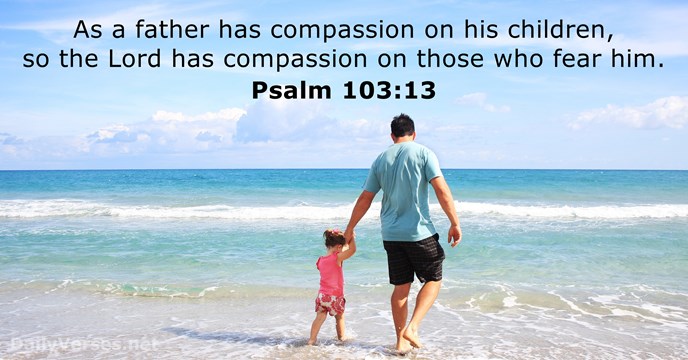
It is easy to forget and overlook the ongoing pain of child loss for fathers-especially when outward signs are few.  
But I promise you-that dad in the pew on Sunday-he’s hurting.

That man shaking hands and joking-he remembers.

He hasn’t forgotten that one of the special people that called him “Daddy” is no longer around to do it.

Tell him you remember too.

Speak his child’s name and share a special memory.

Acknowledge the pain.  Let him express his grief.  

And honor him as a father to ALL his children-those that walk the earth with him and those that don’t.  

good father unsung

Father’s Day 2026: Acknowledging Grieving Dads


Like it or not the stereotype often rings true: women emote and men clam up.

I see it play out every day in the online support groups to which I belong. If you check the member list there are quite a number of dads in the mix but it’s exceedingly rare that one of them posts or comments.

I get it. I’m a wife and mother to three boys (now men). All of them are better at compartmentalizing difficult situations and pushing down emotions than I am.

When I have something heavy on my heart it almost always spills out and splashes across everything else.

They, on the other hand, will sit on sadness or anxiety or the never-ending missing that makes up child loss/sibling loss until it finally becomes more than even their iron-clad emotional chests can hold.

Even then they often weep in private, mourn in secret.

That’s unfortunate because it means they are frequently forgotten in society’s rush to comfort parents whose children make it first to Heaven.

Much is made over bereaved moms and Mother’s Day. There is even an International Bereaved Mother’s Day on the Sunday before Mother’s Day (U.S.). I (and others) take that opportunity to have a separate day to think about, mourn and celebrate the life of my child gone too soon.

But dads kind of get short shrift.

While there IS an International Bereaved Father’s Day ( August 31, 2025), it’s nowhere near as well-recognized as the one for moms.

I’ve written often about how important friends are to our grief journey. They can encourage, provide practical help and simply by their presence remind a heart that darkness and despair is not all there is.

Men need friends who will step up and step in. They need masculine examples of sharing and caring.

Men Can Have Better Friendships. Here's How : NPR

They need grace and space to unlock the chest of emotions that they sometimes keep tucked away and hidden from their family because they think it’s their job to “be strong”.

So if you know a dad whose child has left for Heaven, reach out in the next few days before Father’s Day.

Take him fishing. Go for a ride. Tackle a project together.

Be a safe place for them to let their guard down, to open up, to release pent up emotions and (possibly) frustration.

Dads grieve too.

Don’t forget them.

Grief Work 2026: Some Choices Can Help My Heart Heal

I know that when I first stumbled onto a bereaved parent group, it was one of the things I was looking for: evidence that the overwhelming pain of child loss would not last forever.  

Some days I was encouraged as those who had traveled farther down this path posted comments affirming that they could feel something other than sorrow.

Some days I was devastated to read comments from parents who buried a child decades ago asserting that “it never gets better”.

Who is right?  

What’s the difference?

Do I have any control over whether or not this burden gets lighter?

It has been over twelve years since Dominic ran ahead to Heaven and I’ve learned a few things since then.

letting-go

Time, by itself, heals nothing.  But time, plus the work grief requires, brings a measure of healing.  

If I cling with both hands to my loss, I can’t take hold of the good things life still has in store for me.  

Longing for the past all the time only brings sorrow.  I cannot turn back time.  Days, weeks, years will keep coming whether or not I choose to participate in them.  I will rob my heart of potential joy by focusing exclusively on the sorrow I can’t undo.

Daily choices add up.  When I lean into the small things required each day, I build confidence that I can do the bigger things that might still frighten me.  Making phone calls eventually helps me show up to a meeting or to church.  I strengthen my “can do” muscle every time I use it.

Doubt doesn’t disappear. Facing my doubt forces me to explore the edges of my faith.  It does no good for me to stuff questions in a drawer and hope they go away.  They won’t.  I have to drag them into the light and examine them.  Doubt is not denial.  If God is God (and I believe that He is!) then my puny queries don’t diminish His glory.  He knows I’m made of dust and He invites me to bring my heart to Him-questions and all.

My mental diet matters more than I might think.  I have to be very careful what I feed my mind.  If I focus on sadness, tragic stories, hateful speech and media that feeds my fears and despair then those feelings grow stronger.  If instead I focus on hopeful stories, good conversation with faithful friends and inspiring quotes, verses and articles I feed the part of my heart that helps me hold onto hope.

I need a space where I can be completely honest about what this journey is like.  Bereaved parents’ groups have been that space for me and have been an important component of my healing.  But even there I must be cautious about how much time I spend reading other parents’ stories if I notice that I’m absorbing too much pain and not enough encouragement.

me too sharing the path

Grief is hard.  

It’s work. 

And that work is made up of dozens of daily choices that are also often difficult.  

I don’t expect to be healed and whole this side of eternity.  But I do know that if I consistently do the work grief requires I will be stronger, more whole and better able to lean into the life I have left than if I don’t.

I want to live. 

I want to honor my son by living a life that’s more than just limping along, barely making it, struggling for each step.  

So I do the work grief asks of me.  

Even when it’s hard.  

give yourself space to do the work grief requires

Grief Work 2026: Breaking Free From Shame

Shame is one of the most crippling aspects of child loss.

Depending on the circumstances surrounding your child’s last days on earth, it can be compounded by friends, family and even strangers who speculate, comment or simply give a parent “that look”.

It’s true that we all MAKE mistakes but none of us ARE mistakes.

Grief work is, in part, embracing this life we didn’t choose.

But it is also letting go of feelings, identities and burdens placed upon our broken hearts by ourselves and others.

Shame tells us we are unworthy of love and belonging and that is simply a lie.

Shame is a shackle as sure as any chains forged from iron.  

And it often finds its home in the hearts of those who bury a child.

Bereaved parents may feel shame for lots of reasons:

  • Circumstances surrounding the death of their child-suicide, alcohol, drug abuse;
  • Inability to provide the funeral or burial they want due to financial constraints;
  • Missing signs or symptoms of an illness that may have led to death;
  • Family dynamics that pushed a child away from home or relationship.

The list could be endless-on the other side of child loss our brains pick apart every interaction, every choice, every moment that could have gone one way but went another.

Grief is WORK.

But it is impossible to make my way through the pile of emotions if I’m shackled by shame.  I can’t move freely and effectively if I’m bound hand and foot by things I can’t control and can’t change.

In the midst of all this work, some bereaved parents find they are immobilized by depression and/or anxiety and need medication to help them through.

woman looking through rainiy window.jpg

And they feel ashamed.  

Can I just say this? 

There is NO shame in seeking help.

There is nothing shameful about using whatever tools are available to make this awful journey more manageable.

A wise and kind doctor friend said, “Medication does not make the sorrow and pain go away, but it can calm the mind and create space so you can do the work grief requires.”

You are not a failure if you need medical help to quiet your mind.  You are not weak if you take a pill to keep from feeling like you’re going to come out of your skin.  You have done nothing wrong if you can’t sleep and require a sleep aid to allow your body the rest it needs to carry on.

Don’t compare your journey to anyone else’s.

You are unique.  Your path through this heartache is your own.

Do what you need to- for YOU.  

Shake off the shame.  

grief-is-not-linear