Dominic was an amazing man-he lived harder and braver and louder than most. He was a unique light in this world and now he is gone.
I will never stop missing him.
There is no way to sum up a person’s life-not even a relatively short one-in the number of words allotted to a newspaper article. But I am grateful the Crimson and White gave it a shot–click here to read their tribute:
Now it has been two years since the morning the deputy brought the news to my front door. Two years since I heard my son’s voice. Two years since my life was turned upside down.
It seems unbelievably long ago–like a dream. Yet also like yesterday–like that bad feeling you get when you wake from a nightmare and it just won’t go away.
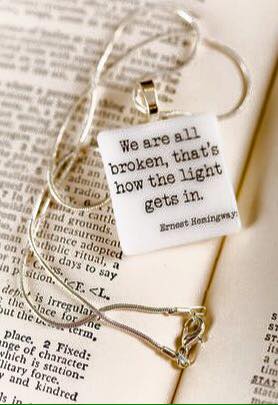
I am not as fragile as I was on that day. But I am just as broken. The pieces of a shattered heart never fit back together to make a perfect whole.
The burden is not lighter. But I am stronger.
The pain is no less but I have learned to endure it.
“We are pressed on every side by troubles, but not crushed and broken. We are perplexed because we don’t know why things happen as they do, but we don’t give up and quit. 9 We are hunted down, but God never abandons us. We get knocked down, but we get up again and keep going.”
2 Corinthians 4:8-9 TLB
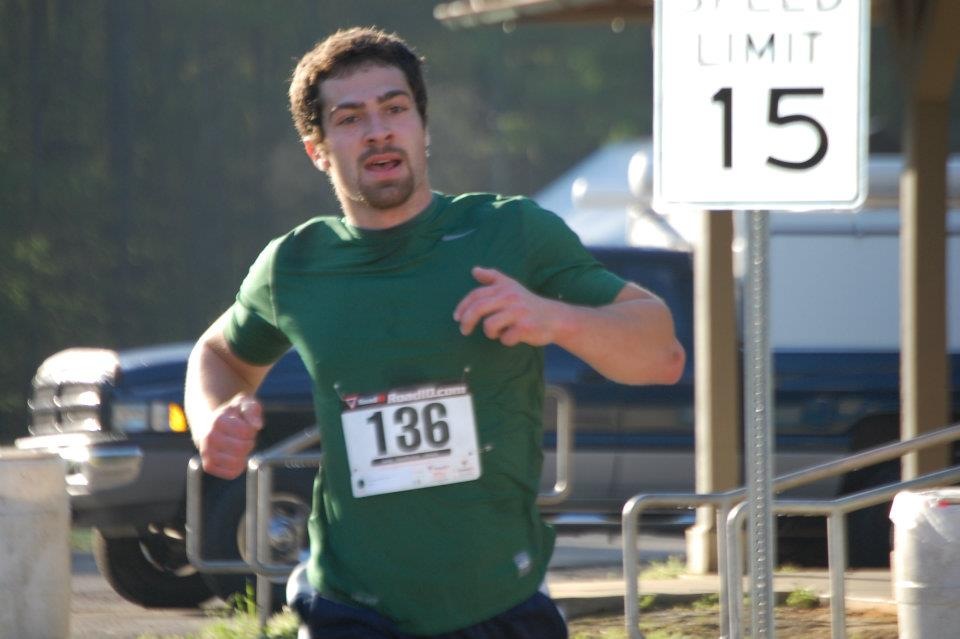
“From the start, if you didn’t want Dominic to do something, you couldn’t let him see you do it.” Read the rest: Running Ahead
Tomorrow will be two years since my life was changed forever, 731 days since my heart was shattered, 17,544 hours since Dominic’s accident.
I never dreaded time the way I do now. Gray hair and wrinkles didn’t faze me. My children growing from babies to toddlers to high school graduates was exciting, not sad.
But now, I am oh, so aware, of the days and months that have passed since Dominic left us. I look back to the years we had with him and hate to see them falling further and further into the past.
I look ahead with ambivalence to the years that may lie between now and my reunion with the son I love and miss.
The Bible describes Heaven as a place where “time will be no more” and I’ve always considered that concept in terms of an unending opportunity to enjoy Jesus and those we love for ever and ever.
But something occurred to me the other day: timelessness itself will be a gift unimaginable.
In this body, I am bound in time. My life is divided into “before” and “after”. But there will be a day when it won’t be.
There will be a day when I will also inhabit the timeless eternity where Jesus reigns and Dominic resides.
I don’t know if I will remember the details of this life, the pain and the heartache-maybe, because Scripture tells me that God will wipe away every tear-but I firmly believe that I will be able to enter fully into the “now” of heaven’s timelessness without a sense of loss.
I will be free from this body of sin and death, free from the burden of grief and pain, free of the weight of sorrow.
For ever and ever.Amen.
Nothing that has cursed mankind shall exist any longer; the throne of God and of the Lamb shall be within the city. His servants shall worship him; they shall see his face, and his name will be upon their foreheads. Night shall be no more; they have no more need for either lamplight or sunlight, for the Lord God will shed his light upon them and they shall reign as kings for timeless ages.
I’m not the most tech savvy individual and I freely admit it.
Dominic was our resident tech advisor and among other things I lost when he was taken from us was my own personal “help” desk. Now I muddle through the best I can.
I’m also not too excited about exploring popular Facebook posts that purport to give you insider information. But I did check out a recent post making the rounds and discovered that FB DOES hide some of my messages.
I have no idea what kind of filter they use to decide what messages I should see and what messages should be sequestered into the “filtered messages” folder, but I wish they would just stop!
I found messages from MONTHS ago from mamas trying to contact me about my blog and many asking permission to share a post or to print a post and pass it along to another grieving family.
I was heartbroken that I didn’t receive these requests in a timely way and I pray that in each case, they decided to share anyway.
So, since I have no idea how to stop FB from filtering messages, I would like to make this plain: PERMISSION GRANTED to anyone who finds these posts helpful to share them.
As long as you make no changes, share them in entirety and cite thelifeididntchoose.com as the source, share away.
You can share one of several ways-there are buttons at the bottom of each post for FB, Twitter, and Reddit. You can copy and paste into an email or email the link. Or you can print them for physical distribution.
If you want to sign up to receive the posts in your own email, there is a link on the right side of each post inviting you to “follow blog via email”-this makes it easier to share a post via email.
If you have a WordPress site, you can follow through your own site as well.
Finally, at the top right corner there is a “contact” button-you are welcome to contact me anytime through email. I try to answer within a day.
I cannot bring my son back-but I can honor his memory by sharing faithfully what God is teaching me as I make this journey.
I am thankful and humbled that others find my words helpful.
If you know someone that might also find them helpful, please pass them along.
If you meet me now at the grocery store or pass me in church, I probably won’t cry.
I will most likely ask you how you are, what you’ve been doing and smile when you share the latest family news even if in the midst of the words a thousand alarms go off in my head, reminding me of Dominic.
Because I’m stronger.
There’s a common misconception about grief among those who have never experienced the loss of a close loved one.
It goes something like this: The first few weeks, months and the first holidays celebrated without them are the hardest. But once the bereaved make it through THOSE, things get EASIER.
I’m here to tell you that, at least for me, it’s just not true.
A better picture of how I am continuing in this grief journey is to think of it as weight lifting. I started with a 250 pound barbell raised over my head-no warning, no training-that knocked me to my knees and threatened to press the life out of me. But friends and family came alongside and helped me lift the heavy weight for a season.
And I survived.
Each day, I have to get out of bed and lift that weight.
Over time, my muscles have grown stronger.
Over time, I’ve become more adept at keeping my grip.
Over time, I’ve learned a few tips and tricks to balance the bar more evenly, to situate myself more strategically beneath it and to breathe through the lifting so that I don’t become light-headed and faint.
But there are still days, still moments, when my balance is off and I can be crushed by the weight of grief. There are times when life adds a few more pounds onto the bar and even my stronger arms are unable to lift it up and carry on.
And in those moments or on those days, the full weight of sorrow and pain and longing overwhelm me. That’s when I understand how Paul felt when he wrote:
We are pressed on every side by troubles, but not crushed and broken. We are perplexed because we don’t know why things happen as they do, but we don’t give up and quit. We are hunted down, but God never abandons us. We get knocked down, but we get up again and keep going. These bodies of ours are constantly facing death just as Jesus did; so it is clear to all that it is only the living Christ within who keeps us safe.
2 Corinthians 4: 8-10
I sit in my floor and cry out to God for mercy, cry out to Him for strength, cry out to Him for grace to rise and carry on.
I am thankful that it’s no longer every day. I’m relieved that I can do routine things more easily. I can smile. I can even laugh.
When I first shared this post, I received a lot of feedback from readers and much of it went something like this: “I wish my pastor would read this.” or “I’d love to share this on my own FaceBook page but I’m afraid someone might be offended.”
I didn’t write this post to point fingers but I did write it to drag into the light a hidden place of pain and division within churches.
There are so many hurting people in our pews and we cannot continue to ignore our responsibility to minister to them. So to you who are timid, I say, “Be brave! Share! There is no shame in sharing the truth in love!”
“I am a shepherd. My goats and sheep depend on me for food, for guidance and for their security.
And every day I am reminded that a shepherd’s heart is revealed by the way he or she cares for the weakest and most vulnerable of the flock.”
There is a lot of misconception around the notion of “acceptance” in the grief community. Sometimes among the very people counseling those walking this valley of loss.
It’s not a once-and-done realization or commitment or decision. It’s a process…
Sometimes those that walk alongside the bereaved are biding time, waiting for that “final” stage of grief: Acceptance.
And some therapists, counselors and armchair psychiatrists are certain that if the grieving mother can simply accept the death of her child, she can move on–that she can get back to a more “normal’ life.
But this notion is as ridiculous as imagining that welcoming a new baby into a household doesn’t change everything.
As a bereaved mother, I long desperately to know that my son is still remembered and that he still matters. Of course, he matters to me-but it is a great gift to know that he matters to others as well.
Death is scary. Even for us who trust Jesus. And the death of a child just trashes the notion that we are in control, that we can fully protect the ones we love from all harm.
But you are frightened of what you cannot comprehend.
I don’t want people passing me in the street or in the sanctuary secretly shaking their head and thinking, “poor woman”.
I would like to be understood-at least as well as anyone standing on the outside of child loss can understand…
A bereaved parent’s grief doesn’t fit an easy-to-understand narrative. And it flies in the face of the American “pull yourself up by your bootstraps” mentality.
I wrote this post in an effort to help the nonbereaved understand that funerals and memorials and other outward symbols of “good-bye” are only the BEGINNING to our sense of loss and sorrow. And that while everyone else walks away and goes back to the life they had the day before, we stand on the threshold to a different life we are unprepared for, know nothing about and do not want.
“A funeral or memorial service seems like a final chapter. We close the coffin, close the doors and everyone goes home.
But for bereaved parents and their surviving children, it’s not an end, it is a beginning.
Much like a wedding or birth serves as the threshold to a new way of life, a new commitment, a new understanding of who you are, burying a child does the same.
I walked away from the cemetary overwhelmed by the finality of death–not in a theological sense–I believe firmly that my son lives with Jesus–but with the undeniable fact that he is no longer available to me on this earth.”









 thelifeididntchoose