Grief Work 2026: Being Real When it Matters Most

I’ll be honest-there are definitely times when “faking it” is the easier path. Chatty neighbors, standing in line, professional meetings or chance encounters lend themselves to light conversations that don’t need to include ALL my feelings or current grief experience.

But there are other times when being real, honest and authentic is not only preferable, it’s necessary.

I cannot fake it forever.

It took me awhile to figure that out.

Child loss is hard. Child loss impacts a family forever. Child loss is not “curable” or “solvable” and it’s not helpful to pretend it is.

So for the relationships that matter, I try to be transparent.

❤ Melanie

There’s a common bit of advice in grief circles:  Fake it until you make it.

It’s not bad as far as it goes and can be pretty useful-especially just after the initial loss and activity surrounding it.

Like when I met the acquaintance in the grocery store a month after burying Dominic and she grabbed me with a giant smile on her face, “How ARE you?!!! It’s SO good to see you out!!!”

I just smiled and stood there as if I appreciated her interest, a deer caught in headlights, silently praying she’d live up to her talkative past and soon move on to another target.

Faked it.

Boom!

BUT there comes a time when faking it is not helpful.  In fact, it’s downright dangerous.

Because if I fake it long enough and get good enough at it, I can convince myself that I have done the work grief requires.

Grief will not be ignored forever.

It bubbles up in physical symptoms and sleepless nights. It boils over in anger and impatience and anxiety and nervous habits.

There is no way through but through.  It has to be faced head on.

Life circumstances kept me distracted and busy for the first four or five months after Dominic ran ahead to heaven.

IMG_1790

I cried, screamed and was heartbroken-I definitely had my moments. But for the most part I functioned at a pretty high level.

It wasn’t until things slowed down that I had my come apart. And it caught me by surprise.

I was forced to sit in silence and face the feelings.  I was compelled to hear my heart shatter-over and over again.

I’ve now had 33 months of this burden of sorrow.  Almost three years to think about, work on and pray through the pain.  

I’m learning to pay attention to my own heartbeat, to my body, to my triggers, to my joy-bringers, my joy-stealers and my limitations.  I’m beginning to accept the bellycrawl progress through this tunnel of darkness by focusing on the bright light at the end.  

I still fake it sometimes-it’s not worth it to me to get into a long conversation with that person I only see every year or so.  Too much time, too much energy and too little reward.

But I’m learning to be more genuine with the people that matter most.  I’m learning to be honest about how I feel, what I need and how much I can do.

And I refuse to allow busyness to creep up on me so that I don’t have the time and energy to continue doing the work grief requires.  

not-required-set-yourself-on-fire-life-daily-quotes-sayings-pictures

Grief Work 2026: Stress, Grief and Emotional Wellness

It would be so helpful if there was an app to track stress like there is to track spending.

Wouldn’t it be marvelous to get an alert that said, “Low Balance”, for mental, physical and psychological reserves like the one you can get for your bank account right before you are heading to overdraft territory?

But there isn’t.

And few of us are very good at gauging just how much is left in our mental wellness accounts which means we often keep giving when the well is more than dry.

I’d be lying if I said I spend the same amount of time crying, lamenting and bent over in agonizing pain that I did in the early days of mourning Dominic. I’ve found a way to keep him close, to trust his soul to Jesus and to (largely) live in the present instead of always longing for the past.

There are days, though…

Some days are easy to anticipate-birthdays, holidays, the awful anniversary of his leaving-and some sneak up on me. I can often trace my overwhelming sadness to a specific trigger or memory dug up in a drawer or found in a pile of photos.

Occasionally, I have a horrible weepy day for no discernable reason.

That’s when I walk my heart back through recent events and always come to the same conclusion-I’ve let myself run dry:

  • I’ve overcommitted.
  • I’ve not planned rest.
  • I’ve had hard pain days.
  • There’s been family drama.
  • Someone I love is sick.
  • I’m sick.
  • A deadline looms large.
  • There’s some major unpredictability going on.
  • I’ve counseled too many people without enough time to regain my own emotional stores.
  • I’m not sleeping well.
  • I’m doing too much and not listening to my body.

What I’ve come to understand is that stress is a HUGE impact on my grief and how I experience it.

I won’t patronize folks reading this with a simplistic (but wholly unhelpful!) suggestion to “reduce or avoid stress”.

For heaven’s sake! If we could do that with a snap of our fingers we would hardly need someone to tell us to take advantage of that solution.

Truth is, stress is often largely outside our control.

But there ARE some things I can make choices about. So I do. I look ahead at the calendar and note upcoming milestone days. I plug in doctor’s appointments, birthdays and holidays. I review every invitation to celebrations or lunch in light of what is already inked in.

I’ve learned to be honest with folks about my limitations and send a card or gift through the mail if I can’t be there in person. I sometimes suggest an alternative date and time if the one a friend offers just doesn’t work for me. I stand firm in my opinion that “no” is a complete sentence and as long as I’m kind and gracious it is not incumbent upon me to offer an explanation for why I’m turning down an invitation.

And if I have an unexpectedly hard day-from grief or activity or because of my RA-I drop back the next day to allow time to recuperate and rest (if at all possible).

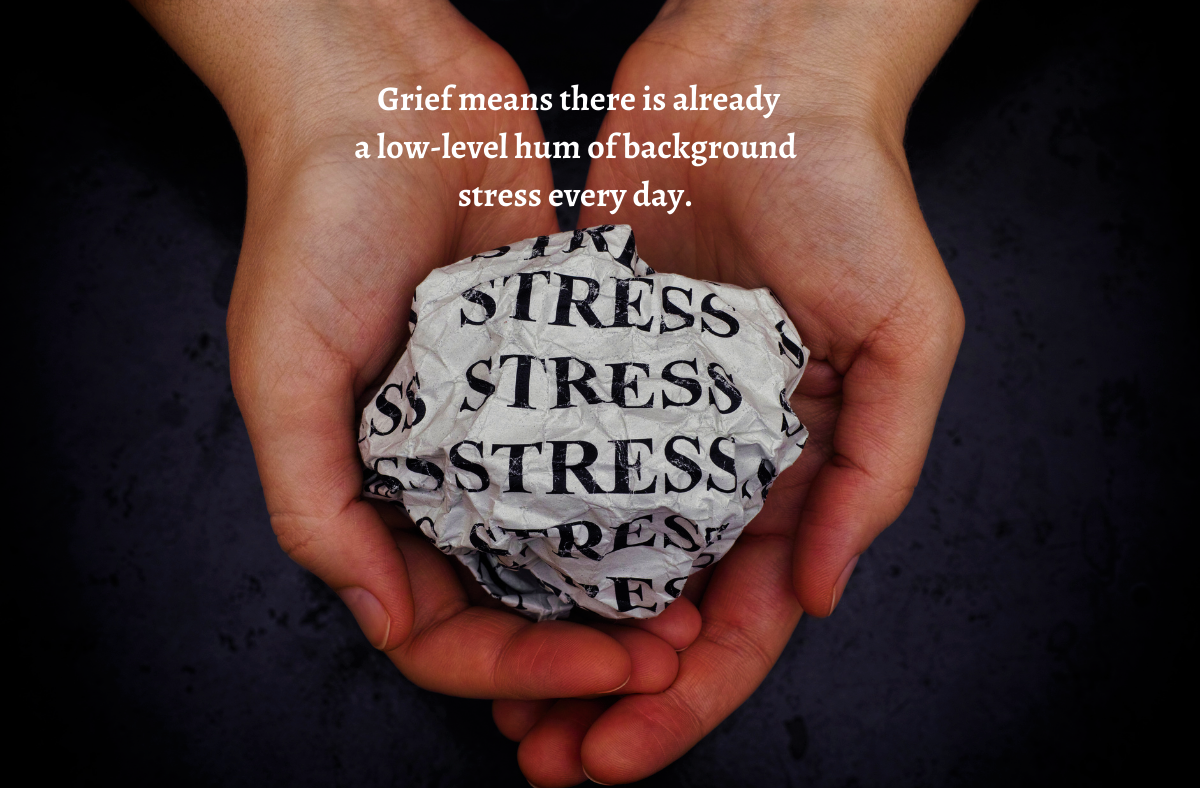
The reality is that child loss means there is ALWAYS a certain low-level hum of stress in my life.

Adding to that already higher-than-average stress means it’s easy for me to be tipped into unhealthy territory.

Crying is only the tip of the iceberg.

Health problems, heart problems, relationship issues and other long-term consequences often result.

It’s not only OK for me to set boundaries to protect my health and my heart,

It’s absolutely, positively the right thing to do.