Replay: Loving Well Series

Beginning today and through the next week, I will be sharing again a series of posts written to help those journeying the valley of grief and those walking with them on the journey.  I asked other bereaved parents to share from their experience the things that were helpful and not so helpful to them after losing a child.

Many of these insights are useful for blessing anyone in any difficult situation–we can all use a little help from our friends.

If you are a bereaved parent, and you have wanted to let family and friends know what’s helpful and what isn’t-sharing a post to Facebook can be a non-threatening way to let them know using someone else’s voice.

“No one is prepared to bury their child.

But some of us have to.”

Read the rest: Loving Well: Meaningful Ministry to Grieving Parents

Choosing Transparency

I’ve had two conversations in as many days that revolved around how hard it is to be transparent in relationships.

And it seems that the difficulty lies not only in our own desire to present ourselves in a way that casts a positive light on our actions, thoughts and feelings but also because of an unspoken rule in social transactions that demands (and I don’t think “demand”is too strong a word) we conform to the “I’m doing just fine” standard that is prevalent everywhere you turn.

All around me, people are faking life.

They are acting as if there are no hurdles, no burdens, no wounded places in their own hearts.  They run around proclaiming, “this is my best life now!” somehow convinced that if they say it loud enough and long enough it will be true.

But everyone sees what we think we are hiding.

Many know what we think we’re not saying.

And we all walk around, seeing and knowing but never acknowledging the truth:  we are not as strong or as perfect as we wish we were.

All this fake life is costly.  It’s costly to us who try so very hard to keep up appearances-it robs our lives of energy that would be better used in loving and serving others.  It is costly to the people around us because as long as we play the game, they feel like they must play along too.

And everywhere, hurting people hurt alone.  Scared people remain isolated in their fear.

That is not the life Jesus came to give us.  That is not the way to build true community among His called-out ones.  That is not the way to teach our children how to lean into and hold onto the strength and hope that Christ died to bring.

When I lost Dominic, many feelings overwhelmed me-sorrow, pain, disbelief-and, to my surprise, humility.

For the first time in my life it made sense to me why in many cultures bereaved people sit in the dirt and tear their clothes.  Because I remember saying over and over, “I am cast to the ground, and ashes are my food.”

And while that feeling is no longer as strong as it once was, it still echoes in my heart and mind.  I carry it with me wherever I go.  It has freed me from the game of “let’s pretend” that held me hostage to other people’s expectations of how I should act or what I should hide from public view.

Let’s just STOP.

Let’s be honest.

Let’s refuse to hide our scars, our tears, our fears and our failures.

If those of us who love Jesus refuse to acknowledge our weakness, how do we expect others to acknowledge their need for a Savior?

“The Christian often tries to forget his weakness; God wants us to remember it, to feel it deeply. The Christian wants to conquer his weakness and to be freed from it; God wants us to rest and even rejoice in it. The Christian mourns over his weakness; Christ teaches His servant to say, ‘I take pleasure in infirmities. Most gladly …will I…glory in my infirmities’ (2 Cor. 12:9)’ The Christian thinks his weaknesses are his greatest hindrance in the life and service of God; God tells us that it is the secret of strength and success. It is our weakness, heartily accepted and continually realized, that gives our claim and access to the strength of Him who has said, ‘My strength is made perfect in weakness”

― Andrew Murray, Abide in Christ

Making Space for Brokenness at the Table of the LORD

As we enter the week on the Christian calendar when most churches celebrate the death, burial and resurrection of Jesus Christ, I am reminded that often we race past the road that lead to Calvary and linger at the empty tomb.

But to understand the beauty of forgiveness and the blessing of redemption, we MUST acknowledge the sorrow of sin and the burden of brokenness.

When our sacred spaces draw boundaries around what we can bring to the Lord’s Table, we exclude the very ones who are desperate for the bread and cup.  When we treat the path as unimportant and only acknowledge the destination, we discourage those that are struggling to keep up.  When we welcome only the triumphant, we exclude those that are trying.

Let’s throw open the doors to the church and

Clear the way for the Lord in the wilderness [remove the obstacles]; Make straight and smooth in the desert a highway for our God. (Isaiah 40:3 AMP)

Let’s invite the outcasts, the limping, the hurting and the broken to the table.

Let’s declare to the wounded that in Christ there is healing!

As I’ve written before: “The truth is that none of us escape hardship in life.  All of us have hidden heartache.  We all have cracks in our polished persona.”

Read more:  Beautiful Broken


No Rush

Time, by itself, does not heal all wounds.  

But of all the factors that promote healing, there is NO SUBSTITUTE for time–not in the physical world of surgery and broken bones and deep wounds and not in the inner world of  emotional pain and brokenness and sorrow.

Our bodies are made to be amazingly resilient.  

Most people don’t really think of surgery as an assault on the body, but it is.

The surgeon knifes through layers of flesh and tissue that are designed to keep intruders out, mucks about inside, does what he or she came to do, and closes up–hopefully without introducing bacteria into the wound. Some medication may be prescribed to promote healing, control pain and reduce the risk of infection.

Then the patient goes home to recover.

But it is really TIME and the body’s own healing powers that do the lion’s share of the work.

Our hearts and minds can be resilient too.

Frequently, someone who suffers an assault on their emotions may not bear outward signs and symbols to mark what they’ve  been through.  And well-meaning friends and family can forget that healing has only begun and is far from complete.

Sometimes broken people feel pressured to put on a brave face and to stuff their feelings.

For the body, ignoring doctor’s orders to rest after surgery can mean another hospital stay due to complications that might have been avoided if the patient had been given sufficient time to recover.

Emotionally wounded people can end up with complications from pressure to rejoin regular activities and engage society in ways for which they are not yet ready.

It takes TIME to heal from burying a child or any other traumatic loss.

There is no way to rush the healing.  It takes HOURS AND HOURS to think about, respond to and process the feelings that overwhelm anyone who is grieving or trying to cope with emotional upheaval of any kind.

ok to just breathe

So be patient with yourself.

  • Understand that there will be good days and bad days.
  • There will be forward movement and steps backward.
  • Sometimes it will be easy to do something or go somewhere and the next time it might be really hard.

And don’t be afraid to let others know you are still healing.

Deep emotional wounds require great care and an extended period of time to heal if the healing is to be sound and free from unnecessary complications.

You are not selfish to draw boundaries around what you can and can’t do, what you will and won’t allow and where and when you engage with others-you are being wise.  

For those walking with the wounded:  extend grace and be patient.

Thank God you are not bearing this burden and be mindful of placing demands or pressure on the wounded to heal according to a predetermined timetable.

Then support them in their effort to give themselves the TIME they need to heal.

smiling through tears


God of the Day and God of the Night

I was afraid of the dark until I was almost forty years old.

My fear was rooted in scary childhood moments and even years of adult experience could not rip it from the soil of my psyche. I never could convince my heart what my head knew to be true: there was nothing in the dark that wasn’t also there in the light.

It was fear, not darkness, that controlled me.

There is great darkness in grief.  So many unanswerable questions, so much anquish, so much pain.

And there is darkness in many other painful, unchangeable circumstances.

The darkness can hide things that I see clearly in the light.  And if I’m not careful, I  can allow the darkness to foster fear and keep me from venturing futher.

In my own strength, depending on my own resources, I am afraid.

But when I call out from my scary place to the God Who made me, I can face the fear in confidence He hears and cares.

When I am afraid, O Lord Almighty, I put my trust in you.

Psalm 56:3 GNT

Sometimes believers in Christ can convince themselves that admitting their world is dark with pain or suffering or questions diminishes the power of God–that it speaks ill of God or that it means God is insufficient to uphold us in our weakness.

If I pretend that I’m never afraid, or that I never experience darkness, I am denying others my aid.

Even worse, I may be shaming them to silence, sending the message that if they are experiencing pain, something is wrong with THEM.

How many people are sitting in our pews with broken hearts and broken lives, afraid to reach out for help because–in addition to the pain of their broken life–they live under condemnation?

Life is full of pain and darkness.  Even for those who follow Jesus.

When I deny that truth, I also refuse to testify to God’s power to help me carry on and give me the courage to face my fear.

God is the God of the day AND the God of the night.  

I do not diminish Him by admitting that I experience both.

He invites me to lean into Him and to hold hands with His children as I journey on, even when it’s dark.

“Christians with this unflinching faith in the sovereign God do not deny grief. But even in their darkest hours, they borrow God’s strength. In their tears and pain they cling to God who will never let them go. What the Savior has done for others He will do for you. When you are shaken, and you know that life will never be the same again, you can trust and not be afraid. You can live in HOPE with the sturdy confidence that God will dry your tears and put you on your feet again.”

“Grief, Comfort for Those Who Grieve and Those Who Want to Help” by Haddon W. Robinson


Dropping the Mask

Despite my commitment to authenticity, I do have a plastic smile I can pull out of my pocket and slap across my face.

Sometimes I just don’t want to have to have to answer the question, “How are you?” with more than a nod and a wave.

I tell myself that it demonstrates maturity and self-control.

And I actually think that’s OK. I don’t always need to spill my guts to every unsuspecting stranger I meet.

But if I allow it to become a habit or use it as camouflage to keep my distance from my fellow man, it is unhelpful.  It gives the false impression that life is mostly smooth sailing, when that’s just not true so much of the time.

And it builds a wall between me and others.

Because if the people I meet think that I have it all together all the time, they are going to be much less likely to admit that they don’t.  And let’s be real, none of us have it all together.

We all have at least one place in our lives that hurts and that needs healing.

Everyone has scars.

Losing a child is teaching me many things.  One of the things I am learning is that I am not self-sufficient.  I am not capable of meeting my own needs or bearing my burdens alone.  I need companionship in this journey.

When I walk around with my mask on, I isolate myself from the very people that might help me heal.

It is humbling and sometimes frightening, to let others SEE my brokenness.

I might be inviting judgment and condemnation.  But I am also welcoming love and companionship.  I am opening my heart to the gift of friendship.

When I refuse to pretend, I give permission for others to take off their masks too.

Being real creates space for authentic healing.

It unlocks doors to sharing truth.

Jesus came as God in the flesh so that He could experience our trials, our temptations, our joys and our sorrows. He came to KNOW.

But He also came to make the Father KNOWN.

And He has left His followers to continue making the Father known in the world.

If I want to minister to the painful places in the lives of others, I have to let them see the painful places in my own. I have to drop the mask and reveal my face.  When I do, I invite them to let me help carry their load and to let them help me carry mine.

Bear ye one another’s burdens, and so fulfil the law of Christ.

Galatians 6:2


Loving Well: How the Church Can Serve Grieving Parents and Other Hurting People

I am a shepherd.  My goats and sheep depend on me for food, for guidance and for their security.

And every day I am reminded that a shepherd’s heart is revealed by the way he or she cares for the weakest and most vulnerable of the flock.

But most of us are far removed from the daily reminder of pastoral life that was commonly accessible to the authors and readers of the Bible thousands of years ago.  So it’s no surprise that we tend to forget the connection between a shepherd’s life and a pastor’s calling.

Jesus called Himself, “the Good Shepherd” and He told Peter to “feed My sheep”. The relationship of shepherd to sheep is important if we are to understand how God wants His church to function.

Many churches serve more people than the number of animals in my care. And a pastor is only one person.  He (or she) cannot personally meet every need of every member of the congregation.

Still, a pastor is in a unique position to demonstrate priorities to a church and lead by example in ministering to the weakest and most vulnerable among them.

So how can a pastor lead the church to love the grieving and other hurting people well?

Cultivate a Culture of Compassion:

Does your local body welcome the wounded?  

Like those carrying the pain of burying a child.  Or the burden of chronic physical disability. Or the unceasing struggle of overcoming addiction.

Pain is a reminder that this world is broken. It’s uncomfortable to feel it, to be near to someone who is feeling it. We try so hard to “fix” our own and other people’s pain.  And sometimes if we don’t feel like we can fix it, we ignore it.

A cold shoulder wounds as much as hurtful words. Acknowledgement is as great a blessing as an extended hand.

Compassion means “to suffer alongside”.  It requires getting to know someone and listening to their story.  It means inviting others into your life, not only your pew.

Is your congregation too busy to truly SEE? The business of the church is people.

If we are to minister to the broken, we must reach out to them.  The first step is to welcome them in.  Then show them that you care.

Come alongside, bear witness to the tears, lay a hand on an arm, reach out with only love-often in silence. This is compassion, it touches the soul of one who hurts and reminds them that pain is not all there is.

No one should leave a church service ungreeted.  No one should leave feeling more alone than when they entered the building.

Communicate the Cost of Compassionate Response:

God is the God of inexhaustible resources, yet sometimes we act as if we are in a zero-sum community.  If we give too much over here, there won’t be enough over there.  But God has promised to supply every need according to His riches in glory.  

If we are to live in true fellowship with one another, loving one another through thick and thin, then it will be costly.  Ministry requires giving of resources, energy and time.

I have written elsewhere that, “There is no substitute for walking with the wounded.  It is costly, it is painful, it is hard.”

But it is what we are called to do.

God Himself stepped into His creation to feel the pain of brokenness, to bear the price of sin and to open a Way for restoration and redemption.

We shouldn’t set a time limit or a resource cap when we minister to those He has placed in our midst.

Commit to Continue:

Compassion says, “I see your pain.  I hurt with you.  Let me stay with you until you feel better.  And if you never feel better, I’ll still be here.”

Compassion requires conscious commitment to push back against our tendency to forget those who live with ongoing challenges.

Ministering to hurting people rarely leads to a tidy final chapter that wraps loose ends into a comfortable narrative.We need to be honest about this.  A weekly program is not going to be enough.

Pastors can help a congregation remain focused on compassionate response so that members do not abandon the broken to sit alone with their pain.

True ministry involves RELATIONSHIP.  And relationship is time-consuming.

But relationship is at the center of the Gospel of Jesus Christ.  No longer separated from God by our sin, we are invited to His table–welcomed into His family.

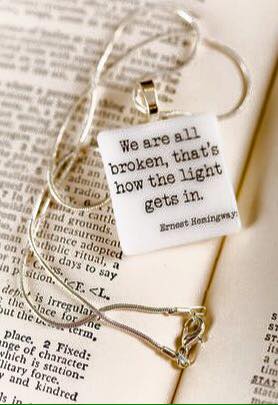
We are all broken.  And without the compassionate love of our Savior, we are all without hope.

When we welcome the wounded, we are living the Good News.

Watch what God does, and then you do it, like children who learn proper behavior from their parents. Mostly what God does is love you. Keep company with him and learn a life of love. Observe how Christ loved us. His love was not cautious but extravagant. He didn’t love in order to get something from us but to give everything of himself to us. Love like that.

Ephesians 5:1-2 MSG