The Battle For My Mind: Thoughts Matter

So much of this battle has been fought in my mind.

Really, even more than in my heart.

Because you can’t argue with sad or shock or missing or disappointment.

But you can absolutely argue with hopelessness (there is nothing to live for), apathy (there is nothing to do) and distrust (there is no one who can help me).

Read the rest here: Thoughts Matter

Time, Child Loss and Major Life Changes

I remember thinking in the first days and weeks after Dominic’s accident that the world really needed to just STOP!

Sunrise, sunset, sunrise again felt like an abomination when my son was never coming home again. Shouldn’t the universe take notice that something was terribly, terribly wrong?

But it didn’t.

So life (even for me and my family) carried on.

Some days lingered like that last bit of honey in the jar-slipping slowly, ever so slowly into nights when my brain betrayed me by replaying all the ifs, whys and should haves as I tried in vain to get some sleep.

Others flew by and I found myself months further into a new year unable to remember how I got there and what I’d done for all that time.

My adult children married, moved, graduated, changed careers, and had their own child (another on the way!).

My mother joined Dominic in Heaven.

I got older.

We’ve celebrated birthdays, anniversaries and holidays.

Daily life isn’t as difficult (most days) as it was in the beginning but my husband’s retirement has forced me to figure things out once again.

I can’t blame it all on the fact we’ve buried a child. I’m pretty sure most couples struggle to find a new normal when one or both give up long term employment for staying home.

Suddenly my little house kingdom has been overtaken by my husband’s love of music in the background (I’m a work in silence kind of gal), his tendency to leave a trail of breadcrumbs (paper, gum wrappers, tools) wherever he goes and a completely different wake/sleep/work cycle than my own.

I have a plan for the next day the night before. He treats every morning as a blank slate and takes a few hours to decide what he will do. By the time he gets going, I’ve nearly finished my list.

Trying hard to accommodate these changes has laid bare one of the main ways I’ve managed my grief for almost eight years.

I can’t make time stop but I work hard to control it. I schedule and plan and execute the plan in an attempt to reorder life so I don’t feel as vulnerable to its vagaries.

It’s a vain attempt.

My husband’s sense of time is challenging my coping mechanism. Once again I need to figure out how to navigate a changing world, how to carry grief and carry on.

I’m working on it.

I’ll let you know how it goes.

Sleep and Grief

It’s something I hear often from bereaved parents-sleep is elusive.

Falling asleep was nearly impossible in the first days and weeks after Dominic’s accident. I would lie down utterly exhausted but simply not be able to close my eyes because behind the lids scrolled the awful truth that my son was never coming home again.

Eventually my body overcame my mind and I would drift off for an hour or two but couldn’t stay asleep.

It was years before I finally developed something that resembled a “normal” sleep pattern. Even now I wake at four practically every morning-the time when the deputy’s knock sounded on my door.

Sleep is important. I can’t do the work grief requires if I go too long without it.

I have used (and still use!) various tips and tricks to help me fall asleep and stay asleep. Here are a few of them.

Boy, do I envy my cats’ ability to fall asleep any place, any time.

I’ve lived with chronic physical pain for over a decade and there are nights when it is hard to go to sleep-when it is impossible to ignore the pain.  But I have never thought of myself as having trouble sleeping.

Until now.

Read the rest here: grief and sleep

Healthy Grieving: You Can’t Fake it Forever

There’s a common bit of advice in grief circles:  Fake it until you make it.

It’s not bad as far as it goes and can be pretty useful-especially just after the initial loss and activity surrounding it.

Like when I met the acquaintance in the grocery store a month after burying Dominic and she grabbed me with a giant smile on her face, “How ARE you?!!! It’s SO good to see you out!!!”

I just smiled and stood there as if I appreciated her interest, a deer caught in headlights, silently praying she’d live up to her talkative past and soon move on to another target.

Faked it.

Boom!

BUT there comes a time when faking it is not helpful.  In fact, it’s downright dangerous.

Read the rest here: Can’t Fake It Forever

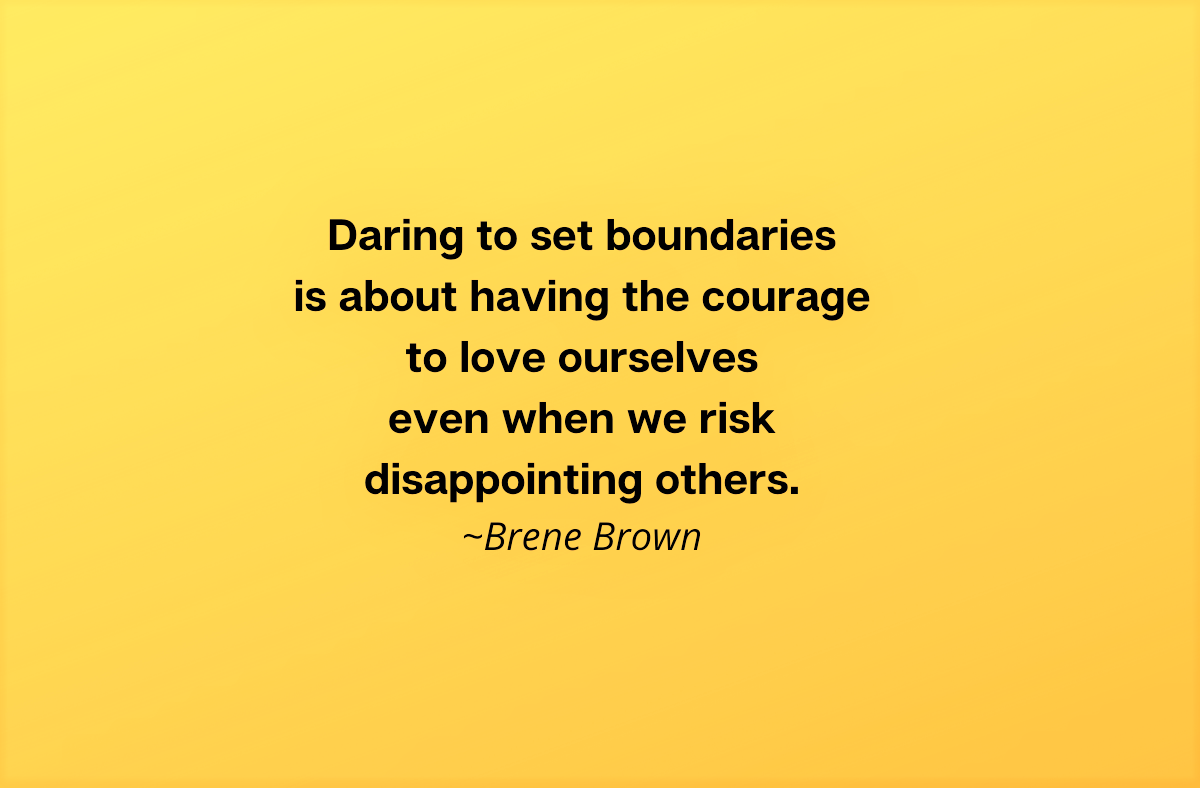
The Necessity of Setting Healthy Boundaries in Grief

As a people-pleasing first born who hates conflict, giving in has always been  easy for me. It’s only later that I wish I hadn’t.  

So for most of my life, setting personal boundaries has been challenging.

But in the aftermath of child loss, healthy boundaries are no longer optionalthey are necessary for survival.  

So what are healthy boundaries?

Read the rest here: Healthy Boundaries in Grief

Solitude? Isolation? Is There a Difference?

Since Dominic ran ahead to Heaven, I find I need even more alone time than before.

That quiet place is where I do my most effective grief work, undisturbed by interruptions and distractions.

But I need to be careful that solitude doesn’t shift into isolation. 

Read the rest here: Solitude or Isolation? Which is it?

Is It Possible to H.A.L.T. a Grief Spiral?

If you’ve ever been in any kind of counseling or recovery group , you have probably seen or heard this acronym and advice: HALT  before you speak.

It’s a great reminder that I should take a moment to consider my frame of mind before I blurt out something that might damage a relationship or wound someone else’s heart.

I had never thought about it until recently, but it is also a great reminder to us who grieve that what we interpret solely as grief (which we cannot control) might be compounded greatly by other things  (some of which we can control).

So I am learning to apply the HALT acronym to a grief spiral in my own life.

Read the rest here: HALTing a Grief Spiral

Everyday Brave

So I did something last week that was pretty big for me.

I went to the dentist-not once, but twice-AND I let him make some long-needed repairs to my neglected teeth.

For some folks this might seem like a silly bit of whiny sympathy seeking for the kind of every day healthcare I should be grateful for and not complain about.

But for me, it was HUGE.

I’ve never, ever liked having my mouth worked on.

I don’t remember when it started but I do know that by five or six I would rather know I was going for a vaccine booster than to the dentist for a cleaning. Of course, having pretty lousy teeth (bad genes) and multiple cavities by my teen years didn’t help.

Anyway, fast forward to adulthood and of all the uncomfortable things I could make myself face in the name of being a grown-up I was never able to get over this ridiculous fear.

Last week it could wait no longer.

Retirement means our insurance provider changes and we needed to use up the benefits we had left on the old one. So armed with economic necessity, I dragged my behind to the dentist, committed to doing what had to be done.

One thing had changed, though, in the years (yes, I know it’s supposed to be every six months!) since I’d sat in that chair. I had learned to speak up for myself. I’d learned to be forthright about how much pain I was willing to take and when enough would just have to be enough for that visit.

I’ve discovered a perverse “law” this side of child loss.

I have suffered the absolute worst heartache and sorrow I can bear. So inconvenience or tiny slights or even some pretty large challenges are manageable.

But I’m not at all willing to suffer unnecessarily either physically or relationally anymore.

If a word to the wise, if honesty, if admitting up front that I need some kind of chemical aid or extra grace to endure a procedure will make a conversation, friendship or painful prod or poke go smoothly, then I’m going to ask for it.

So I did.

And while taking the short walk from the waiting room to the exam room involved some deep breaths and positive (silent) self-talk, once things got going it wasn’t bad at all.

I walked out encouraged and with sounder teeth.

I’ve got another complex appointment in a few weeks and am asking for the same treatment plan and protocol. But this time I’m not dreading it at all.

I’m learning that sucking it up or pretending isn’t the only flavor of brave.

I can ask for help.

That’s brave too.

Bereaved Parents Month 2021: Mental Health Days

I think it gets harder and harder over the years for me to justify the necessity of some time devoted solely to processing the ongoing changes grief produces in my heart, mind and body.

It just seems like I should be-I don’t know-“used” to it by now, “better” at it by now, “more capable” by now.

And, I suppose I am all of those things.

But every now and then I find the normal stress and strain of life combined with the constant hum of missing Dominic wears me down.

Read the rest here: Bereaved Parents Month Post: Mental Health Days

Bereaved Parents Month 2021: Physical Manifestations of Grief

Grief is not *just* feelings. It is so much more.

I shared this last year around this time in response to many, many comments and questions from bereaved parents about what felt like random or unusual physical manifestations of their own grief.

I hope it helps another heart navigate this life none of us would choose.

❤ Melani e

It’s a well known fact that stress plays a role in many health conditions.  

And I think most of us would agree that child loss is one of (if not THE) most stressful events a heart might endure.  

So it’s unsurprising that bereaved parents find themselves battling a variety of physical problems in the wake of burying a child.  

Read the rest here: Bereaved Parents Month Post: Physical Manifestations of Grief