Grief Work 2026: Importance of Boundaries After Child Loss

As a people-pleasing first born who hates conflict, giving in has always been  easy for me. It’s only later that I wish I hadn’t.  

So for most of my life, setting personal boundaries has been challenging.

But in the aftermath of child loss, healthy boundaries are no longer optionalthey are necessary for survival.  

So what are healthy boundaries?

  • Saying “no” without guilt
  • Asking for what you want or need
  • Taking care of yourself
  • Saying “yes” because you want to, not out of obligation or to please others
  • Behaving according to your own values and beliefs
  • Feeling safe to express difficult emotions and to have disagreements
  • Feeling supported to pursue your  own goals
  • Being treated as an equal
  • Taking responsibilty for your own emotions
  • Not feeling responsible for someone else’s emotions
  • Being in tune with your own feelings
  • Knowing who you are, what you believe, what you like

~sharonmartincounseling.com

What does this look like in real life?

  • Not being “guilted” into engaging in social/family/church activities before I am ready
  • Letting family and friends know when I need encouragement, companionship, solitude, help or space
  • Keeping or making doctor’s appointments and staying on top of my physical well-being by sleeping/eating/taking medication/exercising as best I can
  • Participating in what is helpful and life-giving to me when I want to and not because I feel like I have to.  
  • Giving myself space and time to figure out how losing a child impacts my beliefs, my sense of self, my understanding of the world-being honest about questions and about struggles.  If I have to take a break from church for awhile, that’s OK.
  • Expecting support from friends and family to do the work grief requires.  If some in my circle can’t do this, then I’ll put those relationships on hold until I feel stronger. I am not required to live up to other people’s standards.
  • Embracing and acknowledging my own emotions.  Not expecting someone else to “make me better”.  No one can take away the sorrow and pain of child loss.  It is excruciating.  There is no way through but THROUGH.  Face the feelings.  Get help from a counselor if necessary.  Join a support group.  Find safe friends.  But I will not be able to distract myself or ignore the heartache forever.
  • Understand that though I share the loss with others-a spouse, my surviving children, my child’s grandparents, etc-I am not responsible for how they are dealing with loss. I may offer help, may arrange counseling (especially for children), should strive toward an environment where feelings can be expressed-but I can’t work through their loss experience for them.  
  • Pay attention to my own feelings and what triggers grief attacks.  When I can, plan around the triggers.  When I can’t, accept the feelings and go with them.  If I need to leave a venue, leave.

What it doesn’t look like:  

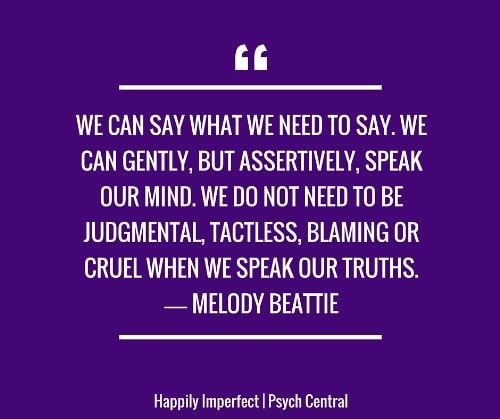
Healthy personal boundaries are not an excuse for bad behavior.  They are not to be used as blunt instruments to bully others into submission or to advance my own agenda against theirs.

My boundaries don’t give me the right to be hateful, hurtful or unkind.  They are not permission to pitch fits, make public displays or belittle others.  
say-what-we-need-to-say-gently

And they are absolutely NOT a reason to plaster hate speech across social media.  If I have a personal relationship issue then it needs to be handled personally and privately not publicly. Vague Facebook statuses that suggest I’ve been offended by half my friend list are off limits.

Establishing healthy personal boundaries is work.  

Already exhausted from grief, the last thing I want is more work.

But if I don’t defend the space and time I need to do the work grief requires I cannot make progress toward healing.

If I don’t limit my interaction with those who are unhelpful or downright hurtful, I will be dragged down further in the mire of sorrow and sadness.

If I don’t purposely pursue physical, emotional and psychological healthgrief will kill me.

Grief Work 2026: Practical Tips for Coping With Anxiety

I no longer have to imagine the worst thing that could happen in the life of a mother-I know exactly how it feels. 

And if I allow my heart to ponder that too often or too long, it consumes me.

So I am learning to take those anxious thoughts captive, learning to make them live in only a small corner of my mind instead of taking it over completely.

It takes effort and discipline, but it’s possible.  

I don’t have to live the rest of my days a quivering mess- afraid of every sunrise, every phone call, every mile my family travels:

  • I confront my fear with facts:  The absolute truth is that it is no more likely I will lose a child today than it was the day I lost Dominic.  I’m not good at determining odds-if I toss a coin ten times and it lands on “heads”-I’m convinced that next time it HAS to be “tails”.  But that’s just not true.  EVERY time the coin is tossed, it has exactly a 50/50 chance of landing on “heads” or “tails” regardless of what happened last time.  That’s not how it FEELS, but that’s how it IS.
coin_toss_11
  • I refuse to feed my fear:  I don’t linger over news stories that play up danger or magnify the possibility of catching rare diseases.  Do these things happen?  ABSOLUTELY!  But are they likely to happen to me or someone I love, probably not.  I will not fuel the fire of fear that threatens to rage through my mind.
  • I take reasonable precautions:  My family wears seatbelts.  We take our vitamins and go to the doctor when we need to.  We eat right and exercise.  We don’t walk across streets without looking both ways.  These were all things we did before Dominic’s accident and we continue to do them now.  Not one of them would have made a diference that night but they help me feel better.
crosswalk
  • I limit my exposure to uncertainty:  If I’m concerned about someone, I call or text.  It’s that simple.  I don’t have to live for hours wondering if they are OK.  I’m careful not to infringe on my adult children’s lives by a never-ending series of contacts, but they understand my heart.  We try to be mindful of letting each other know we arrive safely to our destination.
  • I exercise control in other areas of my life:  Anxiety is a beast that grows stronger the more out of control I feel.  I cannot keep my family absolutely safe-it’s not in my power to do so. BUT, I can control some aspects of life.  So I do.  Even cleaning out a messy junk drawer helps bolster my sense of control.  Small, easy to complete projects feed the part of my brain that says, “You can do this!”
take-control-of-your-life
  • I limit caffeine and other stimulants:  Increased heart rate, rapid breathing and sweaty palms are signs of anxiety.  Caffeine can produce these effects even when I’m not anxious. If my body is feeling this way, my mind is quick to jump on board.  
angry
  • I practice distraction:  There are times when I find myself feeling anxious despite my best efforts.  When that happens, I am learning to distract myself.  I find something to touch, smell, hear or taste that can help me regain composure.  I count backwards from ten or twenty.  I hum a song or recite a Bible verse.  I add numbers in my head or do multiplication tables.
  • I live in the present:  I have no idea what tomorrow holds.  If I allow my heart to dwell on what might happen, I will be useless for today.  So while I make marks on the calendar for appointments, I wake each morning determined to live right now.
now

Because, really, that’s all any of us has. 

Grief Work 2026: How Trauma Affects Relationships and Healing

No matter how a child leaves this earth, it’s traumatic.

And trauma rewires our brains.

The “fight or flight” response that had previously been reserved for truly life-threatening situations gets woven in with memories and feelings and our bodies remain on high alert.

So before we know it, all kinds of ordinary, daily, and definitely not life-threatening situations evoke rapid heartbeat, shortness of breath, anxiety and fear. And the absolutely reasonable response is to get away from those things that make us feel that way.

So we do (or try to!).

We find ourselves running away from people who love us, who want to help us but who just might not understand why we’re running. We cocoon in our homes, in our own bodies and try to find that one safe space where fear and anxiety can’t find us.

But there is no such absolutely safe space.

Trauma rewires our brains, it’s true.

They can be rewired again.

So many good therapies are available for those of us who suffer in silence. Many are based on using physical cues to help a brain learn to distinguish between truly dangerous and only the memory of dangerous.

PTSD treatments and therapies

It is possible to venture out in the world again, to reach for and sustain connection, to lean into company instead of shying away.

Don’t stay hidden, afraid and alone.

Find a trained trauma counselor

Ask for help.

Grief Work 2026: Balancing Solitude and Isolation

I’ve always loved my alone time.

As an introvert (who can, if pressed pretend not to be!) my energy is restored when I interact with one or two folks or no one at all.  A dream afternoon is writing while listening to nothing louder than the wind chimes outside my door.

I treasure solitude.

Since Dominic ran ahead to Heaven, I find I need even more alone time than before.

That quiet place is where I do my most effective grief work, undisturbed by interruptions and distractions.

But I need to be careful that solitude doesn’t shift into isolation. 

I have to remind my heart that spending time with others keeps me from falling so deeply down the well of despair that all I see is darkness.

I need human interaction to keep me connected to a world that, quite frankly, I might sometimes just as soon leave behind.

So how can I tell the difference between solitude and isolation?

Here are a few questions that help me figure that out:

  • Do I feel lonely, neglected or abandoned? If my alone time feels less like a gift and more like an unwelcome burden then it may be isolation rather than solitude.
  • Where are my thoughts taking me? Being alone is often the only way to “hear” my own thoughts without having to block out the noise and activity of other people. If I am sitting with myself, processing hard things or even beautiful things, resolving internal conflict, conjuring new ways to deal with difficult relationships or situations then solitude is doing its work. If, instead, I find my mind tangled up in fearful knots, filled with negative self-talk or unable to break a downward spiral into despair then I probably need to find someone to talk to.
  • Am I getting stronger or being drained? After the holidays or other hectic seasons I need time alone to recharge my batteries. Often it is almost a day-for-day exchange. I can feel tension melting away and strength returning. My mind begins to clear and life doesn’t feel so overwhelming. Solitude grants space for my body, mind and soul to be refreshed. When it slides into isolation I can feel the shift. Instead of waking refreshed and eager to greet a free day, I wake to dreading another long one alone. Instead of energy rising in my spirit, I can feel it draining away. Instead of thinking kindly of friends and family who choose to leave me be, I’m resentful no one has checked up on me.
  • Is there a helpful rhythm to my days alone or am I counting the hours until sundown? When I’m enjoying solitude, the hours feel like a welcome opportunity to do things (or not do things!) at my own pace and according to my own preferences. I sit with pen in hand and jot down a list knowing that if I complete it or if I don’t the only person I have to answer to is myself. No pressing appointments and no worrisome commitments. When I’m isolating, the hours feel like a long march through deep mud-every step tedious, treacherous and exhausting. I’m alone but I’m not getting any benefit from it. If I’m enduring instead of enjoying then I’m isolating.
  • Do I have an endpoint in mind? When I look ahead at a week on my calendar, I try to balance alone time with social commitments. A day or two alone (or with limited human interaction) is solitude. A week holed up in the house is isolation. If I find myself pushing off needed outings (to the grocery store, to run errands) then I ask myself, “why?”. Often it’s because I’ve drifted from solitude (helpful alone time) to isolation (unhelpful hiding).

I can shift myself out of isolation by choosing just one small social interaction.

I might text or message a friend, go to the grocery store and make a point of speaking to the clerk, call someone or show up at a church or community event even if I sit in the back and slip out early.

I’m never going to be that person who is up for every outing. That’s just not how I’m made and child loss has intensified my need for solitude.

But I don’t want to be alone and lonely, sinking deeper and deeper into a pit of my own making.

Some days it’s harder than others.

But I keep trying.

Grief Work 2026: Some Choices Can Help My Heart Heal

I know that when I first stumbled onto a bereaved parent group, it was one of the things I was looking for: evidence that the overwhelming pain of child loss would not last forever.  

Some days I was encouraged as those who had traveled farther down this path posted comments affirming that they could feel something other than sorrow.

Some days I was devastated to read comments from parents who buried a child decades ago asserting that “it never gets better”.

Who is right?  

What’s the difference?

Do I have any control over whether or not this burden gets lighter?

It has been over twelve years since Dominic ran ahead to Heaven and I’ve learned a few things since then.

letting-go

Time, by itself, heals nothing.  But time, plus the work grief requires, brings a measure of healing.  

If I cling with both hands to my loss, I can’t take hold of the good things life still has in store for me.  

Longing for the past all the time only brings sorrow.  I cannot turn back time.  Days, weeks, years will keep coming whether or not I choose to participate in them.  I will rob my heart of potential joy by focusing exclusively on the sorrow I can’t undo.

Daily choices add up.  When I lean into the small things required each day, I build confidence that I can do the bigger things that might still frighten me.  Making phone calls eventually helps me show up to a meeting or to church.  I strengthen my “can do” muscle every time I use it.

Doubt doesn’t disappear. Facing my doubt forces me to explore the edges of my faith.  It does no good for me to stuff questions in a drawer and hope they go away.  They won’t.  I have to drag them into the light and examine them.  Doubt is not denial.  If God is God (and I believe that He is!) then my puny queries don’t diminish His glory.  He knows I’m made of dust and He invites me to bring my heart to Him-questions and all.

My mental diet matters more than I might think.  I have to be very careful what I feed my mind.  If I focus on sadness, tragic stories, hateful speech and media that feeds my fears and despair then those feelings grow stronger.  If instead I focus on hopeful stories, good conversation with faithful friends and inspiring quotes, verses and articles I feed the part of my heart that helps me hold onto hope.

I need a space where I can be completely honest about what this journey is like.  Bereaved parents’ groups have been that space for me and have been an important component of my healing.  But even there I must be cautious about how much time I spend reading other parents’ stories if I notice that I’m absorbing too much pain and not enough encouragement.

me too sharing the path

Grief is hard.  

It’s work. 

And that work is made up of dozens of daily choices that are also often difficult.  

I don’t expect to be healed and whole this side of eternity.  But I do know that if I consistently do the work grief requires I will be stronger, more whole and better able to lean into the life I have left than if I don’t.

I want to live. 

I want to honor my son by living a life that’s more than just limping along, barely making it, struggling for each step.  

So I do the work grief asks of me.  

Even when it’s hard.  

give yourself space to do the work grief requires

Grief Work 2026: Breaking Free From Shame

Shame is one of the most crippling aspects of child loss.

Depending on the circumstances surrounding your child’s last days on earth, it can be compounded by friends, family and even strangers who speculate, comment or simply give a parent “that look”.

It’s true that we all MAKE mistakes but none of us ARE mistakes.

Grief work is, in part, embracing this life we didn’t choose.

But it is also letting go of feelings, identities and burdens placed upon our broken hearts by ourselves and others.

Shame tells us we are unworthy of love and belonging and that is simply a lie.

Shame is a shackle as sure as any chains forged from iron.  

And it often finds its home in the hearts of those who bury a child.

Bereaved parents may feel shame for lots of reasons:

  • Circumstances surrounding the death of their child-suicide, alcohol, drug abuse;
  • Inability to provide the funeral or burial they want due to financial constraints;
  • Missing signs or symptoms of an illness that may have led to death;
  • Family dynamics that pushed a child away from home or relationship.

The list could be endless-on the other side of child loss our brains pick apart every interaction, every choice, every moment that could have gone one way but went another.

Grief is WORK.

But it is impossible to make my way through the pile of emotions if I’m shackled by shame.  I can’t move freely and effectively if I’m bound hand and foot by things I can’t control and can’t change.

In the midst of all this work, some bereaved parents find they are immobilized by depression and/or anxiety and need medication to help them through.

woman looking through rainiy window.jpg

And they feel ashamed.  

Can I just say this? 

There is NO shame in seeking help.

There is nothing shameful about using whatever tools are available to make this awful journey more manageable.

A wise and kind doctor friend said, “Medication does not make the sorrow and pain go away, but it can calm the mind and create space so you can do the work grief requires.”

You are not a failure if you need medical help to quiet your mind.  You are not weak if you take a pill to keep from feeling like you’re going to come out of your skin.  You have done nothing wrong if you can’t sleep and require a sleep aid to allow your body the rest it needs to carry on.

Don’t compare your journey to anyone else’s.

You are unique.  Your path through this heartache is your own.

Do what you need to- for YOU.  

Shake off the shame.  

grief-is-not-linear

Is This Normal? Questioning How We Grieve.


Believe me, no one wonders more than I if the things I’m feeling, the things I’m doing and the rate at which I am healing is “normal”.

I belong to a couple of bereavement support groups and a recurring theme is, “Am I crazy?  Is this the way it is supposed to be?”

Sometimes grieving parents wonder these things because of their own misgivings.

But often, we question our feelings and experience because of external pressure.

And that is unfortunate and unfair.

When a mom brings her new baby home from the hospital, people are quick to remind her that life “will never be the same”.

She is encouraged to seek advice and help from friends and family and given space and time to figure out this new way of being.  As the years pass, she might express frustration and concern over the challenges of going back to work, sleepless nights, feeding issues, potty training, and dozens of other, everyday struggles that result from welcoming this little person into the family.  And that is just the beginning. 

No one thinks it strange that the ADDITION of a child is a life-long adjustment.

So, why, why, why is it strange that the SUBTRACTION of a child would also require accommodation for the rest of a mother’s life?

My heart grew larger when Dominic was born and the space that is his cannot and will not be filled by anyone or anything else.

I am learning each day to work around this empty spot.  I am becoming stronger and better able to carry the weight of grief that I must bear.

I can do many of the things I used to do before the only place I could visit Dominic was at the cemetary.

But I have to do them differently.  I need more help.  It takes more time. And sometimes I find after I plan to go somewhere that I am just not able to go after all.

I will never “get over” burying my son.

There will always be another mountain to climb, another loss to mourn, another hurdle to clear in this grief journey.

Dominic is part of me.  That didn’t change when he went home to be with Jesus.

The absence of his presence is EVERYWHERE.

And just for the record–missing the child I love for the rest of my life is perfectly normal.

Grief Lessons: Trying To Be a Better Listener


I admit it:  I’m a fixer.

It’s probably genetic (won’t mention any names!) but it has been reinforced by training and life experience.

When faced with a difficult or messy situation, my mind instantly rolls through an inventory of available resources and possible solutions.

And I tended to cut people off mid-sentence with my brilliant (?) plan to save the day.

But there are things you just can’t fix.

I knew that before Dominic ran ahead to Heaven but I mostly ignored it.

I can’t do that anymore.

heart leaf torn

So I’m learning to listen better.  Learning to let others express the hard things that can’t be fixed so that their burden is a bit lighter for the sharing.  I’m learning that silent hand holding or hugging or just looking someone in the eye instead of dodging their gaze is a great gift.

I’m learning that lending courage is possible.  One heart can actually beat in synchrony with another and the duet is musical and magical strength.

I’m learning that there are too many voices shouting “solution!” and too few ears listening to the full expression of a problem.

I’m learning that often my rush to remedy is hurtful, not helpful.

I’m learning that time does not heal all wounds-there are many among us bearing injuries that may be decades old but have never been spoken aloud because no one would listen.

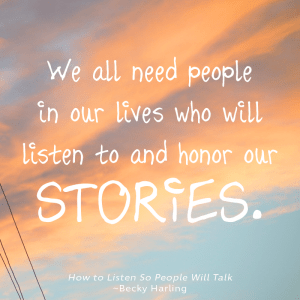
we all need people who will listen to our stories

I’m learning that even the spoken stories need to be repeated often and with just as much emotion each time because the telling has a way of releasing pain all it’s own.  

I’m convinced that if we were a society of listeners who slowed down just long enough to really HEAR other people’s stories we’d be a society with much less pent up anger, bitterness and other dark emotions.

sometimes you can hurt yourself more by keeping feelings hidden

I’m embracing the old saying, “God gave us two ears and one mouth so we should listen twice as much as we talk”.  

Sometimes that means literally biting my tongue or placing my hand over my mouth.  

But I’m trying not to waste this hard-bought lesson.  

Need an ear?  

I’m here.  

Navigating Grief: Trauma Rewires Our Brains

No matter how a child leaves this earth, it’s traumatic.

And trauma rewires our brains.

The “fight or flight” response that had previously been reserved for truly life-threatening situations gets woven in with memories and feelings and our bodies remain on high alert.

So before we know it, all kinds of ordinary, daily, and definitely not life-threatening situations evoke rapid heartbeat, shortness of breath, anxiety and fear. And the absolutely reasonable response is to get away from those things that make us feel that way.

So we do (or try to!).

We find ourselves running away from people who love us, who want to help us but who just might not understand why we’re running. We cocoon in our homes, in our own bodies and try to find that one safe space where fear and anxiety can’t find us.

But there is no such absolutely safe space.

Trauma rewires our brains, it’s true.

They can be rewired again.

So many good therapies are available for those of us who suffer in silence. Many are based on using physical cues to help a brain learn to distinguish between truly dangerous and only the memory of dangerous.

PTSD treatments and therapies

It is possible to venture out in the world again, to reach for and sustain connection, to lean into company instead of shying away.

Don’t stay hidden, afraid and alone.

Find a trained trauma counselor

Ask for help.

Navigating Grief: Even Here There Are Things I CAN Control

When I opened the door to that deputy and received the news, my world suddenly spiraled out of control.

Over the next days, weeks months I would have to do things I never imagined I might do and certainly things I did not WANT to do.  So, so much I couldn’t change.  So many ways I lost the right to choose.  

And I hated it!  

Wasn’t long and that sense of helplessness permeated every corner.  Even when it didn’t belong there.  I began to feel as if I couldn’t control anything.

So in many ways I stopped trying.  

But then one day I woke from the fog of despair.  I remembered that there WERE some areas of life where I could still make choices.

And it was empowering!  

So here’s a list that I pray gives hope to other hurting hearts.

THINGS I CAN CONTROL

  • My attitude (how I react to what others say or do)
  • My thoughts (with great difficulty sometimes)
  • My perspective (when I’m careful to fill my mind, heart and eyes with truth)
  • If I’m honest (about ALL things-including my feelings)
  • Who my friends are (from my end-can’t stop people from walking away)
  • What books I read (I am choosy and only read things that feed my soul)
  • What media I consume (stay away from toxic people, topics and television)
  • What type of food I eat (healthy, appropriate amounts)
  • How often I exercise (a walk, gentle yoga, online video routines)
  • How many risks I take (not just physical ones, but also emotional and relational risks)
  • How kind I am to others (being wounded does not give me the right to wound)
  • How I interpret situations (do I assume the best or the worst?)
  • How kind I am to myself (extending the same grace to ME that I extend to others)
  • How often and to whom I say, “I love you”
  • How often and to whom I say, “Thank you”
  • How I express my feelings (I can learn healthy ways to speak my truth)
  • Whether or not I ask for help (no one gets “points” for playing the martyr)
  • How many times I smile in a day (smiling, by itself, lifts mood-even a “fake” smile)
  • The amount of effort I choose to put forth
  • How I spend my money
  • How much time I spend worrying (or praying or complaining)
  • How often I spend moments blaming myself or others for past actions
  • Whether or not I judge other people
  • Whether or not I try again when I suffer a setback or disappointment (success is getting up one more time than I fall down)
  • How much I appreciate the people and things in my life

Exercising control over the parts of my life where I CAN exercise control helps me deal more effectively with the many parts over which I have no control

It does not undo the sorrow and pain of child loss, but it does work to balance the emotional scales. 

It makes it easier to face a new day.  

It helps me hold onto hope.  

And that is a good thing.  

whenyoucan27tcontrolthewindadjustyoursails