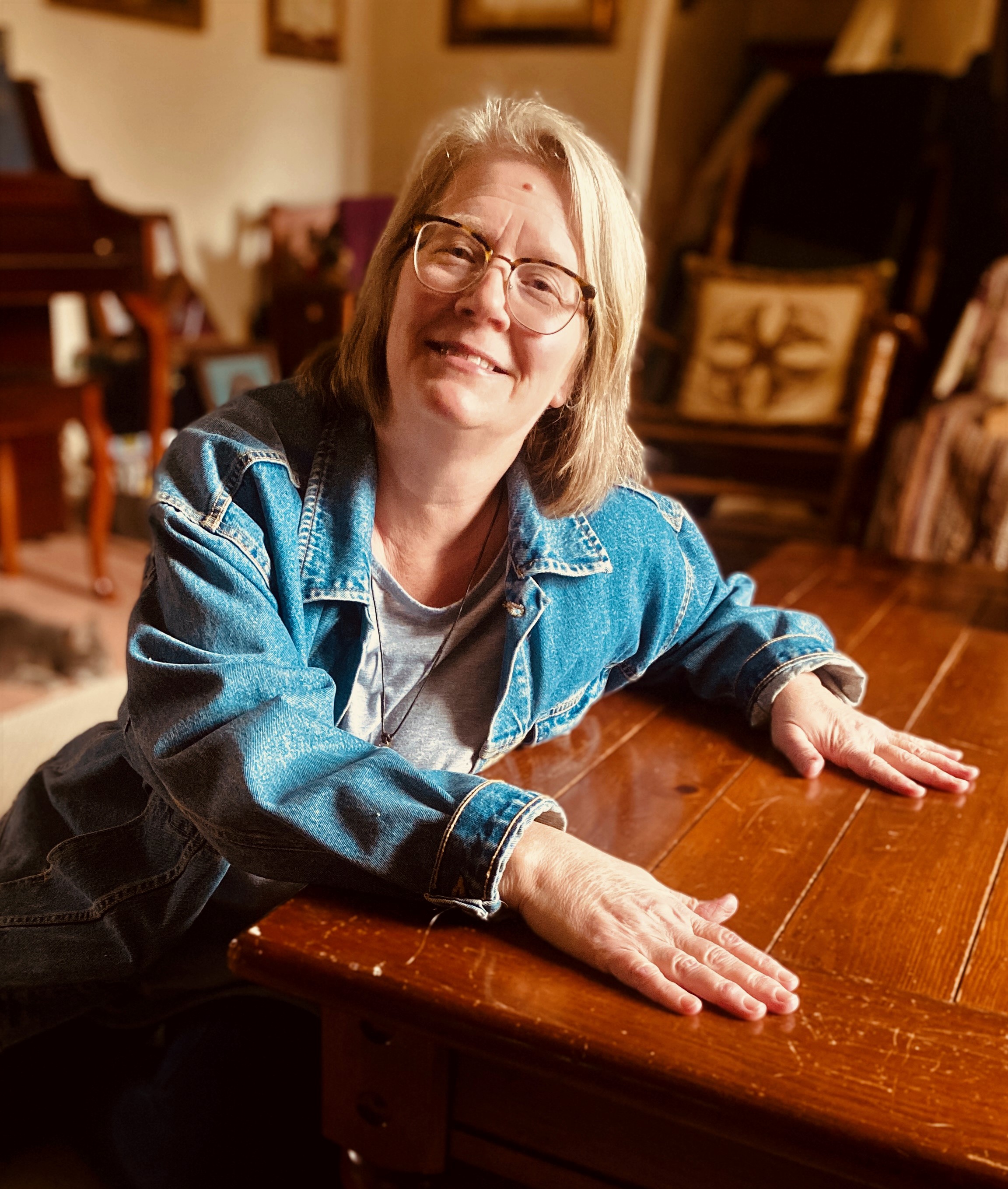
Most of the time I share my grief journey in this space, but occasionally I’ve been asked to share in person at retreats or on the air for podcasts.
I’ll be honest, I’m much less comfortable speaking with no chance to edit my remarks versus typing them out and re-reading, rearranging and refining my message.
But when asked by a friend of a friend to meet with Stacy McCants, to have a wide-ranging, honest and God-focused discussion about child loss, grief in general and the intersection of faith and traumatic experience, I said, “yes”.
It was definitely outside my comfort zone.
Stacy helped my on-air jitters by promising to edit out any glaring mistakes or uncomfortable pauses. We sat across the table from one another in his home studio and cover a wide range of topics from loss to the ministry of the Holy Spirit and the importance of Scriptural truth.
It’s REALLY long-slightly over two hours so you might want to download it and listen in small doses.
But if you’ve ever wanted to hear my voice, hear my opinions on a variety of topics or just prefer listening to reading, you might find it interesting.
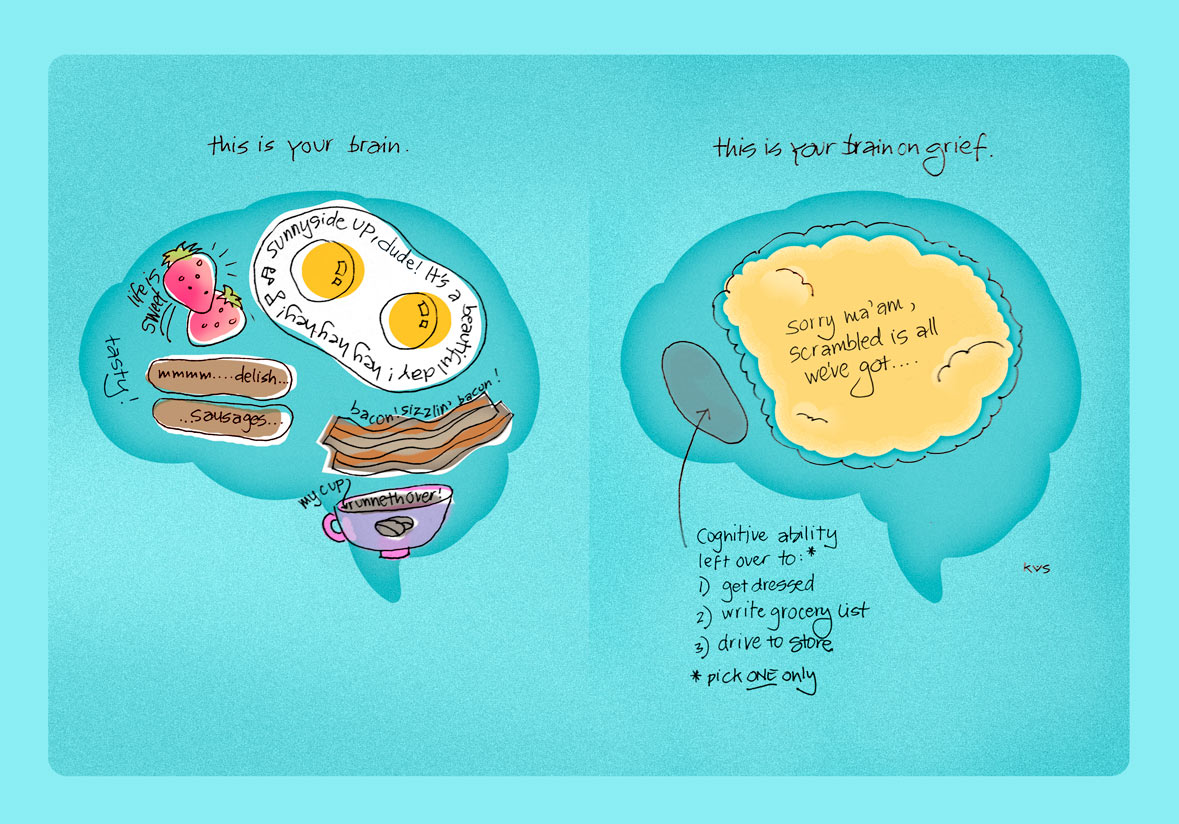
Traumatic loss rewires your brain as well as your body.
So here I am, nearly eight years into the journey of sudden child loss and I’m reminded once again I am not the same “me” I once was.
Our newest grandbaby made an early entrance into the world nearly two weeks ago and I’m doing Mama D duty with his big brother. It’s a delight to be with my three year old grandson but it’s also challenging for this aging/post trauma brain.
Trying to navigate (super simple) routes to and from the hospital, to and from preschool, and to and from the closest grocery store has led to more than one U-turn and long way around. Sure I could use my phone’s GPS but I keep thinking I’ll finally remember next time.
I should know better by now…
❤ Melanie
I’m looking right at her.
I know her. In fact, I’ve known her for years. But please don’t ask me her name.
I have no idea.
It happens to all of us-meet someone in the store or at the Post Office and you just know you know them, but cannot-for the life of you-remember a name.
Chatting on, you search mental files desperately trying to make a connection you can hold onto. Five minutes after she walks away it pops up-oh, yes! That’s so-and-so from such-and-such.
Imagine if instead of searching mental files without success you can’t even find the file cabinet and start to wonder if one ever existed.
That’s what “grief brain” does to you.
Here are a few more examples of things that actually happened:
I think I will post this link as long as I maintain the blog because I will always be a voice for those whose lives look more like Ash Wednesday than Mardi Gras.
I will continue to speak out for space in our congregations and fellowships that acknowledge life is often hard, often unfair and often more like a broken hallelujah than a high note.
I am not a member of the Church of the Perpetually Cheerful.
I am a member of the Broken Body of Christ, limping through this world, holding on to hope with both hands.
A few decades ago, faulty research methods made popular an inaccurate statistic that a disproportionate number of marriages fail after a couple experiences child loss.
Like many urban legends, once fixed in the minds of many, it’s nearly impossible to dislodge.
And that is more than unfortunate because when marriages falter (and they often do) after child loss, lots of people just give up because they think failure is inevitable.
I’ve thought a great deal about friendship since losing Dominic. I’ve been blessed by those who have chosen to walk with me and dismayed by some who have walked away.
It takes great courage to sit in silence with those who suffer. We must fight the urge to ward off their pain with chatter.
Quiet companionship requires that we allow our hearts to suffer too.
❤ Melanie
For fifty years I was on the “other side”-the one where I looked on, sad and sometimes horror-stricken- at the pain and sorrow friends or family had to bear.
f you have lived a blessed life where the greatest challenge to your faith has been disappointment and not destruction then I am so, so happy for you. Really.
Some of us have dragged our broken hearts through the church doors out of habit with little hope we might find the genuine comfort we need to survive inside.
Because experience taught us that while it is perfectly acceptable to raise a hand and ask for prayer one or two weeks in a row, it better not become a predictable pattern. Patience with unsolvable and messy ongoing situations runs thin as leaders turn the discussion toward “victory in Jesus”.
But that isn’t what Christ came for-not that we don’t have ultimate and even some temporal victory through Him.
He came for the broken and breathless. He came in the flesh because our flesh is weak and life is hard and bad things happen.
We’ve got to do a better job welcoming and ministering to hurting hearts.
We have to.
❤ Melanie
I am a shepherd. My goats and sheep depend on me for food, for guidance and for their security.
And every day I am reminded that a shepherd’s heart is revealed by the way he or she cares for the weakest and most vulnerable of the flock.
But most of us are far removed from the daily reminder of pastoral life that was commonly accessible to the authors and readers of the Bible thousands of years ago. So it’s no surprise that we tend to forget the connection between a shepherd’s life and a pastor’s calling.
I think the mama is often the first person others think about when they hear a child has run ahead to Heaven.
But child loss affects dads too.
And it’s often sibling loss as well.
Grief is truly a family affair-each member is changed by the experience and they ALL need support.
❤
I firmly believe that our friends and extended family want to reach out, want to help, want to walk alongside as we grieve the death of our child
I am also convinced that many of them don’t because they don’t know how.
It may seem unfair that in addition to experiencing our loss, we also have to educate others on how to help us as we experience it, but that’s just how it is.
The alternative is to feel frustrated and abandoned or worse.
In the last post I shared the difference between mourning and grief. While the outward ceremonies have long passed, the inward struggle to embrace and understand the pain and sorrow of losing my son continues.
If you love someone who has lost a child, perhaps these thoughts might help you understand a bit of their pain and how completely it changes the way bereaved parents encounter the world.
Please be patient. Please don’t try to “fix” us. Please be present and compassionate. And if you don’t know what to say, feel free to say nothing-a hug, a smile, an understanding look-they mean so very much.
❤ Melanie
A bereaved parent’s grief doesn’t fit an easy-to-understand narrative. And it flies in the face of the American “pull yourself up by your bootstraps” mentality.
You can’t beat it–it’s not a football game-there is no winning team.
You can’t lose it–it’s not the extra 10 pounds you’ve been carrying since last Christmas.
You can’t get over it–it’s not a teenage love affair that will pale in comparison when the real thing comes along.
You can only survive it. You can heal from it, but it will take a lifetime and require very special care.