Shake Off the Shame

shame

Shame is a shackle as sure as any chains forged from iron.  

And it often finds its home in the hearts of those who bury a child.

Bereaved parents may feel shame for lots of reasons:

  • Circumstances surrounding the death of their child-suicide, alcohol, drug abuse;
  • Inability to provide the funeral or burial they want due to financial constraints;
  • Missing signs or symptoms of an illness that may have led to death;
  • Family dynamics that pushed a child away from home or relationship.

The list could be endless-on the other side of child loss our brains pick apart every interaction, every choice, every moment that could have gone one way but went another.

Grief is WORK.

But it is impossible to make my way through the pile of emotions if I’m shackled by shame.  I can’t move freely and effectively if I’m bound hand and foot by things I can’t control and can’t change.

In the midst of all this work, some bereaved parents find they are immobilized by depression and/or anxiety and need medication to help them through.

woman looking through rainiy window.jpg

And they feel ashamed.  

Can I just say this? 

There is NO shame in seeking help.

There is nothing shameful about using whatever tools are available to make this awful journey more manageable.

A wise and kind doctor friend said, “Medication does not make the sorrow and pain go away, but it can calm the mind and create space so you can do the work grief requires.”

You are not a failure if you need medical help to quiet your mind.  You are not weak if you take a pill to keep from feeling like you’re going to come out of your skin.  You have done nothing wrong if you can’t sleep and require a sleep aid to allow your body the rest it needs to carry on.

Don’t compare your journey to anyone else’s.

You are unique.  Your path through this heartache is your own.

Do what you need to- for YOU.  

Shake off the shame.  

grief-is-not-linear


It’s Personal! — Boxx Banter

From my friend and fellow bereaved mother, Janet Boxx:

“Talk to me when your world has collapsed around you. Talk to me when you are afraid. Talk to me when you can name your fears and when they are a vague Specter looming threateningly over your shoulder, unnamed but real nonetheless. Talk to me when you are afraid to take your Savior’s hand and when you are equally afraid not to. Talk to me when the ability to project a positive outlook has been striped from your arsenal of weapons. Talk to me when it becomes desperately and intimately personal. Then I will think you understand. . .”

“God is good all the time”, is not a flip statement you rattle off to project confidence in your Savior. It’s not a mantra you repeat hoping to convince yourself of its truth. Those six words are a sacrifice of praise that are torn from the depths of despair and lifted in defiance from the ashes of a life burned down around you.

via It’s Personal! — Boxx Banter

No. It’s a Complete Sentence.

When news that Dominic left us spread, our yard was filled with friends and family here to help bear the burden of grief and loss.

Our house was bursting with people and food and phone calls-more coming and going than our gravel lane had seen in a lifetime of living up in the woods.

It was beautiful and terrible all at the same time.  Beautiful because we were not alone in our sorrow and terrible because it was due to that sorrow they were here.

In those days between the accident and the funeral I was boundary-less.

People hugged me, fed me, cleaned my house, cut my grass, tended the animals, asked me questions, told me stories and I just accepted it-whatever “it” was-because I was utterly unable to do anything else.  

But in the weeks that followed, as the pain made itself more at home in my heart-as it expanded to fill every nook and crevice-I realized that I had to put up some fences.

My oldest son was getting married just a couple months after the accident.

There’s a lot of stuff to do for a wedding as most folks know.  So I got a phone call one week after Dominic’s funeral and the person on the other end launched into a long saga regarding a minor detail and expected me to 1) listen attentively; 2) care as deeply as they did about something that absolutely didn’t matter; and 3) join with them in light-hearted, laughter-filled banter.

I just. couldn’t. do. it.  

So I didn’t.  

I politely but firmly explained that I was unable to continue the conversation and that in future they needed to contact me through my son.  I promised I was 100% committed to making the wedding happen, to doing my part and to being as happy as possible on the day.

But until then, unless it was a true emergency, please leave me alone.

Drawing a boundary created space for me to DO what needed to be done without the added burden of extra emotional baggage.

Before Dominic left us I was a “yes” person.

Smiling stylish woman showing sign excellently, isolated on red

Need help with an event?  Why, sure I’m available.  

Need someone to take your Sunday School class?  Absolutely.

Keep your toddler? Just drop him off-we’ll play with the critters all day.


Phone call counselor and Homeschool Help Hotline-that was me.

Not anymore.  

I’ve learned that if I am to have the energy needed to do necessary things, I have to protect my heart.  I am too weak to carry everyone else’s burdens.  If I am going to survive this journey I’ve got to prioritize.

I still listen.

I still help.  

But I do it in a more healthy way-with respect for myself as well as others.  

It is OK to say, “No.”  And I don’t have to offer a reason.  It’s a complete sentence all on its own.

All of my children had urged me over the years to draw boundaries. But I had grown from a parent-pleasing first born into a people pleasing adult and I just couldn’t do it.

Dominic even crafted a wire sign that hung on my kitchen curtains in the shape of a cursive “no”.

lack-of-planning


He made me repeat the mantra: Lack of planning on your part does not constitute an emergency on my part.  


He’d be proud of me for finally taking his advice.  


Repost: I Am NOT Crazy!

It comes up over and over in support groups for bereaved parents:

Am I normal?

Am I doing alright, coping well, making progress?

Do others struggle to get through a day even months or years after losing a child?

I want to reach through the computer screen and hug each one.

Yes.

Yes.

Yes.

You. are. NOT. alone.

You. are. NOT, Crazy!

Strong or Weak? How Labels Harm the Hurting

Labels and categories can be helpful.  When cruising the grocery aisles I’m thankful for the signs that point the way to “vegetables” or “baking needs”.

But labels can be harmful when applied to people.

label-jars-not-people

Thankfully public discussion rarely includes some of the ugly words  I heard growing up.

And that’s a good thing.

It means we are free to talk about the things that really matter without having to clear the hurdle of offense.

This trend has yet to take hold in wider circles when speaking about or speaking to bereaved parents and other hurting people.

From the outside looking in, we tend to classify struggling hearts as either “strong” or “weak”.  We apply standards based on our own experience and background to determine whether or not a particular soul is “handling it well” or “crumbling under the stress”.

The problem with labels for hurting people is that it puts extra pressure on them and lets those around them off the hook.

heard-stories-but-not-know-heart

You probably mean it as a compliment when you say, “You are so strong”.

But I know it’s not true-I’ve gotten very good at holding it together in public and at saying all the right things when I meet folks on the street.

I can look you in the eye, recite answers to the question of , “How are you doing?” by focusing on the current status of my surviving adult children. What you probably won’t notice among the well-rehearsed lines is I never share my heart-I never tell you how I FEEL.

If I opened that vault there’s no telling what might spill out.

You walk away confirmed in your opinion that I am doing well, that I no longer need any active encouragement or ongoing prayer.  I’m off the “ministry list” because I am past the point of crisis and doing just fine.

Or you may see me at a vulnerable moment and think, “She’s weak” or “She’s really struggling”.

I AM weak and I DO struggle.

If you are tired of hearing about the ongoing struggle, how tired do you imagine I am living it?

If you wish I would “get over it”-how much more do you think I wish it never happened?

You may give up because it’s too much trouble to keep reaching out.  You may tuck me in the basket of lost causes because you think I’m not committed to keep trying.

It’s easy to draw a line in the sand and decide that you will go thus far and no farther in extending help or encouragement or grace because you CAN walk away.

But I am not a lost cause.

Each day Jesus meets me in my weakness and brokenness and gives me the strength I need to carry on.

And He often does this through people-people who choose to walk alongside and not label me or my journey.  People who are committed to continue even when they are tired of helping carry the burden and sick of hearing my story.

Graceabundant grace-given and received is what makes life livable.

Love, not labels is what I need.  

It’s what everyone needs.

never-forget-the-ones-who-helped-me-through-grief


Holiday Planning Helps for Grieving Parents

As much as I hate the mashup of Halloween/Thanksgiving/Christmas that assaults my senses every time I walk into a store, it IS a reminder that, like it or not, the holidays are coming.

displays-before-halloween

I wrote these posts a few weeks back so that grieving parents and their families could begin to think about and make plans for year-end celebrations.

I know it’s hard-it continues to be hard for me as I approach the third (!) set of holidays without one of my children at the table.

But it is harder without a plan. 

So here are links to the posts.  I pray they are a small help for heartbroken mamas and daddies:

thanksgiving-day-4-wallpaper


Grief and Holiday Plans: Working Out the Details


family-reunion


Grief, Holidays and Hard Conversations


its hurting again


Grief and Holidays:What the Bereaved Need From Friends and Family


IMG_1378


Practical Ideas for Dealing with the Holidays after Child Loss

Accommodating Grief

The doctor I see every six months or so for my rheumatoid arthritis always fusses at me.

One of the routine questions is, “How’s your pain level?”

I usually say, “About a three.”

And then she looks at my hands and my feet-at the swollen joints and twisted toes-and shakes her head.

But here’s the deal:  sure they hurt, sure I can’t do all the things I used to do, sure I have to do many things differently than I did them when my hands and feet were unaffected by this disease-but I’m STILL moving and doing what needs to be done.

I don’t really know how to do anything else.

And that’s how it is with this grief I lug around-it’s heavier some days than others-but I’m STILL moving and doing what needs to be done.

fall still moving.jpg

This is not the life I thought I would be living, but it’s the life I have.

So I make accommodations for my sorrow just like I make accommodations for my hurting hands and crooked toes.

  • I try not to over-schedule my days.  If I have an appointment I mark it on the calendar and refuse to pile other commitments on top of it.  That way if I’m wiped out I have some built in down time.
  • I prioritize what needs to be done.  Whether it is for a week or a day, I jot down a list (still using paper-but a phone would work) and then decide what are the two or three MOST important tasks that must be done in that time frame.  If I find myself running behind because it’s a hard grief day (or week), I can quickly make choices that ensure the needful things are done and the others laid aside for when I have more energy to do them.  I’m less anxious about what I don’t get finished because I know I did the most important things first.
  • I build rest into my days.  When I’m overtired, I’m more susceptible to grief attacks. I pause every now and then to sit or take a quick walk outside or simply change my work from detail-oriented to broad strokes.  I have more flexibility because I work at home but even in an office it’s possible.  My husband walks every day on his lunch hour-sunshine and physical activity make his afternoons easier to bear.
  • I ask for help. When I’m drowning in grief, I reach out for a lifeline.  There’s no shame in asking for help.  I have a good friend that I can text or call anytime I need to and ask for prayer or a listening ear.  I belong to a couple of online grief groups and they are full of people who understand my pain and will lift me up in prayer and encourage my heart when it feels especially broken.
  • I accept my limitations.  My toes don’t allow me to wear beautiful shoes anymore so I’ve learned to wear what fits instead of what’s in fashion.  I am not the same person I was before I buried a child so I’m learning to live with the new me.  I don’t like crowds.  I don’t like unexpected change.  I feel anxious in unfamiliar places and around strangers.  I make choices that limit my exposure to those things when possible.
  • I shake off the really awful day.  I can’t help that some days take a nosedive into terrible as soon as I leave the bed. I admit that grieving is hard, that it will continue to be hard.  But I won’t let my worst days be my only days.

I am not in control of everything, but I can control some things.

I would not have chosen this life for myself, but I can make choices that help make it bearable.

losses-and-choices-nouwn


You Can Only Hold On To What You Refuse to Let Go Of

Those hours before I planted one last kiss on my son’s forehead, I held his hand.  

I nodded at the people filing past to pay their respects with my arm tucked behind me, desperate to cling to my child.

no one can snatch them

And I’m still clinging.  

I will not let him go.  

I don’t care how many days or months or years march on taking me further from the sound of his voice, the touch of his hand or the brightness of his smile-I refuse to release my grasp.

It’s hard for someone who has never buried a child to understand why we who have are compelled to speak about them, to post pictures of them, to air our great grief and share our great hope of reunion.

I didn’t have a clue before it was me.

But this is all we have.

There will be no new experiences, no fresh memories, no photos marking higher achievements or life passages.  

So I will hold onto Dominic as a little boy who was so stubborn he would sit in the floor and cry in frustration because he couldn’t yet crawl.

I will hold onto Dominic as a young man who could argue anyone under the table until they gave in because, right or wrong, he wasn’t giving up.

IMG_1890

I will hold onto Dominic who taught himself how to play the drums and pounded away when I took my daily walk so that it wouldn’t be too loud for my ears.

I will hold onto Dominic who talked his way into a program that admitted few students even though he had missed the first semester of classes.

IMG_1814

I will hold onto Dominic who could fight like a banty rooster when he was mad but be as tender as a mother hen with someone who was hurting.

IMG_1798

I will hold onto Dominic who would have never wanted this for me, who would have done anything he could to prevent this great sorrow resting on my shoulders.

I refuse to let go.

Because he is my son.

There is no past tense for a mother’s love.  

as long as I live

Relentlessly Forward

The sharp shard stabs deep when I’m unprepared.

Drifting off to sleep

Driving down the road

Doing the laundry.

He’s not here.

He’s not coming back.

His living presence is taken from me.

His smile,

Unseen.

His voice,

Unheard.

His arms,

Out of reach.

Untouchable.

And the gap widens every day

Between the last time and this moment.

No way to slow it down.

No path to go back.

pencil-drawing-bereaved-mother


Falling Leaves

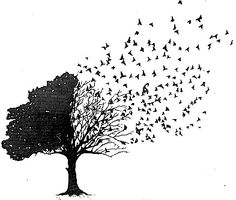
We think leaves fall when we turn the calendar page to Autumn months.

Piles of red, gold and orange land beneath trees that grow increasingly barren until one day they are truly naked.

But leaves begin to fall as early as July-hardly noticed because they drift down lonely, one by one.  

single-leaf

No one is looking for them then.  

And green grass grows tall to hide them.

We think people live to the fullness of years.  They begin in spring and pass through all the seasons before the cold winter claims them.

old-lady

But some survive only one season, or twonever enjoying the fruitful harvest of the latter years the younger years of hard work are meant to produce.

Unlike early falling leaves, early deaths are perceived and acknowledged.

Shocking and unexpected, people gather round to discuss the tragedy, the sorrow and the lost future of one who dies young.

IMG_1811

But then they go away-caught up in the seasons of their own lives.  

And the green grass grows tall to hide the ones who left too soon.

No one is looking for them anymore.  

old homeplace