A few decades ago, faulty research methods made popular an inaccurate statistic that a disproportionate number of marriages fail after a couple experiences child loss.
Like many urban legends, once fixed in the minds of many, it’s nearly impossible to dislodge.
And that is more than unfortunate because when marriages falter (and they often do) after child loss, some people just give up because they think failure is inevitable.
But it’s not.
Marriage is hard under any circumstances. It requires sacrifice, compromise, communication, change and most importantly, commitment.
Any stressor makes it harder.
I can’t think of a bigger stressor than child loss. It’s no surprise that many marriages tend to flounder in the tsunami of grief, sorrow and pain that follows the death of a child.
But grief rarely causes the problems that surface, it simply makes them unavoidable.
Suddenly all the energy that was once available to deflect, to distract, to pretend is gone. And things that have gone unaddressed for years or decades can no longer be ignored.
I remember as a young mother of four working hard to keep my kids safe.
Next to fed and dry (two still in diapers!) that was each day’s goal: No one got hurt.
It never occurred to me THEN to add: No one got killed.
Because the most outlandish thing I could imagine was one of them falling or touching a hot stove and us having to rush to the emergency room.
Then I became a mother of teens and one by one they acquired a driver’s license and motored away from our home.
That’s when I began to beg God to spare their lives.
One particularly frightening test was when all four went to Louisiana-my eldest driving and the rest in the van with her. I made them call me every hour and tell me they were OK. It was the first time I realized that I could lose every one of them in a single instant should they crash-all my eggs in one basket.
I was glad when that day was over. Although the irony is they were no “safer” at the end of those 24 hours than they were at the beginning.
Because what I know now, but didn’t know then is this: There is no such thing as“safe”.
Not the way we like to think of it-not the way we add labels to devices, seat belts to cars, helmets to everything from bicycles to skateboards. Of course we should absolutely take precautions!Many lives are saved by them every single day.
But. BUT…
Life is more random than we want to admit.And there is no defense against random.
There is no way to screen for every underlying physical abnormality, no way to drive so well you can stop the drunk or inattentive driver from plowing through a stop sign, no way to anticipate every foolish choice a young person might make that ends in disaster instead of a funny story.
My first response when Dominic died driving his motorcycle was that I wanted my surviving sons to sell theirs. They did so out of respect for me. Neither of them wanted their mama to have to endure a second knock on the door and the same message delivered twice.
I receive it as a sacrifice offered in love from them.
Because it was.
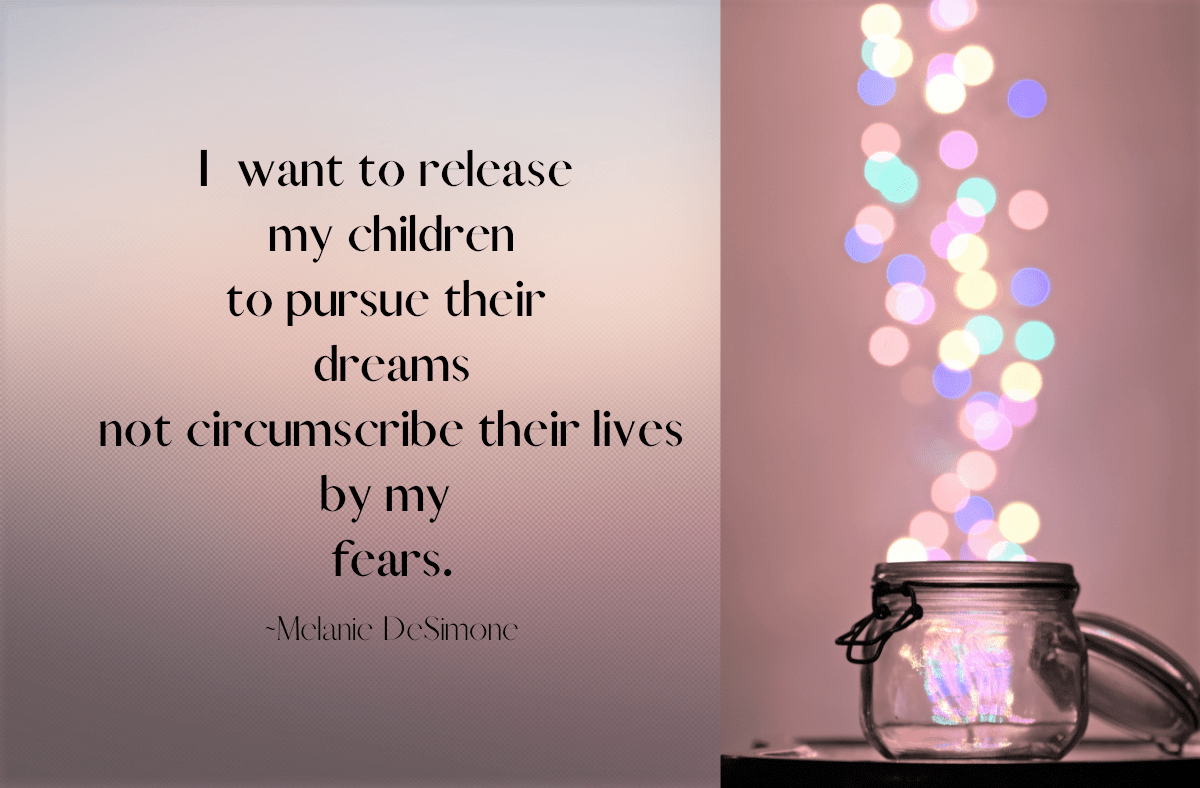
Since Dominic left us almost [eleven] years ago, I have had to deal with my desperate need to keep my living children safe.
And it is a real struggle.
Each child is involved in a career that includes inherent risk. None of them are foolhardy, but they are exposed-perhaps more than many-to potential bad actors and dangerous circumstances.
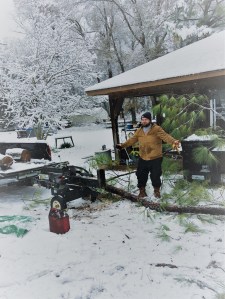
This branch fell just minutes after my son was standing in that spot splitting logs.
How I long for those days when I could tuck everyone in, turn out the lights and sleep soundly because all my chicks were safe inside my own little coop! How I wish the only danger I thought about or knew about was a bump on the head from hitting a coffee table!
How my heart aches for one more moment of blissful ignorance!
But I can’t live in some imagined water color past. I have to live in the world as it is.
So I remind my heart that safe is an illusion-no matter where we are. Life is not living if it’s only about preserving breath and not about making a difference.
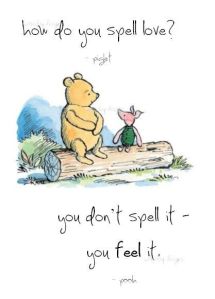
Fairy tales and favorite movies aside, what does love really look like?
How can I see this feeling that has driven some to distraction, some to destruction and even more to dedication to another in spite of whatever obstacles life has placed in the path?
It’s not often writ large.
In fact, it’s usually tiny stitches in the tapestry of life.
A choice to fix her breakfast before his. * Bending down to plant a kiss on that frowning face. * Lending a tool or a few dollars knowing full well you’ll never see it again. *Refusing to leave when that friend pushes away. * Bearing witness to sorrow and joy and pain and celebration. * Holding a hand when a heart is barely able to hold on. *Showing up, without being asked, because presence makes a difference. * Consistency in the face of chaos. * Doing the things that need to be done even when they go unnoticed and the one you do them for is ungrateful. * Letting go when it’s time. * Turning up the heat for him and taking off your sweater. * Cooking a favorite meal or dessert or stew. * Carefully preserving a legacy. * Folding the towels the way she likes. * Phone calls across continents. * Refusing to give up, ever, no matter how hard it gets. ❤
If I want to see love, all I have to do is look around.
Love is so much more than flowers or candy on a single day of the year.
It’s a life lived in service to another.
It’s a pouring out.
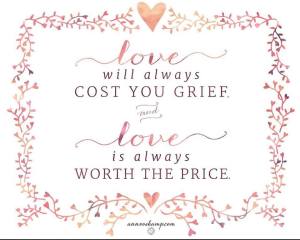
Real love is costly-in time, in effort, in energy.
There are so many life circumstances that plunge a heart into darkness.
Child loss is certainly one of them, although not the only one.
And when you’re in the dark, stumbling around, trying to avoid the sharp corners and looking, looking, looking for a tiny sliver of light to guide you out, it is terrifying.
If you don’t have a pocket full of matches or a flashlight or a lantern, you are at the mercy of whoever cares enough to come back for you.
I am so thankful for the friends and family who never tire of my fearful cries when I find myself in dark places.
It wasn’t planned that way but escalating blood pressure meant that, ready or not, here he came!
It’s been a lot of fun to have this day so often focused on romantic love (which, let’s be real rarely lives up to the hype!) focused instead on him and family love.
My habit the past few years has been to expand that focus even further and explore the edges of God’s love, my love for others and what love in action looks like.
Too often I SAY I love someone but refuse to DO the loving thing.
Truth is, love is hard. It’s costly. It can be uncomfortable.
It almost always involves sacrifice.
And if I’m not careful, I can let valentines and candy and flowers be a paltry stand in for the real thing.
February is not the only month in the year that tempts me to give a token and walk away instead of giving myself and sticking around to help in meaningful ways.
So I try to keep Jesus’ words before my eyes:
For the greatest love of all is a love that sacrifices all. And this great love is demonstrated when a person sacrifices his life for his friends.
~John 15:13 TPT
I try to focus on love in action instead of only love in words.
Am I the Good Samaritan or am I one of those who toss a prayer from across the way and walk on, comfortable in my piety and clean clothes?
I firmly believe that our friends and extended family want to reach out, want to help, want to walk alongside as we grieve the death of our child
I am also convinced that many of them don’t because they don’t know how.
It may seem unfair that in addition to experiencing our loss, we also have to educate others on how to help us as we experience it, but that’s just how it is.
The alternative is to feel frustrated and abandoned or worse.
In the last post I shared the difference between mourning and grief. While the outward ceremonies have long passed, the inward struggle to embrace and understand the pain and sorrow of losing my son continues.
If you love someone who has lost a child, perhaps these thoughts might help you understand a bit of their pain and how completely it changes the way bereaved parents encounter the world.
Please be patient. Please don’t try to “fix” us. Please be present and compassionate. And if you don’t know what to say, feel free to say nothing-a hug, a smile, an understanding look-they mean so very much.
❤ Melanie
A bereaved parent’s grief doesn’t fit an easy-to-understand narrative. And it flies in the face of the American “pull yourself up by your bootstraps” mentality.
You can’t beat it–it’s not a football game-there is no winning team.
You can’t lose it–it’s not the extra 10 pounds you’ve been carrying since last Christmas.
You can’t get over it–it’s not a teenage love affair that will pale in comparison when the real thing comes along.
You can only survive it. You can heal from it, but it will take a lifetime and require very special care.
In all fairness, Elisabeth Kubler-Ross had no idea her research would be taken out of context and plastered across professional literature and media outlets as a definitive explanation for the grief experience.
But she didn’t mind the notoriety.
And ever since, counselors, pastors, laypersons and the general public have come to expect folks to politely follow the five (sometimes described as six) stages of grief up and out of brokenness like a ladder to success.
It doesn’t work that way.
❤ Melanie
Sometimes those that walk alongside the bereaved are biding time, waiting for that “final” stage of grief: Acceptance.
And some therapists, counselors and armchair psychiatrists are certain that if the grieving mother can simply accept the death of her child, she can move on–that she can get back to a more “normal” life.
But this notion is as ridiculous as imagining that welcoming a new baby into a household doesn’t change everything.














 thelifeididntchoose