God of the Day and God of the Night

I was afraid of the dark until I was almost forty years old.

My fear was rooted in scary childhood moments and even years of adult experience could not rip it from the soil of my psyche. I never could convince my heart what my head knew to be true: there was nothing in the dark that wasn’t also there in the light.

It was fear, not darkness, that controlled me.

There is great darkness in grief.  So many unanswerable questions, so much anquish, so much pain.

And there is darkness in many other painful, unchangeable circumstances.

The darkness can hide things that I see clearly in the light.  And if I’m not careful, I  can allow the darkness to foster fear and keep me from venturing futher.

In my own strength, depending on my own resources, I am afraid.

But when I call out from my scary place to the God Who made me, I can face the fear in confidence He hears and cares.

When I am afraid, O Lord Almighty, I put my trust in you.

Psalm 56:3 GNT

Sometimes believers in Christ can convince themselves that admitting their world is dark with pain or suffering or questions diminishes the power of God–that it speaks ill of God or that it means God is insufficient to uphold us in our weakness.

If I pretend that I’m never afraid, or that I never experience darkness, I am denying others my aid.

Even worse, I may be shaming them to silence, sending the message that if they are experiencing pain, something is wrong with THEM.

How many people are sitting in our pews with broken hearts and broken lives, afraid to reach out for help because–in addition to the pain of their broken life–they live under condemnation?

Life is full of pain and darkness.  Even for those who follow Jesus.

When I deny that truth, I also refuse to testify to God’s power to help me carry on and give me the courage to face my fear.

God is the God of the day AND the God of the night.  

I do not diminish Him by admitting that I experience both.

He invites me to lean into Him and to hold hands with His children as I journey on, even when it’s dark.

“Christians with this unflinching faith in the sovereign God do not deny grief. But even in their darkest hours, they borrow God’s strength. In their tears and pain they cling to God who will never let them go. What the Savior has done for others He will do for you. When you are shaken, and you know that life will never be the same again, you can trust and not be afraid. You can live in HOPE with the sturdy confidence that God will dry your tears and put you on your feet again.”

“Grief, Comfort for Those Who Grieve and Those Who Want to Help” by Haddon W. Robinson


Identity Crisis

Yeah, so one more thing that grief has made  harder: empty nesting.

While my nest is not technically empty, I have long since finished raising and schooling my children.  I had the great privilege of staying home with my kids and teaching them all the way through high school.  And even in college and graduate school, mom was still editor-in-chief and head of the crisis management center of our home.

I spent a lifetime pouring myself into my family and now they are grown. Sure, they need me now and then, but they are well-established, functioning adults and quite capable without my help.

This is good–I always intended to work myself out of a job.

But losing Dominic, and the burden of grief I carry as a result, has made this transition from “hands-on” to “standing by” that much more difficult.

We all have pictures in our mind of where life is headed–where we imagine ourselves in five years, ten years or even further.  In part, those visions are what make hard days bearable, what keep us going when obstacles seem insurmountable, and what beckon us down the road when we can’t see exactly where it is leading.

I had those.

Now I can’t manage a plan or vision for a single day, much less a year or the rest of my life. I feel as if I am cast adrift in a sea of possiblities but none look inviting. It’s like I have one oar in the water and all I can do is paddle in a circle.

I’m not idle-I keep moving.  I have things to do, but I’m not sure they are things that make a difference.

And I have to admit, it’s a little frightening to think about the future given my recent past experience.

So I’m trying to learn to rest in the arms of the Father.  

Trying to tune my heart to His.

Trying to be patient with myself and with my own impatience.

For I know the thoughts that I think towards you, saith the Lord, thoughts of peace, and not of affliction, to give you an end and patience.

Jeremiah 29:11 DRA


denial

To deny the presence of pain is to diminish the power of the cross.  

Dying, Jesus honored His mother’s courage by acknowledging her pain. She was losing the Son she loved and it hurt in a way that only mothers can comprehend.  He didn’t tell her that it would “be alright” or that “the ending is ultimately victorious”.

Instead, He looked upon her trembling figure and saw her broken heart.

He made what practical provision He could by telling John to care for her. He knew it would not undo her sorrow.

Some in the church preach that pain and suffering are anomalies–that they are aberrations in the “victorious Christian life”.

And we place great emphasis on the idea that even though we may have trouble in this life–“We know the REST of the story!”  Jesus WINS!

Yes. He. does.

But some of our earthly stories-the ones we are living right now- do not have tidy, happy endings:

Some are burned in the fire.

Some die of cancer.

Some fall headlong into mental illness.

And some bury their children.

What to do when you are confronted by undeniable pain in your own or someone else’s life?

Acknowledge it.

Look with mercy on the broken heart.

Allow suffering to flow from the cracks unchecked and unjudged.

Be still and be love.

Offer practical aid without strings attached.  Be mindful of what is actually helpful even if it doesn’t make sense to you.  Come alongside for the long haul.

There is no greater gift to the one who is suffering than a faithful friend who refuses to be frightened away.

Loving burden-bearers help those of us living with no-happy-ending earthly stories cling more securely to the hope of ultimate victory in Christ.  

And by doing so, declare the power of the cross.  

For the message of the cross is foolishness [absurd and illogical] to those who are perishing and spiritually dead [because they reject it], but to us who are being saved [by God’s grace] it is [the manifestation of] the power of God.

I Corinthians 1:18 AMP

Better than?

We live in a world where rankings rule.

The FitBit craze, while a boon to healthy living, is also a testimony to our competitive nature.

You would think that in the pit of despair, the need to be “more than” or “better than” would disappear.  But that’s not the case.

I continue to judge myself in comparison to others.

I find it difficult to give up the inner tape measure that marks progress or regress in this grief journey.

When I’m having a bad day, I feel like a failure.  I feel guilty for not taking firmer hold of the promises of God in Christ.  I question my commitment to the truth and I wrestle with unbelief.

When I’m having a relatively good day, I congratulate myself on the distance traveled, the hurdles overcome and the positive progress toward pushing grief to the background of daily life.

This is unhelpful.  And it rests in a root of pride.

I am not in control.

My struggle to rate my “progress” in grief recovery is an attempt to exert my will over things I cannot subdue in my own power. And if I feel successful, then the glory goes to ME.

When I choose to practice spiritual disciplines like prayer and fasting, I am placing myself in a position to hear from God and to be receptive to His will in my life.

Likewise, when I choose to lean into the support of others and focus on truth revealed in Scripture, I encourage the healing process.

But if my restoration rests on my efforts, I’m doomed. I do not have the power  or authority to redeem my pain.

I cannot save myself.

I need a Savior.

The sting of death is sin, and the power of sin [by which it brings death] is the law; but thanks be to God, who gives us the victory [as conquerors] through our Lord Jesus Christ. Therefore, my beloved brothers and sisters, be steadfast, immovable, always excelling in the work of the Lord [always doing your best and doing more than is needed], being continually aware that your labor [even to the point of exhaustion] in the Lord is not futile nor wasted [it is never without purpose].

I Corinthians 15:56-58 AMP


Preaching to Myself

Some days I’m afraid that I’m not making progress.

Sometimes I wonder if I’m settling for lagging behind.

And there are moments when I want to give up and give in.

But I’m still in the fight.

I haven’t surrendered.

I WILL NOT QUIT.

Because my God is The Living God.

THERE IS NO DEVASTATION GREATER THAN HIS RESURRECTION.

There is no desert that will not bloom under His flood of grace.

There is no wall that is higher or stronger than His onslaught of mercy and no heart so cold that the warmth of His faithful love cannot penetrate it.

He has promised to redeem my pain.

The Spirit of God, the Master, is on me
    because God anointed me.
He sent me to preach good news to the poor,
    heal the heartbroken,
Announce freedom to all captives,
    pardon all prisoners.
God sent me to announce the year of his grace—
    a celebration of God’s destruction of our enemies—
    and to comfort all who mourn,
To care for the needs of all who mourn in Zion,
    give them bouquets of roses instead of ashes,
Messages of joy instead of news of doom,
    a praising heart instead of a languid spirit.

Isaiah 61:1-3a MSG

Truth out of Balance

A  wise pastor I know made a profound statement that has stuck with me through the years: Heresy is truth out of balance.

I read my Bible.  I have been in church for most of my life.  I’ve heard sermons, participated in Sunday School lessons and listened to teaching on tapes and the radio from sound expositors of the Word. So it is unlikely that I would fall headlong into chasing after a wildly twisted theology that bore little resemblance to biblical truth.

But, I can be seduced into taking tiny baby steps away from the straight line of doctrine and look up one day only to realize that I am miles from where I thought I was headed.

The Pharisees clung tenaciously to the Law until they excluded grace.

In Paul’s letter to the Romans, he addressed the opposite extreme, answering the argument that if grace was so abundant, then perhaps one should sin more so that grace could be made more evident:

Now what is our response to be? Shall we sin to our heart’s content and see how far we can exploit the grace of God? What a ghastly thought!   ~Romans 6:1, 2a Phillips

Grieving the loss of a child, I am forced to face and balance questions that I thought I had once settled firmly in my mind:

  •  Is God good?
  • Is God in control?
  • Is there a heaven?
  • Is the blood of Christ sufficient to cover all sin?
  • Why does God save (physically) some people and not others?
  • Why do bad things happen to “good” people?
  • What, exactly, does God want from me?
  • Does God love me?

And if all I do is roll them around in my mind, depending on my own reasoning , I am at risk of answering my queries in a way that may seem right but which might actually be far from the truth.

There is a way which seems right to a man and appears straight before him, But its end is the way of death. ~Proverbs 14:12 AMP

Or if I look to other people and their lives, I am limited by what I see–which is never the whole picture.

So I must meditate on the Word and balance my interpretation in light of the whole counsel of Scripture as well as being honest about my own feelings and experience.  I must ask God through His Spirit to “lead me into all truth”.

And when I find it, I must cling to it with all my might and refused to be uprooted by the winds of sorrow and pain.

“Make them ready for your service [Sanctify them; Consecrate them; setting them apart for service] through your truth; your ·teaching [word] is truth.”

~John 17:17 EXB


What Fills Your Heart?

Jesus taught that “Where your treasure is, there your heart will be also.” What I value most is where my heart rests.

Burying a child has pushed that truth right in front of my eyes.  I am pouring my life into something–no way around it.

So two questions fill my mind most days:

What am I willing to die for?  What will I live for?

Dying for something or someone would be a moment in time, an unrepeatable and finished work.  A single act.  

It’s much more challenging to think about what I will live for.  

I have to decide and commit to THAT over and over.

My first journal entries after Dominic died were filled with prayers begging God to pour His love, mercy and grace into my broken heart and to make me a vessel of healing for others–to not allow me to become bitter or hard or uncaring–

It was the only good I could imagine coming from the horror of burying my child.

Years ago, my husband gifted me with the CD “Revival in Belfast” by Robin Mark.  And in these months after losing my son, it is the one soundtrack I can play over and over because it speaks to deep places in my heart and spirit.

One of the songs,  “When It’s All Been Said and Done” has become my anthem:

When it’s all been said and done
There is just one thing that matters
Did I do my best to live for truth?
Did I live my life for you?

When it’s all been said and done
All my treasures will mean nothing
Only what I have done
For love’s rewards
Will stand the test of time

Lord, your mercy is so great
That you look beyond our weakness
And find purest gold in miry clay
Turning sinners into saints

I will always sing your praise
Here on earth and heaven after
For you’ve joined me at my true home
When it’s all been said and done
You’re my life when life is gone…

When It’s All Been Said and Done (lyrics)

When It’s All Been Said and Done By Robin Mark

“Only what I’ve done for love’s rewards will stand the test of time.”

I want my heart to be filled with love.  

I want my treasure to be eternal.

But for right now, until that completeness, we have three things to do to lead us toward that consummation: Trust steadily in God, hope unswervingly, love extravagantly. And the best of the three is love.

I Corinthians 13:13 MSG

Not Quite So Dry Bones: Learning to Dance Again

I wrote this post several months ago–when falling autumn leaves turned my mind to how every living thing dies.  When the thought of another holiday season without a complete family circle pressed hard against my eyeballs and threatened to undo me.

I felt so very tired.  Some days I still do.  Some days are “dry bone” days.  But there are days when I hear laughter–look around and realize it flows from my own mouth.

I believe God is healing me.  He is restoring life to my bones.  He is redeeming my pain and resurrecting my hope.

It is a process.  So if you have only recently begun a grief journey, don’t despair.  It is hard and it is long.  But there is hope.

Grief has sapped the strength from my body and the life from my bones.  It has turned this forward-thinking planner into someone who rarely ponders even an hour from now.

I was a visionary.  

Now I’m a survivor.

I understand why Naomi changed her name to Mara-“bitter”.

When I read her story in the book of Ruth, I’m tempted to challenge her across time to “look on the bright side” and to “think of the future”.  But she felt her hope and her future had died and been buried with her husband and sons.  She was old.  She was spent.  She couldn’t understand what God was doing or imagine life beyond this moment or this day.

She was dried up all the way down to the bone.  

The breath of the promise of God had left her heart and she was barely there.

But God brought joy back into her life, He breathed life into her dry bones.

The book of Ezekiel records an amazing vision.  God shows the prophet a valley of dry bones.

Very dry bones.

No-life-even-in-the-marrow bones.  

And He challenges Ezekiel to prophesy to them:

Then he said to me, “Prophesy to these bones and say to them, ‘Dry bones, hear the word of the Lord!  This is what the Sovereign Lord says to these bones: I will make breath enter you, and you will come to life.  I will attach tendons to you and make flesh come upon you and cover you with skin; I will put breath in you, and you will come to life. Then you will know that I am the Lord.’” (Ezekiel 37: 4-6 NIV)

I long to have the LORD make His breath enter once again into my own dry bones, so I read His word and prophesy to my dry bones.

He is the God of the resurrection, and He will redeem my sorrow and pain.  

He IS the breath of life.   

I am clinging to His promises and trusting His heart.

One day, these dry bones will dance!

Loving Well: How the Church Can Serve Grieving Parents and Other Hurting People

I am a shepherd.  My goats and sheep depend on me for food, for guidance and for their security.

And every day I am reminded that a shepherd’s heart is revealed by the way he or she cares for the weakest and most vulnerable of the flock.

But most of us are far removed from the daily reminder of pastoral life that was commonly accessible to the authors and readers of the Bible thousands of years ago.  So it’s no surprise that we tend to forget the connection between a shepherd’s life and a pastor’s calling.

Jesus called Himself, “the Good Shepherd” and He told Peter to “feed My sheep”. The relationship of shepherd to sheep is important if we are to understand how God wants His church to function.

Many churches serve more people than the number of animals in my care. And a pastor is only one person.  He (or she) cannot personally meet every need of every member of the congregation.

Still, a pastor is in a unique position to demonstrate priorities to a church and lead by example in ministering to the weakest and most vulnerable among them.

So how can a pastor lead the church to love the grieving and other hurting people well?

Cultivate a Culture of Compassion:

Does your local body welcome the wounded?  

Like those carrying the pain of burying a child.  Or the burden of chronic physical disability. Or the unceasing struggle of overcoming addiction.

Pain is a reminder that this world is broken. It’s uncomfortable to feel it, to be near to someone who is feeling it. We try so hard to “fix” our own and other people’s pain.  And sometimes if we don’t feel like we can fix it, we ignore it.

A cold shoulder wounds as much as hurtful words. Acknowledgement is as great a blessing as an extended hand.

Compassion means “to suffer alongside”.  It requires getting to know someone and listening to their story.  It means inviting others into your life, not only your pew.

Is your congregation too busy to truly SEE? The business of the church is people.

If we are to minister to the broken, we must reach out to them.  The first step is to welcome them in.  Then show them that you care.

Come alongside, bear witness to the tears, lay a hand on an arm, reach out with only love-often in silence. This is compassion, it touches the soul of one who hurts and reminds them that pain is not all there is.

No one should leave a church service ungreeted.  No one should leave feeling more alone than when they entered the building.

Communicate the Cost of Compassionate Response:

God is the God of inexhaustible resources, yet sometimes we act as if we are in a zero-sum community.  If we give too much over here, there won’t be enough over there.  But God has promised to supply every need according to His riches in glory.  

If we are to live in true fellowship with one another, loving one another through thick and thin, then it will be costly.  Ministry requires giving of resources, energy and time.

I have written elsewhere that, “There is no substitute for walking with the wounded.  It is costly, it is painful, it is hard.”

But it is what we are called to do.

God Himself stepped into His creation to feel the pain of brokenness, to bear the price of sin and to open a Way for restoration and redemption.

We shouldn’t set a time limit or a resource cap when we minister to those He has placed in our midst.

Commit to Continue:

Compassion says, “I see your pain.  I hurt with you.  Let me stay with you until you feel better.  And if you never feel better, I’ll still be here.”

Compassion requires conscious commitment to push back against our tendency to forget those who live with ongoing challenges.

Ministering to hurting people rarely leads to a tidy final chapter that wraps loose ends into a comfortable narrative.We need to be honest about this.  A weekly program is not going to be enough.

Pastors can help a congregation remain focused on compassionate response so that members do not abandon the broken to sit alone with their pain.

True ministry involves RELATIONSHIP.  And relationship is time-consuming.

But relationship is at the center of the Gospel of Jesus Christ.  No longer separated from God by our sin, we are invited to His table–welcomed into His family.

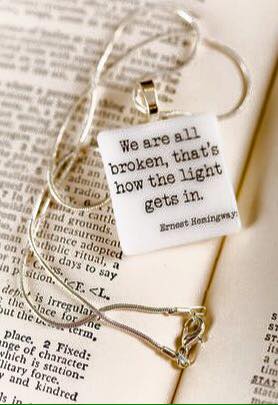
We are all broken.  And without the compassionate love of our Savior, we are all without hope.

When we welcome the wounded, we are living the Good News.

Watch what God does, and then you do it, like children who learn proper behavior from their parents. Mostly what God does is love you. Keep company with him and learn a life of love. Observe how Christ loved us. His love was not cautious but extravagant. He didn’t love in order to get something from us but to give everything of himself to us. Love like that.

Ephesians 5:1-2 MSG


Loving well: Understanding “Acceptance”

Sometimes those that walk alongside the bereaved are biding time, waiting for that “final” stage of grief: Acceptance.

And some therapists, counselors and armchair psychiatrists are certain that if the grieving mother can simply accept the death of her child, she can move on–that she can get back to a more “normal” life.

But this notion is as ridiculous as imagining that welcoming a new baby into a household doesn’t change everything.

And new parents have months to prepare.

I had the brief millisecond between the words leaving the deputy’s mouth and my ears hearing them for my mind to comprehend.   

And I admit, there were moments in the day, even a few months afterwards, that I found myself saying out loud, “How can Dominic be dead?”

But those have mostly passed.

I accept that my son is dead.  He will not return to me in the land of the living.  He will not walk through my front door and he will not grow older, marry and have children of his own.

Every now and then, I do see a shape in a crowd, the shoulders set just so and for a moment my heart leaps.  But my mind quickly remembers that Dominic is not here.

So, acceptance means that I understand that things are the way they are.

Acceptance does not mean that I have to like it or that I don’t wish some things were different.

Acceptance means that I comprehend the future will not include new memories with Dominic as part of our family circle here on earth.

Acceptance does not mean that I never look back fondly and with yearning for the years we spent together.  It does not mean that I don’t grieve the years we won’t have.

I accept that I have a life to live even though part of my heart is no longer with me.

But acceptance does not mean that the life I live going forward is not impacted by my loss or that it isn’t framed at the edges by grief.

I am now what losing a child has made me.  

Acceptance means that I will offer up this new me, just as I have offered up every new me in the past, to the God Who made me, to use me according to His plan and for His glory.

The people of Israel were shaped as much by what they lost as by what they gained.

A group of Israelites, led by Ezra the scribe, returned to Jerusalem from Babylon, and were charged with rebuilding the Temple that had been destroyed many years earlier.

A few among them had seen with their own eyes the glory and majesty of Solomon’s Temple, but most of those returning had been born in captivity.  To the older men, this new temple paled in comparison to what they had lost.  But to the younger, it represented a new beginning and a brighter future.

Many of the older priests and Levites and the heads of families cried aloud because they remembered seeing the first temple years before. But others were so happy that they celebrated with joyful shouts.Their shouting and crying were so noisy that it all sounded alike and could be heard a long way off.

Ezra 3:12-13 CEV

The grieving were sad, but they worked anyway.

Acceptance acknowledges loss, but is not immobilized by it.

So how to love me and others well in this phase of our grief journey?

Understand that acceptance involves both of us:  while I must accept the fact that my child is dead and that my life is different than the one I would have chosen for myself–others must accept that I am who I am and I will never be the other me–the one before losing a child, again.

My life as a bereaved mother is always going to be a mixture of sorrow and joy.

It will always include looking back and looking forward.

It can’t be anything else.