Often there are random or unusual physical symptoms that show up days, weeks or even years after a child has gone to Heaven.
An important and necessary part of grief work is learning to recognize the physical manifestations of grief and advocating for care from professionals who may not be able to make the connection unless the bereaved speak up and speak out.
❤ Melanie
It’s a well known fact that stress plays a role in many health conditions.
And I think most of us would agree that child loss is one of (if not THE) most stressful events a heart might endure.
So it’s unsurprising that bereaved parents find themselves battling a variety of physical problems in the wake of burying a child.
What may be surprising is how uninformed medical and even psychological professionals are with respect to the very real ways child loss intersects with chronic conditions and often creates new symptoms.
Here is a list of only SOMEof the physical manifestations of grief (via What’s Your Grief?) with my own comments :
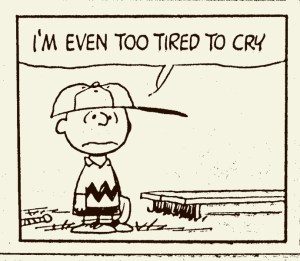
Fatigue. If you’ve always been an energetic sort, you might find this aspect of grief particularly disconcerting. This kind of fatigue doesn’t get better with rest. I’ve written about that here.
Some days I can barely make myself get out of bed and when I do, I struggle to do any but the most necessary tasks. Don’t automatically dismiss this symptom as ONLY grief (although it most certainly could be!) get a thorough check-up to rule out other causes such as low thyroid, diabetes, heart disease, major depressive disorder or a number of conditions that can be treated effectively with medicine. Don’t beat yourself up if the doctor decides “nothing is wrong” with you. You are grieving and grief is work! I know this symptom has improved for me over time as I’ve established boundaries, admitted limitations and learned to rest when necessary.
Aches and Pains. Our bodies and minds are connected in ways not well understood. Mental and emotional distress can make any underlying pain condition that much worse. When I’m feeling especially lonely, desperate or sad my autoimmune disease flares AND my perception of the very real pain that causes is heightened. Pain and heartache can lead to a downward spiral that is hard to undo. Get help and treatment for the physical and give yourself grace and space to endure the emotional causes of body aches. Don’t self-medicate with drugs, alcohol or other self-destructive coping strategies. Reach out to a safe person and let them help you find a better way.
Headaches. Needless to say, stress makes tension headaches more likely. Sometimes, though, a headache can be a symptom of something more serious. Don’t dismiss an especially sudden, intense or long-lasting headache as “just grief”. It could be previously undiagnosed high blood pressure, stroke or migraine. Those being ruled out, various relaxation techniques, cold or warm compresses, over-the-counter analgesics and gentle stretches might help.
Sometimes grief headaches can be alleviated by the simple act of telling our stories. Bottling up emotions and thoughts adds to the ongoing stress and tension of my child loss burden. When I spill them-either on paper in a journal, in a closed online bereaved parents’ group or in person to a safe friend or family member-often I feel the band around my head relax and the pain fade away.
Tightness in Chest, Shortness of Breath. The day I got the awful news, I remember asking friends who came to sit with me over and over, ” Am I still breathing?” My world was spinning out of control and my body responded. Anxiety after child loss is real. Broken Heart Syndrome is real. Heart attacks are not uncommon. Don’t ignore these symptoms. But don’t be surprised if they persist despite all tests to the contrary. When I feel trapped and overwhelmed, a walk outside or even to another room can help. Deep breathing exercises and grounding exercises can often interrupt an episode.
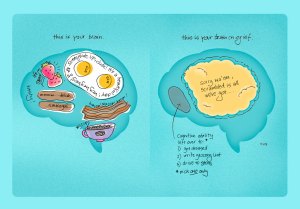
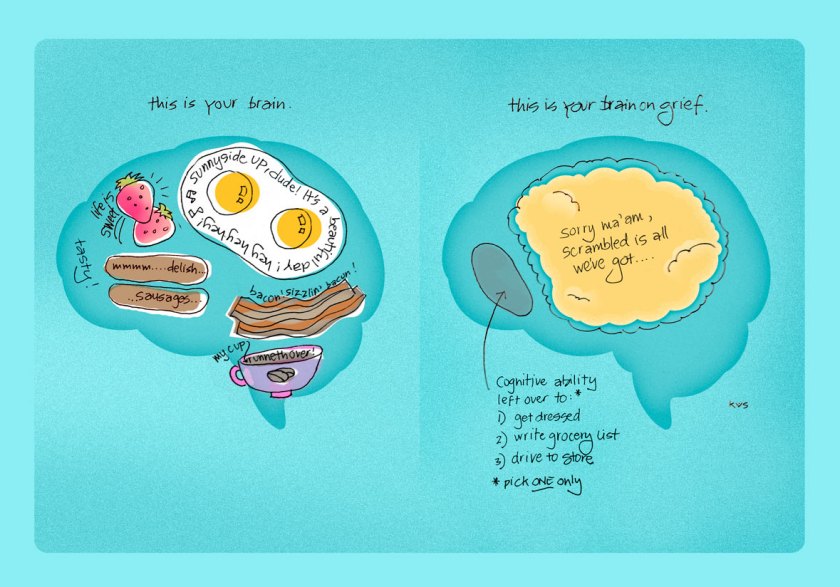
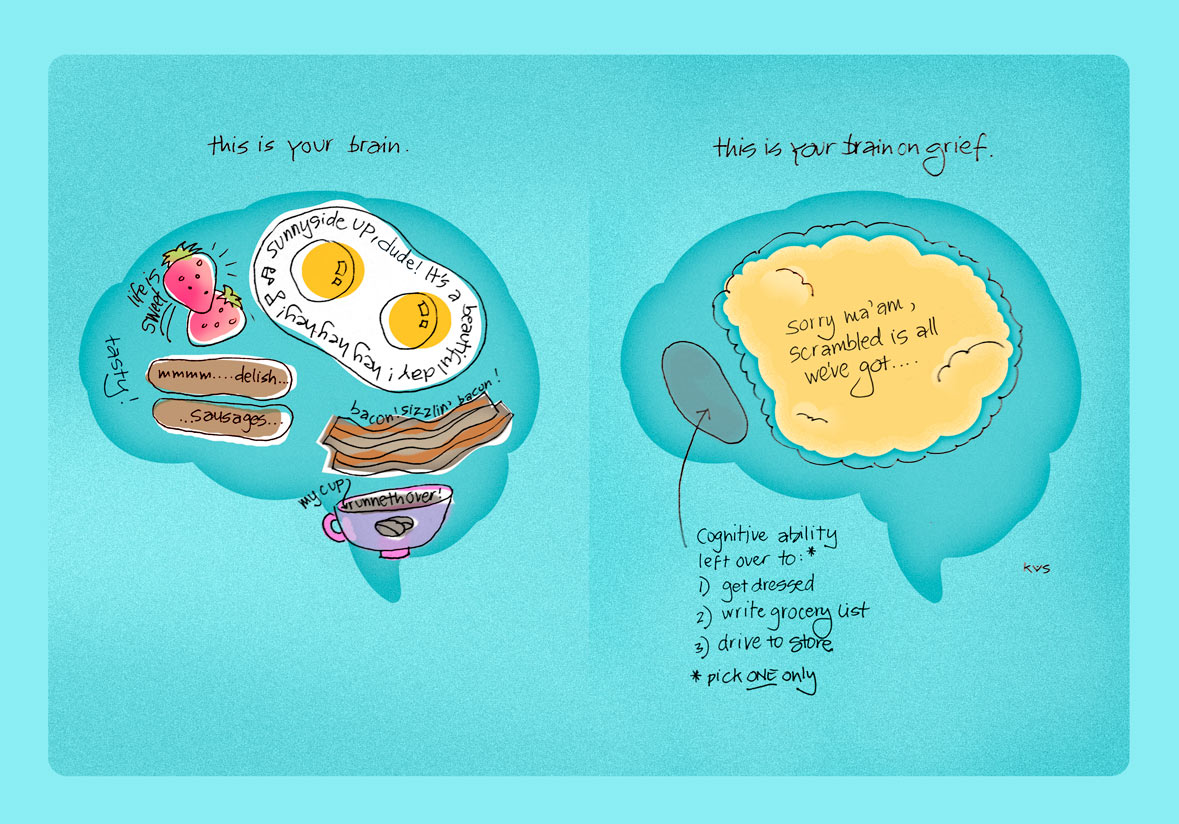
Forgetfulness. I wrote this post on Grief Brain: It’s a Real Thing! a couple years ago and am always surprised to see it shared repeatedly. But I think it strikes a chord with any heart walking through grief. You are not crazy! You are not experiencing early onset dementia (most likely). Like other symptoms, get checked out if they persist or worsen. But odds are, your experience falls within the range of normal for anyone whose life has been shattered by child loss. Losing things, forgetting things, getting lost in familiar places, missing appointments or bill payments, inability to remember names of people you know well-all of these are common after loss. In time, the symptoms usually diminish. They have for me. I still have to rely on lists and reminders much more often, though. And that’s OK.
Inability to Focus. Like grief brain, this is another cognitive manifestation that’s not only annoying, it can impact life in significant ways. Before Dominic ran ahead to Heaven, I was an avid reader. I often had three or four books going at the same time. I could spend hours focused on a single project. Not anymore. I sometimes find it difficult to read a recipe.
I have to take frequent breaks when working on something because my mind gets fuzzy and I just can’t pay attention for more than a few minutes at a time. Some bereaved parents have to change jobs or careers because they are not able to perform necessary tasks anymore. This particular symptom has not improved very much for me although I’ve found ways around it. I use lists to keep an external record of what I should be doing and when. I mix up mindless chores with ones that require more attention to give my brain a break. I try to dissect larger jobs into smaller, manageable chunks. And sometimes I just have to admit that today a particular thing just isn’t happening.
Appetite or Digestive Issues. Stress has long been linked to gut problems. I suspect we’ve all had that “rumbling in our tummy” from time to time even before child loss. For many of us it’s exponentially worse after. Some bereaved parents try to stuff emotions by stuffing themselves with food. Others can’t eat at all. Still others experience stomach ulcers or bowel disease ranging from acute to chronic. I was hospitalized twice in the first year after my son’s death for serious colon issues.
Again, don’t ignore sudden or persistent symptoms. Try to eat well and avoid self-medicating with food. Added pounds rarely add up to better emotional or mental health. I let pounds I’d lost ten years ago find me again. Get help if you need to from someone willing to act as an accountability partner. I’ve recently joined a friend in setting goals for ourselves and sharing recipes and meal prep. Try to treat food as another aspect of grief work and manage it the best you can.
Getting Sick More Often. Stress lowers the immune system. That’s a fact. So when bereaved parents encounter germs (as we all do from time to time) it may well be our bodies don’t have the energy or resources to combat them. Colds, flu, strep throat, skin infections may all be more likely this side of child loss. Don’t be discouraged to seek treatment. There is so much we can’t control in life, but getting antibiotics for an infection is pretty easy.
It’s not in your head, mom or dad!
Grief has real physical manifestations.
Don’t be dismissed or denied the care you need.
Educate your healthcare providers and insist on being heard.
*photo credit: The Weight of Grief Scupture ~ Celeste Roberge*
I shared this last year around this time in response to many, many comments and questions from bereaved parents about what felt like random or unusual physical manifestations of their own grief.
I hope it helps another heart navigate this life none of us would choose.
It’s a well known fact that stress plays a role in many health conditions.
And I think most of us would agree that child loss is one of (if not THE) most stressful events a heart might endure.
So it’s unsurprising that bereaved parents find themselves battling a variety of physical problems in the wake of burying a child.
It would be lovely if life were neatly divided into seasons or sections.
But like so many things, there are no clean lines between now and what used to be.
Who I am today is shaped by who I was the day before.
I think that’s one of the things I enjoy most about fiction-authors are free to wander back and forth among character’s thoughts, past experiences and present reality.
It makes for a more complete story.
Each year about this time (in the waning days of my Season of Sorrow) I usually stop and take stock of how far I’ve come and how grief continues to shape my life.
There are many, many ways I’ve healed and am healing:
I no longer cry every day.
I feel true joy!
The pain of losing Dominic doesn’t dominate me although it plays like Background Music-not always demanding my attention.
I celebrate my family and my family’s milestones with genuine excitement and once again enjoy planning get togethers, birthdays and (most!) holidays.
I function at a higher level and am able to rejoin some groups and participate in some activities I just couldn’t manage in the early years.
I’ve made peace with the questions that won’t be answered this side of eternity.
I’ve incorporated traumatic loss into my understanding of Who God is and how He may work in world while accepting I don’t always like it.
I attend baby showers, weddings and even funerals without bringing all my lost dreams or personal sadness to the event.
I laugh-a lot. It feels good again to belly laugh at family memories or new jokes.
I can extend hospitality once more. That was a core component of my pre-loss life and personality and I missed it.
But there are many ways in which grief and loss continues to inform how I walk in the world:
I absolutely, positively cannot multitask! I have to break daily chores into single actions so I can focus and accomplish one thing at a time. I used to be able to cook, talk on the phone, bend over and motion to a child needing help with school all at once. Not anymore! Just recently I lost an important piece of mail most likely because I was looking at it while chatting to a family member. I put it down and cannot for the life of me remember where it is.
I become anxious when around too many people-especially if they are people I don’t know or the venue is one with which I’m unfamiliar. This even happens in the car driving in new places. I was never an anxious person before. In fact, I was typically the voice of calm in a group of friends panicking over some small detail that went awry. I try not to share my anxiety, but it’s there and it takes a huge amount of energy to corral it and keep it from escaping into wild demonstrations like running from a room. (I do a lot of counting/visualizing/breathing and self-soothing.)
I don’t like noise. To be fair, I never really did but now it’s exacerbated. Shopping can be a real trial when stores insist on blasting music in hopes it makes patrons feel like spending more money. I, for one, just want to get what’s on my list and get the heck out of Dodge! I love children but I can’t tolerate the incessant chatter little ones bring to a Sunday School classroom or a Vacation Bible School craft table. I used to be the first one to volunteer for those posts but I just. can’t. do. it. anymore.
I crave predictability. I know, I know, of all people I should understand control is an illusion. I do. But the tiny details of life-like planning meals, choosing clothes, cleaning routines and evening quiet times- are things I want to be able to count on. Routine is my friend. It helps my mind (such as it is) operate on reliable pathways. I’ve never been a big fan of random, but now it’s something I try to avoid at all costs.
I need solitude. I’m still processing some things. I imagine I’ll be doing that the rest of my life as different experiences from NOW interact with my loss. I cannot do that in the presence of others. I need to think, reflect, write, read and walk it out. That means I have to devote time and space to being alone. If circumstances prevent me from quiet solitude for too long my blood pressure climbs, my patience disappears and little things grow large.
I don’t sweat the small stuff (usually-see above!). If time, effort or money can remedy it then it’s just. not. a. problem. I’ve learned the hard way that life and love are the most important things in life. Everything else might be nice but it’s not essential. I’m not minimizing the stress and strain of broken pipes, wrecked cars or lost jobs. It’s just that eventually those are situations that can be fixed. And lest you think I’ve not experienced any of those, I have. My first thought whenever anything happens I once perceived as “the worst thing that could happen” is, “It’s absolutely, positively NOT the worst thing that can happen”.
I need to observe a careful rhythm of commitment and freedom on a daily, weekly and monthly basis. I always kept my big calendars each year and tossed them into a box of “if I ever need to know these things”. When I look back on how busy we were as a young family I’m astounded at the pace we kept, the places we went, the hours I was frantically working to fulfill all our obligations along with the things we just wanted to do. I’m sure some of this is a function of age-I’m no spring chicken any more-but I know in my bones it’s also a function of the ongoing toll grief takes on my body, mind and soul. I can only manage a few days of busyness in a row until I need a complete shut-down for at least twenty-four hours or more. I refuse to schedule any but the most difficult to get appointments in a week where I’ve already inked in other commitments.
Sleep, regular exercise and good food are necessary for me to face life with a good attitude. This is probably true of most folks but just a day or two of fast food, no outdoor walks or interrupted nights and I’m toast. I’m not a whole foods, organic everything kind of gal but I try to eat a variety of fresh and less-processed meals. When I’m home I have an almost two mile path through woods and up gentle inclines that builds muscle, exercises my lungs and body and gives me ample time to drink in the beauty of birds, wildflowers and leafy trees. If you’ve ever been to my home you know that the rest of the crowd can stay up as long as they want to but I’m headed upstairs between eight and nine. Of course I get up before the sun, so my total hours are roughly the same but there’s something about that pre-midnight sleep that restores me like no other.
I could probably list dozens more, less obvious, ways grief still shapes the me of today. But it no longer binds me like it did in the early days. I’m better able to work around the difficult bits and still make a meaningful life with the people I love.
Traumatic loss rewires your brain as well as your body.
So here I am, nine plus years into the journey of sudden child loss and I’m reminded once again I am not the same “me” I once was.
Our newest grandbaby made an early entrance into the world awhile ago and I did Mama D duty with his big brother for nearly a month. It was a delight to be with my oldest grandson but it was also challenging for this aging/post trauma brain.
Trying to navigate (super simple) routes to and from the hospital, to and from preschool, and to and from the closest grocery store led to more than one U-turn and long way around. Sure I could use my phone’s GPS but I kept thinking I’ll finally remember next time.
I should know better by now…
❤ Melanie
I’m looking right at her.
I know her. In fact, I’ve known her for years. But please don’t ask me her name.
I have no idea.
It happens to all of us-meet someone in the store or at the Post Office and you just know you know them, but cannot-for the life of you-remember a name.
Chatting on, you search mental files desperately trying to make a connection you can hold onto. Five minutes after she walks away it pops up-oh, yes! That’s so-and-so from such-and-such.
Imagine if instead of searching mental files without success you can’t even find the file cabinet and start to wonder if one ever existed.
That’s what “grief brain” does to you.
Here are a few more examples of things that actually happened:
When I first became aware that Grief Brain was a real thing, it was a blessed relief!
I had long known that physical, mental or emotional stress could alter thinking and make it hard to remember things but I had never experienced such inability to hold even the most basic information in my head or found it nearly impossible to complete simple daily tasks.
It was truly frightening.
And it made life extremely hard.
I think the really, truly awful period of confusion, memory loss and difficulty lasted a good couple of years-not every day as bad as the next or the one before-but it was fairly consistent. I had to use lists, alarms and strict habits (like where I put my keys, the route I took somewhere, etc.) to make it through.
Now, nine years later, it’s not nearly as bad.
That’s partly because I’ve become so good at relying on aids and helps like alarms and calendars and partly because I’ve gotten better at keeping the constant hum of loss compartmentalized in my brain so I can actually think of something else.
But if there is any added stress in the system I regress.
I forget words, names, places, why I’ve walked into a room, where I’m going, what I’m doing and (much to my horror) food in the oven or on the stove.
So if you are in the early days of loss and wonder, wonder, wonder if you are losing your mind, odds are-you aren’t.
Traumatic loss rewires your brain as well as your body.
So here I am, nine plus years into the journey of sudden child loss and I’m reminded once again I am not the same “me” I once was.
Our newest grandbaby made an early entrance into the world last spring and I did Mama D duty with his big brother for nearly a month. It was a delight to be with my three year old grandson but it was also challenging for this aging/post trauma brain.
Trying to navigate (super simple) routes to and from the hospital, to and from preschool, and to and from the closest grocery store led to more than one U-turn and long way around. Sure I could use my phone’s GPS but I kept thinking I’ll finally remember next time.
I should know better by now…
❤ Melanie
I’m looking right at her.
I know her. In fact, I’ve known her for years. But please don’t ask me her name.
I have no idea.
It happens to all of us-meet someone in the store or at the Post Office and you just know you know them, but cannot-for the life of you-remember a name.
Chatting on, you search mental files desperately trying to make a connection you can hold onto. Five minutes after she walks away it pops up-oh, yes! That’s so-and-so from such-and-such.
Imagine if instead of searching mental files without success you can’t even find the file cabinet and start to wonder if one ever existed.
That’s what “grief brain” does to you.
Here are a few more examples of things that actually happened:
Nine years later and I’m still on the struggle bus with this one.
I used to be able to keep clutter manageable, clothes put away and counters and carpets clean.
Now I sometimes come downstairs and wonder what tornado has blown through the family room only to realize it’s an accumulation of several days’ chores left undone.
Sigh.❤
I freely admit I was never a housecleaning fanatic.
With a busy family, a small farm and mountains of paper, pencils and books scattered around I was content if the most obvious dirt was swept up and the sink free of dishes.
But, I DID have a routine. I DID clean my bathrooms and wash clothes and make beds and vacuum the rugs on a regular basis.
Not anymore.
Even all this time after Dominic ran ahead to heaven, I have not reestablished any kind of rhythm.
When I first became aware that Grief Brain was a real thing, it was a blessed relief!
I had long known that physical, mental or emotional stress could alter thinking and make it hard to remember things but I had never experienced such inability to hold even the most basic information in my head or found it nearly impossible to complete simple daily tasks.
It was truly frightening.
And it made life extremely hard.
I think the really, truly awful period of confusion, memory loss and difficulty lasted a good couple of years-not every day as bad as the next or the one before-but it was fairly consistent. I had to use lists, alarms and strict habits (like where I put my keys, the route I took somewhere, etc.) to make it through.
Now, eight years later, it’s not nearly as bad.
That’s partly because I’ve become so good at relying on aids and helps like alarms and calendars and partly because I’ve gotten better at keeping the constant hum of loss compartmentalized in my brain so I can actually think of something else.
But if there is any added stress in the system I regress.
I forget words, names, places, why I’ve walked into a room, where I’m going, what I’m doing and (much to my horror) food in the oven or on the stove.
So if you are in the early days of loss and wonder, wonder, wonder if you are losing your mind, odds are-you aren’t.
Traumatic loss rewires your brain as well as your body.
So here I am, nearly eight years into the journey of sudden child loss and I’m reminded once again I am not the same “me” I once was.
Our newest grandbaby made an early entrance into the world this spring and I did Mama D duty with his big brother for nearly a month. It was a delight to be with my three year old grandson but it was also challenging for this aging/post trauma brain.
Trying to navigate (super simple) routes to and from the hospital, to and from preschool, and to and from the closest grocery store led to more than one U-turn and long way around. Sure I could use my phone’s GPS but I kept thinking I’ll finally remember next time.
I should know better by now…
❤ Melanie
I’m looking right at her.
I know her. In fact, I’ve known her for years. But please don’t ask me her name.
I have no idea.
It happens to all of us-meet someone in the store or at the Post Office and you just know you know them, but cannot-for the life of you-remember a name.
Chatting on, you search mental files desperately trying to make a connection you can hold onto. Five minutes after she walks away it pops up-oh, yes! That’s so-and-so from such-and-such.
Imagine if instead of searching mental files without success you can’t even find the file cabinet and start to wonder if one ever existed.
That’s what “grief brain” does to you.
Here are a few more examples of things that actually happened:

















 thelifeididntchoose