curating grief

Most of us have taken a class or two in literature–we read other people’s writing and sit around discussing “what it really means”.  My husband has always scoffed at the notion that anyone but the author knows that.

Me–I love books, plays and poetry so I’ve spent a lifetime reading and trying to interpret the meaning of others’ words.

But now I find I’m leaning more toward my husband’s point of view.

One of the challenges I face as a grieving parent is finding that other people want to interpret my experience for me.

They want to curate my mourning like a museum exhibit–arrange and highlight and sift through the days before and after burying my child and lay my experience out in some way that makes sense to them.

Sometimes it is subtle and involves mentioning memories that cast the missing child in a positive light–extolling his virtues and highlighting his achievements–as if noting how wonderful he was when walking this earth makes it easier to let him go.

Other times it is direct and forceful–“Everything happens for a reason.” Or, “He wouldn’t want you to be sad.”  Or, my personal favorite, “You know he’s safe with Jesus and you will be together again one day.”

While my theology rests firmly on the finished work of Christ, my heart longs for the physical presence of my son.  So none of these platitudes are helpful and they only draw a sharper contrast between my hope and my experience.

Let me just be blunt:  unless you have buried a child, you do not know how it feels. 

Full stop.

No debate.

I am grateful for your support, for your prayers, for your kindness, compassion and love.

But please do not tell me how this all makes sense or fits together in God’s plan or will someday “make a difference”.

I  invite you to travel with me, to share stories (good and bad) of my son with me, to sit with me and look at the memories, feel the sorrow and experience the missing.

And, if you are brave, you can ask me what it means.


No Perfect Formula

Everyone loves a formula.

We spend millions (billions?) of dollars seeking the perfect, easy way to whittle our waistlines.  We spend hours (days?) googling tips on reducing clutter, improving relationships, decorating our homes (Pinterest, anyone?).

Christian bookstores are filled with tantalizing titles that promise a quick and effortless method for happiness and holiness.

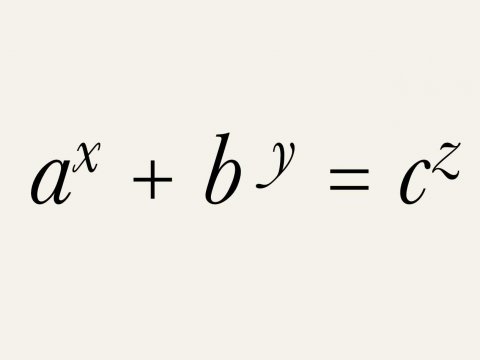
We just want someone to tell us what to do, when to do it and exactly how to do it–we want life to work like a math problem: 2+2=4.

Sometimes, for a season, it looks like a formula might work.

But there is nothing predictable about life. And as long as people are involved, there’s no reliable method to accurately predict outcomes.

It’s just not that simple.

Looking for the perfect equation to balance life’s challenges distracts me from the life I’m actually living.  It offers false hope that one day, some way and somewhere, things will be “perfect”.

It seduces me into thinking that people behave like numbers and that I can size them up, put them in the math machine and turn out identical and predictable products.

Burying a child rips that notion right out of your head.

Nothing predictable about that.

There are no shortcuts.  No pat answers.  No perfect formulas.

Life is relationship.

With God,

with people,

with ourselves.

In light of all this, here’s what I want you to do. While I’m locked up here, a prisoner for the Master, I want you to get out there and walk—better yet, run!—on the road God called you to travel. I don’t want any of you sitting around on your hands. I don’t want anyone strolling off, down some path that goes nowhere. And mark that you do this with humility and discipline—not in fits and starts, but steadily, pouring yourselves out for each other in acts of love, alert at noticing differences and quick at mending fences.

Ephesians 4:2-3 MSG


Rachel Weeping for Her Children

I woke up with this Scripture on my mind: “Rachel weeping for her children and refusing to be comforted, because they are no more.”(Matthew 2:18b)

God warned Joseph in a dream, but apparently didn’t warn the other fathers.

It served His purposes for those children to die. There is no way to know if their mamas ever suspected the reason or understood the plan.

We read the “story” focused on Jesus-as is right. And we conclude that everything turns out well. But those families lived the rest of their lives with grieving hearts.

The Kingdom has always advanced at a steep cost and the ways of God are mysterious.

This tension is hard to  bear.

We live in a scripted world where we can watch and re-watch news, events, movies and Youtube videos.  We can read and re-read books. And our attention span is short.

Our compassion is often short, too.

We want to rush past the hard parts, the sad parts and the uncomfortable parts.

We want to get to the end of the story because we want to see how the parts fit together.

But when you are living the story, you can’t hurry to the end. You must live each day, each minute as it comes.

The only way to make it through is with patient compassion, tender mercy and extravagant grace.

Not as Strong as I Look


No matter how tightly I strap on my armor, grief sends arrows through the tiniest unprotected chink and pierces my heart.

There is no defense against the sound, the smell, the wayward memory that sends me back in time to when Dominic was alive and with me.

And once there, to drag myself forward to today—where he is neither—is torture. 

Sometimes the process can be a matter of seconds, the only evidence a blank stare or a single tear.  Other times the memories and the forceful return to the here and now unleashes a flood from my eyes and ends my usefulness for that day.

Either way, it’s exhausting. 

I think that might be one of the most surprising aspects of grief for me.  When it strikes hard (as it still does sometimes) it robs me of energy and the desire to do anything.

I am a “get-it-done” kind of person.

But there’s no way to get grief “done”. 

It works itself out in its own time and in its own way.

I can position my mind and my heart to heal by focusing on the promises of God in Scripture.  But I cannot hurry along the healing.

And healing, when it comes, will always be incomplete this side of heaven.

Please don’t mistake the fact that I can stand straight and look strong as proof that I am recovered. 

I am often frightened and sometimes I want to hide.

But vulnerable and wounded, I remain until God calls me home.

In His feathers He shall deliver you and under His wings you shall have refuge; His truth shall surround you as a supply of armor.

Psalm 91:4

Making Room for Grief at the Christmas Table

Our family didn’t do Santa.

We started to with our first child, but when she asked, “How does Santa know everything and how does he live forever?” at two years old, we ditched him.

I realized that even her young mind had picked out the inconsistencies between Jolly Old Saint Nick and what we were teaching her about God and the human condition.

The path to joy is filled with pain.  The way to heaven is traveled through a world where children die and cruelty is common.  Not every good little boy or girl finds their wishes fulfilled on Christmas morning.

This is precisely the place where the grieving find Christmas difficult.

Even Christ followers tend to section off the celebration of Jesus’ birth from the agony and necessity of His death.  We welcome the Baby but disregard the crucified Savior.  We like to pretend that “all is calm, all is bright”.

The pressure to maintain the facade of jollity overwhelms my heart and makes me weary down to my bones.

Joy and sorrow both dwell in my soul and I cannot reveal one and hide the other.  I may laugh and cry in the same moment.

It is all too easy for others to welcome the laughter and to shut out the grief–to insist that those who gather pretend everyone gets what they want for Christmas.

No one can bring my son back to me.  No one can giftwrap a restored family and place it under the tree. 

But you can give me and other mourners space for our pain at the Christmas table.

You can honor those we miss by noting their absence–you can acknowledge that eternity is truly wonderful, but today is so very hard.

That is a gift we would treasure.

Countdown to Christmas

Here in the last days before Christmas, the darkest days of the year, my grieving heart longs for light.

In some ways the busy-ness of the holiday season pushes the pain of missing my son to the background–a mind can only entertain so many ideas at one time.

But the activity and constant barrage of demands and conversations exhausts me and makes me more vulnerable to the moments when grief rolls full force over my soul like an ocean wave.

I am more sensitive to the chasm between me and those who have not buried a child.  

More sensitive to the fact that the world continues to spin, parties are planned, songs are sung and Dominic isn’t here for any of it.

I want to find a way to mark his absence, to include him in conversation, to make sure he isn’t forgotten.

I am so very thankful for the family that surrounds me at Christmas, and want them to know how much I cherish the moments we are together and how fiercely I love them.

But my heart is divided.  

Part of me is “here” and part of me is “there”.  I walk in two worlds–on earth and in heaven.  I savor the sweet joy of the “now” but ache for the even sweeter joy of the “forever”.

So I sing all four verses of the Christmas hymns–not just the ones that speak of Jesus’ birth, but the verses that tell of His return.

I celebrate His coming, but I long for His coming again.

For lo! the days are hastening on,
By prophets seen of old,
When with the ever-circling years
Shall come the time foretold,
When the new heaven and earth shall own
The Prince of Peace, their King,
And the whole world send back the song
Which now the angels sing.

~It Came Upon A Midnight Clear


My Three Sons

My three sons–I still have three you know.

Two that travel the earth with me and one that dwells with Jesus.

My soul expanded with each birth–like pants stretched to make room for inches gained and there is no going back.

My heart will always bear the stretchmarks of my love.

LORD, I cannot thank You for allowing my son to be taken–I can thank You for Who You are and for not leaving me alone in my grief.

I won’t overlook the beauty in a sunrise, the gift of laughter or the welcome warmth of loving hugs.

I won’t allow bitterness to strip my life of kindness and compassion.  I will try to embrace the pain and let it work Your purpose in my heart.

When I can’t fight the battle myself, I will rest in the arms of the One Who fights for me.

 God is a safe place to hide,
    ready to help when we need him.
We stand fearless at the cliff-edge of doom,
    courageous in seastorm and earthquake,
Before the rush and roar of oceans,
    the tremors that shift mountains.

Jacob-wrestling God fights for us,
    God-of-Angel-Armies protects us.

Psalm 46:1-3 MSG


Navigating Grief for Those Who Have Lost a Child

With GPS apps on our phones and in our cars, getting lost in the physical world is becoming ever more rare.

But grief is disorienting and every day I must relearn which way is true north.

It has never bothered me to ask directions.  I’ll pull off in a heartbeat–ask a stranger–stop a mailman–look for a fire station (they have to know all the addresses of their district).  I’m not shy and I’m not proud.

But as a bereaved mother,  I’ve struggled to find a map, or guide or landmarks that can help me navigate this wilderness called grief.

Twenty months down this path, here are some practical ways I’ve discovered to help me get through this unmarked world.

It is hard to concentrate so I have learned to break tasks up into smaller units.  I might only clean the bathroom sink and then move on to something else, coming back later to do the tub or mirrors.

I have trouble remembering EVERYTHING so important things like my phone and keys ALWAYS go in the same place.  My purse has designated pockets for specific items and I hold onto my keys when I get out of my truck so I don’t lock them inside.

Going to the store can be very challenging with all the noise, distractions and people (and the memories of his favorite foods).  Even if I’m only shopping for a few groceries, I make a list.

Keeping track of things like phone calls, gifts or thank you notes is also difficult. I use an inexpensive spiral notebook that lives on the kitchen table to write down numbers, notes or anything I need to remember.  I staple receipts to a page so that I won’t lose them.

I use a pocket calendar to note appointments, family schedules or important dates.  I don’t agree to or change anything until I have it in front of me.

I have learned to ask people to repeat things that I’m not sure I understand. Sometimes it seems as if folks around me are speaking a foreign language because my brain simply won’t process the words.

I don’t apologize for my tears or for my need to give myself space and time to make a decision when asked to do something. 

Grieving requires so much emotional, physical and mental energy that there is little left for everyday tasks.  But life goes on even if I want it to stop.

This is who I am now, and I will need to make accomodations for that as long as I live.


When The Last Fingerprint Fades Away

Dominic was always working on his car.

During one weekend session, something went wrong and he came storming through the garage.

He slammed both hands hard on my extra pantry, crashing one mason jar full of tomatoes into the other, making a mess and leaving greasy hand prints on the white melamine doors.

I waited until he made his way into the house and upstairs then went to assess the damage-tomatoes dripping everywhere, glass on the floor and hand prints in several places.

I cleaned the tomatoes and glass and gave a swipe at the doors. But those marks of my son’s temper remained for months. I finally found a mixture that got most of it off so only faint reminders were left.

After Dominic was killed, I went to the garage and put my fingers one by one into what was still there of his hand print.

It made me feel closer to him, like there was a little of his life left that I could touch.

Today I was thinking-what will I do when the last fingerprint fades away?

What will I cling to that can make him real to me again?

I know he has only left this earthly tent and the real Dominic is with Jesus, but I’m still stuck in the physical world, longing for physical connection.

A mama’s arms are made for holding her children, not for holding their memories.

This is the greatest challenge I face in my grief–not blaming God or even dealing with the pain–it’s the need to touch my children and knowing now one is beyond my reach until I join him in heaven.

[King David said] “Could I bring the child back to life? I will some day go to where he is, but he can never come back to me.”  2 Samuel 12:23b GNT

What Grieving Parents Want Others to Know

People say, “I can’t imagine.

But then they do.

They think that missing a dead child is like missing your kid at college or on the mission field but harder and longer.

That’s not it at all.

It isn’t nostalgia for a time when things were different or better or you talked more: it’s a gut-wrenching, breath-robbing, knee-buckling, aching groan that lives inside you begging to be released.

There is no smooth transition up the ladder of grief recovery so that you emerge at the top, better for the experience and able to put it behind you.

We’ve all heard the much touted theory that grief proceeds in the following stages:

  • denial
  • anger
  • bargaining
  • depression
  • acceptance

And people (who haven’t experienced grief) tend to think it’s a straight line from one stage to another, gradually going from bottom to top and then on with life.

But it just isn’t true.

Reality is, these “stages” coexist and fluctuate back and forth from day to day and even hour to hour.

Grief remakes you from the inside out.

Losing a child has made me rethink everything I believe and everything I am.  It has changed and is changing my relationship with myself and with others in ways I couldn’t imagine and often don’t anticipate.

And it is hard, hard work.

Life around us doesn’t stop.  Grieving parents return to work, continue to nurture their surviving children, keep getting up in the morning and taking care of daily details.

We are doing all the things others do, but we are doing them with an added weight of sorrow and pain that makes each step feel like wading through quicksand.

We want you to know we are doing the best we can.

Life without my child is like having a leg amputated–I am forced to learn to manage without it, but everything will always be harder and different.

And it will be this way for the rest of my life.

The one thing a grieving parent DOESN’T want you to know is how it feels to bury your child.

I don’t want anyone else to know what it means to leave part of your heart and a chunk of your life beneath the ground.

“But please: Don’t say it’s not really so bad. Because it is. Death is awful, demonic. If you think your task as a comforter is to tell me that really, all things considered, it’s not so bad, you do not sit with me in my grief but place yourself off in the distance away from me. Over there, you are of no help. What I need to hear from you is that you recognize how painful it is. I need to hear from you that you are with me in my desperation. To comfort me, you have to come close. Come sit beside me on my mourning bench.”

Nicholas Wolterstorff   LAMENT FOR A SON