Bereaved Parent Month 2025: What Grieving Parents Want Others to Know

I wrote this post December, 2015.  It hadn’t been long since I joined an online community of bereaved parents and began to see that I wasn’t the only one who had friends and family that misunderstood child loss.

I was spending a lot of time in my life trying to help others comprehend, just a little, what it felt like to bury a child.

Trying to give them a tiny taste of how this pain is so, so different than any other I had experienced.  Begging them to toss the popular ideas bandied around that grief followed “stages” and was “predictable”.

I re-share every so often because it seems to help, a little.  I’m re-sharing today in  honor of Bereaved Parents Month. 

People say, “I can’t imagine.“

But then they do.

They think that missing a dead child is like missing your kid at college or on the mission field but harder and longer.

That’s not it at all.

Read the rest here: What Grieving Parents Want Others to Know

Bereaved Parents Month 2024: What Grieving Parents Want Others to Know

I wrote this post December, 2015.  It hadn’t been long since I joined an online community of bereaved parents and began to see that I wasn’t the only one who had friends and family that misunderstood child loss.

I was spending a lot of time in my life trying to help others comprehend, just a little, what it felt like to bury a child.

Trying to give them a tiny taste of how this pain is so, so different than any other I had experienced.  Begging them to toss the popular ideas bandied around that grief followed “stages” and was “predictable”.

I re-share every so often because it seems to help, a little.  I’m re-sharing today in  honor of Bereaved Parents Month. 

People say, “I can’t imagine.“

But then they do.

They think that missing a dead child is like missing your kid at college or on the mission field but harder and longer.

That’s not it at all.

Read the rest here: What Grieving Parents Want Others to Know

What If I Don’t Feel a Thing? Sometimes Grief = Numb.

I’ve thought long and hard about that season of “un-feeling”.

Why did my heart shut down? Why the long silence when no emotion pierced my soul?

I think it was necessary.

I think a body and mind and heart can’t operate for too long at warp speed. I think that just like fainting is a response to the brain needing oxygen, numbness is a response to the soul’s need for respite and time to heal.

So if you are in the season of numb, you’re neither crazy nor alone.

Read the rest here: Why Don’t I Feel A Thing? Sometimes Grief = Numb.

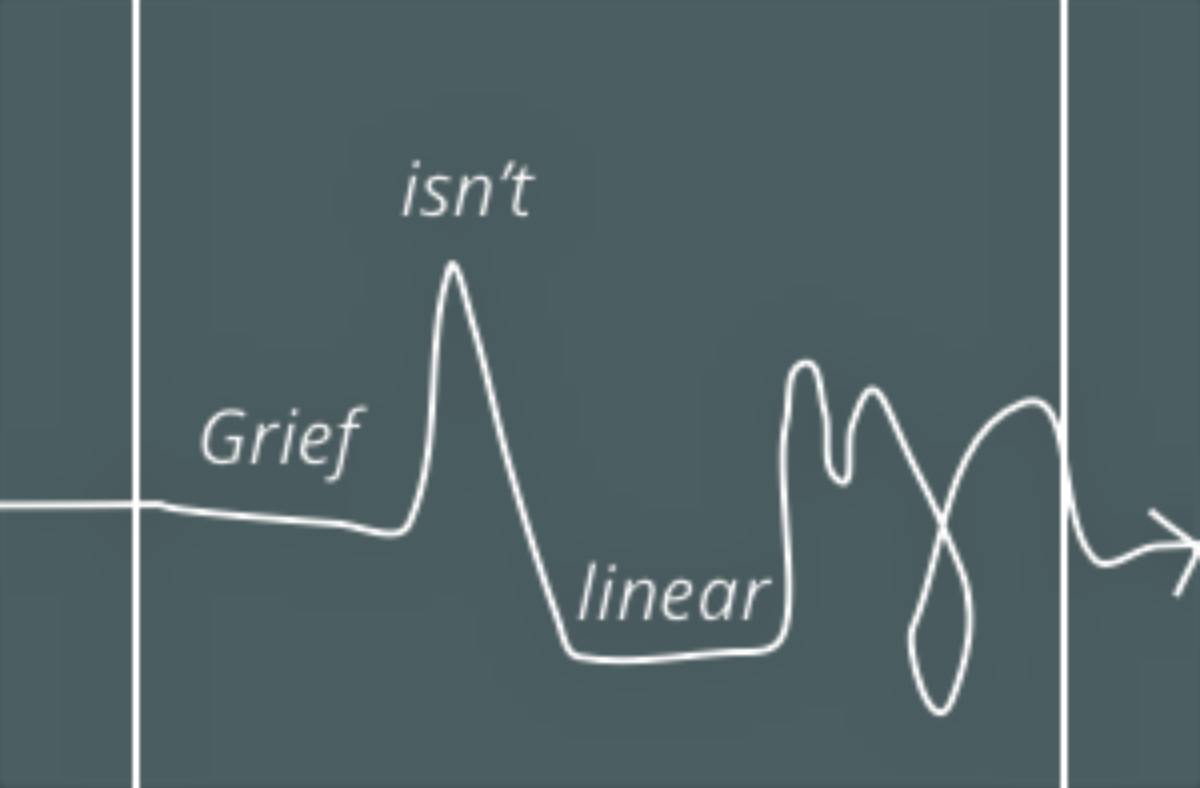
Healing Is NOT Linear

I remember thinking in the early days, weeks and months of this journey that healing was impossible.

The wound was too great, too deep and too devastating to allow for that.

No amount of work or help or wishful thinking could undo the damage.

But I was wrong.

Read the rest here: Healing Is Not Linear

I’m Not Refusing to Accept He’s Gone…


Even therapists get it wrong sometimes.

Especially therapists that only know what child loss is supposed to look like from books and lectures.

I understand how logical it seems that a parent should be able to accept his or her child is no longer alive. After all, most of us saw our child’s lifeless body and performed whatever rituals our hearts find most comforting.

We haven’t received a phone call, text, message or new photograph. Weeks, months and years pass and no word.

Of course this child is gone.

But a mama’s heart still hopes. Somewhere deep down there is a part of me that longs for connection to this child I carried, nurtured and loved.

So sometimes my heart will play tricks on me.

Read the rest here: Am I Refusing To Accept My Child Is Gone?

Bereaved Parents Month 2022: What Grieving Parents Want Others to Know

I wrote this post December, 2015.  It hadn’t been long since I joined an online community of bereaved parents and began to see that I wasn’t the only one who had friends and family that misunderstood child loss.

I was spending a lot of time in my life trying to help others comprehend, just a little, what it felt like to bury a child.

Trying to give them a tiny taste of how this pain is so, so different than any other I had experienced.  Begging them to toss the popular ideas bandied around that grief followed “stages” and was “predictable”.

I re-share every so often because it seems to help, a little.  I’m re-sharing today in  honor of Bereaved Parents Month. 

People say, “I can’t imagine.“

But then they do.

They think that missing a dead child is like missing your kid at college or on the mission field but harder and longer.

That’s not it at all.

Read the rest here: What Grieving Parents Want Others to Know

There Are No Stages of Grief

I first shared this several years ago and while it’s absolutely true that Kubler-Ross did not intend for her model to be applied to grieving parents it has been nonetheless.

And the damage that has been wrought in the name of interpreting the traumatic loss of out of order death through the lens of the “Stages of Grief” is undeniable and incalculable.

So, so many people have been judged or marginalized because the way they processed their loss didn’t follow a predetermined path. So, so many hearts have been hurt because they’ve been deemed “abnormal” or “pathological” or “maladaptive”.

I’m here to tell you that there are NO stages of grief-at least not the way they have entered common parlance or even common therapeutic practice.

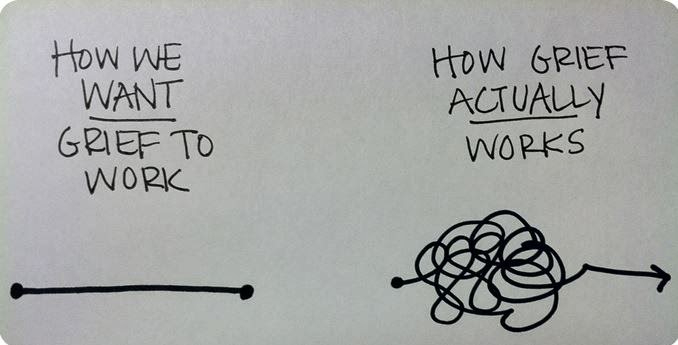
Grief is a complex process that makes its own way through a person’s psyche. It’s unpredictable and untamable.

Grief after child loss is doubly so.

Don’t let anyone circumscribe your experience by outdated and disproved ideas about what you should or should not be feeling.

❤ Melanie

Ever since Elizabeth Kubler Ross published her best-sellling book, “On Death and Dying” both professionals and laypersons have embraced her explanation of the “five stages of grief”.  

The model has been used as a faulty standard to measure grievers’ “progress” for decades.

Trouble is, she got it wrong.  

And it is especially wrong for bereaved parents or anyone who suffers traumatic or sudden death.

Read the rest here: Stages of Grief ? Nope.

“Acceptance” Isn’t a Stage. It’s a Lifetime.

In all fairness, Elisabeth Kubler-Ross had no idea her research would be taken out of context and plastered across professional literature and media outlets as a definitive explanation for the grief experience.

But she didn’t mind the notoriety.

And ever since, counselors, pastors, laypersons and the general public have come to expect folks to politely follow the five (sometimes described as six) stages of grief up and out of brokenness like a ladder to success.

It doesn’t work that way.

Sometimes those that walk alongside the bereaved are biding time, waiting for that “final” stage of grief: Acceptance.

And some therapists, counselors and armchair psychiatrists are certain that if the grieving mother or father can simply accept the death of a child, he or she can move on–they can get back to a more “normal” life.

But this notion is as ridiculous as imagining that welcoming a new baby into a household doesn’t change everything.

And new parents have months to prepare.

Read the rest here: Loving well: Understanding “Acceptance”

“Stages of Grief”? Not Really.

In all fairness, Elizabeth Kubler-Ross never intended her book, “On Death and Dying” to be adopted as a proscriptive model for walking hearts through grief.

It was a compilation of observations and interviews with those who were facing death or actively dying not a study of those left behind to mourn.

Sadly, however, it’s been used as a standard to measure grievers’ “progress” for decades.

It’s time to let it go.

Ever since Elizabeth Kubler Ross published her best-selling book, “On Death and Dying” both professionals and laypersons have embraced her explanation of the “five stages of grief”.  

The model has been used as a faulty standard to measure grievers’ “progress” for decades.

Trouble is, she got it wrong.

Read the rest here: Stages of Grief ? Nope.

Grief: “Acceptance” Isn’t A Stage, It’s a Lifetime

In all fairness, Elisabeth Kubler-Ross had no idea her research would be taken out of context and plastered across professional literature and media outlets as a definitive explanation for the grief experience.

But she didn’t mind the notoriety.

And ever since, counselors, pastors, laypersons and the general public have come to expect folks to politely follow the five (sometimes described as six) stages of grief up and out of brokenness like a ladder to success.

It doesn’t work that way.

Sometimes those that walk alongside the bereaved are biding time, waiting for that “final” stage of grief: Acceptance.

And some therapists, counselors and armchair psychiatrists are certain that if the grieving mother can simply accept the death of her child, she can move on–that she can get back to a more “normal” life.

But this notion is as ridiculous as imagining that welcoming a new baby into a household doesn’t change everything.

And new parents have months to prepare.

Read the rest here: Loving well: Understanding “Acceptance”