Journaling has been and continues to be a very important part of my grief journey.
Putting thoughts on paper gets them out of my head.
Writing them down helps me understand them.
Read the rest here: Grief Journaling Prompts
Journaling has been and continues to be a very important part of my grief journey.
Putting thoughts on paper gets them out of my head.
Writing them down helps me understand them.
Read the rest here: Grief Journaling Prompts
No one wakes up one day and just “is”. We become, over time, as our innate nature interacts with the world around us. First our parents and siblings influence us and then school, friends, life experience either gently molds us or pounds us into shape.
Often we get so used to our own way of doing and being we never give it much thought. It’s just “how we are”. We work around our faults and try to use our strengths to our advantage.
Most of us are pretty good at it.
Then something earth shattering comes along and suddenly the cracks are exposed and we haven’t the energy to cover them over.
Read the rest here: What Can Make Grieving Harder? Things You Might Not Expect.
My hardest grief season begins in November and runs to the end of May. Thanksgiving through Dominic’s birthday on (or near) Memorial Day are days full of triggers, memories and stark reminders that one of us is missing.
If I could fall asleep November first and wake up in June I’d do it.
But I can’t so I have to employ all the tricks I’ve learned in the over seven years since Dominic ran ahead to heaven to survive those particularly challenging months.
Here are ten ways I survive hard grief days…
Read the rest here: Taking Care: Ten Ways to Survive Hard Grief Days
I belong to several bereaved parents online communities and this question comes up again and again-it was the first thing I asked a bereaved mom just after Dominic ran ahead to heaven:
“Will this suffocating pain remain sitting on my chest, smothering the breath and life right out of me? Will I ever be able to stop crying? Will it ALWAYS feel like this?”
The short answer is, “No, it won’t.”
Read the rest here: Will It ALWAYS Feel Like This?
There is no quick fix for a broken heart. No remedy for missing someone you love.
Instead, grief is a process.
It’s a lifelong journey of remaking a relationship that can no longer depend on physical presence and new memories.
It circles back again and again, asking the same questions, sometimes finding new answers but often having to settle for the old ones.
Read the rest here: Not a State But a Process
Time, by itself, does not heal all wounds.
But of all the factors that promote healing, there is NO SUBSTITUTE for time–not in the physical world of surgery and broken bones and deep wounds and not in the inner world of emotional pain and brokenness and sorrow.
Read the rest here: No Rush
I have used the term for years and only recently has someone asked me to define it.
I guess I never realized that in all the writing about it, I’d never really explained what it meant.
So here goes.
Read the rest here: What, Exactly, IS “Grief Work”?
I’ve just had the privilege of a house full of family for the first time in over a year. My son, wife and his son (our only grandchild!) came for an extended visit and it has been wonderful!
But after such a long stretch of only us older, predictable (read boring) and relatively quiet folks rattling around this place, the vibrant, noisy, slightly chaotic frenzy of a nearly two-year-old has been a little challenging.
I’ve really had to work hard on centering my focus and being present in the moment. And I don’t mind telling you, I’ve missed the mark several times now.
I know better-I know I have absolutely, positively GOT to set aside some quiet time each day but I’ve let my “to do” list rob me of it.
So here I am, preaching to myself. Again.
❤
One of the commitments I made out loud and in my heart the day Dominic left us was this: I was not going to let his death tear my family apart.
I was not going to let him become the sainted brother that stood apart and above his siblings.
I was going to continue to give as much of my time, effort, love and presence to each of the three I had left as I had done when there were four on earth beside me.
I’ve been more or less successful in keeping this promise.
Read the rest here: Child Loss: Setting Aside Time To Grieve Helps My Heart Hold On
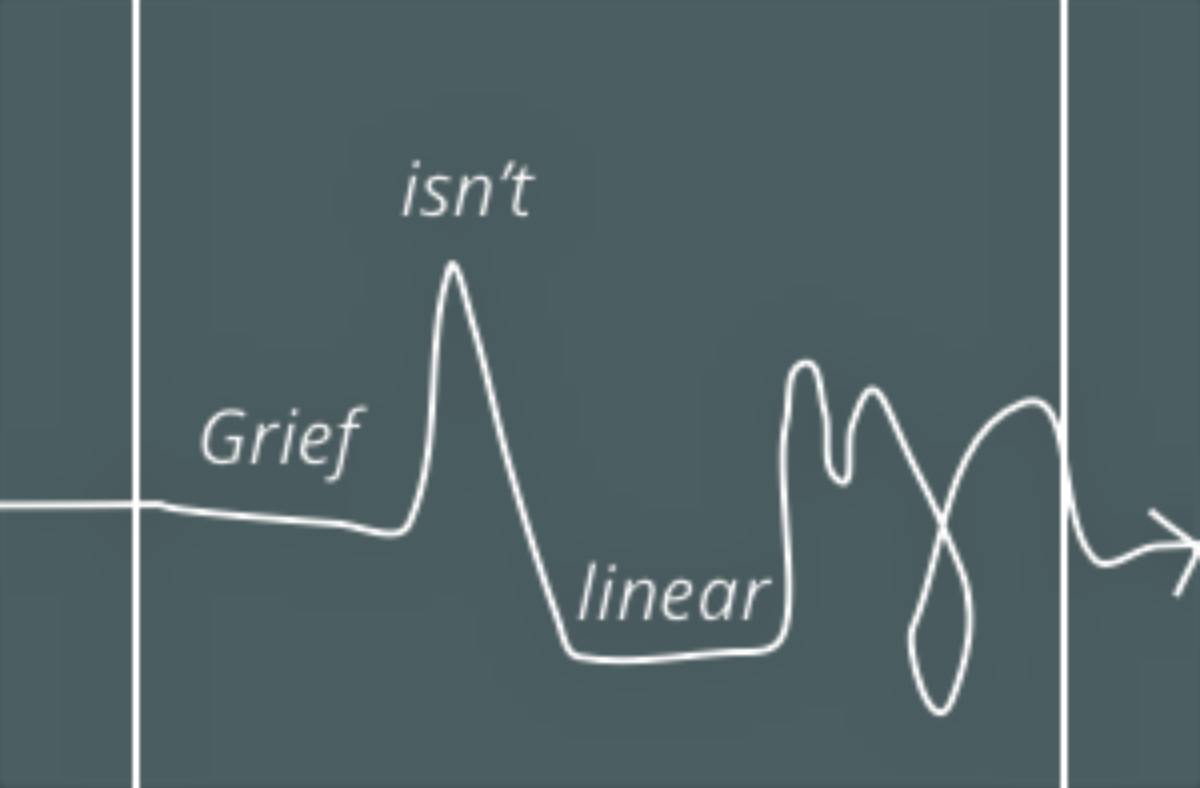
In all fairness, Elisabeth Kubler-Ross had no idea her research would be taken out of context and plastered across professional literature and media outlets as a definitive explanation for the grief experience.
But she didn’t mind the notoriety.
And ever since, counselors, pastors, laypersons and the general public have come to expect folks to politely follow the five (sometimes described as six) stages of grief up and out of brokenness like a ladder to success.
It doesn’t work that way.
❤
Sometimes those that walk alongside the bereaved are biding time, waiting for that “final” stage of grief: Acceptance.
And some therapists, counselors and armchair psychiatrists are certain that if the grieving mother can simply accept the death of her child, she can move on–that she can get back to a more “normal” life.
But this notion is as ridiculous as imagining that welcoming a new baby into a household doesn’t change everything.
And new parents have months to prepare.
Read the rest here: Loving well: Understanding “Acceptance”
While I certainly had no real idea in the first hours or even weeks what losing a child entailed, I understood plainly that it meant I would not have Dominic to see, hold or talk to.
I wouldn’t be able to hug his neck or telephone him.
He wouldn’t be sitting at my table any more.
But the death of a child or other loved one has a ripple effect. It impacts parts of life you might not expect. As time went on, I was introduced to a whole list of losses commonly called “secondary losses”.
Read the rest here: Child Loss and Secondary Losses