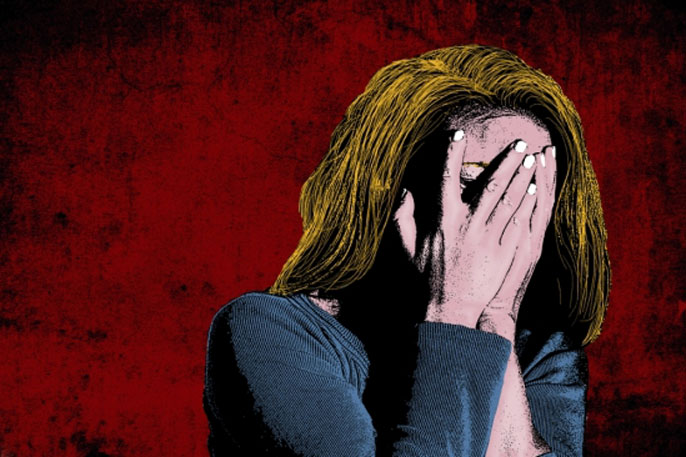
HALTing a Grief Spiral

If you’ve ever been in any kind of counseling or recovery group , you have probably seen or heard this acronym and advice: HALT  before you speak.

It’s a great reminder that I should take a moment to consider my frame of mind before I blurt out something that might damage a relationship or wound someone else’s heart.

I had never thought about it until recently, but it is also a great reminder to us who grieve that what we interpret solely as grief (which we cannot control) might be compounded greatly by other things  (some of which we can control).

So I am learning to apply the HALT acronym to a grief spiral in my own life.

When I feel absolutely overwhelmed and the grief wave is dragging me under I ask myself, “Am I hungry, angry, lonely or tired?”

hungry

H-Am I hungry?

  • Have I eaten something within the past 4-6 hours?
  • Have I had enough water in the past 2 hours?
  • Have I eaten too much sugary food today (this can impact blood sugar even if I’m not “hungry”)?
  • Am I eating a balanced diet overall?
  • Am I grazing and eating too much?
  • Do I have an underlying physical condition such as hypoglycemia or diabetes which may impact my ability to think clearly?

Some of us eat our feelings and some of us avoid food when we are stressed.  Either can be terrible for health and for mental well-being.

If you have ever been diagnosed as borderline diabetic in the past, intense grief can send you over the edge-request that your primary health provider do an A1-c test, not just measure fasting glucose.

If you don’t feel like eating, make it a non-option.  Set an alarm on your phone if you have to and consider food as medicine.  If you aren’t fueling your body appropriately, you just simply don’t have the energy to do all the things grief requires.

If you find you are overeating, try to portion out healthy and lower calorie snacks that can help you feel full but are lower in sugar and empty calories. Or instead of eating, try taking a walk or doing a few minutes of impromptu exercise.

angry

A-Am I angry?

Somewhere in life I embraced the idea that anger is “bad”.   When I am angry, I feel the anger and also feel guilty for being angry.

  • Has someone said something that upset me?
  • Has someone done/not done something that frustrates me?
  • Am I angry at God?
  • Am I angry at my missing child for leaving/for choices they made/for not saying “good-bye”?
  • Am I angry at myself for not protecting my child (even if it was not in my power to do so)?
  • Am I angry with my spouse or other close family members because they are not grieving in the same way as me?
  • Am I angry that the world goes on without my child?
  • Am I angry at friends that haven’t “been there” for me?

Acknowledge your anger.

If it is toward a person, ask yourself if you can bring it to them and mend the relationship. If that’s not an option, think about how you can construct boundaries to limit that person’s impact on your life, at least while you are experiencing the most intense feelings of grief.

If it’s toward God, express it in a journal or aloud or to a safe friend.  The Psalms are full of “Why God?”;  “Where are You?”;  “Why have You abandoned me?”

If your anger is toward your missing child, consider writing your thoughts in a journal or a letter to him or her.  Often I find that really all I need is an opportunity to express myself. It doesn’t “fix” things, but it makes them bearable.

woman-looking-through-rainiy-window

L-Am I lonely?

Grief is an isolating experience.  

Once the funeral and first few days or weeks pass by, most people around us either don’t think about our loss or don’t recognize its ongoing impact on our daily lives.  There have been many days when I have felt very, very alone.

  • Do I feel isolated in grief?
  • How long has it been since I was with other people?
  • Have I called/texted/messaged anyone today?
  • Has anyone called/texted/messaged me today?
  • Do I feel like nobody understands me?
  • Do I feel like God has abandoned me?
  • Do I feel like I just can’t talk to anyone anymore because of the differences in our experiences?

I have been blessed with some amazing friends who continue to seek fellowship even though it’s been  2 1/2 years since my son left us.  And I also joined several online communities of bereaved parents where I can vent my feelings any time and be assured that I am received, affirmed and understood.

I think anyone who hopes to heal after the loss of a child must have a safe someone to talk to.  If you don’t have friends or family that can fill that need, consider counseling.  There are just some things you have to speak aloud to be able to work out.

exhaustion

T-Am I tired?

  • Did I sleep last night?
  • Am I going to bed too late or waking too early?
  • Am I staying overly busy and running myself down?
  • Am I getting adequate and appropriate exercise?
  • Am I taking medication that makes me sleepy/tired?

I know that for many bereaved parents, sleep is elusive.  And once asleep, staying asleep is a whole other issue.  But without proper rest, you cannot have the resources to do the work grief requires.

If you are consistently struggling with sleeplessness, consider asking your healthcare provider for help.  There are a number of natural sleep remedies (melatonin, valerian root, etc.) that may be appropriate.  And if necessary, prescription medicine can help break the cycle of insomnia.

None of these things-hunger, anger, loneliness or feeling tired-are the root cause of my grief.

I grieve because my son is gone.

BUTany of them, or a combination of them-can make me more vulnerable to feeling worse IN my grief.

I cannot control the fact that I am grieving.

I cannot remove the burden of sorrow and pain that losing a child has placed upon me.

But I can make adjustments in my lifestyle or life choices to make it easier to bear that burden.

Bereaved Parent’s Wish List

This list is adapted from a friend’s Facebook post (with permission) and a list published by Children’s Hospital of Colorado.

BEREAVED PARENT’S WISH LIST:

1. I wish my child hadn’t died. I wish I had my child back.

2. I wish you wouldn’t be afraid to speak my child’s name. My child lived and was very important to me. I need to hear that my child was important to you also.

3. If I cry and get emotional when you talk about my child, I wish you knew that it isn’t because you have hurt me. My child’s death is the cause of my tears.

4. Being a bereaved parent is not contagious, so I wish you wouldn’t shy away from me. I need you now more than ever.

5. I might be sad and I might cry, but I wish you would let me talk about my child.

6. I wish you wouldn’t expect my grief to be over in a certain amount of time. I wish you could understand that my grief will never be over. I will suffer the death of my child until the day I die.

7. I am working very hard on my recovery, but I wish you could understand that I will never fully recover. I will always miss my child, and I will always grieve that my child is gone.

8. I wish you wouldn’t expect me to “not think about it” or to “move on.” Neither will happen, so don’t frustrate yourself.

9. When I say, “I’m doing okay,” I wish you could understand that I don’t “feel” okay and that I struggle daily.

10. I wish you knew that all of the grief reactions I’m having are very normal. Depression, anger, hopelessness, and overwhelming sadness are all to be expected. So, please excuse me when I’m quiet and withdrawn or irritable or cranky.

11. I wish you understood that grief changes people. When my child died, a big part of me died as well. I am not the same person I was before my child died and I will never be that person again.

12. I wish very much that you could understand …understand my loss and my grief, my silence and my tears, my void and my pain but I am so very thankful you don’t share my experience.  


Repost: Living Between the Crucifixion and the Resurrection

A close  family member is facing a difficult, scary and extensive surgery.

It’s one more reminder that we live in a broken world.  

The victory Christ gained is real.  But we do not yet have the full benefit of all its fruit.

We still face death.

We still bear pain.  

We still long for that day when ALL will be made right. 

Until then, we Live Between the Crucifixion and the Resurrection.

Repost: How Do You Breathe?

“It was the question I asked the bereaved mother that came to my son’s funeral.

It was the question a mother asked me as we stood by her granddaughter’s casket, surrounded by family and flowers.

And it is the right question.

Because when the breath leaves the body of your child, and you look down at the shell that used to be the home of a vibrant, living soul, you simply can. not. breathe.”

Read the rest here:  How Do You Breathe?

I Don’t Know How I’m Doing

People see me, these years and months after Dominic left us and ask, “How are you doing?”

I come up with an answer because that’s the law of conversation-you ask something and I answer, then I ask something and you answer.

are-you-ok

Gotta keep that ball rolling.  

If it drops we are both forced to stand there wondering what to do with our bodies, our faces and our thoughts.

But right now, I don’t know HOW I’m doing.

I am definitely past the crying-every-single-day stage.  The deep sense of loss still strangles me but I’ve learned to pretend it’s not there and just keep on keeping on.

I can look at his photo (most times) and not feel the sucker punch as my heart realizes-once again-he is not coming back.  

Ever.

I’ve developed routines to work around the hardest part of a week-Friday night into Saturday morning-so my mind and body follow the rut like cows headed to water.

cowpath

One-foot-in-front-of-the-other.

“A thousand mile journey begins with the first step” and all that.

I try to lean into the life I have NOW.  The life I would have never imagined or chosen for myself but the one I wake up to every day.

There is no EASY way to lose a child but I almost envy parents whose child’s death has given them a cause to fight for. Sometimes the circumstances surrounding loss lend themselves to a crusade which at least gives a parent somewhere to focus his or her sorrow.

What can I say about Dominic’s leaving?

Don’t ride motorcycles?

Sure, but that was my position before they were ever purchased.  I was always only barely able to contain my anxious thoughts as my sons went from here to there on two wheels with no protective shell.

I’ve learned to push down the pain and that means I stuff every other feeling as well.

I can’t select JUST the pain to hold inside.

So that leaves me here-not knowing how I’m doing.

Am I better?  

Healing?

Or just plain numb because to feel whatever I’m really feeling is too hard to embrace?

I have no idea.

smile-question

Repost: Slow Fade


Each time Dominic should be here but isn’t, I lose just a little bit more.

fading-away

“It would be easier, in a way, if it happened all at once.

If the vivid memories of his voice, his laugh, his body language, his sense of humor just disappeared-POOF!-now-you-see-it-now-you-don’t. Then I could make a single adjustment.”

Read the rest here:  Slow Fade

A Peek Inside My Heart: What Grieving Parents Want You to Know

For the next few days I’m probably going to be cycling through some posts that received the most response from readers.  A family member is facing serious and complex surgery Monday, October 24th and I’m going to be focused on that.

If I get a chance, I’ll add new content-but as all of us know, there’s no telling what a day will bring.

Until then, I hope that if you missed these, they will be helpful or if you’ve forgotten about them, they will be refreshing and encouraging again.


“People say, “I can’t imagine.

But then they do.

They think that missing a dead child is like missing your kid at college or on the mission field but harder and longer.

That’s not it at all.”

Read the rest: What Grieving Parents Want Others to Know

Repost: It’s Complicated


just fine

Child loss makes so many things more complex.

I wrote this awhile back in an attempt to help those outside this community understand that every. single. day. we who have buried a child face an emotional minefield of choices.

“One of the things I’ve been forced to embrace in the wake of child loss is that there are very few questions, experiences or feelings that are simple anymore.” 

Read the rest here:  It’s Complicated

Shake Off the Shame

shame

Shame is a shackle as sure as any chains forged from iron.  

And it often finds its home in the hearts of those who bury a child.

Bereaved parents may feel shame for lots of reasons:

  • Circumstances surrounding the death of their child-suicide, alcohol, drug abuse;
  • Inability to provide the funeral or burial they want due to financial constraints;
  • Missing signs or symptoms of an illness that may have led to death;
  • Family dynamics that pushed a child away from home or relationship.

The list could be endless-on the other side of child loss our brains pick apart every interaction, every choice, every moment that could have gone one way but went another.

Grief is WORK.

But it is impossible to make my way through the pile of emotions if I’m shackled by shame.  I can’t move freely and effectively if I’m bound hand and foot by things I can’t control and can’t change.

In the midst of all this work, some bereaved parents find they are immobilized by depression and/or anxiety and need medication to help them through.

woman looking through rainiy window.jpg

And they feel ashamed.  

Can I just say this? 

There is NO shame in seeking help.

There is nothing shameful about using whatever tools are available to make this awful journey more manageable.

A wise and kind doctor friend said, “Medication does not make the sorrow and pain go away, but it can calm the mind and create space so you can do the work grief requires.”

You are not a failure if you need medical help to quiet your mind.  You are not weak if you take a pill to keep from feeling like you’re going to come out of your skin.  You have done nothing wrong if you can’t sleep and require a sleep aid to allow your body the rest it needs to carry on.

Don’t compare your journey to anyone else’s.

You are unique.  Your path through this heartache is your own.

Do what you need to- for YOU.  

Shake off the shame.  

grief-is-not-linear


It’s Personal! — Boxx Banter

From my friend and fellow bereaved mother, Janet Boxx:

“Talk to me when your world has collapsed around you. Talk to me when you are afraid. Talk to me when you can name your fears and when they are a vague Specter looming threateningly over your shoulder, unnamed but real nonetheless. Talk to me when you are afraid to take your Savior’s hand and when you are equally afraid not to. Talk to me when the ability to project a positive outlook has been striped from your arsenal of weapons. Talk to me when it becomes desperately and intimately personal. Then I will think you understand. . .”

“God is good all the time”, is not a flip statement you rattle off to project confidence in your Savior. It’s not a mantra you repeat hoping to convince yourself of its truth. Those six words are a sacrifice of praise that are torn from the depths of despair and lifted in defiance from the ashes of a life burned down around you.

via It’s Personal! — Boxx Banter