There Is NO Rush, Dear Heart. Take Your Time.

Time, by itself, does not heal all wounds.  

But of all the factors that promote healing, there is NO SUBSTITUTE for time–not in the physical world of surgery and broken bones and deep wounds and not in the inner world of  emotional pain and brokenness and sorrow.

Our bodies are made to be amazingly resilient.  

Most people don’t really think of surgery as an assault on the body, but it is.

The surgeon knifes through layers of flesh and tissue that are designed to keep intruders out, mucks about inside, does what he or she came to do, and closes up–hopefully without introducing bacteria into the wound. Some medication may be prescribed to promote healing, control pain and reduce the risk of infection.

Then the patient goes home to recover.

But it is really TIME and the body’s own healing powers that do the lion’s share of the work.

Our hearts and minds can be resilient too.

Frequently, someone who suffers an assault on their emotions may not bear outward signs and symbols to mark what they’ve  been through.  And well-meaning friends and family can forget that healing has only begun and is far from complete.

Sometimes broken people feel pressured to put on a brave face and to stuff their feelings.

For the body, ignoring doctor’s orders to rest after surgery can mean another hospital stay due to complications that might have been avoided if the patient had been given sufficient time to recover.

Emotionally wounded people can end up with complications from pressure to rejoin regular activities and engage society in ways for which they are not yet ready.

It takes TIME to heal from burying a child or any other traumatic loss.

There is no way to rush the healing.  It takes HOURS AND HOURS to think about, respond to and process the feelings that overwhelm anyone who is grieving or trying to cope with emotional upheaval of any kind.

ok to just breathe

So be patient with yourself.

  • Understand that there will be good days and bad days.
  • There will be forward movement and steps backward.
  • Sometimes it will be easy to do something or go somewhere and the next time it might be really hard.

And don’t be afraid to let others know you are still healing.

Deep emotional wounds require great care and an extended period of time to heal if the healing is to be sound and free from unnecessary complications.

You are not selfish to draw boundaries around what you can and can’t do, what you will and won’t allow and where and when you engage with others-you are being wise.  

For those walking with the wounded:  extend grace and be patient.

Thank God you are not bearing this burden and be mindful of placing demands or pressure on the wounded to heal according to a predetermined timetable.

Then support them in their effort to give themselves the TIME they need to heal.

smiling through tears

He’s The God of the Day AND The God of the Night

I was afraid of the dark until I was almost forty years old.

My fear was rooted in scary childhood moments and even years of adult experience could not rip it from the soil of my psyche. I never could convince my heart what my head knew to be true: there was nothing in the dark that wasn’t also there in the light.

It was fear, not darkness, that controlled me.

There is great darkness in grief.  So many unanswerable questions, so much anquish, so much pain.

And there is darkness in many other painful, unchangeable circumstances.

The darkness can hide things that I see clearly in the light.  And if I’m not careful, I  can allow the darkness to foster fear and keep me from venturing futher.

In my own strength, depending on my own resources, I am afraid.

But when I call out from my scary place to the God Who made me, I can face the fear in confidence He hears and cares.

When I am afraid, O Lord Almighty, I put my trust in you.

Psalm 56:3 GNT

Sometimes believers in Christ can convince themselves that admitting their world is dark with pain or suffering or questions diminishes the power of God–that it speaks ill of God or that it means God is insufficient to uphold us in our weakness.

If I pretend that I’m never afraid, or that I never experience darkness, I am denying others my aid.

Even worse, I may be shaming them to silence, sending the message that if they are experiencing pain, something is wrong with THEM.

How many people are sitting in our pews with broken hearts and broken lives, afraid to reach out for help because–in addition to the pain of their broken life–they live under condemnation?

Life is full of pain and darkness.  Even for those who follow Jesus.

When I deny that truth, I also refuse to testify to God’s power to help me carry on and give me the courage to face my fear.

God is the God of the day AND the God of the night.  

I do not diminish Him by admitting that I experience both.

He invites me to lean into Him and to hold hands with His children as I journey on, even when it’s dark.

“Christians with this unflinching faith in the sovereign God do not deny grief. But even in their darkest hours, they borrow God’s strength. In their tears and pain they cling to God who will never let them go. What the Savior has done for others He will do for you. When you are shaken, and you know that life will never be the same again, you can trust and not be afraid. You can live in HOPE with the sturdy confidence that God will dry your tears and put you on your feet again.”

“Grief, Comfort for Those Who Grieve and Those Who Want to Help” by Haddon W. Robinson

As If Time Were In OUR Hands…

Every spring and every fall we dutifully make the rounds to our clocks and digital devices, putting them first forward an hour and then back in an attempt to make the days “longer”.

As if time was in our hands.

The sun rises and sets according to the Creator’s schedule, we can neither speed the world’s turning, nor slow it down.

We can only choose whether to be present in the moments He grants us.

The day Dominic died settled firmly any ideas I may have had about time, or control, or knowing what the future holds.  In one instant, a line was drawn across the years and they were divided into “before” and “after”.  I couldn’t turn back the clock and gain even a single hour of the days or weeks or months before his accident.

Don’t waste the precious and irretrievable hours you are given-we are all just one breath away from eternity.

Clocks don’t determine the length and quality of my days–love, laughter and gentleness do.  

None of us knows when our lives will end.

Because I have been forced to face the truth that time is in God’s hands-I choose to spend the time He gives me on things that matter, pouring into the lives of those around me and sharing what’s important with those I love.

So teach us to number our days

that we may gain a heart of wisdom

Psalm 90:12

To Deny the Presence of Pain Diminishes the Power of the Cross

To deny the presence of pain is to diminish the power of the cross.  

Dying, Jesus honored His mother’s courage by acknowledging her pain. She was losing the Son she loved and it hurt in a way that only mothers can comprehend.  He didn’t tell her that it would “be alright” or that “the ending is ultimately victorious”.

Instead, He looked upon her trembling figure and saw her broken heart.

He made what practical provision He could by telling John to care for her. He knew it would not undo her sorrow.

Some in the church preach that pain and suffering are anomalies–that they are aberrations in the “victorious Christian life”.

And we place great emphasis on the idea that even though we may have trouble in this life–“We know the REST of the story!”  Jesus WINS!

Yes. He. does.

But some of our earthly stories-the ones we are living right now- do not have tidy, happy endings:

Some are burned in the fire.

Some die of cancer.

Some fall headlong into mental illness.

And some bury their children.

What to do when you are confronted by undeniable pain in your own or someone else’s life?

Acknowledge it.

Look with mercy on the broken heart.

Allow suffering to flow from the cracks unchecked and unjudged.

Be still and be love.

Offer practical aid without strings attached.  Be mindful of what is actually helpful even if it doesn’t make sense to you.  Come alongside for the long haul.

There is no greater gift to the one who is suffering than a faithful friend who refuses to be frightened away.

Loving burden-bearers help those of us living with no-happy-ending earthly stories cling more securely to the hope of ultimate victory in Christ.  

And by doing so, declare the power of the cross.  

For the message of the cross is foolishness [absurd and illogical] to those who are perishing and spiritually dead [because they reject it], but to us who are being saved [by God’s grace] it is [the manifestation of] the power of God.

I Corinthians 1:18 AMP

What are “Secondary Losses”?

While I certainly had no real idea in the first hours or even weeks what losing a child entailed, I understood plainly that it meant I would not have Dominic to see, hold or talk to.

I wouldn’t be able to hug his neck or telephone him.  

He wouldn’t be sitting at my table any more.

But the death of a child or other loved one has a ripple effect.  It impacts parts of life you might not expect.  As time went on, I was introduced to a whole list of losses commonly called “secondary losses”.

Read the rest here: Child Loss and Secondary Losses

Even Here There Are Things I CAN Control

When I opened the door to that deputy and received the news, my world suddenly spiraled out of control.

Over the next days, weeks months I would have to do things I never imagined I might do and certainly things I did not WANT to do.  So, so much I couldn’t change.  So many ways I lost the right to choose.  

And I hated it!  

Wasn’t long and that sense of helplessness permeated every corner.  Even when it didn’t belong there.  I began to feel as if I couldn’t control anything.

So in many ways I stopped trying.  

But then one day I woke from the fog of despair.  I remembered that there WERE some areas of life where I could still make choices.

And it was empowering!  

So here’s a list that I pray gives hope to other hurting hearts.

THINGS I CAN CONTROL

  • My attitude (how I react to what others say or do)
  • My thoughts (with great difficulty sometimes)
  • My perspective (when I’m careful to fill my mind, heart and eyes with truth)
  • If I’m honest (about ALL things-including my feelings)
  • Who my friends are (from my end-can’t stop people from walking away)
  • What books I read (I am choosy and only read things that feed my soul)
  • What media I consume (stay away from toxic people, topics and television)
  • What type of food I eat (healthy, appropriate amounts)
  • How often I exercise (a walk, gentle yoga, online video routines)
  • How many risks I take (not just physical ones, but also emotional and relational risks)
  • How kind I am to others (being wounded does not give me the right to wound)
  • How I interpret situations (do I assume the best or the worst?)
  • How kind I am to myself (extending the same grace to ME that I extend to others)
  • How often and to whom I say, “I love you”
  • How often and to whom I say, “Thank you”
  • How I express my feelings (I can learn healthy ways to speak my truth)
  • Whether or not I ask for help (no one gets “points” for playing the martyr)
  • How many times I smile in a day (smiling, by itself, lifts mood-even a “fake” smile)
  • The amount of effort I choose to put forth
  • How I spend my money
  • How much time I spend worrying (or praying or complaining)
  • How often I spend moments blaming myself or others for past actions
  • Whether or not I judge other people
  • Whether or not I try again when I suffer a setback or disappointment (success is getting up one more time than I fall down)
  • How much I appreciate the people and things in my life

Exercising control over the parts of my life where I CAN exercise control helps me deal more effectively with the many parts over which I have no control

It does not undo the sorrow and pain of child loss, but it does work to balance the emotional scales. 

It makes it easier to face a new day.  

It helps me hold onto hope.  

And that is a good thing.  ❤

whenyoucan27tcontrolthewindadjustyoursails

Refusing to Hide: Lament Is Worship

We usually think of worship as songs of joy and happiness extolling the virtues of God and Christ.  

While that is most certainly a form of worship, it is absolutely not the only one.  

Biblical lament is an honest, vulnerable expression of pain, a crying out to God in faith as we are suffering.
― Cindee Snider Re

Worship is also the broken whimper of a scared and wounded child, crawling into the lap of her Abba Father.  

Read the rest here: Refuse to Hide: Lament As Worship

At Night, It Can Still Feel Fresh

It happens most often as I am drifting off to sleep. 

There is this one spot on the bedroom bookshelf where my eyes landed that first night-one paperback spine that instantly transports me to the moment I had to close my eyes on the day I found out my son would never come home again.

And it is fresh.  

Absolutely, positively fresh.  

Like “just happened” fresh.  

missing-someone

You’d think that nearly eleven years of intervening experience, nearly eleven years of grief work, nearly eleven years of trying so darn hard to learn to tuck that feeling away deep down so it can’t escape would have worked whatever magic time is supposed to work.  

it has been said that time heals all wounds rose kennedy clock

But it hasn’t.  

Oh, most days I can lock that lid down tight.  I can distract my mind, busy my hands and keep my heart from wandering too close to despair.

Darkness though. 

Shadows and silence and stillness give room for the memory to rise to the surface.  

And it does.  

My son is never coming home again.  

Fresh.  

Absolutely, positively fresh.

“Just happened” fresh.  

sometimes cant believe you are gone

Is My Marriage Doomed After Child Loss? Absolutely Not.

A few decades ago, faulty research methods made popular an inaccurate statistic that a disproportionate number of marriages fail after a couple experiences child loss.

Like many urban legends, once fixed in the minds of many, it’s nearly impossible to dislodge.  

And that is more than unfortunate because when marriages falter (and they often do) after child loss, some people just give up because they think failure is inevitable.

But it’s not. 

Marriage is hard under any circumstances.  It requires sacrifice, compromise, communication, change and most importantly, commitment.

Any stressor makes it harder. 

I can’t think of a bigger stressor than child loss. It’s no surprise that many marriages tend to flounder in the tsunami of grief, sorrow and pain that follows the death of a child.

But grief rarely causes the problems that surface, it simply makes them unavoidable.

Suddenly all the energy that was once available to deflect, to distract, to pretend is gone.  And things that have gone unaddressed for years or decades can no longer be ignored.

Read the rest here: Child Loss: Can My Marriage Survive?

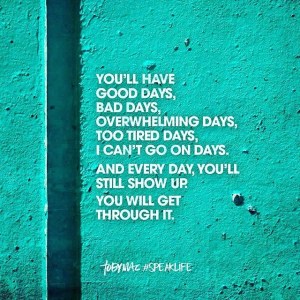
Some Days are Good, Some Days are Bad-It’s All Part of the Journey

Will today be a good day or a bad day?

Not sure yet.

Mainly because what usually determines THAT is something that happens (or doesn’t happen) at some point after my morning quiet time.

But whether it’s a good day, a bad day or somewhere in between, it is absolutely, completely, utterly NORMAL for my emotions to change as I make my way down the path called “Child Loss”.

As long as I am doing the work grief requires I will continue to have some better days.  

But grief still comes in waves in response to triggers or in response to nothing at all and it may be a bad day.  

waves-of-greif

How well did I sleep, rest, eat or exercise? My body affects my emotions in ways I don’t fully understand but absolutely experience.

Stress can bring tears to the surface.  Even GOOD stress can do it.  Looking forward to things, planning a party, large meal, trip or event is stressful, even if it isn’t sad.  All stress weakens my defenses and makes it harder to employ the techniques I’ve mastered for diverting my thoughts or controlling my tears.

Sunshine or rain? I have learned to count the number of recent cloudy days if I wake one morning feeling bluer than normal.  I often realize that a week or more has passed since I’ve seen the sun.

Too much interaction or too little interaction with other humans makes a BIG difference. My introvert self loves long afternoons alone, sitting in silence with a book or crochet, quiet walks in the woods and chore-filled days without music blaring.  But healthy solitude can turn to withdrawal if I let it and sometimes I realize my sudden sense of overwhelming grief is, in part, due to lack of human company.

The list is endless.  

Thankfully, at nearly eleven years, the better days outnumber the worse ones for me. 

But  no matter what kind of day it may be, I no longer worry if it’s normal. 

Because it’s ALL normal.  ❤

you will have good days bad days keep showing up