Ambushed

I know that certain things will bring tears to my eyes or make it impossible to squeak out a sound.  So, when I can, I avoid them.

But sometimes I can be minding my own business and BAM! from out of nowhere a sight or a sound or a smell or a memory sneaks up and there I am, ambushed by grief.

The other day was one of those.

Waiting to meet my dad for lunch, I was wandering around Cracker Barrel, enjoying the cute kitsch when the song playing overhead caught my ear–

“I bet it gets so quiet in Heaven sometimes
Even God cries when an Angel’s hands are tied”

(Rodney Atkins – Angel’s Hands)

I started listening more closely.  And as I did, Bible verses and Sunday School lessons and sermons all ran together in my head:

“God sends His angels to intervene sometimes.”

“He sent an angel to try to stop Balaam from his folly.”

“Was there an angel there when Dominic had his accident?“

“Does God cry?”

These thoughts shot lightning fast through my head and straight to my heart until I found myself searching for a corner where the tears could roll and I wouldn’t have to answer anyone’s polite inquiry, “Are you OK?”

Foolish and perhaps theologically unsound questions that sent me right back to Day One.

By the time my dad arrived, not a trace of my grief attack was left showing.

Some days are like this.  Some days are filled with sadness still.

But not every day.

Thank God.

Better than?

We live in a world where rankings rule.

The FitBit craze, while a boon to healthy living, is also a testimony to our competitive nature.

You would think that in the pit of despair, the need to be “more than” or “better than” would disappear.  But that’s not the case.

I continue to judge myself in comparison to others.

I find it difficult to give up the inner tape measure that marks progress or regress in this grief journey.

When I’m having a bad day, I feel like a failure.  I feel guilty for not taking firmer hold of the promises of God in Christ.  I question my commitment to the truth and I wrestle with unbelief.

When I’m having a relatively good day, I congratulate myself on the distance traveled, the hurdles overcome and the positive progress toward pushing grief to the background of daily life.

This is unhelpful.  And it rests in a root of pride.

I am not in control.

My struggle to rate my “progress” in grief recovery is an attempt to exert my will over things I cannot subdue in my own power. And if I feel successful, then the glory goes to ME.

When I choose to practice spiritual disciplines like prayer and fasting, I am placing myself in a position to hear from God and to be receptive to His will in my life.

Likewise, when I choose to lean into the support of others and focus on truth revealed in Scripture, I encourage the healing process.

But if my restoration rests on my efforts, I’m doomed. I do not have the power  or authority to redeem my pain.

I cannot save myself.

I need a Savior.

The sting of death is sin, and the power of sin [by which it brings death] is the law; but thanks be to God, who gives us the victory [as conquerors] through our Lord Jesus Christ. Therefore, my beloved brothers and sisters, be steadfast, immovable, always excelling in the work of the Lord [always doing your best and doing more than is needed], being continually aware that your labor [even to the point of exhaustion] in the Lord is not futile nor wasted [it is never without purpose].

I Corinthians 15:56-58 AMP


What Fills Your Heart?

Jesus taught that “Where your treasure is, there your heart will be also.” What I value most is where my heart rests.

Burying a child has pushed that truth right in front of my eyes.  I am pouring my life into something–no way around it.

So two questions fill my mind most days:

What am I willing to die for?  What will I live for?

Dying for something or someone would be a moment in time, an unrepeatable and finished work.  A single act.  

It’s much more challenging to think about what I will live for.  

I have to decide and commit to THAT over and over.

My first journal entries after Dominic died were filled with prayers begging God to pour His love, mercy and grace into my broken heart and to make me a vessel of healing for others–to not allow me to become bitter or hard or uncaring–

It was the only good I could imagine coming from the horror of burying my child.

Years ago, my husband gifted me with the CD “Revival in Belfast” by Robin Mark.  And in these months after losing my son, it is the one soundtrack I can play over and over because it speaks to deep places in my heart and spirit.

One of the songs,  “When It’s All Been Said and Done” has become my anthem:

When it’s all been said and done
There is just one thing that matters
Did I do my best to live for truth?
Did I live my life for you?

When it’s all been said and done
All my treasures will mean nothing
Only what I have done
For love’s rewards
Will stand the test of time

Lord, your mercy is so great
That you look beyond our weakness
And find purest gold in miry clay
Turning sinners into saints

I will always sing your praise
Here on earth and heaven after
For you’ve joined me at my true home
When it’s all been said and done
You’re my life when life is gone…

When It’s All Been Said and Done (lyrics)

When It’s All Been Said and Done By Robin Mark

“Only what I’ve done for love’s rewards will stand the test of time.”

I want my heart to be filled with love.  

I want my treasure to be eternal.

But for right now, until that completeness, we have three things to do to lead us toward that consummation: Trust steadily in God, hope unswervingly, love extravagantly. And the best of the three is love.

I Corinthians 13:13 MSG

A Daily Struggle

I despise the platitude plastered across social media memes:  “Hard times either make you bitter or better”.

It makes it sound so simple.

As if all I have to do is make a single choice between two equally available paths.

Enduring deep pain and unchangeable circumstances requires continued commitment to face the fork in the road over and over, and to choose well each time.

Every day I am forced to confront my heart’s tendency to turn inward and embrace loneliness and isolation in an attempt to protect myself from further and perhaps greater pain.

Each moment I have to choose whether I will lean into despair or hold onto hope.

And I just don’t agree that there are only two possible outcomes of a life that endures hardship or grief.

Bitterness is certainly an option.

If I allow myself to rehearse the reasons why my son should not have died, why my family doesn’t deserve this grief, why my life is so much harder than it should be–then the case for bitterness grows strong and becomes attractive.  I can pack my briefcase full of evidence and pull it out at every opportunity when confronted with yet another “happy moment” splashed on Facebook.

Bitterness is always a temptation, and I must refuse it everyday.

But “better” implies that I lacked something that I have now gained.

Better diminishes my grief and gives the impression that I’d do it all over again because my painful experience has wrought amazing results.

Losing my son, regardless of what I have learned, is not the same as sticking to a diet or working up to a marathon run or getting a master’s degree.

The subtle danger in declaring myself “better” is that I can decide I’m a measuring rod for others to judge their grief journey.  Or I can become like the reformed smoker who forgets how many tries it took to quit or how hard it was to finally stop smoking and instead mocks those who are still struggling.

I am not “better”.

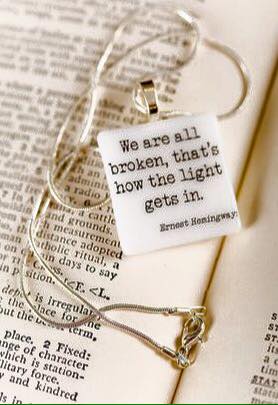
I am broken.  

I am bankrupt of any illusion that I am the captain of my ship.  I understand by very, very painful experience that there are no earthly guarantees life will turn out according to plan. I embrace with both hands the notion that the most precious gift is people we love and no matter how long we have with them, it will never be enough.

I can’t claim a final victory of faith over doubt, of good out of bad, of lessons learned from effort expended.

Instead I extend my empty hands and hurting heart to be filled with grace and mercy.

I choose love and refuse hate.

I continue to engage this broken world from my broken perspective and offer compassion and understanding to those who are broken too.

Blessed [be] the God and Father of our Lord Jesus Christ, the Father of compassions, and God of all encouragement; who encourages us in all our tribulation, that we may be able to encourage those who are in any tribulation whatever, through the encouragement with which we ourselves are encouraged of God.

2 Corinthians 1:3-4 DARBY


Not Quite So Dry Bones: Learning to Dance Again

I wrote this post several months ago–when falling autumn leaves turned my mind to how every living thing dies.  When the thought of another holiday season without a complete family circle pressed hard against my eyeballs and threatened to undo me.

I felt so very tired.  Some days I still do.  Some days are “dry bone” days.  But there are days when I hear laughter–look around and realize it flows from my own mouth.

I believe God is healing me.  He is restoring life to my bones.  He is redeeming my pain and resurrecting my hope.

It is a process.  So if you have only recently begun a grief journey, don’t despair.  It is hard and it is long.  But there is hope.

Grief has sapped the strength from my body and the life from my bones.  It has turned this forward-thinking planner into someone who rarely ponders even an hour from now.

I was a visionary.  

Now I’m a survivor.

I understand why Naomi changed her name to Mara-“bitter”.

When I read her story in the book of Ruth, I’m tempted to challenge her across time to “look on the bright side” and to “think of the future”.  But she felt her hope and her future had died and been buried with her husband and sons.  She was old.  She was spent.  She couldn’t understand what God was doing or imagine life beyond this moment or this day.

She was dried up all the way down to the bone.  

The breath of the promise of God had left her heart and she was barely there.

But God brought joy back into her life, He breathed life into her dry bones.

The book of Ezekiel records an amazing vision.  God shows the prophet a valley of dry bones.

Very dry bones.

No-life-even-in-the-marrow bones.  

And He challenges Ezekiel to prophesy to them:

Then he said to me, “Prophesy to these bones and say to them, ‘Dry bones, hear the word of the Lord!  This is what the Sovereign Lord says to these bones: I will make breath enter you, and you will come to life.  I will attach tendons to you and make flesh come upon you and cover you with skin; I will put breath in you, and you will come to life. Then you will know that I am the Lord.’” (Ezekiel 37: 4-6 NIV)

I long to have the LORD make His breath enter once again into my own dry bones, so I read His word and prophesy to my dry bones.

He is the God of the resurrection, and He will redeem my sorrow and pain.  

He IS the breath of life.   

I am clinging to His promises and trusting His heart.

One day, these dry bones will dance!

Hopeful Waiting: Healing in Community

Since losing my son, I often feel like I’m in a holding pattern, circling life and unable to land.

I’m better at doing than waiting. 

I was prepared for the tears and the sorrow and the longing of grief.  But this lifetime of waiting took me by surprise.  

I am caught  between the here-and-now and the hereafter and I must give each a measure of my attention.

Waiting weighs me down and makes it so very difficult to move.

Because the one thing I want to DO is bring Dominic back.

But that is impossible.

And I groan in travail, desperate to birth into fullness what God has promised.

Paul wrote to the church in Rome, acknowledging the tension between our earthly experience and the glory of heaven:

It is plain to anyone with eyes to see that at the present time all created life groans in a sort of universal travail. And it is plain, too, that we who have a foretaste of the Spirit are in a state of painful tension, while we wait for that redemption of our bodies which will mean that at last we have realised our full sonship in him. We were saved by this hope, but in our moments of impatience let us remember that hope always means waiting for something that we haven’t yet got. But if we hope for something we cannot see, then we must settle down to wait for it in patience.

Romans 8: 24-26 Phillips

And these verses are the cornerstone of a ministry to those who have experienced child loss called “While We’re Waiting”.   (While We’re Waiting)

Founded by two bereaved mothers, it is a Christ-centered, supportive environment that provides a safe place to share with those who understand by experience what grieving parents are going through.

The Facebook page  (while we’re waiting ) is a way for bereaved parents to connect with and encourage one another.

In our mutual waiting, we are all learning that “hope always means waiting for something that we haven’t yet got.” Together we are spurring one another on to finish well.

This community has been so helpful as I continue my grief journey.

By example, I am learning how to keep living and wait for reunion at the same time.

I am learning to persevere.

I am learning to rest but also to work.

I am learning to bear the heaviness of sorrow and deferred hope while also walking confidently in the path God has laid before me.  

And when I am worn out in the waiting, overwhelmed with the prospect of a lifetime of longing, I am encouraged by the love and support of fellow travelers who remind me of God’s faithfulness and provision, even in the wilderness  of grief.

Loving Well: How the Church Can Serve Grieving Parents and Other Hurting People

I am a shepherd.  My goats and sheep depend on me for food, for guidance and for their security.

And every day I am reminded that a shepherd’s heart is revealed by the way he or she cares for the weakest and most vulnerable of the flock.

But most of us are far removed from the daily reminder of pastoral life that was commonly accessible to the authors and readers of the Bible thousands of years ago.  So it’s no surprise that we tend to forget the connection between a shepherd’s life and a pastor’s calling.

Jesus called Himself, “the Good Shepherd” and He told Peter to “feed My sheep”. The relationship of shepherd to sheep is important if we are to understand how God wants His church to function.

Many churches serve more people than the number of animals in my care. And a pastor is only one person.  He (or she) cannot personally meet every need of every member of the congregation.

Still, a pastor is in a unique position to demonstrate priorities to a church and lead by example in ministering to the weakest and most vulnerable among them.

So how can a pastor lead the church to love the grieving and other hurting people well?

Cultivate a Culture of Compassion:

Does your local body welcome the wounded?  

Like those carrying the pain of burying a child.  Or the burden of chronic physical disability. Or the unceasing struggle of overcoming addiction.

Pain is a reminder that this world is broken. It’s uncomfortable to feel it, to be near to someone who is feeling it. We try so hard to “fix” our own and other people’s pain.  And sometimes if we don’t feel like we can fix it, we ignore it.

A cold shoulder wounds as much as hurtful words. Acknowledgement is as great a blessing as an extended hand.

Compassion means “to suffer alongside”.  It requires getting to know someone and listening to their story.  It means inviting others into your life, not only your pew.

Is your congregation too busy to truly SEE? The business of the church is people.

If we are to minister to the broken, we must reach out to them.  The first step is to welcome them in.  Then show them that you care.

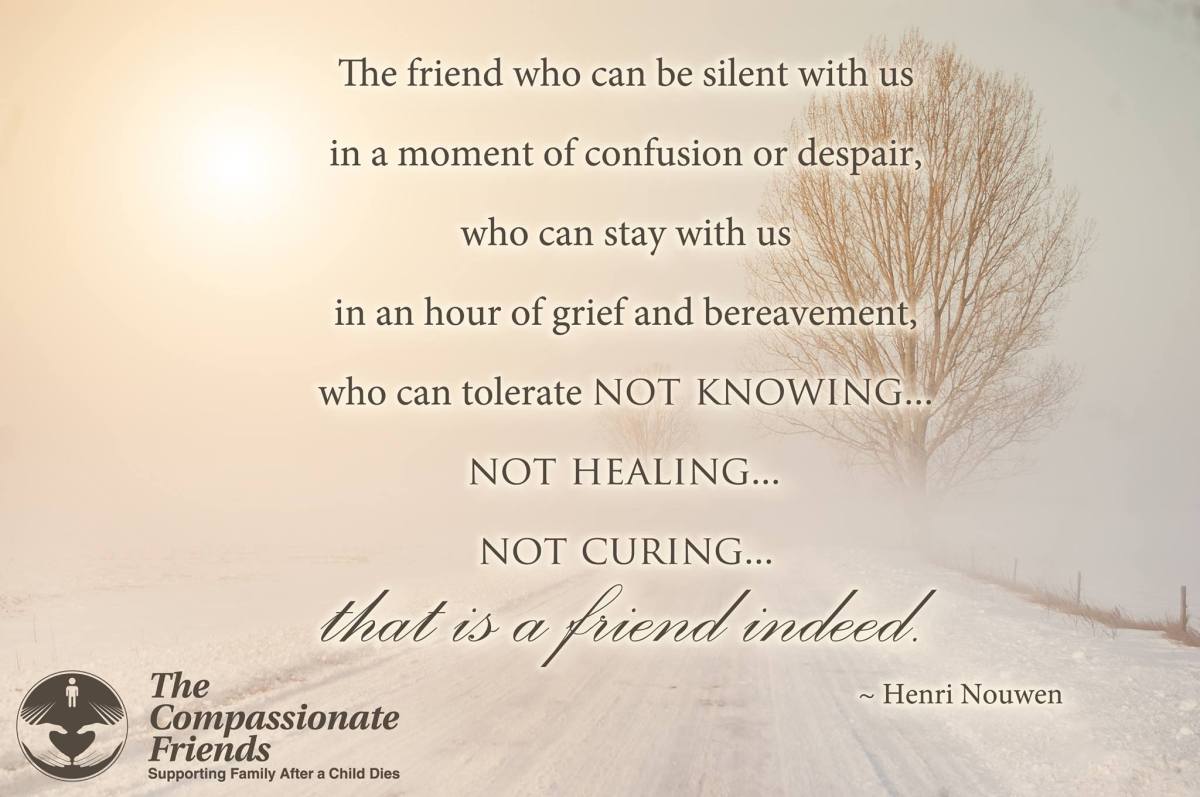
Come alongside, bear witness to the tears, lay a hand on an arm, reach out with only love-often in silence. This is compassion, it touches the soul of one who hurts and reminds them that pain is not all there is.

No one should leave a church service ungreeted.  No one should leave feeling more alone than when they entered the building.

Communicate the Cost of Compassionate Response:

God is the God of inexhaustible resources, yet sometimes we act as if we are in a zero-sum community.  If we give too much over here, there won’t be enough over there.  But God has promised to supply every need according to His riches in glory.  

If we are to live in true fellowship with one another, loving one another through thick and thin, then it will be costly.  Ministry requires giving of resources, energy and time.

I have written elsewhere that, “There is no substitute for walking with the wounded.  It is costly, it is painful, it is hard.”

But it is what we are called to do.

God Himself stepped into His creation to feel the pain of brokenness, to bear the price of sin and to open a Way for restoration and redemption.

We shouldn’t set a time limit or a resource cap when we minister to those He has placed in our midst.

Commit to Continue:

Compassion says, “I see your pain.  I hurt with you.  Let me stay with you until you feel better.  And if you never feel better, I’ll still be here.”

Compassion requires conscious commitment to push back against our tendency to forget those who live with ongoing challenges.

Ministering to hurting people rarely leads to a tidy final chapter that wraps loose ends into a comfortable narrative.We need to be honest about this.  A weekly program is not going to be enough.

Pastors can help a congregation remain focused on compassionate response so that members do not abandon the broken to sit alone with their pain.

True ministry involves RELATIONSHIP.  And relationship is time-consuming.

But relationship is at the center of the Gospel of Jesus Christ.  No longer separated from God by our sin, we are invited to His table–welcomed into His family.

We are all broken.  And without the compassionate love of our Savior, we are all without hope.

When we welcome the wounded, we are living the Good News.

Watch what God does, and then you do it, like children who learn proper behavior from their parents. Mostly what God does is love you. Keep company with him and learn a life of love. Observe how Christ loved us. His love was not cautious but extravagant. He didn’t love in order to get something from us but to give everything of himself to us. Love like that.

Ephesians 5:1-2 MSG


Loving well: Understanding “Acceptance”

Sometimes those that walk alongside the bereaved are biding time, waiting for that “final” stage of grief: Acceptance.

And some therapists, counselors and armchair psychiatrists are certain that if the grieving mother can simply accept the death of her child, she can move on–that she can get back to a more “normal” life.

But this notion is as ridiculous as imagining that welcoming a new baby into a household doesn’t change everything.

And new parents have months to prepare.

I had the brief millisecond between the words leaving the deputy’s mouth and my ears hearing them for my mind to comprehend.   

And I admit, there were moments in the day, even a few months afterwards, that I found myself saying out loud, “How can Dominic be dead?”

But those have mostly passed.

I accept that my son is dead.  He will not return to me in the land of the living.  He will not walk through my front door and he will not grow older, marry and have children of his own.

Every now and then, I do see a shape in a crowd, the shoulders set just so and for a moment my heart leaps.  But my mind quickly remembers that Dominic is not here.

So, acceptance means that I understand that things are the way they are.

Acceptance does not mean that I have to like it or that I don’t wish some things were different.

Acceptance means that I comprehend the future will not include new memories with Dominic as part of our family circle here on earth.

Acceptance does not mean that I never look back fondly and with yearning for the years we spent together.  It does not mean that I don’t grieve the years we won’t have.

I accept that I have a life to live even though part of my heart is no longer with me.

But acceptance does not mean that the life I live going forward is not impacted by my loss or that it isn’t framed at the edges by grief.

I am now what losing a child has made me.  

Acceptance means that I will offer up this new me, just as I have offered up every new me in the past, to the God Who made me, to use me according to His plan and for His glory.

The people of Israel were shaped as much by what they lost as by what they gained.

A group of Israelites, led by Ezra the scribe, returned to Jerusalem from Babylon, and were charged with rebuilding the Temple that had been destroyed many years earlier.

A few among them had seen with their own eyes the glory and majesty of Solomon’s Temple, but most of those returning had been born in captivity.  To the older men, this new temple paled in comparison to what they had lost.  But to the younger, it represented a new beginning and a brighter future.

Many of the older priests and Levites and the heads of families cried aloud because they remembered seeing the first temple years before. But others were so happy that they celebrated with joyful shouts.Their shouting and crying were so noisy that it all sounded alike and could be heard a long way off.

Ezra 3:12-13 CEV

The grieving were sad, but they worked anyway.

Acceptance acknowledges loss, but is not immobilized by it.

So how to love me and others well in this phase of our grief journey?

Understand that acceptance involves both of us:  while I must accept the fact that my child is dead and that my life is different than the one I would have chosen for myself–others must accept that I am who I am and I will never be the other me–the one before losing a child, again.

My life as a bereaved mother is always going to be a mixture of sorrow and joy.

It will always include looking back and looking forward.

It can’t be anything else.

Loving Well: Relational Acts of Kindness

Focusing on “Loving Well” has reminded me again of the dear friends and sisters who consistently, compassionately and sacrificially love me just when I need it most. They came last week for a visit and spoke courage to my heart once again.

Loving well takes time and effort and is costly.  But I think we represent Jesus best when we love extravagantly.

“You can always give without loving, but you can never love without giving.”

– Amy Carmichael

I have two very special friends.

After Dominic died and the meals and visits and cards had dwindled and the silence and heartbreak had become oh-so-overwhelming, they came out to spend the day with me.

The whole day.

With me.

With this crying, couldn’t hold it together, didn’t know what to say mama who had buried her son just weeks ago.

They brought lunch.  And let me talk–or not. They didn’t try to fix me, didn’t offer platitudes or Bible verses to smooth things over when conversation lagged.  They hugged me and listened.

And they have been doing this every few weeks since.

It costs them a whole day and it’s 60 miles each way–but they keep coming and keep lifting me up so that grief and sorrow don’t drown me.

Social networks buzz with posts and tweets and Instagrams of “random acts of kindness”. That’s a good thing.

But on a scale of 1 to 10, those are easy.

We pick a stranger, discern a way to help (maybe paying for a meal or a coffee) and then both walk away feeling warm and fuzzy. No relationship, no comm

Relational Acts of Kindness are much harder.

We can’t just do our thing and leave.  Our hearts and resources are going to get tangled up with theirs.

It might get expensive.

That’s what my friends did.  They leaned into relationship with me even though it was messy, and hard, and costly.

So my challenge to you is this:  who do you know that could use a relational act of kindness?  A neighbor?  A distant relative? Someone who sits alone in a pew?

There is no greater kindness than coming alongside someone at just the moment they feel their strength is gone.

I know that without these friends I would not be able to bear my grief nearly so well.  I pray that God will bless them abundantly as they have been a blessing to me.

“Help carry one another’s burdens, and in this way you will obey the law of Christ.”  

~Galatians 6:2 GNT


Loving Well: Just Say His Name

I know you are afraid.

You think that speaking his name or sharing a memory or sending me a photo will add to my sorrow.

I understand.

But even when it costs me a split second of sharp pain, it is truly a gift to know that Dominic lives on in the hearts and minds of others.  It gives me courage to speak too.  It creates space where I can honor my son.

It helps keep him alive.

“I mean, they say you die twice. One time when you stop breathing and a second time, a bit later on, when somebody says your name for the last time.” ~Banksy

I know you’re busy.  I know your life is full and bustling with so many people and activities demanding attention that you don’t have any to spare.

It is easy to forget.

He wasn’t your child. The date of his homegoing isn’t etched into the marrow of your bones, it isn’t scribed on the inside of your eyelids.

Every time the calendar screams “12” I make one more chalkmark on my heart counting the days since I saw him last.

But please remember.  Please don’t let the day slip by and not acknowledge that it is as important a milestone to me and my family as his birthday.

I know you’re scared.

Death is scary.  Even for us who trust Jesus.  And the death of a child just trashes the notion that we are in control, that we can fully protect the ones we love from all harm.

But you are frightened of what you cannot comprehend.

I am living the reality of your greatest fear.

Be brave.  Step out and welcome me in.

Give space for the longing to hear my son’s name, to know my son matters, to relive some of the happy moments and funny times and even some of the hard days.

I can sit by myself and remember him.

But sharing him with you breathes life into the recollection and speaks hope to my heart.

It fuels the fire that helps me see that even when I’m not here to carry him into the land of those still living, someone else will do it for me.

Love is stronger than death even though it can’t stop death from happening, but no matter how hard death tries it can’t separate people from love. It can’t take away our memories either. In the end, life is stronger than death.

—Anonymous