They’d crossed over to that continent where grieving parents lived. It looked the same as the rest of the world, but wasn’t. Colors bled pale. Music was just notes. Books no longer transported or comforted, not fully. Never again. Food was nutrition, little more. Breaths were sighs. And they knew something the rest didn’t. They knew how lucky the rest of the world was.
― Louise Penny
It was absolutely this way for more than the first three years.
No matter how hard IWILLEDit, I could not make my world any different than it was.
But thankfully, slowly, the color has returned-dimmer still-but no longer only shades of gray.
Music again touches my heart and the right words do bring comfort.
Sighing remains my second language.
And I still think how very blessed are those who have been spared this awful knowledge.
My hardest grief season begins in November and runs to the end of May. Thanksgiving through Dominic’s birthday on (or near) Memorial Day are days full of triggers, memories and stark reminders that one of us is missing.
If I could fall asleep November first and wake up in June I’d do it.
But I can’t so I have to employ all the tricks I’ve learned in the nearly four years since Dominic ran ahead to heaven to survive those particularly challenging months.
Here are ten ways I survive hard grief days:
1. I make lists of things to do. I’ve found that if I don’t make a plan for each day it’s far too easy to just lie around and feel sorry for myself. I use index cards but whatever works for you is fine. I list household chores, phone calls to make or notes to write, exercise, errands or whatever. And then I consider them non-negotiable. These are my marching orders and after my morning coffee I start down the list.
2. I do something creative. I crochet or arrange flowers or sew a little. Taking just five or ten minutes to make something beautiful changes my perspective. I have a can opener that takes the lids off without sharp edges and I make magnets for friends and family members or just to have on hand for a little gift.
3. I take a walk. I am thankful I can go outside on my own property and enjoy fresh air and country sunshine. I know not everyone has that option. But even a walk inside your office building or up and down a couple flights of stairs gets the blood pumping and releases endorphins. If I can’t walk, then I at least change my physical position-from sitting to standing, from standing to moving. Body position impacts my emotions.
4. I find something to make me smile. There is scientific evidence to back our common sense experience that smiling lightens our mood and helps our hearts. I read jokes or check out some of my Facebook friends that tend to post funny memes or stories. Sometimes I just “practice” a smile and even that can send feel-good hormones surging through my system.
“Don’t try to win over the haters, you are not a jackass whisperer.” ~ Brene Brow
5. I call or text a friend. Sometimes I just need to know that someone else is aware of my hard day. No one can undo my grief but when I feel there is a witness, it lightens the load somehow.6. I stay off Facebook and other social media platforms. I love that I’m able to keep in touch with friends and family via social media. But it can be full of drama and negativity as well. So if I’m having a tough day, I remove the potential for it to be made harder due to random comments, posts or photographs.
7. I pet my cats. I have always been an animal lover. But I truly do not know how I could have survived these past four years without the companionship of my cats and other furry friends. Study after study confirms that being in the presence of pets lowers blood pressure and calms nerves.
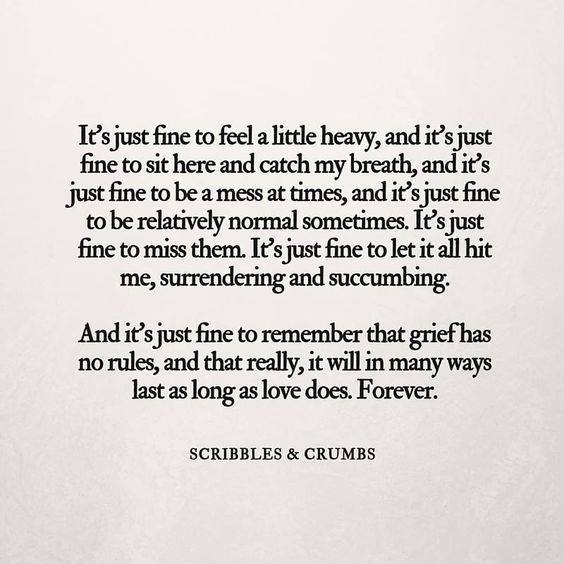
8. I go with my feelings. There is no rule book that says I have to be tough and hide my tears. If I’m having a hard grief day it is perfectly acceptable to let the sorrow wash over me and let the tears fall. Sometimes fighting the feelings only prolongs my pain. Often a good cry is cleansing and I am much better afterwards.
9. I journal. There are things I need to “say” that are better kept between me, God and my notebook. I have kept a journal for nearly three decades. Many times just writing out my feelings, my fears, my thoughts and my frustrations is enough to take the sting out. There’s something about not keeping it all bottled up inside-even if no other soul reads it-that acts as a catharsis.
10. I copy encouraging quotes or Scripture and hang them prominent places throughout the house. I have notes tacked to my bed post, on my bathroom mirror, taped to the cabinet next to my stove, stuck on the fridge, slid into my wallet in my purse-absolutely everywhere. Because when my heart is hanging on by a thread, the smallest bit of encouragement is often enough to help me hold onto hope.
None of these things undo my grief in the most basic sense.
Dominic is gone, gone, gone and I will not see him or hear his voice until we are reunited in the Presence of our Savior.
But they DO help.
One of the most devastating aspects of child loss is the overwhelming sense that NOTHINGmakes sense anymore and that I have absolutelyNOcontrol.
Choosing helpful habits and actions gives me a way to regain dominion over a tiny corner of my world.
And that little bit of action strengthens my spirit and helps my heart hold on.
The fact that so many bereaved parents tell me they don’t feel they can share their experience on their own FaceBook or other social media pages.
That’s just WRONG!
They have been shushed to silent suffering because when they break open the vault of emotions and let others see what’s inside, most people turn away-or worse, they condemn that wounded heart for sharing.
In recent years we have dragged many topics into the light. We’ve made space in the public square for discussion of things we used to pretend didn’t exist.
But life after child loss is still a hushed topic.
The long road to healing after burying a child is rarely acknowledged outside the community of bereaved parents.
We have splashed all kinds of garbage across the Internet because in one way or another it makes us feel good (yep, admit it-it feeds some place in your soul) but we will not tolerate someone being utterly honest about how impossibly hard some things are to bear in this life.
Because THAT makes us uncomfortable.
Not every hurting heart is brave enough to risk negative public opinion. I understand that completely. This post is not for THEM, it’s for the hundreds and thousands who want to shut them down and shut them out.
This may be for you, if you have ever scrolled past a plaintive post or made some glib comment like, “God has a purpose in this for you” or worse, written a private message scolding someone and telling them they are begging for attention, refusing to “move on” or hanging on to hurt.
Think for one minute-literally 60 full seconds-how it would feel to hold the cold hand of your dead child, bury your child, go home to his empty room and then live the rest. of. your. life. without the earthly companionship of the child of your heart.
Then think again about censoring your friend who’s grieving.
Instead, speak courage to his or her heart.
Strengthen their hold on hope don’t destroy it.
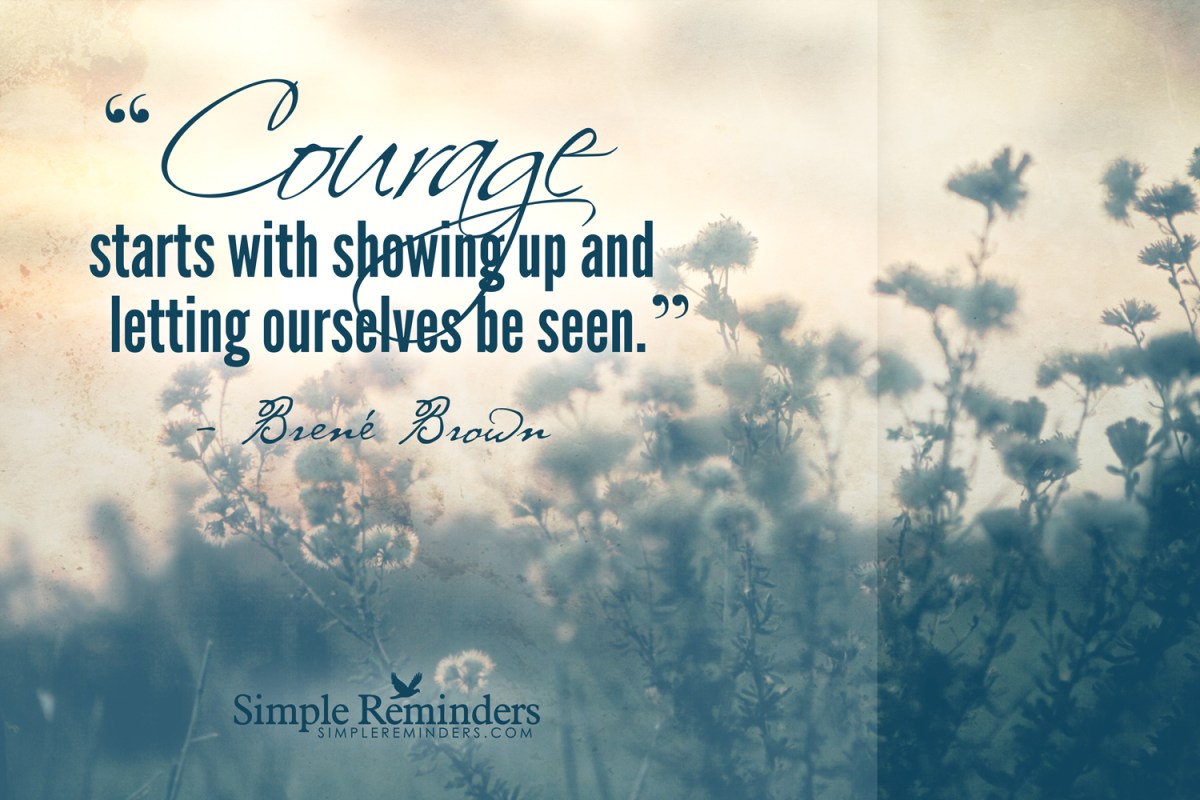
Courage is a heart word. The root of the word courage is cor – the Latin word for heart. In one of its earliest forms, the word courage meant “To speak one’s mind by telling all one’s heart.” Over time, this definition has changed, and today, we typically associate courage with heroic and brave deeds. But in my opinion, this definition fails to recognize the inner strength and level of commitment required for us to actually speak honestly and openly about who we are and about our experiences — good and bad.
Before Dominic ran ahead to heaven I knew only a handful of bereaved parents, all of whom I met after their bereavement.
I had never walked with anyone through this Valley.
Now I am friends with dozens of them and there are hundreds more I “know” online through private groups and blogs.
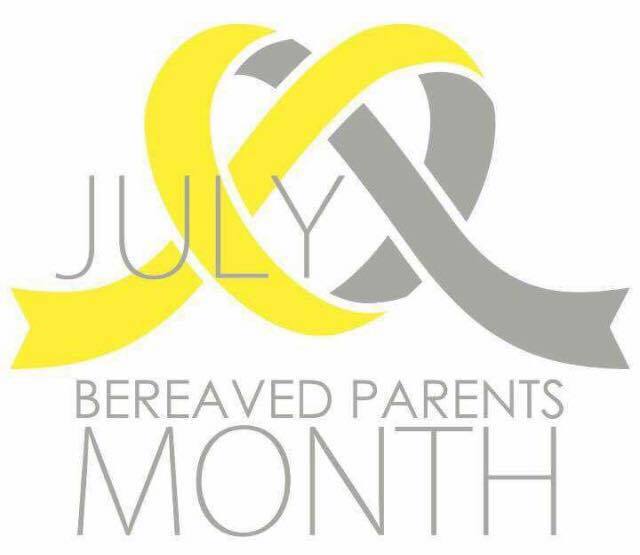
Until this was MY life, I would have dismissed “Bereaved Parents Month” as another random and narrowly applicable declaration by some group trying to muster support for their own agenda.
One of the things I’ve been forced to embrace in the wake of child loss is that there are very few questions, experiences or feelings that are simple anymore.
“How many children do you have?”
A common, get-to-know-you question lobbed across tables, down pews and in the check-out line at the grocery store. But for many bereaved parents, it can be a complex question that gets a different answer depending on who is asking and where we are.
This list is adapted from a friend’s Facebook post (with permission) and a list published by Children’s Hospital of Colorado.
BEREAVED PARENT’S WISH LIST:
1. I wish my child hadn’t died. I wish I had my child back.
2. I wish you wouldn’t be afraid to speak my child’s name. My child lived and was very important to me. I need to hear that my child was important to you also.
It was the question I asked the bereaved mother that came to my son’s funeral.
It was the question a mother asked me as we stood by her granddaughter’s casket, surrounded by family and flowers.
And it is the right question.
Because when the breath leaves the body of your child, and you look down at the shell that used to be the home of a vibrant, living soul, you simply can. not. breathe.
I wrote this post December, 2015. It hadn’t been long since I joined an online community of bereaved parents and began to see that I wasn’t the only one who had friends and family that misunderstood child loss.
I was spending a lot of time in my life trying to help others comprehend, just a little, what it felt like to bury a child.
Trying to give them a tiny taste of how this pain is so, so different than any other I had experienced. Begging them to toss the popular ideas bandied around that grief followed “stages” and was “predictable”.
I re-share every so often because it seems to help, a little. I’m re-sharing today in honor of Bereaved Parents Month. ❤
People say, “I can’t imagine.“
But then they do.
They think that missing a dead child is like missing your kid at college or on the mission field but harder and longer.


 6. I stay off Facebook and other social media platforms. I love that I’m able to keep in touch with friends and family via social media. But it can be full of drama and negativity as well. So if I’m having a tough day, I remove the potential for it to be made harder due to random comments, posts or photographs.
 7. I pet my cats. I have always been an animal lover. But I truly do not know how I could have survived these past four years without the companionship of my cats and other furry friends. Study after study confirms that being in the presence of pets lowers blood pressure and calms nerves.
 9. I journal. There are things I need to “say” that are better kept between me, God and my notebook. I have kept a journal for nearly three decades. Many times just writing out my feelings, my fears, my thoughts and my frustrations is enough to take the sting out. There’s something about not keeping it all bottled up inside-even if no other soul reads it-that acts as a catharsis.




 thelifeididntchoose