Loving Well: Relational Acts of Kindness

Focusing on “Loving Well” has reminded me again of the dear friends and sisters who consistently, compassionately and sacrificially love me just when I need it most. They came last week for a visit and spoke courage to my heart once again.

Loving well takes time and effort and is costly.  But I think we represent Jesus best when we love extravagantly.

“You can always give without loving, but you can never love without giving.”

– Amy Carmichael

I have two very special friends.

After Dominic died and the meals and visits and cards had dwindled and the silence and heartbreak had become oh-so-overwhelming, they came out to spend the day with me.

The whole day.

With me.

With this crying, couldn’t hold it together, didn’t know what to say mama who had buried her son just weeks ago.

They brought lunch.  And let me talk–or not. They didn’t try to fix me, didn’t offer platitudes or Bible verses to smooth things over when conversation lagged.  They hugged me and listened.

And they have been doing this every few weeks since.

It costs them a whole day and it’s 60 miles each way–but they keep coming and keep lifting me up so that grief and sorrow don’t drown me.

Social networks buzz with posts and tweets and Instagrams of “random acts of kindness”. That’s a good thing.

But on a scale of 1 to 10, those are easy.

We pick a stranger, discern a way to help (maybe paying for a meal or a coffee) and then both walk away feeling warm and fuzzy. No relationship, no comm

Relational Acts of Kindness are much harder.

We can’t just do our thing and leave.  Our hearts and resources are going to get tangled up with theirs.

It might get expensive.

That’s what my friends did.  They leaned into relationship with me even though it was messy, and hard, and costly.

So my challenge to you is this:  who do you know that could use a relational act of kindness?  A neighbor?  A distant relative? Someone who sits alone in a pew?

There is no greater kindness than coming alongside someone at just the moment they feel their strength is gone.

I know that without these friends I would not be able to bear my grief nearly so well.  I pray that God will bless them abundantly as they have been a blessing to me.

“Help carry one another’s burdens, and in this way you will obey the law of Christ.”  

~Galatians 6:2 GNT


Loving Well: Just Say His Name

I know you are afraid.

You think that speaking his name or sharing a memory or sending me a photo will add to my sorrow.

I understand.

But even when it costs me a split second of sharp pain, it is truly a gift to know that Dominic lives on in the hearts and minds of others.  It gives me courage to speak too.  It creates space where I can honor my son.

It helps keep him alive.

“I mean, they say you die twice. One time when you stop breathing and a second time, a bit later on, when somebody says your name for the last time.” ~Banksy

I know you’re busy.  I know your life is full and bustling with so many people and activities demanding attention that you don’t have any to spare.

It is easy to forget.

He wasn’t your child. The date of his homegoing isn’t etched into the marrow of your bones, it isn’t scribed on the inside of your eyelids.

Every time the calendar screams “12” I make one more chalkmark on my heart counting the days since I saw him last.

But please remember.  Please don’t let the day slip by and not acknowledge that it is as important a milestone to me and my family as his birthday.

I know you’re scared.

Death is scary.  Even for us who trust Jesus.  And the death of a child just trashes the notion that we are in control, that we can fully protect the ones we love from all harm.

But you are frightened of what you cannot comprehend.

I am living the reality of your greatest fear.

Be brave.  Step out and welcome me in.

Give space for the longing to hear my son’s name, to know my son matters, to relive some of the happy moments and funny times and even some of the hard days.

I can sit by myself and remember him.

But sharing him with you breathes life into the recollection and speaks hope to my heart.

It fuels the fire that helps me see that even when I’m not here to carry him into the land of those still living, someone else will do it for me.

Love is stronger than death even though it can’t stop death from happening, but no matter how hard death tries it can’t separate people from love. It can’t take away our memories either. In the end, life is stronger than death.

—Anonymous


Loving Well: Transitioning From “Good-bye” to Grief

A funeral or memorial service seems like a final chapter.  We close the coffin, close the doors and everyone goes home.

But for bereaved parents and their surviving children, it’s not an end, it is a beginning.

Much like a wedding or birth serves as the threshold to a new way of life, a new commitment, a new understanding of who you are, burying a child does the same.

I walked away from the cemetary overwhelmed by the finality of death–not in a theological sense–I believe firmly that my son lives with Jesus–but with the undeniable fact that he is no longer available to me on this earth.

And in the days afterward, I was struck by the inadequacy of a funeral or memorial service to make space for the deep and ongoing sense of loss and pain and sorrow.

There is a difference between mourning and grief.  Although before losing Dominic I never bothered to notice.

I think we confuse the two on a regular basis.  I know I did.

Mourning is defined as “the outward signs and rituals associated with sorrow for a person’s death.  It is usually limited in time by social conventions or community expectations”.   

Mourning is the more or less public (depending on the family’s choices) “Good-bye” to their loved one.  It’s a circumscribed set of things we do and time we spend welcoming others into the space where we remember, make final arrangements for a body and celebrate the life that has left us.

In most North American communities, we have dispensed with the tradition of draping pictures, windows and ourselves for six months to a year to mark the home and heart of someone who has suffered loss.

What used to be a longer span of time allowing for special accommodations due to grief has now been squeezed into about two weeks.

Our hyper-drive world insists that even parents who bury a child show up to work, begin to participate and act like they have it “together” in public much sooner than our frail human bodies and broken hearts can manage.

Grief is more than a feeling.  It invades your heart, your mind, your body and your soul

Grief is the deep and poignant distress caused by bereavement..

It cannot be circumscribed by time and refuses to limit itself according to the expectations of others or even myself.  It will last (though perhaps not with the same intensity) as long as I live.

Because unlike a funeral, missing my son will not come to an end until I am reunited with him in heaven.

And we need to talk about this.

We need to help ourselves and others understand that grief changes who we are.  It changes how we perceive the world.  It alters our sense of self and impacts our relationships with others.

I am not as fragile as I was just weeks or months after Dominic’s death.  I have learned to put on a smile and pass by his favorite food in the grocery store without crying.  I can remember funny things he said or did without simultaneously experiencing gut-wrenching pain that he is no longer here to do them.

But I am still grieving.  

I am still working out how this missing is weaving itself into the fabric of who I am.

And it is WORK.

Much of the work I have to do on my own–I have to think about and feel and embrace the changes that have been thrust upon me.  But for some of the work, I need the help of others.  I need to be able to speak aloud my thoughts and feelings and receive feedback so that I’m not stuck in unfruitful inner dialogue.

It requires energy and resources.

While I am doing this grief work, my physical, mental, emotional and spiritual energy is largely consumed by it.  I am unavailable more often.  I have a smaller capacity to absorb sudden change and unexpected events. I’m uncomfortable in crowds.  I tire more easily.

And it takes TIME.  

I have discovered that no matter how much I want to speed up this process, it will not be hurried along.  And it proceeds in a “two-steps-forward-one-step-back” fashion so even when I feel I am making progress, I discover I’m not as far along as I think I am or would like to be.

So how to love well at this stage in my grief journey?  When I’m transitioning from “good-bye” to grief?  When I’m trying to understand this new life I never expected to live?

  • Acknowledge my ongoing pain and struggle.
  • Encourage me by allowing me to share honestly.
  • Be patient.  I want to heal but I don’t have control over how long it will take.
  • Don’t shut me out or shut me down.  Grief is uncomfortable for both of us.
  • Remember my son.  I need to know that others miss him too.

Rejoice with those who rejoice [sharing others’ joy], and weep with those who weep [sharing others’ grief].

Romans 12:15 AMP


Loving Well: Some Things Hurt

Before I lost Dominic, I know that I, like others who had never experienced the death of a child, undoubtedly said and did things that were hurtful instead of helpful.

I painfully remember sharing at a Thanksgiving women’s gathering and, meaning to encourage the ladies, said something like, “I think we are able to better face the big disappointments or trials in life, but find the daily drip, drip, drip of unfulfilled expectations to be a greater challenge.”

 A bereaved mom in attendance set me straight (in a very kind and gracious manner!).

That exchange has come often to my mind in these months after burying my son. I wish I could go back and have a do-over.

I hope that my pain has made me more compassionate, more sensitive to those around me.  I pray that I will extend grace and mercy to everyone I meet.  I want to be a light, not a candle-snuffer!

I’m convinced that most people want to bless and not hurt.

So here is a list of things (from my own experience and from the experience of others) that can be particularly damaging to bereaved parents when dealing with their loss:

Offering platitudes and quoting Bible verses is unhelpful.

Don’t say, “At least you have your other children.”  Which of your own children are you willing to give up?

“God needed another angel!” This is just bad theology as well as unhelpful.  God doesn’t need anything and my child is not an angel.  He is a redeemed member of the Body of Christ and in heaven with Jesus.

“He or she isn’t suffering anymore.”  That may very well be true, but it’s not comforting to hear it.

“All things work together for good…” I may believe that in my heart of hearts, and may come to feel it again one day, but in the days immediately following my son’s death, I didn’t need to be reminded.

“He (or she) wouldn’t want you to be sad.”  How do you know what my child would want? Being sad and expressing my pain honors his or her memory.

“God will use your son’s death to bring people to Jesus.” Yes, He might.  But He did not need my son to die in order for anyone to receive Christ.  He may use my son’s death, but I will speak honestly and say that I would not have exchanged Dominic’s life for anyone.

“It could have been worse” or any sentence beginning with, “At least…”. My child is dead.  I cannot have him back.  I’m sure there are more painful ways to lose a child besides a motorcycle accident,but it is a matter of degree, not kind. Just please, don’t.

“Don’t try to make your grief ‘equal’ to the parents. Sometimes in an effort to comfort we might say things like “I understand how you feel. I was devastated when my grandfather, or aunt, or best friend died”.  My mom and sister proceeded my daughter in death and their loss, as difficult as it was, didn’t even come close to how difficult it has been to lose her.  And don’t compare the loss of your beloved pet to the loss of someone’s child. JUST DON’T! Almost everyone I know who has lost a child has had their loss compared to that of someone’s pet. My daughter’s death was compared to that of someone’s pet lizard.”

Asking for details of the cause of death or the conditions surrounding the death of any child is not helpful.  If a parent wants to talk about it, listen.  Otherwise, keep curiosity in check.

“I did not appreciate [a close family member] persisting to know why our son took his own life. I don’t want to tell her as she will dwell on that forever and I want to celebrate his life, not his death. I also didn’t appreciate those folks telling me to stay strong. I am strong, but if I wanted to be a puddle, I am allowed to do that too.”

Please don’t label us as “strong”–you may mean it as a compliment but we hear it in many ways.  One way might be that we are not honoring our child by grieving hard enough.  Another way might be that we are expected to act strong even when we don’t feel strong.  Trust me, you have no idea what it costs a bereaved mama to hold back the tears.

“I get so tired of people telling me I’m so strong also. I too am a puddle often but no one sees me during these days alone.”

It’s true that no one can fully comprehend our pain if they have not felt it.  But it is possible to educate yourself about ways to support grieving parents.

“I wish people were more understanding but the problem with that is about the only way to understand is to go through it and I don’t want that for anyone.”

Please don’t withdraw from us as if we have a communicable disease.  I know it makes you uncomfortable to be around me and my grief.  It makes me uncomfortable too.  But companionship and encouragement can mean the difference between grieving well and being overwhelmed by sorrow.

“I wish one of my good friends had reached out to me more. See we both work for the school system so we had the summer off. I never once heard from that friend all summer. It really hurt.”

“When I got home my church family was there then suddenly I was home alone. Everybody left me home ”

Show up to the funeral.  Put aside petty differences.  Extend grace.  It’s not about you.

“His father didn’t even come. Not even to the funeral. No one brought food or sent flowers. Not even after the funeral. I was left alone a lot frightened and confused. Within a few months I was homeless.”

Be the church.  Be the person that writes notes weeks and months after the funeral. Check in with grieving parents and keep checking in.  Even if they don’t return a phone call, the act of letting them know you care is meaningful.

“After the funeral, there was a huge sense of abandonment from everyone. I don’t think that was intentional by anyone (except my family members, lovely!) but yeah…..there were hundreds of people at his funeral, and I probably didn’t know half of them. I wanted to thank people, but didn’t know who to thank! Lot of support, but when it was over…….it was over.”

“[Some close family members] were total jerks about the entire ordeal, so if there were anything really, I wish they had sucked up their egos and petty jealousies, and been there more for my other kids. I no longer have ties with them.”

“One huge topic that is discussed in my bereaved parents Facebook group is the response from the church for grieving parents. Sadly, most churches just don’t know what to do so they do…..nothing. Some are great for the first couple of weeks after the death and then….nothing. A very few provide the needed support in the months after such a devastating loss.”

Please don’t rush us to meet your timetable of when our grief should subside.  It will take as long as it takes.  Sometimes we can participate in life and sometimes we can’t.  Sometimes we smile, sometimes we cry– but we will always miss our child.

“People, for different reasons, want you to get back to normal. We can’t even remember what normal was ”

One of the biggest fears of bereaved parents is that their child will be forgotten. Don’t forget. Speak to them about their child.  Share memories.  Say their name.  Be present (even with a text, call or card) on important dates.

“No one would come for my son’s first anniversary. I was left home alone…abandoned felt like.”

Loss will enter everyone’s life at some point–there is no escape.

We educate ourselves (as we should) on so many issues–work hard not to offend, to understand, to reach out. Bereaved parents don’t want pity, they would like to be better understood.  We did not choose this journey, it was thrust upon us.

A little bit of kindness goes a long way.


Extravagant Love: Tales of Friendship and Encouragement After Losing a Child

When I asked other bereaved parents to share the things people did that blessed them in the wake of losing a child, I didn’t expect so many stories of extravagant love–of acts surpassing anything I could have thought of or imagined.

“After my daughter passed, which was minutes before Mother’s Day 2012, outside the hospital room, my son gave me a handmade Mother’s Day card that he somehow found time to make in all of the chaos. The card spoke of my daughter, me being her mother, and included a beautiful poem he had written that tugged so strongly at the heartstrings. Oh my heart!”

“A couple who had lost their son years earlier, drove two hours just to come and sit with us.  A dear friend took over my life for the next couple of weeks.”

“On my son’s first anniversary date of his passing, a friend of mine organized a candle light vigil outside our house that night. We didn’t know anything about it. When we walked outside our front door that night, there were people on our lawn with candles”.

“One phone call by the Abbott to our church and everyone who needed to know, knew. We didn’t have to make the calls. And the youth pastor, children’s pastor, and each child’s best friend made it to our house within moments of our kids getting the news. Held them while they screamed. Stayed for hours.”

“I was most grateful to the hospice worker who offered to pack up the hospital room for us and deliver our belongings back to us at home.”

“My pastors wife said ‘lean into your grief, and onto the Lord’–these words carry me to this day, almost 7 years later.  My sister came over, and never left my side until after the funeral.”

“My daughter was in a car accident. The owner of the house where the accident was came out held her hand and prayed with her. I am so grateful to him for giving her peace at that moment.”

“A coworker came and she did not come empty-handed, she brought two things: a box of tissues and a bottle of wine. I was grateful for both. She sat and cried with me and I didn’t feel like I had to be brave or consider other people’s feelings if I was breaking down. She didn’t try to hug me or shush me when I would cry– she’d just cried with me, handed me tissues, and she would pour glasses of wine and we would talk and laugh and cry. There was another young lady who came looking for my youngest son who has just lost his only brother and he had locked himself away in his room she pulled us all together and taught us how to play a card game none of us knew how to play.  But it was such a good distraction and it pulled my son out of his self-imposed isolation.”

“To give you some background: it was the summer before my son’s freshman year and we lived in a tourist town on the coast. We were coming back from the bigger hospital he had been transported to. When we crossed the bridge to our hometown, we came up on a group of teenagers. Hundreds of kids and some adults had begun a candlelight walk on the sidewalk that runs pretty much the whole town of Emerald Isle, NC. People just kept coming. It was amazing. Even the tourists were moved by this impromptu event. The kids sent out the message through social media.”

“I have a long distance friend who has written a psalm a day. It’s been 3 months and she’s still sending them.”

“We also had a lady at the church quietly give us random care packages over the months. No words, just thought. It is very sweet.”

“My son was an avid reader and a friend of mine had bookmarks made with his picture and the footsteps poem on the back to distribute at the viewing. I will cherish that gift forever.”

“One of our son’s best friends somehow managed to have HUNDREDS of rubber bracelets made up that had his name and life verse embossed on them, and he gave them to people at the reception following the memorial. At the time, I thought, ‘That’s nice, but what are we going to do with them?’  I still see people wearing them, and when anyone asks me about mine, I tell his story and give it away.”

“At the cemetery after the graveside service I was having a very difficult time leaving. I knew I could not stand to watch the casket being lowered into the ground yet I could not bring myself to leave. A dear friend and a fellow pediatric cancer mother offered to stay at the cemetery until our son was buried. Long after everyone left she offered to stay until the end. As crazy as this sounds I knew my son would not be alone and I was able to leave knowing that someone was with him.”

“Our family has had a “secret angel” who every month on the 20th which is the day of our son’s passing has brought a red bag and left it on our porch. Inside the red bag has been something small for our family or something for the foundation that we started in our son’s name. It’s never been about the gift received but about someone remembering our son…every month for 5 years and 5 months we have received one of these bags. It has meant a lot to our family and truly has helped us to heal.”

“A hairdresser friend cut a lock of my daughter’s hair (with our permission). She placed some in heart shaped lockets along with meaningful small charms (think Origami Owl). We treasure these pieces.”

I suppose I shouldn’t have been surprised. When we lost Dominic, there were many who blessed us in ways that I can only describe as offerings poured into our lives from the bountiful love of Christ:

It was important to me that we held the funeral in a church and not a funeral home. Even though it meant making accommodations in a busy Easter weekend service schedule, we were made to feel welcome–we had visitation for four hours on Easter Sunday evening.

Three churches participated in making food and hosting a meal after the burial.  The Body of Christ worked in unity to bless us.

Like many parents, I had never considered where I would bury my child. But local pastors graciously guided our family through procurring a burial plot just a mile from our house. Even though I firmly believe that Dominic is not there–just the empty shell that once housed his essence–it comforts me to know he’s not far from home.

Dominic’s friends from The University of Alabama School of Law quietly arranged for me to receive his diploma posthumously.  Dominic was honored during the ceremony and his name was called along with his classmates at graduation.  I will cherish their kindness as long as I live.

I believe that God honors these offerings.

I believe He smiles when His children love one another in sacrificial and extravagant ways.

I believe it is a fragrant aroma, wafting to heaven and drawing others near to the foot of the cross.

[Jesus said] “I am giving you a new commandment, that you love one another. Just as I have loved you, so you too are to love one another. By this everyone will know that you are My disciples, if you have love and unselfish concern for one another.”

John 13:34-35 AMP

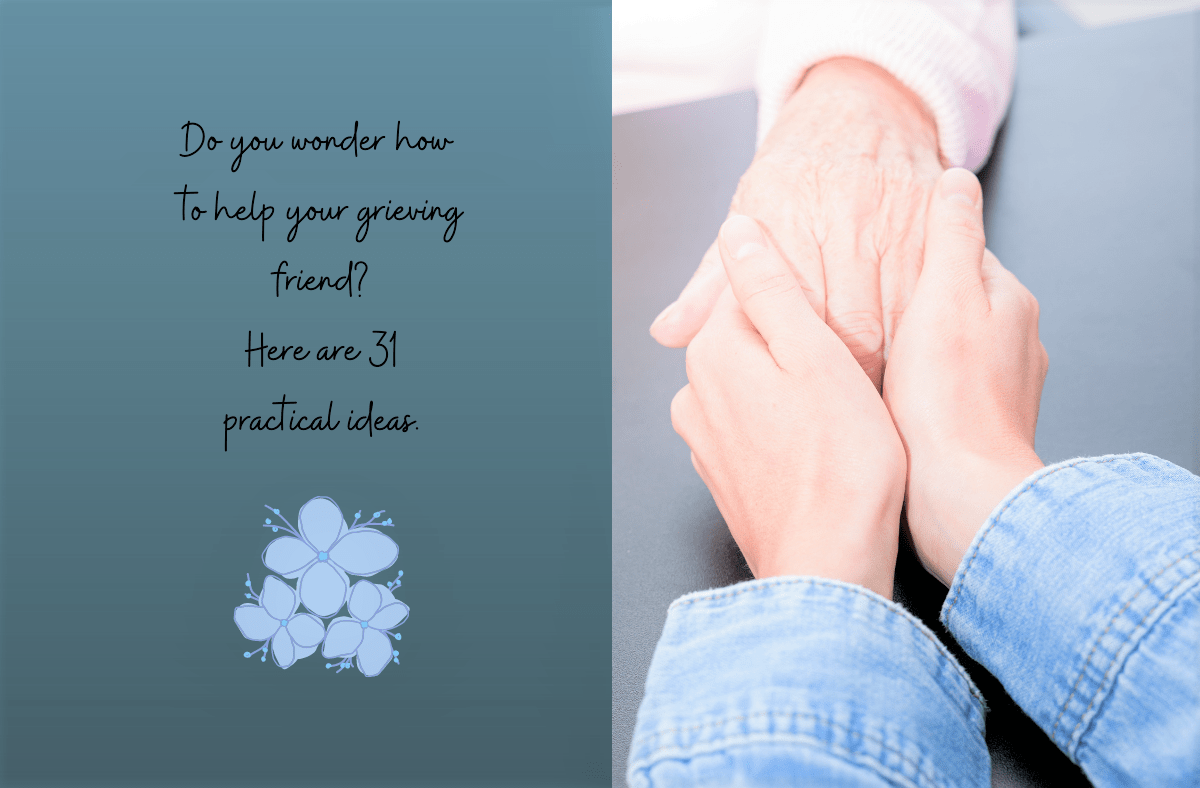
31 Practical Ways to Love Grieving Parents in the First Few Days

When Dominic died, I didn’t get a manual on what to do.  I didn’t get an orientation into how to be a grieving parent.  So when some people asked how they could help me and my family, I really didn’t know.

A comment repeated often by bereaved parents is, “Please don’t use the phrase, ‘let me know if there is anything I can do’, people mean well, but this is unhelpful.”

Another mom put it this way, ” There are too many meanings to this phrase.  It can mean anywhere from, ‘I really want to help’ to ‘I don’t know what to say so I’ll say this but I don’t really want you to ask’.  Also it’s so hard to make any decisions–trying to figure out what you might want or be able to do is overwhelming.  Instead, offer specific things you can do and make plans to do them.”

For those that want to help, here ia a list of 31 ways you can provide practical and timely help to grieving parents:

Show up and answer phones, open the door to visitors, find room for food they bring.  Act as a buffer zone for the parents.

Consider donating PTO, sick leave or vacation days to a bereaved parent if your employer allows it. Many employers allow three (3) days leave for a death in the family with no special consideration for the death of a child.  Three days is not long enough and many parents can’t afford to stay home without pay.

Donate sky miles, rental car points, hotel points or other loyalty points to the parents or family members that need to travel.  There are many expenses associated with burial and the family may not have extra money for travel.

Pick up family members from the airport that are coming for services.

Offer to accompany the parents to the funeral home as they make arrangements.

Donate a burial plot.  Few people have one picked out for their child.

With the family’s permission, set up an account to take donations to help with burial expenses or the medical bills that will be arriving soon.

Offer an extra bedroom to out-of-town family members or friends.  Not every home can accomodate extra guests and the parents need some space of their own.

Bring folding tables and chairs to the home–they are easy to set up and take down as needed to accomodate extra people in the house.

Respect a grieving parent’s need for some private time and space.  If we retreat to a back room, let us.  Check on us quietly and gently, but don’t follow us around asking, “Are you OK?”  No, we are not.  And being asked over and over is stressful.

It is always helpful to bring food.  Set up a meal schedule on Takethemameal.com. There is a way to note any special dietary restrictions.  When people sign up, they can see what others are bringing/have brought.  Driving directions are available on the site and the family can ask that meals be brought at a standard time so there is someone home to receive them.

Bring ice in an ice chest for drinks.

If a parent has a chronic health condition like diabetes or heart problems, check in with them regularly to see if they are taking their medication and if they are experiencing new symptoms.

Offer to drive grieving parents where they need to go.  Deep grief can impair driving as much as or more than alcohol or drugs.  Be willing to sit in the lobby or parking lot–we may not want company finalizing arrangements or speaking with our pastor.

Clean the house. And don’t allow your intimate glimpse to become a source of gossip.

Don’t turn on the television or radio unless the family asks you to or does it themselves. If you want to know the score, check your phone or go to your car.

Mow the yard, tidy flower beds, sweep, rake leaves.

Bring toilet paper, paper towels, paper plates and napkins.

If one or both of the bereaved parents are caregivers to an elderly relative, offer to take over that responsibility for awhile.  (Only if you are willing and competent to do so.)

Take surviving younger children for a walk in the park, to get ice cream or a hamburger. Not all children will be comfortable leaving their parents.  Even if they don’t understand what is going on, they may feel insecure and upset.

Sit with and minister to surviving older children.  We are concerned about our surviving children as well as the child we lost.  Knowing someone is loving on our kids is a great comfort.

Clean the family’s car before the funeral.

Make sure there are bottles of water and maybe a snack in the car for afterwards–often family members can’t eat and forget to drink before the day of the funeral.

Begin assembling electronic photos from friends for a slideshow at the funeral, if the family requests one.  Make sure you run choices by the parents before you flash them on a screen.

Make a list of appropriate songs that might help the family choose.  Don’t be hurt or offended if we use other songs instead–your list may very well have nudged our memory and been helpful.

Offer to drive the family to the funeral and burial.

Attend the funeral.  We want to know our child mattered.  We need to know you care.

If your church provides a meal for the family after burial, and you are asked to bring a dish, bring one.

Offer to help pack up a child’s dorm room or apartment.  We may welcome the help or we may want to do it alone–it has nothing to do with you.

Many grieving mamas want something that smells like their child.  If you are helping to clean in the first hours or days, don’t wash all the child’s clothing.  Put a few worn items in a ziploc bag for her to have later.

Don’t abandon the family after service.  There is such a sense of finality when the coffin is lowered or the memorial over.  Usually lots of people are around and then we go back to the house and quiet overwhelms us.  If you are close to the family, consider joining them for a little while when they first get home.

Dear friends, do you think you’ll get anywhere in this if you learn all the right words but never do anything? Does merely talking about faith indicate that a person really has it? For instance, you come upon an old friend dressed in rags and half-starved and say, “Good morning, friend! Be clothed in Christ! Be filled with the Holy Spirit!” and walk off without providing so much as a coat or a cup of soup—where does that get you? Isn’t it obvious that God-talk without God-acts is outrageous nonsense?

James 2:16-17 MSG

Are you a bereaved parent?  Have you walked this path with a friend or family member? Please add your suggestions to these in the comments section.


Well With My Soul?

If you have been in a church that sings hymns, I’m pretty certain you’ve heard the backstory to the hymn, “It is Well With My Soul”.

Or at least the most popular version–Horatio Spafford lost four daughters in a tragic accident.  Only his wife survived the sinking ship on its way to England.   Once there, she sent a heart-rending telegram, “Saved alone” to Spafford who had not accompanied them on the voyage.

As the story goes, Spafford, upon crossing the Atlantic to meet his wife, passed over the spot of the sinking and the words to the famous hymn came to mind:

When peace, like a river, attendeth my way,
when sorrows like sea billows roll;
whatever my lot, thou hast taught me to say,
It is well, it is well with my soul.
Refrain:
It is well with my soul,
it is well, it is well with my soul.

But, as Paul Harvey was famous for saying, here’s “The rest of the story”.

Spafford belonged to a congregation that staunchly believed difficulty and tragedy were divine chastening for sin or lack of faith.

Apparently, in the minds of at least some of his friends, the awful things that happened to Horatio and his wife were their own fault. Eventually, Spafford and his family removed themselves from the church and created their own fellowship.

Tragically, it seems that Spafford died confused, dismayed and perhaps, disbelieving.

Why is this important?

Because the support (or lack of support) bereaved parents receive from their fellow Christians can make all the difference between losing sight of Jesus and finishing well, with our eyes fixed on the “Author and Perfector of our faith”

We love the shortened version of the Horatio Spafford story because it ends with a triumph of faith, a crescendo of hope and a tidy finish to a messy story.

But the same reason the broad sweep of Spafford’s life is rarely brought to our attention is the same reason many find it difficult to walk beside grieving parents in their journey–even sincere, committed Christians can have doubts.

Even those who have read and believe the Bible can take longer than anyone would like to settle firmly on trusting God again after tragedy.

And even when we who struggle because of deep grief reach the place where our hearts can again rest in the sovereignty and goodness of God, we may always have unanswered questions.

Believers in Christ are called to minister to the members of His Body.  We are commissioned to encourage, uplift, care for and help each other.

It often involves more energy, time and effort than we are willing to give.

But if we believe, as Paul said, that every single member is called by God to serve a specific purpose then can we afford to ignore even one of them?

The way God designed our bodies is a model for understanding our lives together as a church: every part dependent on every other part, the parts we mention and the parts we don’t, the parts we see and the parts we don’t. If one part hurts, every other part is involved in the hurt, and in the healing. If one part flourishes, every other part enters into the exuberance.

I Corinthians 12:25-26


Perspective is Everything

NOTE:  I’m including links to another blog and an old post of my own.  You’ll see that I am unskilled at inserting them smoothly. Yet another in the list of losses–Dominic was my tech advisor…

When my husband and I visited the Sequoia National Forest, we were overwhelmed by the enormity and beauty of the trees.  Even standing beside them, it is hard to realize how very huge they are.  But when you are able to drive your car through one of them, that gives you  some perspective.

Losing a child changes your perspective.  Some things look bigger than they did before and some much smaller.

And some things I thought I understood, I find I don’t understand at all.

Lately I have been challenged to re-read Bible stories I once blazed through like a novel and pay more attention to the people in them and their feelings and lives.

I was reminded of the story of Hagar by fellow blogger Janet Boxx [Boxxbanter.wordpress.com] when she commented on my recent post Sparrows Do Fall:

(https://thelifeididntchoose.com/2016/01/12/sparrows-do-fall/)

And I am ashamed to realize that until now, I saw Hagar’s story as a kind of minor corollary to the over-arching and “more important” story of Abraham.

But to Hagar and Ishmael, this was THE story–it was THEIR story and it was as important as any other story that was happening at the same time.

Perspective is everything.

Eye-witness testimony is often touted as the most solid proof when presenting a criminal case.  But those who study eye-witness accounts know that there can be as many versions of a story as there are people who see it.

What stands out to one person will be ignored or misremembered by another. Different witnesses focus on different aspects of the same scene because their individual experiences make them vulnerable to having their attention turned to various details.

I know that before I lost a child, I was more likely to focus on the “good” that came from the child’s death:  testimonies of lives changed, people coming to Christ, community activism on behalf of a cause or a condition that contributed to the death.

But now, I’m consumed by thoughts of the child’s parents.  I think about the siblings left behind.  I know by experience that they are just beginning a life-long journey that will be so very hard.

When others view the lives of bereaved parents, it is easier for them to place the narrative that consumes the attention, energy and passion of the parents within the larger story of “what God is doing in the world” because they (the non-bereaved) can see the panorama while we (the bereaved) are looking through a keyhole.

And no matter how you twist and turn to try to expand your view when it is limited by physical facts that defy alteration, you just can’t do it.

Hagar called the LORD, Jehovah-Roi,” The God Who Sees”.  

As a slave, no doubt Hagar was often overlooked and undervalued.  But the God of the Universe, SAW HER.

I know in my bones that God does see.

I don’t know or understand what He’s doing, but I know He sees. It is both comforting and disturbing–part of my ongoing wrestling.

Being seen is powerful.  When another comes alongside as witness to my journey, it is helpful.  It speaks courage to my heart to keep on walking and to continue to trust.


the cost of compassion

I can’t help it.

I think too much.  I wonder too often.  I work too hard to make sense of things.

And the thing that is puzzling me right now is why people pull away from those experiencing deep and lasting pain.

Like the pain of burying a child.  Or the burden of chronic physical disability.  Or the unceasing struggle of overcoming addiction.

I think I’ve hit on a few possibilities:

  • There is no end in sight.  None of these scenarios offer a tidy final chapter that wraps loose ends into a comfortable narrative.
  • It challenges what we believe about God.  It’s one thing to consider the problem of pain and suffering in the world from a theoretical perspective and quite another to experience it in real time.
  • Our days are too full of “busy work” to leave room for real ministry. Overscheduled and frazzled,  we don’t have the emotional, physical or psychological energy required to stand with someone while they battle.

So we trade pity for compassion.

Pity says, “I’m sorry for you.  Let me do something for you that makes me feel better.”

We offer platitudes and prayers from afar as a substitute for presence and personal interaction.

And when our attention is turned elsewhere, we drift away–abandoning the broken to sit alone with their pain.

Most of us don’t mean to do it–we just move on, leaving the limping behind.

But the cold shoulder wounds as much as hurtful words. Acknowledgement is as great a blessing as an extended hand.

Compassion says, “I see your pain.  I hurt with you.  Let me stay with you until you feel better.  And if you never feel better, I’ll still be here.”

Compassion requires conscious commitment to push back against our tendency to forget those who live with things they cannot change and will never forget.

God Himself stepped into His creation to feel the pain of brokenness, to bear the price of sin and to open a Way for restoration and redemption.

Jesus came to make the Father known.

There is no substitute for walking with the wounded.  It is costly, it is painful, it is hard.

But I would argue that when we do, we are most like our Savior.


An Invitation

When Dominic died,  I was unaware of any  resources available to bereaved parents other than books written on the subject.  Thankfully, through personal contacts and Google searches, I found out about groups, online communities, blogs and excellent articles that helped me understand I wasn’t alone, I wasn’t crazy and I could survive.

I am working on a series of posts that will highlight some of the most helpful things people did for me and our family in the early days of our grief journey.  I will also share the physical, emotional, spiritual and psychological challenges and experiences of bereavement.

If you are a bereaved parent or someone who loves a bereaved parent, please consider joining me on my public Facebook page:  Heartache and Hope:Life After Losing a Child and share your perspective.

Someone suggested not too long after Dominic died that I might start a group for bereaved parents in my area–there aren’t any close by in our rural Alabama county.

I was not even ready to talk openly about my own feelings, much less listen to and absorb the pain of other grieving parents.

A few months ago I was introduced to a wonderful ministry called While We Are Waiting (whilewearewaiting.org) and discovered the blessing of belonging to a community of people who (unfortunately) know how I feel and can relate to my experience as a bereaved parent.  I began to realize that Facebook can be a place to connect people that otherwise might feel isolated in their pain.

I’m still not ready to sit face-to-face with more than one or two people at a time for deep conversation about life and death and fear and hope.

But I have opened a FaceBook page–Heartache and Hope:Life After Losing a Child–and it is public-although I am moderating posts.  I want to facilitate a way for parents in my area or in their own area, to find one another and form communities of support.

For some of us, online will be best.  Others may choose to get together in physical spaces.  Whatever works and brings hope to grieving hearts is wonderful.

I am not going to “invite friends” to like this page-thankfully, I don’t have that many people on my friend list who have buried children.  But I am inviting those who read my blog, and who have themselves lost a child to “like” the Heartache and Hope page.  And please invite other bereaved parents too.

There is no agenda other than encouraging one another in Christ and reminding ourselves of the hope we have in Jesus:  death is defeated, the grave is not the end, and our children will one day be reunited with us in glory.


Listen very carefully, I tell you a mystery [a secret truth decreed by God and previously hidden, but now revealed]; we will not all sleep [in death], but we will all be [completely] changed [wondrously transformed],  in a moment, in the twinkling of an eye, at [the sound of] the last trumpet call. For a trumpet will sound, and the dead [who believed in Christ] will be raised imperishable, and we will be [completely] changed [wondrously transformed]. For this perishable [part of us] must put on the imperishable [nature], and this mortal [part of us that is capable of dying] must put on immortality [which is freedom from death]. And when this perishable puts on the imperishable, and this mortal puts on immortality, then the Scripture will be fulfilled that says, “Death is swallowed up in victory (vanquished forever). O death, where is your victory? O death, where is your sting?” 1 Corinthians 15:51-55 AMP