I’ve been part of online bereaved parent support groups for over ten years.
Sadly, there are always new names and faces each week and when I read their posts, I am drawn again to those very early days when, next to the excruciating pain, doubt, disbelief and questions dominated my whole being.
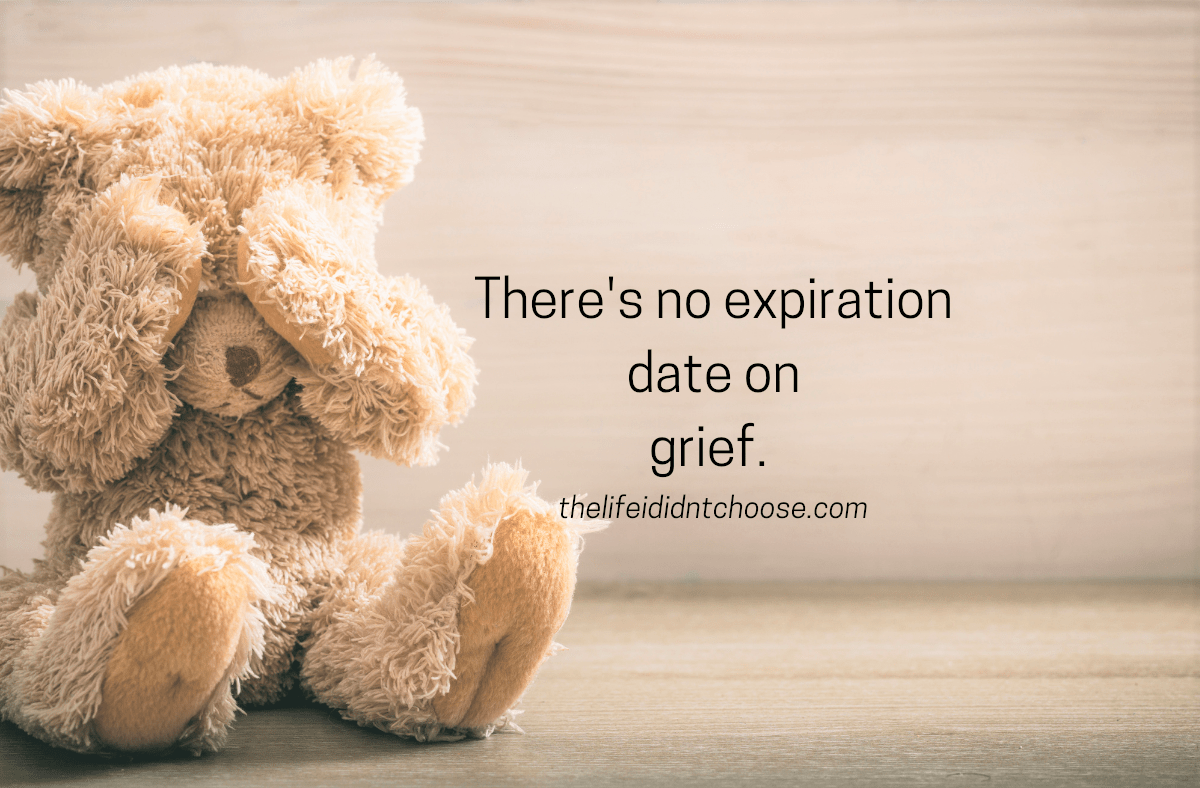
There are no shortcuts through grief.
Each one of us must take every step ourselves (even if we have the sweet blessing of companionship on the journey).
But I do believe that when some of us who have wrestled with questions and, yes, wrestled with God Himself, share our own journey, we can at least assure hurting hearts there is a way forward.
So for a little while I’m going to dig out older posts that show how I worked through a few of these big questions.
I’m sure there will be folks who disagree with me and that is absolutely, positively OK. In fact, I’d love to hear YOUR thoughts and feelings.
Here are some of the questions I will try to address:
Does God really number our days?
What about prayer?
Are our children now our guardian angels?
What about mediums and signs?
How can I know my child is with Jesus?
Is it OK to be angry with God?
Did God “take” my child?
What about sovereignty and free will?
I try hard not to twist Scripture to fit my own point of view.I am committed to remain silent (or at least present various interpretations) on murky subjects and hard-to-interpret verses. I am neither a Greek nor Hebrew scholar although I do use concordances and dictionaries like crazy.Sometimes I change my mind in light of additional research or when Holy Spirit opens my eyes to something I didn’t see or understand before.
So if you are interested, like I am, in theBIG QUESTIONS child loss forces most of us to face, follow along.
It took me a long time before I wanted to gather in a room with other bereaved parents.
My son’s death had undone me and I had no capacity for other people’s raw grief where I might not have an escape.
I wish I hadn’t been so reluctant and waited so long because what I found when I finally walked into the in-person community of other moms and dads who shared my loss, it was life giving, uplifting and utterly amazing.
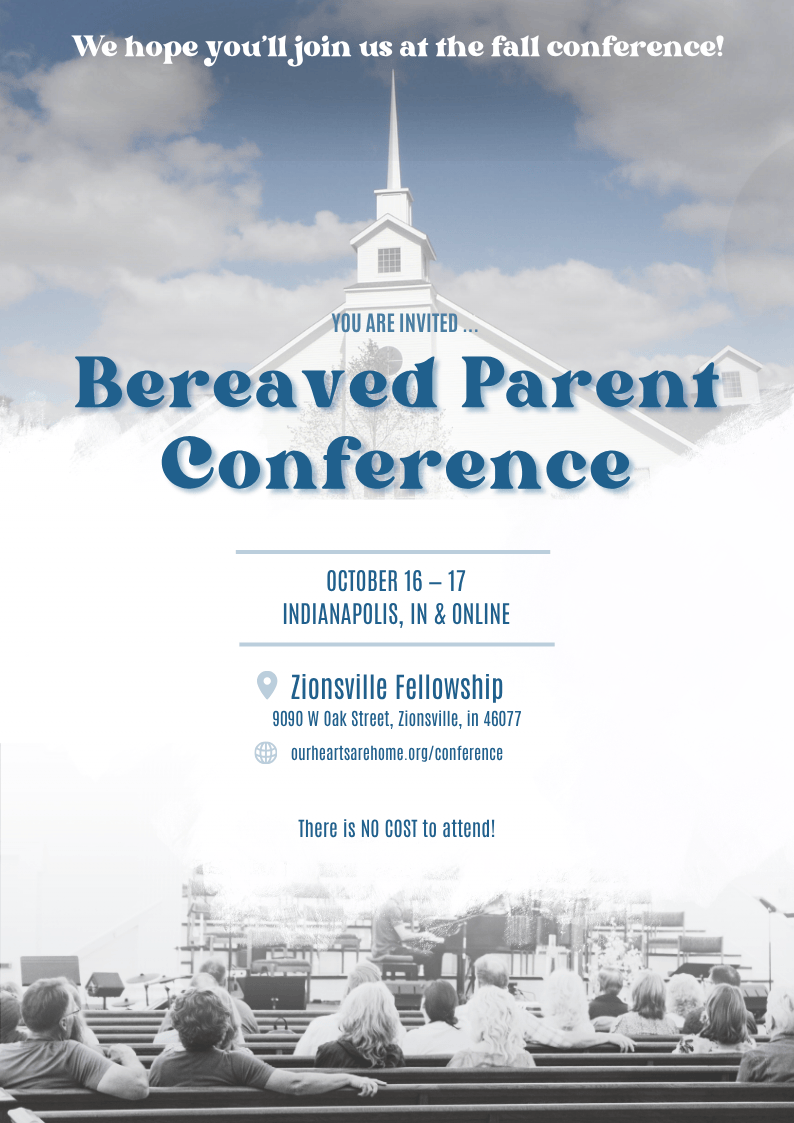
So I want to extend an invitation to fellow broken hearts who hope for hope:
WHO?Bereaved parent & grandparents, and anyone who wants to better know how to comfort a grieving friend
WHAT? Our Hearts Are Home Fall Conference
WHEN? October 16-17, 2026
WHERE?Online or In Person
(If you can’t come on those days, you’ll receive all of the session recordings that remain available for two weeks following the conference.)
This is NOT your typical “Christian Conference” where what’s shared is memorized and rehashed in city after city. This is a unique opportunity to interact with parents who are walking the same broken road as you and are willing to reveal the ups and downs, ins and outs of navigating child loss.
I’ll repeat: there isNO COSTto attend.
I cannot be there this fall because of my dad’s health but have benefitted from the many times I’ve attended in the past.
So often it has been the words of encouragement offered by other bereaved parents and the guiding light of someone a little ahead on the journey that have helped my heart hold on to hope.
So if you can, COME.
You may be nervous up to the very minute you show up or log on but I PROMISE you will not regret it.
My hardest grief season begins in November and runs to the end of May. Thanksgiving through Dominic’s birthday on (or near) Memorial Day are days full of triggers, memories and stark reminders that one of us is missing.
If I could fall asleep November first and wake up in June I’d do it.
But I can’t so I have to employ all the tricks I’ve learned in the over twelve years since Dominic ran ahead to heaven to survive those particularly challenging months.
Here are ten ways I survive hard grief days:
1. I make lists of things to do. I’ve found that if I don’t make a plan for each day it’s far too easy to just lie around and feel sorry for myself. I use index cards but whatever works for you is fine. I list household chores, phone calls to make or notes to write, exercise, errands or whatever. And then I consider them non-negotiable. These are my marching orders and after my morning coffee I start down the list.
2. I do something creative. I crochet or arrange flowers or sew a little. Taking just five or ten minutes to make something beautiful changes my perspective. I have a can opener that takes the lids off without sharp edges and I make magnets for friends and family members or just to have on hand for a little gift.
3. I take a walk. I am thankful I can go outside on my own property and enjoy fresh air and country sunshine. I know not everyone has that option. But even a walk inside your office building or up and down a couple flights of stairs gets the blood pumping and releases endorphins. If I can’t walk, then I at least change my physical position-from sitting to standing, from standing to moving. Body position impacts my emotions.
4. I find something to make me smile. There is scientific evidence to back our common sense experience that smiling lightens our mood and helps our hearts. I read jokes or check out some of my Facebook friends that tend to post funny memes or stories. Sometimes I just “practice” a smile and even that can send feel-good hormones surging through my system.
“Don’t try to win over the haters, you are not a jackass whisperer.” ~ Brene Brown
5. I call or text a friend. Sometimes I just need to know that someone else is aware of my hard day. No one can undo my grief but when I feel there is a witness, it lightens the load somehow.
6. I stay off Facebook and other social media platforms. I love that I’m able to keep in touch with friends and family via social media. But it can be full of drama and negativity as well. So if I’m having a tough day, I remove the potential for it to be made harder due to random comments, posts or photographs.
7. I pet my cats. I have always been an animal lover. But I truly do not know how I could have survived these past four years without the companionship of my cats and other furry friends. Study after study confirms that being in the presence of pets lowers blood pressure and calms nerves.
8. I go with my feelings. There is no rule book that says I have to be tough and hide my tears. If I’m having a hard grief day it is perfectly acceptable to let the sorrow wash over me and let the tears fall. Sometimes fighting the feelings only prolongs my pain. Often a good cry is cleansing and I am much better afterwards.
9. I journal. There are things I need to “say” that are better kept between me, God and my notebook. I have kept a journal for nearly three decades. Many times just writing out my feelings, my fears, my thoughts and my frustrations is enough to take the sting out. There’s something about not keeping it all bottled up inside-even if no other soul reads it-that acts as a catharsis.
10. I copy encouraging quotes or Scripture and hang them prominent places throughout the house. I have notes tacked to my bed post, on my bathroom mirror, taped to the cabinet next to my stove, stuck on the fridge, slid into my wallet in my purse-absolutely everywhere. Because when my heart is hanging on by a thread, the smallest bit of encouragement is often enough to help me hold onto hope.
None of these things undo my grief in the most basic sense.
Dominic is gone, gone, gone and I will not see him or hear his voice until we are reunited in the Presence of our Savior.
But they DO help.
One of the most devastating aspects of child loss is the overwhelming sense that NOTHINGmakes sense anymore and that I have absolutelyNOcontrol.
Choosing helpful habits and actions gives me a way to regain dominion over a tiny corner of my world.
And that little bit of action strengthens my spirit and helps my heart hold on.
I know I’m not the only one who carries a calendar in my head that threatens to explode like a ticking timebomb.Days that mean nothing to anyone else loom large as they approach.
The date of his death.
The date of his funeral.
His birthday.
My birthday.
The day he should have graduated from law school
On and on and on.
How can I survive these oppressive reminders of what I thought my life would look like? How can I grab hold of something, anything that will keep my heart and mind from falling down the rabbit hole of grief into a topsy-turvy land where nothing makes sense and it’s full of unfriendly creatures that threaten to gobble me whole?
Every family,
every child that has run ahead and
every situation is unique.
What works for one person (even in the same family) won’t necessarily work for another. But there are some ways to make these days a little easier.
Here’s a list of what has helped my heart and the hearts of others walking this journey. Take what may help and toss the rest:
Invite friends and family to a special celebration featuring foods and/or activities that honor your missing child. On the first anniversary of Dominic’s homegoing, his friends brought lunch and they shared stories and memories with me-many of which I hadn’t heard since he was living away from home when he left us. I didn’t do a lot of talking, but just listening was a beautiful way to pass that day.
Ask folks to do a “random act of kindness” in your child’s name. Some parents have printed out cards (like photo Christmas cards) and distributed them with a picture and brief information about their child and a way to post the RAK online (Facebook, Instagram, etc.)
If you have a charitable organization or scholarship or other project that bears your child’s name, remind people of it and request donations (if appropriate). Many times friends and family long to do something tangible to show they have not forgotten either.
For birthdays and holidays, purchase a cake (at a local bakery) or toys/gifts for a child the same age as your own. I went a couple of days before Dominic’s birthday and paid for a cake ordered for a little girl’s first birthday. I left a note that said, “Children are a blessing from the Lord. Enjoy your sweet blessing. In honor of my son, Dominic. Love, His Mama.”
Some people launch lanterns at the cemetery or another meaningful place. Check with local regulations before you do this-you don’t want the occasion marred by a confrontation. There are environmentally friendly lanterns available online for those concerned about that. (This is why I don’t recommend letting balloons go.)
Gather gift cards to give to a local Ronald McDonald House or other charitable group that provides support for families of pediatric patients. I know one family that did this for a group that had ministered to them during their son’s illness. The response was overwhelming and it touched them as well as all the families that benefitted from the gift cards.
Create a quiet memorial space in your own yard honoring your child. There are lots of ideas online to get you started. Some parents plant a tree while others use smaller plants and stones along with a bench and special items that remind them of their missing child.
Some grieving parents spend the day at home, under the covers and waiting for it to pass.
Most importantly, no matter what you do or don’t do, be prepared to give yourself grace whatever the day holds.
Don’t do what you don’t feel like you can do-even if you made plans ahead of time.
Do whatever helps your heart.
Hug anyone who chooses to come alongside and bear witness to this awful anniversary.
And hold tight to the fact that even the worst day only lasts 24 hours.
The fact that so many bereaved parents tell me they don’t feel they can share their experience on their own FaceBook or other social media pages.
That’s just SO SAD!
They have been shushed to silent suffering because when they break open the vault of emotions and let others see what’s inside, many people turn away-or worse, they condemn that wounded heart for sharing.
I grew up in the Deep South where ladies were supposed to keep silent about anything “unmentionable”.
Problem is, that included many things that SHOULD be spoken aloud.
Because a conspiracy of silence forces those who are suffering to hide. It creates huge gaps between what goes on behind closed doors and public image.
And it causes those who are wounded to question the authenticity of their own experience.
In recent years we have dragged many topics into the light. We’ve made space in the public square for discussion of things we used to pretend didn’t exist.
But life after child loss is still a hushed topic.
The long road to healing after burying a child is rarely acknowledged outside the community of bereaved parents.
The FACT that as long as I live, my son’s absence will be a shadow trailing me, the burden of sorrow will slow my steps, the heartache of missing will shape my world is glossed over and set aside.
I understand why.
It is scary to speak aloud what you hope will never happen to you. It’s unbelievably frightening to admit that we really have no control over whether, or when, we or the ones we love might leave this world.
But I am not going to keep silent.
Not because I want pity or special treatment, but because I want that parent who just buried his or her child to know that you. are. not. alone.
I want you to know that what you are experiencing is not unusual.
I want you to understand that the horrible pain you feel is absolutely normal.
And I want you to be assured that you are NOT Crazy!
I will tell my story because even though it is hard, it matters. And even though it hurts, it can help heal another. And even though it isn’t finished, it can blaze a trail for others to follow.
Join me, be BRAVE, tell yours.
Courage is a heart word. The root of the word courage is cor – the Latin word for heart. In one of its earliest forms, the word courage meant “To speak one’s mind by telling all one’s heart.” Over time, this definition has changed, and today, we typically associate courage with heroic and brave deeds. But in my opinion, this definition fails to recognize the inner strength and level of commitment required for us to actually speak honestly and openly about who we are and about our experiences — good and bad.
I want him to watch me grow old, to watch him get married and have children and to hear his voice mingled with his siblings at my table.
I’ve tried dozens of times to write a post that describes the abyss that divides the life I thought I would live and what it’s turned out to be.
I can’t do it.
A twenty-three year old isn’t planning his legacy. A mom of a twenty-three year old isn’t carefully preserving daily moments in the event he suddenly disappears.
Whatever legacy Dominic has left behind is a function of his huge personality rather than careful planning. And all I have left of his life are bits and pieces I’m trying to string together so he’s not forgotten.
I was not prepared to wake up one morning and learn that his earthly story ended.
I didn’t get to say good-bye, didn’t get to look him in the eye and tell him how very much I love him, didn’t even get to hold his hand as he left this life and entered Heaven.
I know he is just fine. He’s full of joy and perfectly content.
When I was a young mother, my brother used to love to sit back and wait to see how many things I could do at once.
I could hold a baby, iron a shirt and talk on the phone at the same time. I could pick things up with my toes when I didn’t want to disturb the sleeping child in my lap and couldn’t reach the object with my hand.
Four children in six years, breastfeeding, homeschooling and taking care of all the household chores meant that I got pretty darn good at keeping multiple balls in the air at the same time.
Those days are over.
Like so many things at this point in my life I don’t know how much of what I experience and feel is a function of getting older (definitely middle aged here!) and how much is attributable to grief following the death of Dominic.
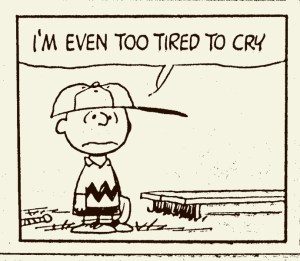
But this I do know: I am only able to focus on a single task, thought, desire or problem at a time. If I try to multi-task, I might as well cry, “Uncle!” from the start.
It’s a little discouraging.
Often I feel like I’ve wasted an hour or a day or even a week. What exactly did I get done?
But it’s also a kind of freedom.
My household isn’t nearly as busy as it once was so there’s really no need to rush from here to there or stack task on top of task.
I’m learning that taking time, talking to people for as long as they need me, doing something well even if I don’t do it quickly are all perfectly acceptable ways to spend a day.
And while I miss so much of who I was before Dominic ran ahead to heaven, I don’t miss the frantic craziness of trying to do too much in too little time.
I shared this last year around this time in response to many, many comments and questions from bereaved parents about what felt like random or unusual physical manifestations of their own grief.
I hope it helps another heart navigate this life none of us would choose.
It’s a well known fact that stress plays a role in many health conditions.
And I think most of us would agree that child loss is one of (if not THE) most stressful events a heart might endure.
So it’s unsurprising that bereaved parents find themselves battling a variety of physical problems in the wake of burying a child.
What may be surprising is how uninformed medical and even psychological professionals are with respect to the very real ways child loss intersects with chronic conditions and often creates new symptoms.
Here is a list of only SOMEof the physical manifestations of grief (via What’s Your Grief?) with my own comments :
Fatigue. If you’ve always been an energetic sort, you might find this aspect of grief particularly disconcerting. This kind of fatigue doesn’t get better with rest. I’ve written about that here.
Some days I can barely make myself get out of bed and when I do, I struggle to do any but the most necessary tasks. Don’t automatically dismiss this symptom as ONLY grief (although it most certainly could be!) get a thorough check-up to rule out other causes such as low thyroid, diabetes, heart disease, major depressive disorder or a number of conditions that can be treated effectively with medicine. Don’t beat yourself up if the doctor decides “nothing is wrong” with you. You are grieving and grief is work! I know this symptom has improved for me over time as I’ve established boundaries, admitted limitations and learned to rest when necessary.
Aches and Pains. Our bodies and minds are connected in ways not well understood. Mental and emotional distress can make any underlying pain condition that much worse. When I’m feeling especially lonely, desperate or sad my autoimmune disease flares AND my perception of the very real pain that causes is heightened. Pain and heartache can lead to a downward spiral that is hard to undo. Get help and treatment for the physical and give yourself grace and space to endure the emotional causes of body aches. Don’t self-medicate with drugs, alcohol or other self-destructive coping strategies. Reach out to a safe person and let them help you find a better way.
Headaches. Needless to say, stress makes tension headaches more likely. Sometimes, though, a headache can be a symptom of something more serious. Don’t dismiss an especially sudden, intense or long-lasting headache as “just grief”. It could be previously undiagnosed high blood pressure, stroke or migraine. Those being ruled out, various relaxation techniques, cold or warm compresses, over-the-counter analgesics and gentle stretches might help.
Sometimes grief headaches can be alleviated by the simple act of telling our stories. Bottling up emotions and thoughts adds to the ongoing stress and tension of my child loss burden. When I spill them-either on paper in a journal, in a closed online bereaved parents’ group or in person to a safe friend or family member-often I feel the band around my head relax and the pain fade away.
Tightness in Chest, Shortness of Breath. The day I got the awful news, I remember asking friends who came to sit with me over and over, ” Am I still breathing?” My world was spinning out of control and my body responded. Anxiety after child loss is real. Broken Heart Syndrome is real. Heart attacks are not uncommon. Don’t ignore these symptoms. But don’t be surprised if they persist despite all tests to the contrary. When I feel trapped and overwhelmed, a walk outside or even to another room can help. Deep breathing exercises and grounding exercises can often interrupt an episode.
Forgetfulness. I wrote this post on Grief Brain: It’s a Real Thing! a couple years ago and am always surprised to see it shared repeatedly. But I think it strikes a chord with any heart walking through grief. You are not crazy! You are not experiencing early onset dementia (most likely). Like other symptoms, get checked out if they persist or worsen. But odds are, your experience falls within the range of normal for anyone whose life has been shattered by child loss. Losing things, forgetting things, getting lost in familiar places, missing appointments or bill payments, inability to remember names of people you know well-all of these are common after loss. In time, the symptoms usually diminish. They have for me. I still have to rely on lists and reminders much more often, though. And that’s OK.
Inability to Focus. Like grief brain, this is another cognitive manifestation that’s not only annoying, it can impact life in significant ways. Before Dominic ran ahead to Heaven, I was an avid reader. I often had three or four books going at the same time. I could spend hours focused on a single project. Not anymore. I sometimes find it difficult to read a recipe.
I have to take frequent breaks when working on something because my mind gets fuzzy and I just can’t pay attention for more than a few minutes at a time. Some bereaved parents have to change jobs or careers because they are not able to perform necessary tasks anymore. This particular symptom has not improved very much for me although I’ve found ways around it. I use lists to keep an external record of what I should be doing and when. I mix up mindless chores with ones that require more attention to give my brain a break. I try to dissect larger jobs into smaller, manageable chunks. And sometimes I just have to admit that today a particular thing just isn’t happening.
Appetite or Digestive Issues. Stress has long been linked to gut problems. I suspect we’ve all had that “rumbling in our tummy” from time to time even before child loss. For many of us it’s exponentially worse after. Some bereaved parents try to stuff emotions by stuffing themselves with food. Others can’t eat at all. Still others experience stomach ulcers or bowel disease ranging from acute to chronic. I was hospitalized twice in the first year after my son’s death for serious colon issues.
Again, don’t ignore sudden or persistent symptoms. Try to eat well and avoid self-medicating with food. Added pounds rarely add up to better emotional or mental health. I let pounds I’d lost ten years ago find me again. Get help if you need to from someone willing to act as an accountability partner. I’ve recently joined a friend in setting goals for ourselves and sharing recipes and meal prep. Try to treat food as another aspect of grief work and manage it the best you can.
Getting Sick More Often. Stress lowers the immune system. That’s a fact. So when bereaved parents encounter germs (as we all do from time to time) it may well be our bodies don’t have the energy or resources to combat them. Colds, flu, strep throat, skin infections may all be more likely this side of child loss. Don’t be discouraged to seek treatment. There is so much we can’t control in life, but getting antibiotics for an infection is pretty easy.
It’s not in your head, mom or dad!
Grief has real physical manifestations.
Don’t be dismissed or denied the care you need.
Educate your healthcare providers and insist on being heard.
*photo credit: The Weight of Grief Scupture ~ Celeste Roberge*
I wrote this post December, 2015. It hadn’t been long since I joined an online community of bereaved parents and began to see that I wasn’t the only one who had friends and family that misunderstood child loss.
I was spending a lot of time in my life trying to help others comprehend, just a little, what it felt like to bury a child.
Trying to give them a tiny taste of how this pain is so, so different than any other I had experienced. Begging them to toss the popular ideas bandied around that grief followed “stages” and was “predictable”.
I re-share every so often because it seems to help, a little.
I’m re-sharing today in honor of Bereaved Parents Month.
People say, “I can’t imagine.“
But then they do.
They think that missing a dead child is like missing your kid at college or on the mission field but harder and longer.
That’s not it at all.
It isn’t nostalgia for a time when things were different or better or you talked more: it’s a gut-wrenching, breath-robbing, knee-buckling, aching groan that lives inside you begging to be released.
There is no smooth transition up the ladder of grief recovery so that you emerge at the top, better for the experience and able to put it behind you.
We’ve all heard the much touted theory that grief proceeds in the following stages:
denial
anger
bargaining
depression
acceptance
And people (who haven’t experienced grief) tend to think it’s a straight line from one stage to another, gradually going from bottom to top and then on with life.
But it just isn’t true.
Reality is, these “stages” coexist and fluctuate back and forth from day to day and even hour to hour.
Grief remakes you from the inside out.
Losing a child has made me rethink everything I believe and everything I am. It has changed and is changing my relationship with myself and with others in ways I couldn’t imagine and often don’t anticipate.
And it is hard, hard work.
Life around us doesn’t stop. Grieving parents return to work, continue to nurture their surviving children, keep getting up in the morning and taking care of daily details.
We are doing all the things others do, but we are doing them with an added weight of sorrow and pain that makes each step feel like wading through quicksand.
We want you to know we are doing the best we can.
Life without my child is like having a leg amputated–I am forced to learn to manage without it, but everything will always be harder and different.
And it will be this way for the rest of my life.
The one thing a grieving parent DOESN’T want you to know is how it feels to bury your child.
I don’t want anyone else to know what it means to leave part of your heart and a chunk of your life beneath the ground.
“But please: Don’t say it’s not really so bad. Because it is. Death is awful, demonic. If you think your task as a comforter is to tell me that really, all things considered, it’s not so bad, you do not sit with me in my grief but place yourself off in the distance away from me. Over there, you are of no help. What I need to hear from you is that you recognize how painful it is. I need to hear from you that you are with me in my desperation. To comfort me, you have to come close. Come sit beside me on my mourning bench.”
A tender broken heart can make all kinds of excuses for less-than-gracious behavior or words.
I know that often we grievers bear the brunt of others’ well-meaning but misplaced and sometimes downright painful advice, remarks, looks and gossip and that makes it easy to rationalize returning like for like.
But I’m not responsible for THEM, I’m responsible for ME.
❤ Melanie
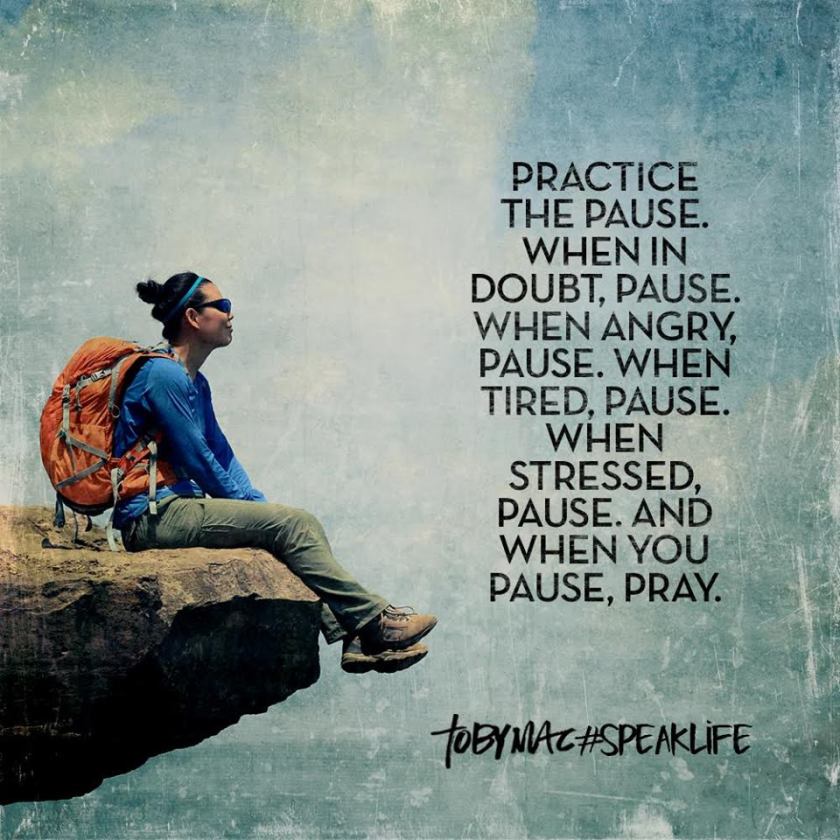
Oh, how I need to learn to practice the pause!
I’m getting better, but still react when I should reflect.
I need to do thisEVERYtime.
Lord,
Help my stubborn heart slow down and give me grace to yield and allow You to melt it, mold it and make it more like Your own!