Ministering to Bereaved Parents: Advice for Pastors

Being a pastor doesn’t mean you come out of seminary with answers to everything.

It doesn’t even mean you emerge equipped for very many of the situations and conversations thrust upon you once you enter ministry.

But I know a lot of folks expect you to be a pillar of strength, a fountain of wisdom, a well-spring of comfort. I’m sure you try to be all those things but it takes years to develop the experience needed to know what to say and do and what NOT to say and do in the most sensitive and painful moments humans face.

So when a thoughtful and inquisitive fellow bereaved parent asked the question below, I found myself REALLY considering the essential advice I’d pass along to a pastor about the unique and uniquely challenging ministry to those whose children have run ahead to Heaven.

It is most certainly NOT exhaustive, but hits the high points. It’s short, succinct and can go a long way toward promoting healing in shattered hearts.

I hope my pastor friends will read it and tuck it away in an easily accessible place. I promise you will need it one day.

I hope my fellow bereaved parents and others will pass it along to pastors they know.

❤ Melanie

This is the question: What advice would you give a pastor to serve, encourage, and walk with a grieving parent? What would you tell them not to do?

I would tell a pastor to:

*Listen, listen and listen some more– without correcting or judging. This is not a teachable moment. Take off the theologian’s coat and put on human flesh.

*Acknowledge the depth of their loss- not compare it or try to identify with it (unless you have also lost a child) and absolutely not minimize it.

*Don’t toss Bible verses– especially those intended to “bright side” their experience.

*Don’t stop checking in even if they stop going to church. If your ministry ends at the door of the building, you’ll lose lots of sheep.

*It will take longer- probably by years-than you think it should for them to return to some semblance of “normal”. Be patient.

*Ask, but don’t pressure, parents who once served (or are serving at the time of loss) if they want to continue serving. Some do, some find it impossible.

*Do not engage in gossip and speculation about “how they’re handling” their grief.

*Educate your congregation on the devastation of grief in general and child loss in particular. (See the story of Jacob-how deeply he grieved when he thought Joseph was dead, what a mess his family was…)

*When appropriate, make space in yearly celebrations or traditions for recognition of those who are mourning and who want to have their child (or other loved one) remembered.

*As time goes on, ask specific questions (How is your grief today? What do you find to be a struggle right now? Could you share something about _____, I love to hear about him/her?) and then listen some more.

If you know them well, you will have many more opportunities to come alongside as a compassionate companion in their grief.

If you don’t know them well or you have a very large congregation, you can still use these general guidelines but also engage the help of someone who does know them and who may be better suited to companion them (with your help and support).


So many bereaved parents struggle with church and with their faith.

Each family and situation will be different.

Reaching out in a timely, encouraging, and understanding way helps them hold onto hope.

Ten Years: The Gift of Friendship

I hurt for hearts who enter the long road of child loss without the support of really, truly friends.

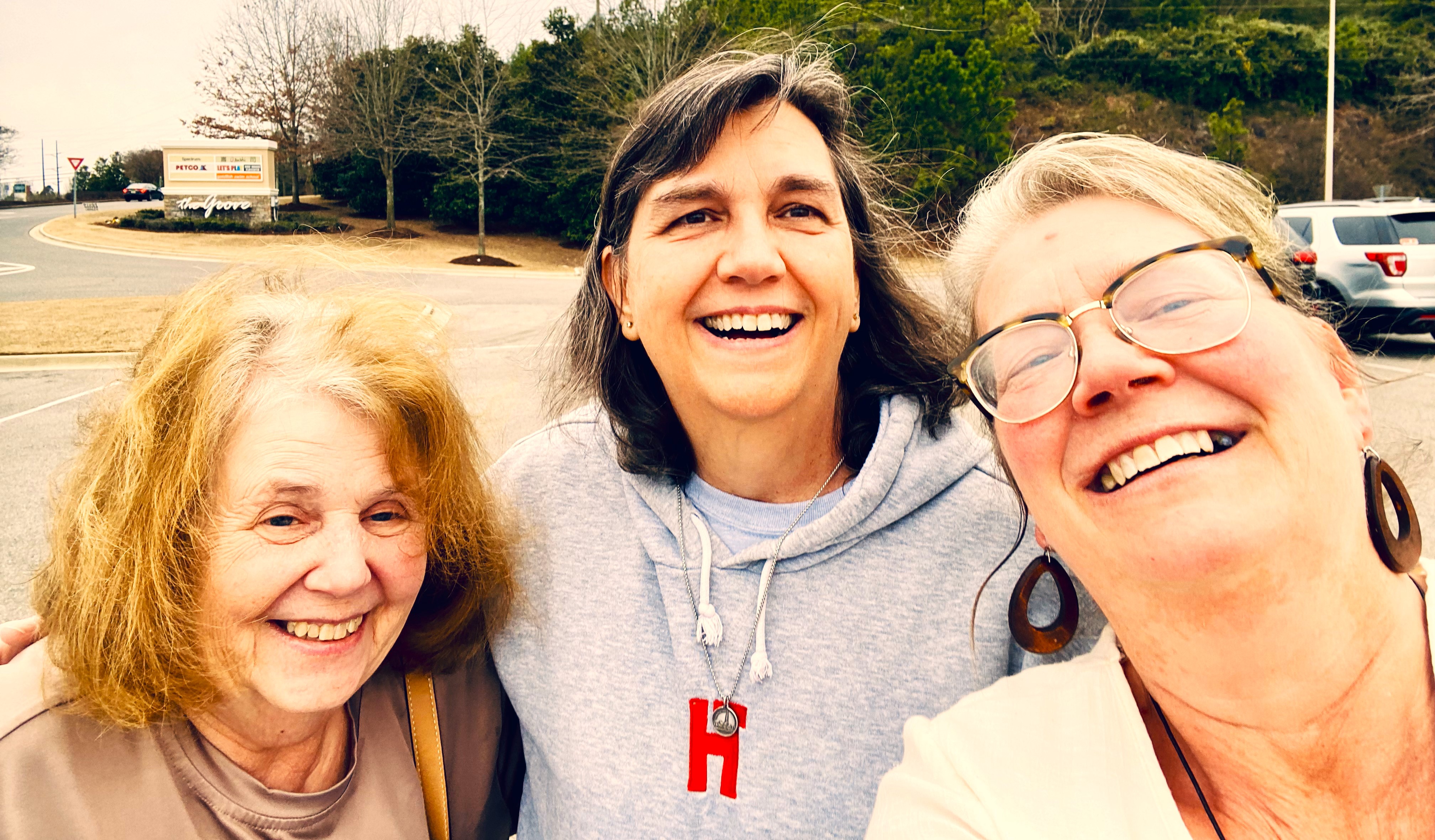
I have been blessed for nearly ten years with two precious hearts who- even though they have been spared the pain of child loss- chose to walk alongside me.

These women right here.

They came alongside and helped me remember that light still existed when darkness was all I could feel and all I could see.

They brought lunch to my home- over an hour away- and loved me, listened to me, didn’t toss Bible verses or correct me. They were much better friends than the ones who joined Job on the ash heap.

I can never repay the debt I owe them.

I’m so thankful that we are aging together and will spend eternity proving that grace, love and the Gospel transform hearts and lives.

I love y’all. ❤️❤️

Lenten Reflections 2024: Fasting Apathy

Today’s Fast: APATHY

In a society drowning in bad ‘news’, apathy can seem an attractive alternative to absorbing the insane amount of planetary pain the Internet brings to our attention every waking moment. However, the antonyms of apathy are not absorption, activism or even emotionalism; they are sympathy, sensitivity and concern.

Alicia Britt Chole

Holy gets angry.

When the things that break God’s heart break mine, it’s natural and right that my spirit cries for justice.

Read the rest here: Lenten Reflections: Fasting Apathy-Making Space for Holy Anger

Compassion 2024: Understanding the Grieving Heart

In the last post I shared the difference between mourning and grief. While the outward ceremonies have long passed, the inward struggle to embrace and understand the pain and sorrow of losing my son continues.

If you love someone who has lost a child, perhaps these thoughts might help you understand a bit of their pain and how completely it changes the way bereaved parents encounter the world.

Please be patient. Please don’t try to “fix” us. Please be present and compassionate. And if you don’t know what to say, feel free to say nothing-a hug, a smile, an understanding look-they mean so very much.

❤ Melanie

A bereaved parent’s grief doesn’t fit an easy-to-understand narrative. And it flies in the face of the American “pull yourself up by your bootstraps” mentality.

You can’t beat it–it’s not a football game-there is no winning team.

You can’t lose it–it’s not the extra 10 pounds you’ve been carrying since last Christmas.

You can’t get over it–it’s not a teenage love affair that will pale in comparison when the real thing comes along.

You can only survive it.  You can heal from it, but it will take a lifetime and require very special care.

Read the rest here: Loving Well: Understanding the Grieving Heart

Compassion 2024: Transitioning From “Good-bye” to Grief

A funeral or memorial service seems like a final chapter.  We close the coffin, close the doors and everyone goes home.

But for bereaved parents and their surviving children, it’s not an end, it is a beginning.

Much like a wedding or birth serves as the threshold to a new way of life, a new commitment, a new understanding of who you are, burying a child does the same.

Read the rest here: Loving Well: Transitioning From “Good-bye” to Grief

Compassion 2024: Love, The Reason I Grieve

If the people we love are stolen from us, the way to have them live on is to never stop loving them.

James O’Barr

I grieve because I love.

My tears are a gift to the son I miss.  My sorrow honors his memory.  My broken heart gives evidence to the ones walking with me that my love is fierce and timeless.

Read the rest here: Love: The Reason I Grieve

Compassion 2024: Just Say His Name!

It’s nearly impossible for anyone who has not lost the earthly companionship of a child to know how desperately I long to hear Dominic’s name spoken aloud.

There are days I walk around my home and think silently and even whisper quietly, “You existed! You exist!” just to remind my heart he is real.

You may hesitate to bring him up because you fear my tears. But any tears his name might evoke will be tears of gratitude as well as those of longing.

Please say his name!

❤ Melanie

I know you are afraid.

You think that speaking his name or sharing a memory or sending me a photo will add to my sorrow.

I understand.

But even when it costs me a split second of sharp pain, it is truly a gift to know that Dominic lives on in the hearts and minds of others.

Read the rest here: Loving Well: Just Say His Name

Compassion 2024: Some Things Just Hurt

Before I lost Dominic, I know that I, like others who had never experienced the death of a child, undoubtedly said and did things that were hurtful instead of helpful.

Loss will enter everyone’s life at some point–there is no escape.

We educate ourselves (as we should) on so many issues–work hard not to offend, to understand, to reach out. Bereaved parents don’t want pity, they would like to be better understood.  

We did not choose this journey, it was thrust upon us.

Read the rest here: Loving Well: Some Things Hurt

Space To Talk It Out-Such a Gift!

Listening is love in action.

If you know someone whose heart carries great grief-and child loss is not the only hard journey hearts are makingoffer to listen. 

Give up a few minutes to hear how they are really doing, what is really hard, what they really need to say but may be afraid to speak aloud.  Leave spaces in conversation so a heart can work up the courage to share.  Don’t be quick to offer platitudes that shut down deep discussion.  

It often takes many, many repetitions of traumatic events for a heart to begin to heal. 

Read the rest here: Why I Have To Talk It Out

How To Love a Mourning Heart at Thanksgiving

Thanksgiving is less than a week away and I know many are making final plans and preparations to gather family and friends around the table.

In the rush toward celebration, please don’t forget those in your circle who have suffered loss.

The past years (!) have prevented or limited many of the ways we publicly gather and mourn so it’s easy to overlook that some families are facing their first set of holidays without a loved one.

Even the second or third Thanksgiving with an empty chair is unbelievably hard.

Here are some helpful ideas to get you started. 

❤ Melanie

We are all on a journey through life and each carry some sort of load.  Mine is child loss.  Yours may be something else.

We can help one another if we try.  

Love and grace grease the wheels and make the load lighter.  

Here are ten ways to love a mourning heart at Thanksgiving:

Read the rest here: Ten Ways to Love a Mourning Heart at Thanksgiving