Sometimes I’m envious of folks hobbling along in those plastic boots designed to support an injured leg or ankle and aid healing.
Not because of the injury–I’m thankful I’ve never broken a bone-but because it’s an outward warning to anyone who might otherwise be impatient or insensitive that they just can’t go any faster.
I think there ought to be a t-shirt, pin or banner that gives the same kind of warning for those of us walking around with broken hearts and broken lives.
My hardest grief season begins in November and runs to the end of May. Thanksgiving through Dominic’s birthday on (or near) Memorial Day are days full of triggers, memories and stark reminders that one of us is missing.
If I could fall asleep November first and wake up in June I’d do it.
But I can’t so I have to employ all the tricks I’ve learned in the over eight years since Dominic ran ahead to heaven to survive those particularly challenging months.
The first time I shared this I was trying to distill years of walking the broken road of child loss into a relatively few, easy to think about, “lessons”.
Since then I could add a dozen more but today I’ll only add one: Being a bereaved parent is not my IDENTITY but it impacts who I am in ways I’m still figuring out.
Just as being married or being female or being from the southern United States informs how I walk in the world and interact with others so, too, does having buried a child.
There’s a lot of pressure to pretend that’s not true.
But I won’t do that.
❤
I’ve had awhile to think about this. Eight years is a long time to live with loss, to live without the child I carried, raised and sent off in the world.
So I’ve considered carefully what my “top ten” might be.
Traumatic loss rewires your brain as well as your body.
So here I am, nearly eight years into the journey of sudden child loss and I’m reminded once again I am not the same “me” I once was.
Our newest grandbaby made an early entrance into the world this spring and I did Mama D duty with his big brother for nearly a month. It was a delight to be with my three year old grandson but it was also challenging for this aging/post trauma brain.
Trying to navigate (super simple) routes to and from the hospital, to and from preschool, and to and from the closest grocery store led to more than one U-turn and long way around. Sure I could use my phone’s GPS but I kept thinking I’ll finally remember next time.
I should know better by now…
❤ Melanie
I’m looking right at her.
I know her. In fact, I’ve known her for years. But please don’t ask me her name.
I have no idea.
It happens to all of us-meet someone in the store or at the Post Office and you just know you know them, but cannot-for the life of you-remember a name.
Chatting on, you search mental files desperately trying to make a connection you can hold onto. Five minutes after she walks away it pops up-oh, yes! That’s so-and-so from such-and-such.
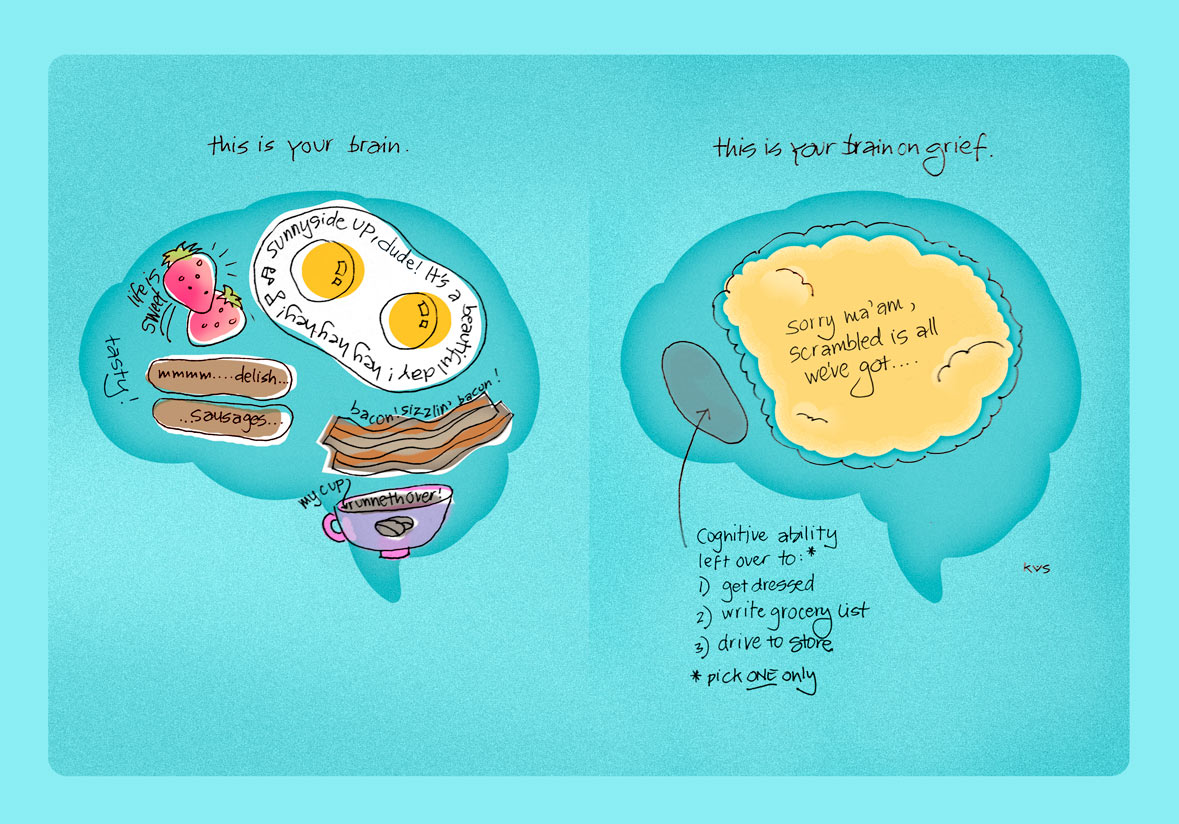
Imagine if instead of searching mental files without success you can’t even find the file cabinet and start to wonder if one ever existed.
That’s what “grief brain” does to you.
Here are a few more examples of things that actually happened:
While I certainly had no real idea in the first hours or even weeks what losing a child entailed, I understood plainly that it meant I would not have Dominic to see, hold or talk to.
I wouldn’t be able to hug his neck or telephone him.
He wouldn’t be sitting at my table any more.
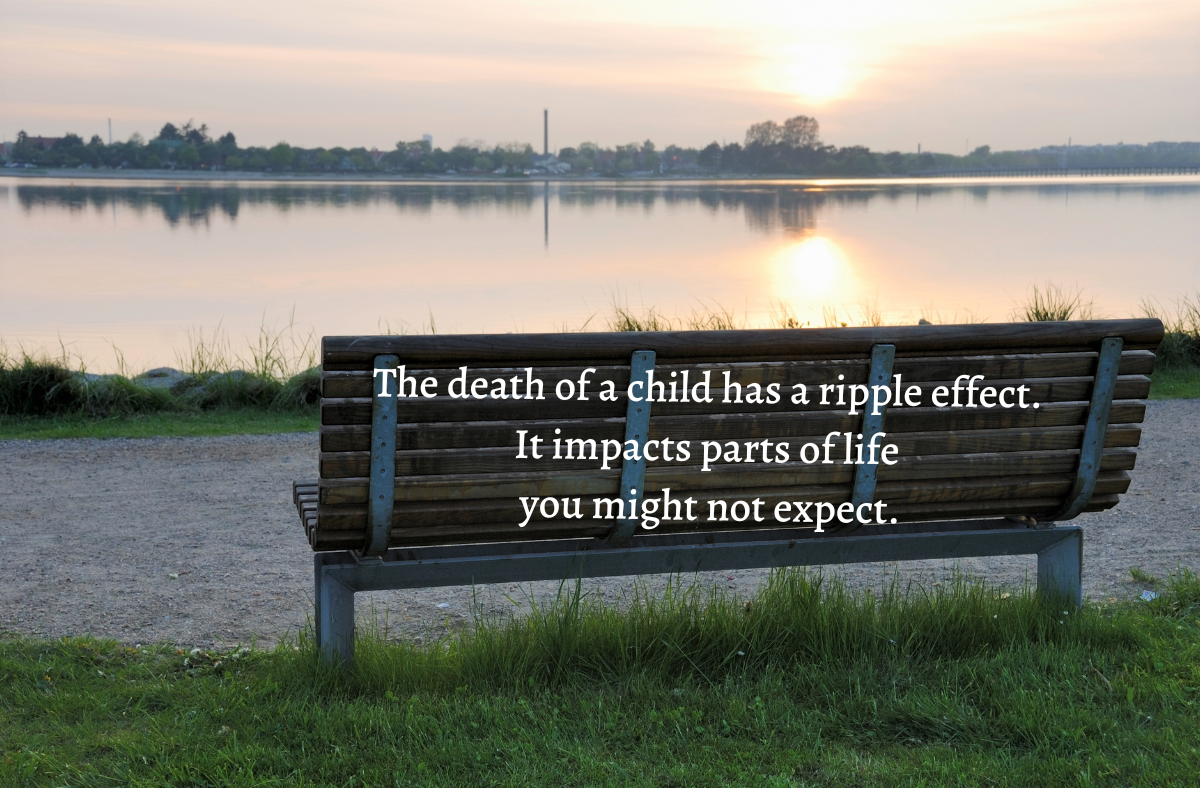
But the death of a child or other loved one has a ripple effect. It impacts parts of life you might not expect. As time went on, I was introduced to a whole list of losses commonly called “secondary losses”.
I shared this last year around this time in response to many, many comments and questions from bereaved parents about what felt like random or unusual physical manifestations of their own grief.
I hope it helps another heart navigate this life none of us would choose.
❤ Melanie
It’s a well known fact that stress plays a role in many health conditions.
And I think most of us would agree that child loss is one of (if not THE) most stressful events a heart might endure.
So it’s unsurprising that bereaved parents find themselves battling a variety of physical problems in the wake of burying a child.




 thelifeididntchoose