Grief Work 2026: How Trauma Affects Relationships and Healing

No matter how a child leaves this earth, it’s traumatic.

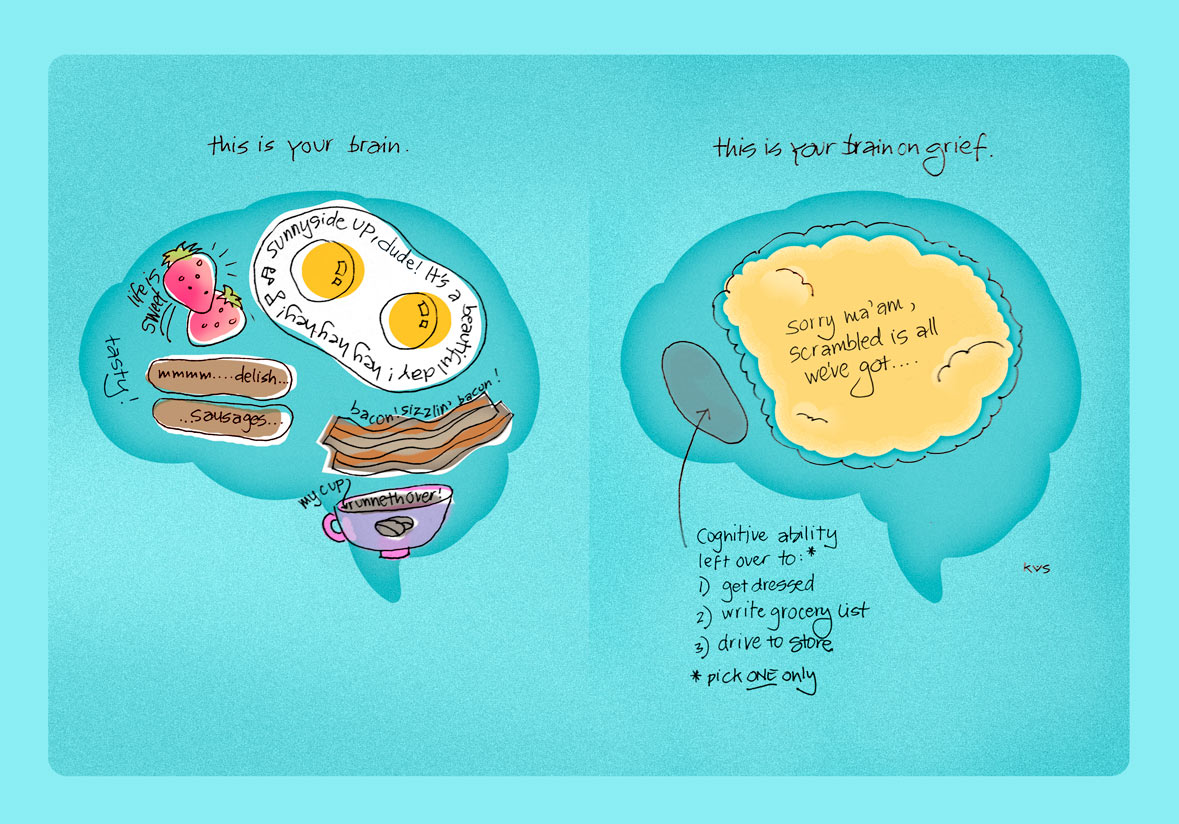
And trauma rewires our brains.

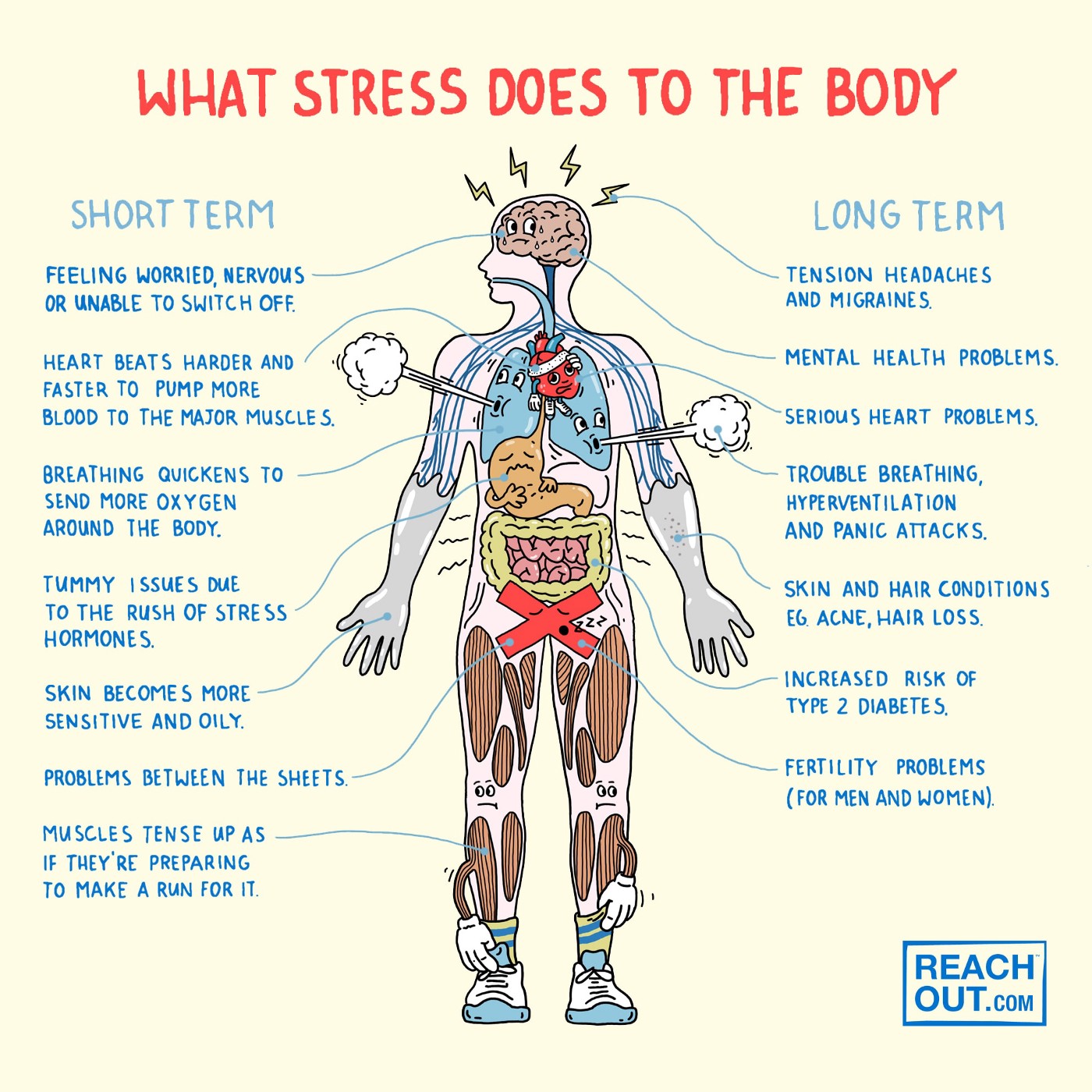
The “fight or flight” response that had previously been reserved for truly life-threatening situations gets woven in with memories and feelings and our bodies remain on high alert.

So before we know it, all kinds of ordinary, daily, and definitely not life-threatening situations evoke rapid heartbeat, shortness of breath, anxiety and fear. And the absolutely reasonable response is to get away from those things that make us feel that way.

So we do (or try to!).
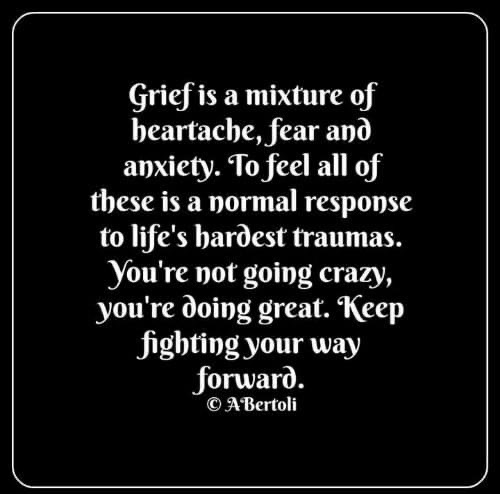
We find ourselves running away from people who love us, who want to help us but who just might not understand why we’re running. We cocoon in our homes, in our own bodies and try to find that one safe space where fear and anxiety can’t find us.

But there is no such absolutely safe space.

Trauma rewires our brains, it’s true.

They can be rewired again.

So many good therapies are available for those of us who suffer in silence. Many are based on using physical cues to help a brain learn to distinguish between truly dangerous and only the memory of dangerous.

PTSD treatments and therapies

It is possible to venture out in the world again, to reach for and sustain connection, to lean into company instead of shying away.

Don’t stay hidden, afraid and alone.

Find a trained trauma counselor

Ask for help.

Navigating Grief: Trauma Rewires Our Brains

No matter how a child leaves this earth, it’s traumatic.

And trauma rewires our brains.

The “fight or flight” response that had previously been reserved for truly life-threatening situations gets woven in with memories and feelings and our bodies remain on high alert.

So before we know it, all kinds of ordinary, daily, and definitely not life-threatening situations evoke rapid heartbeat, shortness of breath, anxiety and fear. And the absolutely reasonable response is to get away from those things that make us feel that way.

So we do (or try to!).

We find ourselves running away from people who love us, who want to help us but who just might not understand why we’re running. We cocoon in our homes, in our own bodies and try to find that one safe space where fear and anxiety can’t find us.

But there is no such absolutely safe space.

Trauma rewires our brains, it’s true.

They can be rewired again.

So many good therapies are available for those of us who suffer in silence. Many are based on using physical cues to help a brain learn to distinguish between truly dangerous and only the memory of dangerous.

PTSD treatments and therapies

It is possible to venture out in the world again, to reach for and sustain connection, to lean into company instead of shying away.

Don’t stay hidden, afraid and alone.

Find a trained trauma counselor

Ask for help.

Navigating Grief: Trauma Rewires our Brains

No matter how a child leaves this earth, it’s traumatic.

And trauma rewires our brains.

The “fight or flight” response that had previously been reserved for truly life-threatening situations gets woven in with memories and feelings and our bodies remain on high alert.

So before we know it, all kinds of ordinary, daily, and definitely not life-threatening situations evoke rapid heartbeat, shortness of breath, anxiety and fear. And the absolutely reasonable response is to get away from those things that make us feel that way.

So we do (or try to!).

We find ourselves running away from people who love us, who want to help us but who just might not understand why we’re running. We cocoon in our homes, in our own bodies and try to find that one safe space where fear and anxiety can’t find us.

But there is no such absolutely safe space.

Trauma rewires our brains, it’s true.

They can be rewired again.

So many good therapies are available for those of us who suffer in silence. Many are based on using physical cues to help a brain learn to distinguish between truly dangerous and only the memory of dangerous.

PTSD treatments and therapies

It is possible to venture out in the world again, to reach for and sustain connection, to lean into company instead of shying away.

Don’t stay hidden, afraid and alone.

Find a trained trauma counselor

Ask for help.

Space To Talk It Out-Such a Gift!

Listening is love in action.

If you know someone whose heart carries great grief-and child loss is not the only hard journey hearts are makingoffer to listen. 

Give up a few minutes to hear how they are really doing, what is really hard, what they really need to say but may be afraid to speak aloud.  Leave spaces in conversation so a heart can work up the courage to share.  Don’t be quick to offer platitudes that shut down deep discussion.  

It often takes many, many repetitions of traumatic events for a heart to begin to heal. 

Read the rest here: Why I Have To Talk It Out

Bereaved Parents Month 2023: Grief Brain is REAL!

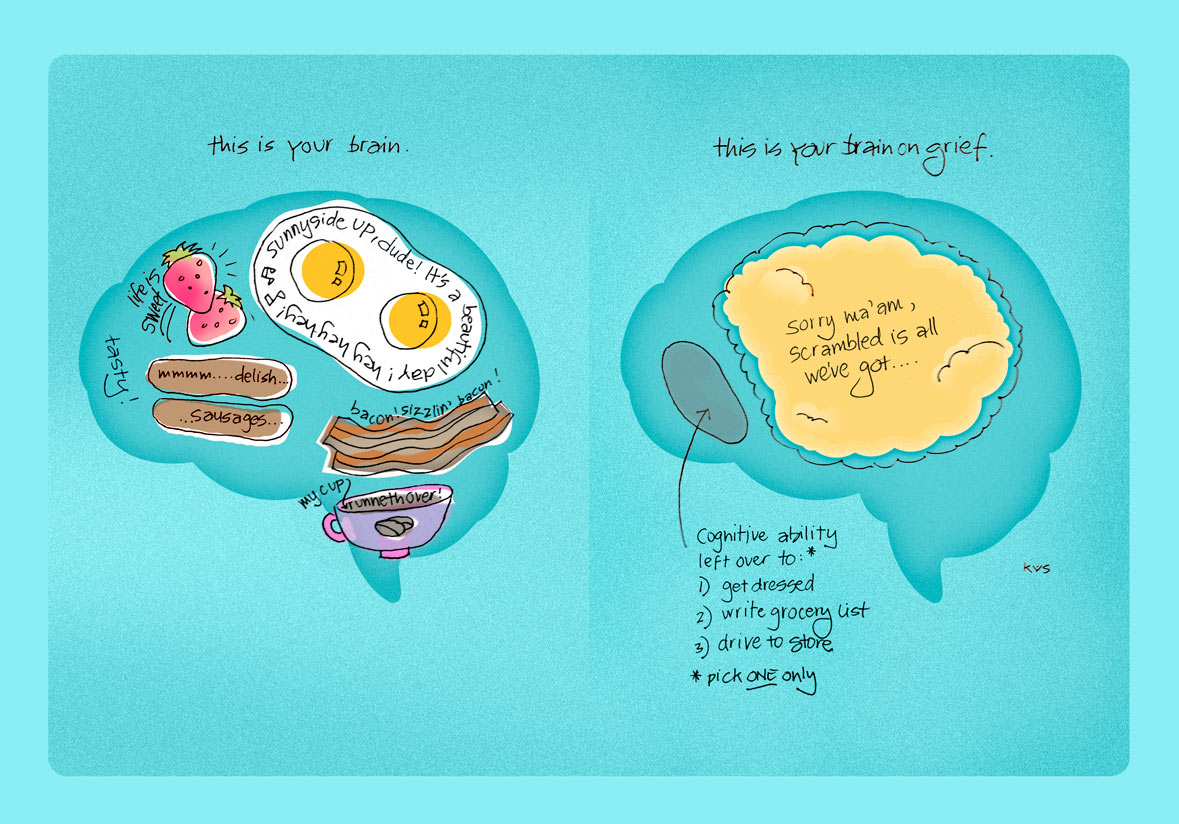
Traumatic loss rewires your brain as well as your body.

So here I am, nine plus years into the journey of sudden child loss and I’m reminded once again I am not the same “me” I once was.

Our newest grandbaby made an early entrance into the world last spring and I did Mama D duty with his big brother for nearly a month. It was a delight to be with my three year old grandson but it was also challenging for this aging/post trauma brain.

Trying to navigate (super simple) routes to and from the hospital, to and from preschool, and to and from the closest grocery store led to more than one U-turn and long way around. Sure I could use my phone’s GPS but I kept thinking I’ll finally remember next time.

I should know better by now…

❤ Melanie

I’m looking right at her.

know her.  In fact, I’ve known her for years.  But please don’t ask me her name.

I have no idea.

It happens to all of us-meet someone in the store or at the Post Office and you just know you know them, but cannot-for the life of you-remember a name.

file-cabinet

Chatting on, you search mental files desperately trying to make a connection you can hold onto.  Five minutes after she walks away it pops up-oh, yes!  That’s so-and-so from such-and-such.

Imagine if instead of searching mental files without success you can’t even find the file cabinet and start to wonder if one ever existed.

That’s what “grief brain” does to you.

Here are a few more examples of things that actually happened:

Read the rest here: Grief Brain: It’s a Real Thing!

Child Loss Is Not a Single Event. I Wish It Were.

Child loss is not a single event. 

Of course the moment when the last breath leaves a body is noted and duly recorded because the law requires such.  I can pull out Dominic’s death certificate (what an ugly thing to have to say about my child!) and it reads:  Time of Death:  1:10 a.m. April 12, 2014.  

But I didn’t know about it until 4: 15 that morning when the deputy rang the bell.  

So for me, his death came then.

Read the rest here: Child Loss is Not a Single Event

Listening is Love in Action

Listening is love in action.

If you know someone whose heart carries great grief-and child loss is not the only hard journey hearts are makingoffer to listen. 

Give up a few minutes to hear how they are really doing, what is really hard, what they really need to say but may be afraid to speak aloud.  Leave spaces in conversation so a heart can work up the courage to share.  Don’t be quick to offer platitudes that shut down deep discussion.  

It often takes many, many repetitions of traumatic events for a heart to begin to heal. 

Read the rest here: Why I Have To Talk It Out

Do The Next Right Thing

I’m not a fan of catch phrases that enter the popular lexicon and then take off into all directions.

Too often they reduce complex emotions or situations into a few words that folks find convenient to banter around in the hopes of sounding wise or “in the know” without any genuine attempt to understand what’s really going on.

But sometimes there IS a phrase that accurately summarizes choices or circumstances and is helpful in guiding a heart in the right direction.

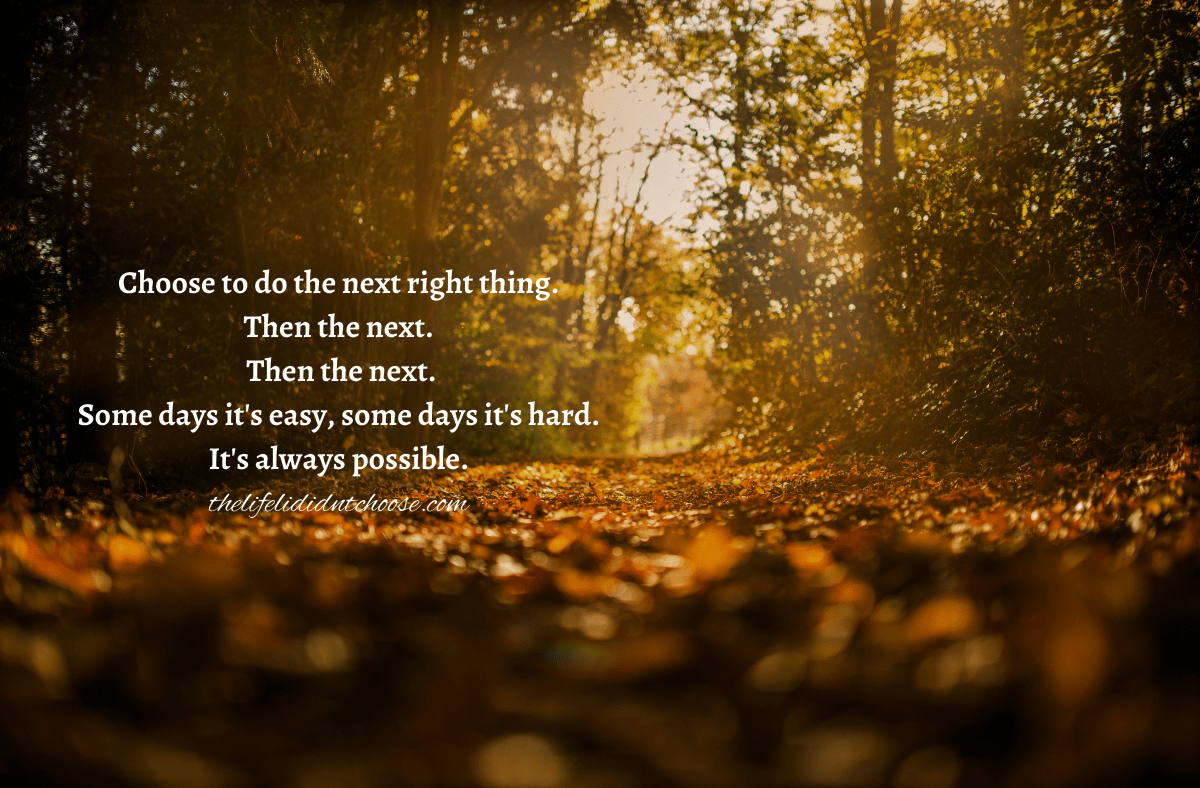
“Do the next right thing” is one of those.

As far as I can tell, it was coined by someone (or many someones) who participated in twelve step programs (think AA) and meant that you don’t give in to the temptation to feed your addiction but instead head to a meeting or rendezvous with a sponsor or other safe person who will help you avoid falling back down the rabbit hole.

Grief is definitely a rabbit hole.

And there are lots of times I need someone or something to distract me from the siren call of despair that would lead me right back down to darkness-even eight and half years later.

So how do I manage to shake it off and move forward? It’s really pretty simple: I do the next right thing.

One day it might be getting up, making coffee and going for my morning walk. Another day it might be taking a shower, getting dressed and heading to a doctor’s appointment.

Most days it’s some form of the regular chores that have outlined my life on this piece of property for the past quarter century-feeding horses, cooking meals, tidying the house, sweeping porches, making necessary phone calls or tracking down some important piece of information we all store in the one location that will most likely be here long after I’m gone.

I’ve written before that just changing my physical position when I feel anxiety creeping up my back and taking hold of my brain can help ward off a full blown panic attack. If I’m sitting, I stand; if standing, I walk; if walking, I sit down. We are complex creatures and the body keeps the score (also a title of an excellent book!).

Feelings aren’t JUST feelings. They are neurotransmitters, muscular contraction, heart rate and blood pressure wrapped up in thoughts.

So when faced with a wall of overwhelming and cascading feelings, I do the next right thing-whatever that may be-and often find it breaks through that wall so I can see a sliver of light.

I follow that light like a candle in a cave until it leads me to a way out of the darkness.

Little by little, decision by decision, I move forward.

Some days it’s easy and some days it’s hard.

But it’s always possible.

Bereaved Parents Month 2022: Grief Brain-It’s a Real Thing!

Traumatic loss rewires your brain as well as your body.

So here I am, nearly eight years into the journey of sudden child loss and I’m reminded once again I am not the same “me” I once was.

Our newest grandbaby made an early entrance into the world this spring and I did Mama D duty with his big brother for nearly a month. It was a delight to be with my three year old grandson but it was also challenging for this aging/post trauma brain.

Trying to navigate (super simple) routes to and from the hospital, to and from preschool, and to and from the closest grocery store led to more than one U-turn and long way around. Sure I could use my phone’s GPS but I kept thinking I’ll finally remember next time.

I should know better by now…

❤ Melanie

I’m looking right at her.

know her.  In fact, I’ve known her for years.  But please don’t ask me her name.

I have no idea.

It happens to all of us-meet someone in the store or at the Post Office and you just know you know them, but cannot-for the life of you-remember a name.

file-cabinet

Chatting on, you search mental files desperately trying to make a connection you can hold onto.  Five minutes after she walks away it pops up-oh, yes!  That’s so-and-so from such-and-such.

Imagine if instead of searching mental files without success you can’t even find the file cabinet and start to wonder if one ever existed.

That’s what “grief brain” does to you.

Here are a few more examples of things that actually happened:

Read the rest here: Grief Brain: It’s a Real Thing!

Bereaved Parents Month 2022: How Grief Continues to Shape My Life Eight Years Later

It would be lovely if life were neatly divided into seasons or sections.

But like so many things, there are no clean lines between now and what used to be.

Who I am today is shaped by who I was the day before.

Read the rest here: How Grief Continues To Shape My Life Eight Years Later