While I certainly had no real idea in the first hours or even weeks what losing a child entailed, I understood plainly that it meant I would not have Dominic to see, hold or talk to.
I wouldn’t be able to hug his neck or telephone him.
He wouldn’t be sitting at my table any more.
But the death of a child or other loved one has a ripple effect. It impacts parts of life you might not expect. As time went on, I was introduced to a whole list of losses commonly called “secondary losses”.
When I opened the door to that deputy and received the news, my world suddenly spiraled out of control.
Over the next days, weeks months I would have to do things I never imagined I might do and certainly things I did notWANT to do. So, so much I couldn’t change. So many ways I lost the right to choose.
And I hated it!
Wasn’t long and that sense of helplessness permeated every corner. Even when it didn’t belong there. I began to feel as if I couldn’t control anything.
So in many ways I stopped trying.
But then one day I woke from the fog of despair. I remembered that there WERE some areas of life where I could still make choices.
And it was empowering!
So here’s a list that I pray gives hope to other hurting hearts.
THINGS I CAN CONTROL
My attitude (how I react to what others say or do)
My thoughts (with great difficulty sometimes)
My perspective (when I’m careful to fill my mind, heart and eyes with truth)
If I’m honest (about ALL things-including my feelings)
Who my friends are (from my end-can’t stop people from walking away)
What books I read (I am choosy and only read things that feed my soul)
What media I consume (stay away from toxic people, topics and television)
What type of food I eat (healthy, appropriate amounts)
How often I exercise (a walk, gentle yoga, online video routines)
How many risks I take (not just physical ones, but also emotional and relational risks)
How kind I am to others (being wounded does not give me the right to wound)
How I interpret situations (do I assume the best or the worst?)
How kind I am to myself (extending the same grace to ME that I extend to others)
How often and to whom I say, “I love you”
How often and to whom I say, “Thank you”
How I express my feelings (I can learn healthy ways to speak my truth)
Whether or not I ask for help (no one gets “points” for playing the martyr)
How many times I smile in a day (smiling, by itself, lifts mood-even a “fake” smile)
The amount of effort I choose to put forth
How I spend my money
How much time I spend worrying (or praying or complaining)
How often I spend moments blaming myself or others for past actions
Whether or not I judge other people
Whether or not I try again when I suffer a setback or disappointment (success is getting up one more time than I fall down)
How much I appreciate the people and things in my life
Exercising control over the parts of my life where I CAN exercise control helps me deal more effectively with the many parts over which I have no control
It does not undo the sorrow and pain of child loss, but it does work to balance the emotional scales.
A few decades ago, faulty research methods made popular an inaccurate statistic that a disproportionate number of marriages fail after a couple experiences child loss.
Like many urban legends, once fixed in the minds of many, it’s nearly impossible to dislodge.
And that is more than unfortunate because when marriages falter (and they often do) after child loss, some people just give up because they think failure is inevitable.
But it’s not.
Marriage is hard under any circumstances. It requires sacrifice, compromise, communication, change and most importantly, commitment.
Any stressor makes it harder.
I can’t think of a bigger stressor than child loss. It’s no surprise that many marriages tend to flounder in the tsunami of grief, sorrow and pain that follows the death of a child.
But grief rarely causes the problems that surface, it simply makes them unavoidable.
Suddenly all the energy that was once available to deflect, to distract, to pretend is gone. And things that have gone unaddressed for years or decades can no longer be ignored.
Mainly because what usually determines THAT is something that happens (or doesn’t happen) at some point after my morning quiet time.
But whether it’s a good day, a bad day or somewhere in between, it is absolutely, completely, utterly NORMAL for my emotions to change as I make my way down the path called “Child Loss”.
As long as I am doing the work grief requires I will continue to have some better days.
But grief still comes in waves in response to triggers or in response to nothing at all and it may be a bad day.
How well did I sleep, rest, eat or exercise? My body affects my emotions in ways I don’t fully understand but absolutely experience.
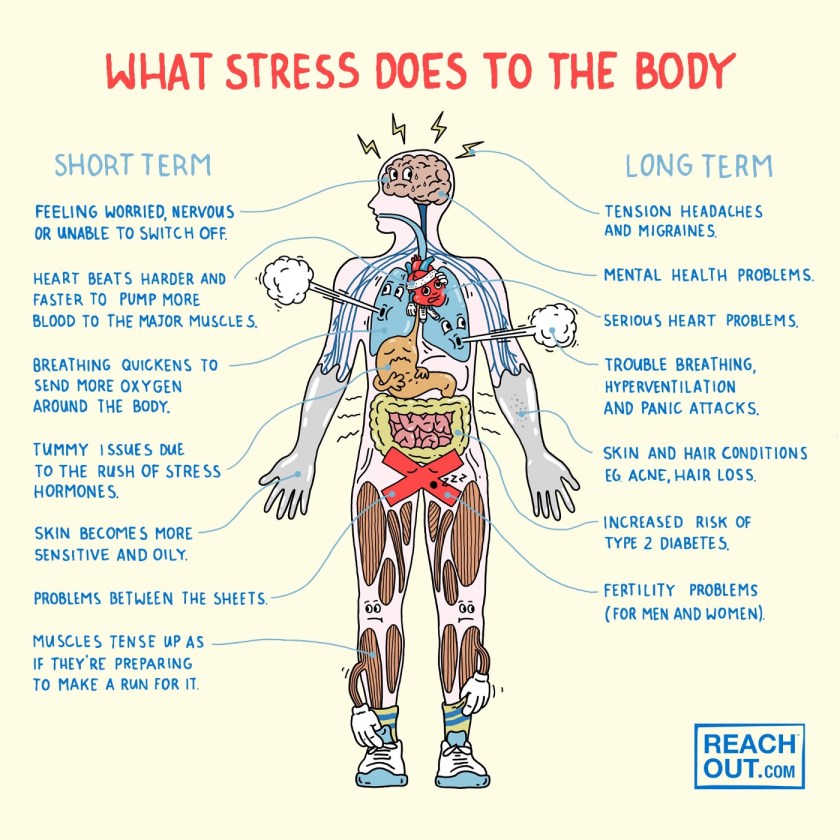
Stress can bring tears to the surface. Even GOOD stress can do it. Looking forward to things, planning a party, large meal, trip or event is stressful, even if it isn’t sad. All stress weakens my defenses and makes it harder to employ the techniques I’ve mastered for diverting my thoughts or controlling my tears.
Sunshine or rain? I have learned to count the number of recent cloudy days if I wake one morning feeling bluer than normal. I often realize that a week or more has passed since I’ve seen the sun.
Too much interaction or too little interaction with other humans makes a BIG difference. My introvert self loves long afternoons alone, sitting in silence with a book or crochet, quiet walks in the woods and chore-filled days without music blaring. But healthy solitude can turn to withdrawal if I let it and sometimes I realize my sudden sense of overwhelming grief is, in part, due to lack of human company.
The list is endless.
Thankfully, at nearly eleven years, the better days outnumber the worse ones for me.
But no matter what kind of day it may be, I no longer worry if it’s normal.
I remember as a young mother of four working hard to keep my kids safe.
Next to fed and dry (two still in diapers!) that was each day’s goal: No one got hurt.
It never occurred to me THEN to add: No one got killed.
Because the most outlandish thing I could imagine was one of them falling or touching a hot stove and us having to rush to the emergency room.
Then I became a mother of teens and one by one they acquired a driver’s license and motored away from our home.
That’s when I began to beg God to spare their lives.
One particularly frightening test was when all four went to Louisiana-my eldest driving and the rest in the van with her. I made them call me every hour and tell me they were OK. It was the first time I realized that I could lose every one of them in a single instant should they crash-all my eggs in one basket.
I was glad when that day was over. Although the irony is they were no “safer” at the end of those 24 hours than they were at the beginning.
Because what I know now, but didn’t know then is this: There is no such thing as“safe”.
Not the way we like to think of it-not the way we add labels to devices, seat belts to cars, helmets to everything from bicycles to skateboards. Of course we should absolutely take precautions!Many lives are saved by them every single day.
But. BUT…
Life is more random than we want to admit.And there is no defense against random.
There is no way to screen for every underlying physical abnormality, no way to drive so well you can stop the drunk or inattentive driver from plowing through a stop sign, no way to anticipate every foolish choice a young person might make that ends in disaster instead of a funny story.
My first response when Dominic died driving his motorcycle was that I wanted my surviving sons to sell theirs. They did so out of respect for me. Neither of them wanted their mama to have to endure a second knock on the door and the same message delivered twice.
I receive it as a sacrifice offered in love from them.
Because it was.
Since Dominic left us almost [eleven] years ago, I have had to deal with my desperate need to keep my living children safe.
And it is a real struggle.
Each child is involved in a career that includes inherent risk. None of them are foolhardy, but they are exposed-perhaps more than many-to potential bad actors and dangerous circumstances.
This branch fell just minutes after my son was standing in that spot splitting logs.
How I long for those days when I could tuck everyone in, turn out the lights and sleep soundly because all my chicks were safe inside my own little coop! How I wish the only danger I thought about or knew about was a bump on the head from hitting a coffee table!
How my heart aches for one more moment of blissful ignorance!
But I can’t live in some imagined water color past. I have to live in the world as it is.
So I remind my heart that safe is an illusion-no matter where we are. Life is not living if it’s only about preserving breath and not about making a difference.
I have never been one of those women who lied about her age.
My weight…well, you will have to threaten me with something that matters to get THAT number out of my lips.
But I’ve noticed this year more than others since Dominic left us that the wear and tear of years and tears and life and loss are showing up on my face as well as my hips.
I am definitely the worse for wear.
I’m sixty-one and for the first time in my life I am religious about applying under eye cream and moisturizing lotion to my face each morning and night.
I don’t want to be the sore thumb in the family pictures!
I’m not sure it’s working. I’m not sure anything can erase or roll back the marks that life and love and loss have etched on my face.
I’m not sure I want to.
Because each wrinkle, each line, each saggy, baggy skin flap says, “I loved, I lived and I am surviving-even though it’s hard.”
Before Dom left I was camera shy. I still am, a bit. But I’m trying hard to suck up my pride and my insecurity and let those flashes pop. Memories are made one day at a time and photos help preserve them.
So whether I’m at my best, at my worst or somewhere in between, I won’t say no to a Kodak moment.
I wish I had more of them from “before”.
I wish I hadn’t’ been so darned particular about what I looked like, what I was wearing and whether or not my wrinkles or big butt showed.
Worse for wear?
Who cares?
This one wasn’t made to last.
❤
For instance, we know that when these bodies of ours are taken down like tents and folded away, they will be replaced by resurrection bodies in heaven—God-made, not handmade—and we’ll never have to relocate our “tents” again. Sometimes we can hardly wait to move—and so we cry out in frustration. Compared to what’s coming, living conditions around here seem like a stopover in an unfurnished shack, and we’re tired of it! We’ve been given a glimpse of the real thing, our true home, our resurrection bodies! The Spirit of God whets our appetite by giving us a taste of what’s ahead. He puts a little of heaven in our hearts so that we’ll never settle for less.
My friend and fellow bereaved mom, Margaret Franklin, Ryan’s mom, shared a beautiful Dutch word with me “Sterkte” (pronounced STAIRK-tah).
It literally translates “strength” or “power” but culturally means much more. It means bravery, strength, fortitude and endurance in the face of fear and insumountable odds through the empowering strength of God in me.
I have loved Scripture as long as I can remember. When I was in second grade I got the notion to read the whole Bible straight through-in the King James Version. I made it to Leviticus before I threw in the towel.
By the time my kids were grown I had read and studied Scripture for decades.
But three years before Dominic ran ahead to Heaven I realized my reading had become rote-I felt like I “knew” all the stories. So I slowed my study to a crawl-only one chapter a day-and I usually copied the whole chapter plus my notes into a journal. I had just finished this time through the Bible in January before Dom was killed in April.
And all that truth stored in my mind and heart was what I “read” for months when my eyes were too full of tears to see print on a page.
Many verses stung-some still do-but I was committed to bathe my broken heart in what I knew was true. I would take it like medicine, even when it tasted awful.I knew-in the end-it was my only hope for help.
It’s easy when doubt creeps in to let my heart hold onto it-even in the face of Truth that puts the doubt to rest.
But if all I do is question, question, question and never still my soul to receive God’s answers or His comfort, then I will simply run out of oxygen and faith.
I can’t stop the clock or the sun or the days rolling by.
Those of us who are more than a couple months along in this journey (or any journey that involves tragedy and loss) know that it is ABSOLUTELY POSSIBLEto feel worse than in the first few days.
Because as the edges of the fog lift and the reality of an entire lifetime looms before you the questions form and the doubt sinks in:
Where ARE You God?
Why don’t You DO something?
Are You even LISTENING?
So many of us who have been in church for a long time think that Wrestling With God or entertaining doubt is sin-or, at best- unhealthy and proof of a weak faith.
When my perfectly healthy, strong and gifted son was killed instantly in a motorcycle accident on April 12. 2014 my world fell apart. My heart shattered into a million pieces. And after three and a half years, I’ve yet to even FIND all of those pieces much less put them back together.
So what does a heart do when that happens?Because, try as I might, I cannot stop time.
Even THAT awful day only lasted 24 hours.
When the sun rose again, the pain was still there. And behind that pain and mixed with it was something else-disappointment, disaffection, distrust.
Where were You, God???
God is sovereign-He rules.
God is good-He loves.
How do those two truths live together in a universe that includes child loss? How can I trust the rest of my life and my eternal future to a God who lets this happen?