Child Loss: Can My Marriage Survive?

A few decades ago, faulty research methods made popular an inaccurate statistic that a disproportionate number of marriages fail after a couple experiences child loss.

Like many urban legends, once fixed in the minds of many, it’s nearly impossible to dislodge.  

And that is more than unfortunate because when marriages falter (and they often do) after child loss, some people just give up because they think failure is inevitable.

But it’s not. 

Marriage is hard under any circumstances.  It requires sacrifice, compromise, communication, change and most importantly, commitment.

Any stressor makes it harder. 

I can’t think of a bigger stressor than child loss. It’s no surprise that many marriages tend to flounder in the tsunami of grief, sorrow and pain that follows the death of a child.

But grief rarely causes the problems that surface, it simply makes them unavoidable.

Suddenly all the energy that was once available to deflect, to distract, to pretend is gone.  And things that have gone unaddressed for years or decades can no longer be ignored.
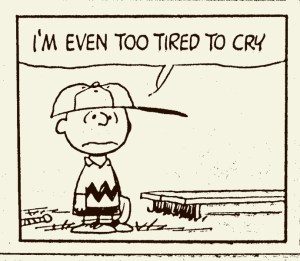
charlie brown too tired to cry

It’s important to make that distinction because if child loss is the only reason a couple can’t find their way, then giving up might make sense.  Anyone who lives with child loss knows that the pain, sorrow and missing will never go away.  We become better able to deal with it, but it is something we will carry for life.

If, however, child loss is simply the force that shook other problems loose, then working on those specific issues is not only possible, it’s doable. 

wedding rings

Here are some common conflicts in marriage that surface after child loss:  

Different ways of expressing (or not expressing) emotion.  Men and women often grieve differently.  You and your spouse may have always dealt differently with strong emotions but until it was grief, it went unnoticed.  Sometimes these differences cause conflict because one spouse cries openly while another rarely mentions their missing child.  To the open griever, it feels like her spouse doesn’t care.  To the secret griever, it feels like his wife is dramatic and out of control.  If you don’t talk about it, the gap grows wider and can become unbridgeable. 

It’s OK to grieve differently.  But it’s not OK to blame someone for grieving differently.  Ask questions.  Give grace.  Listen carefully.  Grant space. 

style of grieving marriage quote

Blended family dynamics that have gone unaddressed.  Some bereaved parents are no longer married to the mother or father of their child.  They have remarried and are part of a blended family.  Any differences in grieving styles between spouses can be exaggerated when the biological parent feels like the stepparent “doesn’t get it”.  Sometimes the bio-parent becomes bitter that his family circle has been broken while his spouse is spared.  The list is practically endless but nearly always starts with things in the relationship that were always there-favoring one child over another, a sense that the stepparent never cared for her spouse’s children as much as for her own, or other silent resentment.

Before you assume that the only reason your spouse isn’t crying at all or as much as you is because it wasn’t HIS child, think carefully about it.  Have there been rumbles in your relationship before?  Consider the full sweep of how your spouse treated your missing child-is there ample evidence that he or she loved your child well?

Don’t jump to conclusions.  Ask questions.  Give grace.  Listen carefully.  Grant space.

listening is a postive act

Underlying health problems.  Sometimes child loss causes or uncovers health problems.  If you or your spouse suffer from heart disease, diabetes or other chronic health issues, the stress of burying a child can make any or all of them worse. Child loss can also push marginal mental health to the point of requiring counseling and/or medication.  Chronic pain tends to get worse.  Thyroid medication often needs to be adjusted.  All of these things can make someone grumpy, short-tempered, less likely to extend grace and mercy.  Add that to the stress of child loss and it’s no wonder spouses may find themselves at one another’s throats. 

One spouse may be motivated to take better care of him or herself while another may give up and give in, refusing medication or treatment for the most obvious health problems.  Frustration and a sense that the unmotivated spouse is making life harder for everyone adds to family stress.

If you find yourself or your spouse acting out of character,  a thorough physical examination and blood work can expose underlying health problems.  Appropriate medical intervention will make a huge difference.  Counseling is often an important part of that intervention.  

Old wounds.  Child loss is such a deep wound!  It frequently uncovers other, older wounds as well.  You or your spouse may have wounds from earlier in your marriage or from earlier in life before marriage.  Many, many times we cover these up and *almost* forget them.  But when a heart is shattered in the aftermath of burying a child, all those tender places become exposed.  Whatever tricks we’ve used to keep them hidden just don’t work anymore.

If you feel like you are reacting disproportionately to everyday stresses, stop and listen to your own heart.  Is there an offense behind the offense you think you’ve suffered at the hand of your spouse?  Is there an unhealed wound shading the meaning of words and actions that otherwise wouldn’t upset you?

heart baloon girl

I could list a dozen more examples of the complex reasons a marriage may struggle after child loss.  

I won’t.  

Marriage is a commitment.  A difficult, trying, time consuming, energy zapping commitment under the best of circumstances.  

Child loss may be the worst of circumstances.  

But remember that child loss alone is rarely the reason a marriage flounders.  

Look deep.  

Grant space.

Ask questions.  

Strain to hear what your spouse is really saying.  

Give grace.  

We can’t bring our children back but we can choose to fight for our marriages.  

They do not have to become another casualty in this life we didn’t choose. 

hands across table

Child Loss: A Letter to My Living Children

I never thought it possible to love you more than I already did.

But I do.

photo (20)

Your brother’s untimely departure has opened my heart in a whole new way to the glory that is your presence.  It has made me drink you in like water in the desert.

No more do I take even a moment for granted.  Never again will I be “too busy” to listen to you, to hug you, to greet you on the porch when you decide to make your way back home.

Read the rest here:  A Letter To My Living Children*

Child Loss and Secondary Losses

While I certainly had no real idea in the first hours or even weeks what losing a child entailed, I understood plainly that it meant I would not have Dominic to see, hold or talk to.

I wouldn’t be able to hug his neck or telephone him.  

He wouldn’t be sitting at my table any more.

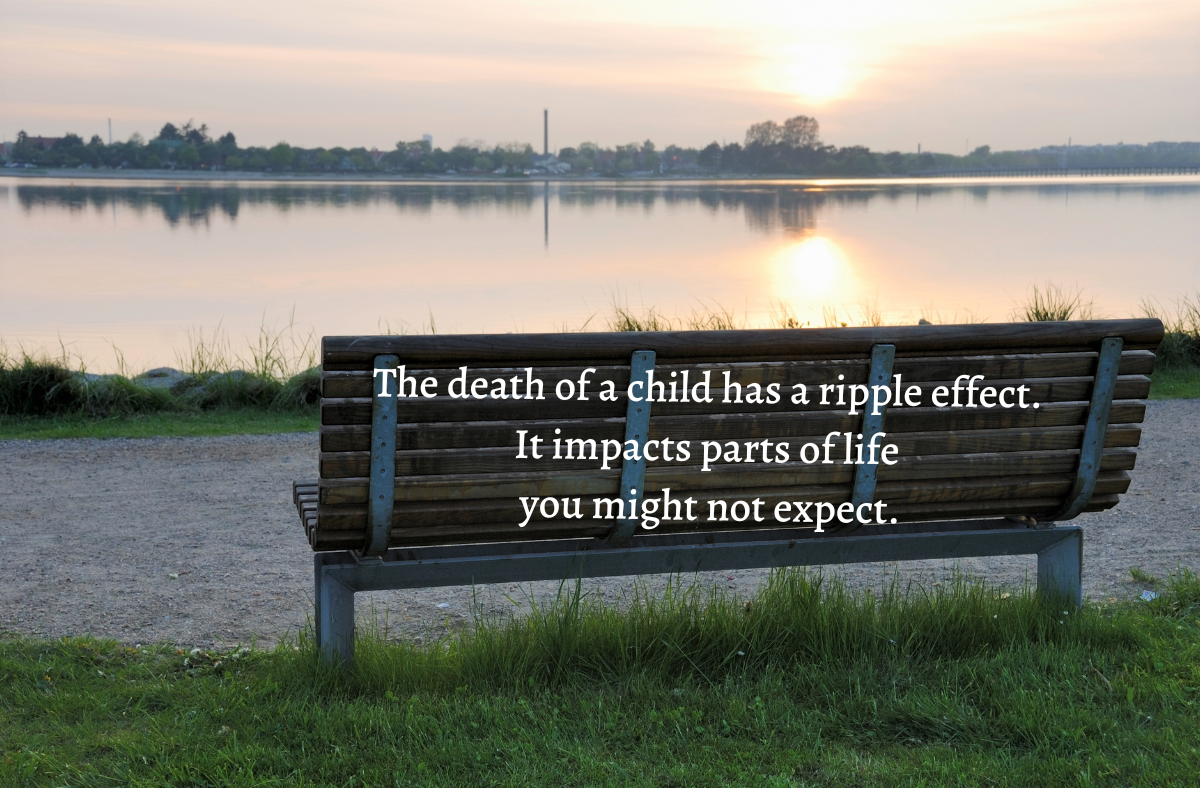
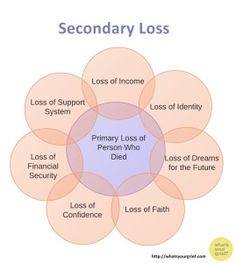
But the death of a child or other loved one has a ripple effect.  It impacts parts of life you might not expect.  As time went on, I was introduced to a whole list of losses commonly called “secondary losses”.

secondary losses

Here are just a few:

Loss of a large chunk of “self”.  Dominic possessed part of my heart and part of my life.  It was violently ripped away when he died.  There is part of me that was uniquely reflected from him-like a specialty mirror.  I can never access that part of me again.

Loss of identity.  Before Dominic died I was one kind of mother.  I was a mother of four living children who were making their way in the world as successful adults.  I was a mother looking forward with happy anticipation to the next years.  Now I am still a mother of four children but one whose heart has been changed by tragedy and sorrow. Tomorrow is still bright, but there’s a shadow just behind it.

desimones uab family

Loss of self-confidence.  I used to enter a room without a thought to how I’d be received or perceived.  That’s definitely not the case now.  I’m self-conscious-constantly wondering if I’m saying or doing the right thing.  I never know if a grief trigger will (at best) pull my attention away from conversation or (at worst) send me scurrying for the bathroom.

Loss of sense of security.  I think every parent has moments of fear over his or her child.  When they first go off someplace without us, when they get a driver’s license, travel abroad, go to college.  But all the awful things I imagined didn’t hold a candle to the reality of waking one morning to a knock on my door and the news that Dominic had been killed.  The bottom fell out of my (relatively) safe world.  Bad things, random things can and do happen.  Once it happened to ME, it changed how I processed everything.  The passing years have softened some of the anxiety but I will never be able to assume safety again.

Anxiety

Loss of faith.  I did not “lose” my faith.  I never once doubted that God was still working, was still loving and was still in control.  But I most certainly had to drag out every single thing I thought I knew about how I thought He worked, loved and superintended the world and examine it in light of my experience of burying my son.  It took a long time to work through all the pat answers I had been offered and myself doled out to others for years that didn’t fit with my new reality.  I am learning that doubt is not denial and that I have to live with unanswered questions.

Loss of family structure.  I’ve written before that a family is more than the arithmetic total of the number of members.  There were six of us.  But we were so much more than six when we were all together!  Our talents, personalities and energy were amplified in community.  When Dominic’s large presence was suddenly whisked away, every relationship got skewed.  We’ve fought our way back to a semblance of “whole” but still miss him terribly.  We can function, but we will never be the same.

empty chair

Loss of my past.  Memories are funny things.  They are plastic and subject to change.  And my recall of an event is limited to my own perspective.  For a memory to be rich and full, I need input from others who were there as well.  One vessel of family memories is no longer available to add his unique contribution.  Every time I pull out a photo or dig down deep in my heart to draw up a treasured moment, I realize I’ve lost something I can not recover.  The joke, the glance, the odd detail are all gone.

Loss of the future I anticipated.  I’m a planner by nature.  Not a detailed, OCD, got-everything-in-order kind of planner, but a “big picture” kind of planner.  When Dominic left us in 2014, things were going (pretty much) according to plan.  Each child was well on his or her way to the career path they had chosen.  I was easing into an empty nest and exploring options for life after homeschooling.  My husband was entering his last few years of a lengthy career.  It’s hard to explain to anyone who hasn’t experienced it, but when your world is shaken by child loss, everything gets scrambled.  You can’t just pick up where you left off and keep going with the pieces that remain. 

There’s a prolonged period of confusion and everyone is impacted differently and in ways you could never imagine.  All of us have changed dramatically in the years since Dominic left us.  He is not the only thing missing from the rest of our lives.  Holidays are altered.  Birthdays are different.  We have to plan special events around uncomfortable milestone dates that roll around every year whether we want them to or not.  It’s a constant readjustment to life as it IS instead of life as I thought it WOULD be.

Loss of ability to focus and function.  Oh, how this surprised me!  I was in some kind of zone for the first month after Dominic left.  My other children were home, we had to make it through planning his funeral, two graduations and cleaning out his apartment.  I also had to handle paperwork for my husband to take short-term disability due to grief.  I cried a lot, wrote down dozens of notes but managed to do what I had to do.  Then I crashed. I couldn’t remember a thing.  I couldn’t read more than a couple sentences at a time.  I hated the telephone.  I could barely stand to hear the television.  I had to make a list of the most basic things like brushing my teeth, feeding my animals, turning off all the lights before bed.  It was awful!  And it didn’t really get better for well over a year.

I still suffer from a very short attention span, low tolerance for noise and an inability to accommodate last minute changes.  I don’t schedule anything back to back.  I live in a rural area and sometimes shop in the nearby town.  I will start the day with a long list and shorten it repeatedly as I go along because driving in traffic, crowds and random sounds ramp up my anxiety and make me want to go home with or without what I came for.  I have changed the way I do so many things.  My pre-loss memory has never returned.  

griefbrain1

Loss of patience.  I am at once impatient and long-suffering.  I have zero patience for petty grievances, whining and complaining.  Yet I have compassion for other people living hard and unhappy stories.  I berate myself for not being “better” and, at the same time, extend grace to others who aren’t “better” either.  I want to shake people who bowl over weak, hurting, desperate souls.   I don’t have time for moaning about rain when you were planning a picnic but will listen for hours to a mama tell me about her missing child.

Loss of health.  I had a number of chronic health conditions before Dominic ran ahead.  Within the first year of his departure, I was hospitalized twice.  My experience is not unique.  Some parents suffer immediate health effects (heart attack, blood sugar spikes, anxiety/depression) and some see a slow decline over time.  In part because child loss, like any stressor, will negatively impact health and also because sometimes bereaved parents stop doing the things that help them stay healthy.  At almost five years, I’ve learned how to manage the stress better although some of my health issues continue to get worse.  It’s hard to tease apart what is age, what is disease and what is grief.

When your child leaves this life before you do, it changes everything.  

Not only things you might expect, but many you’d never imagine.  

It’s a constant balancing act, readjusting every day to new challenges.  

Struggling to keep my head above the waves.  

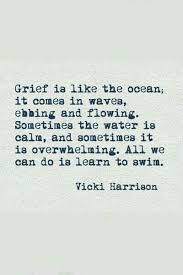
grief like the ocean learn to swim


Child Loss: Marking the Milestones

When your child is born you take notes.

You plan to mark this day as a special milestone for the rest of your life.

You absolutely, positively NEVER think you will have to mark another one:  the day he or she leaves this life and leaves you behind.

But some parents have to mark both.  The dash in the middle is shorter than we anticipated, and our child’s life ends before ours.

grieving mother at grave

So how do you do it?  How in the world do you observe the polar opposite of a birthday?

Here are some ideas (shared with permission) that parents shared recently in an online discussion sparked by one mom’s very honest admission that she just didn’t have it in her to create another video montage from the same old photos to mark yet another year without the earthly companionship of her precious son:

Don’t do anything.  That is an option. We do not have to draw a red circle around THAT day on the calendar, gather folks as if  it’s a celebration.  As one mama said, “Yes, the day they left us does not need to be ‘remembered’.”  For some parents, going to work like it’s a regular day, engaging in whatever normal activities are required, ticking the hours off on the clock until night falls and the earth turns to the next day may be the very best choice.  Another mama wrote this:  “I have friends who celebrate a ‘heaven day’ for their son.  I can’t.  I just can’t.  If it were up to me, I would probably go camp somewhere all alone, and not move a muscle for the entire day.”

Do something big (or small).  Some parents choose this day to hold an annual “Celebration of Life”.  It might take the form of a balloon release, or lantern release at home, at a park or other outdoor venue or at the cemetery.  It might be lunch or dinner out at your child’s favorite restaurant or at home with your child’s favorite menu.  Invite friends and family to join you and ask that they bring a photograph or memory and share.  One mom said that such an event kind of happened organically and spontaneously when contacted by her son’s widow:  “We went to one of [his] favorite restaurants.  Told funny stories about him, talked about how missed he is, then went o his grave and put fresh flowers.”

balloon release

Serve others.  Did your child have a special interest in a particular charity or community organization?  Maybe you can spend this day volunteering or raising awareness/money for that group.  Often having something to do helps a heart from sinking into despair.  If the group allows, maybe put up a sign saying, “Volunteering today in honor of __________” and attach appropriate photos of your child.  Some parents whose child died from cancer or suicide or violence participate in walks or fundraisers that highlight those causes.

Encourage Random Acts of Kindness (RAK).  I plan to do this one in April.  It will be seven years (!) and I can barely stand it.  But so many of the comments from Dominic’s friends after he left for Heaven went something like this one, “He was always doing something for someone else.  Fixing their car or showing up when they needed an encouraging word.”  He was known for his many acts of generosity and kindness and I feel like he lives on in the hearts of others because of that.  I had cards printed ( I intentionally let his “dates” off) which I will distribute well in advance of April 12th for friends and family to leave behind when they do a RAK in memory of Dom.  Vistaprint and other online publishing companies offer reasonable prices and will guide you through the process step-by-step.

random act of kindness

Escape.  Lots of us find being at home (alone or in the company of others) too hard to bear.  Many received word of their child’s death at home and as the day creeps closer, the memories crowd every corner of mental and physical space and are inescapable.  So sometimes parents plan a trip around this time.  Go somewhere your child would have loved to go or go somewhere he or she enjoyed visiting.  Take photos and post them in honor of your child if you want to.

Focus on family.  You may not want to be alone, but the thought of being with anyone outside your closest grief circle is overwhelming.  That’s OK.  Spend time with the people who, like you, are most affected by your child’s absence.  You don’t have to do anything special.  You can make room for them to speak or not speak about their grief as they choose.  Sometimes just having another warm body in the room is enough to ward of the chill of despondency.

grieving dad

Flip the script.  For those of us who believe that this life is not all there is, the day can be one of celebration.  Our children have escaped life full of sorrow and trouble and are safe forever in the arms of Jesus, where we will also be one day.  Waiting is hard, but waiting is not forever.

Simply allow yourself to feel the full force of missing and grief.  “As far as his death day, for me, that is a day when I allow myself to fully feel and express the pain of my loss.  It is a way to (temporarily) empty myself of all this pain, so I can breathe again to face another day.  I will sit in his sweatshirt, listen to reflective music, cry a lot, talk to him, pray to God, and just allow myself to feel all the pain and emotion that everyday responsibilities cause me to stuff away.”  If you can manage it, taking the day off work and giving yourself grace and space to grieve in ways that are denied so often may be the very best way to experience the day.

Here’s a list of ways some parents honor their child on this day:  

  • Giving away stuffed toys with a card or note explaining why.
  • Taking goodies to first responders and/or nurses who were served their family during an accident or illness.
  • Handing out Bibles or books in memory of their child.
  • Making memory baskets for parent whose child will be born straight into heaven.
  • Adding to a scholarship fund or other charitable fund in honor of their child.
  • Placing balloons, flowers or other special decorations on their child’s final resting place.
  • Lighting candles, releasing butterflies, balloons or lanterns.
  • Placing a memorial advertisement in a local paper.

Do or don’t do whatever helps you make it through those twenty-four hours that represent another year of sorrow, another year of missing.  

missing child from arms

There is NO wrong way to mark or not mark this day. 

It’s up to you and your heart.  

And absolutely does not require anyone else’s permission or approval.  

dont trade authenticity for approval

Sometimes I Just Want To Be Me!

Even in the very first hours after the news, my brain began instructing my heart, “Now, try to be brave.  Try not to disappoint people.  Try to say the right thing, do the right thing and be the example you should be.”

Whatever that meant.

As I made phone calls and received concerned friends and family members I was so aware that they would take a cue from me-how much can I say, how hard can I cry, should I hug or stand back, should I talk about him or be silent lest it make the tears fall harder?

And here-almost five years later-I still feel like I need to lead the way in conversations and social encounters.

Read the rest here:  Can I Just Be Me?

Repost: I Get It-I Really DO Get It

I write a lot about what bereaved parents (me!) wish others knew or understood about child loss and this Valley we are walking.  And I am thankful for every person outside the child loss community who chooses to read and heed what I write.

But I want to take a minute to tell those of you who are not part of this awful “club” that I get it-I really do get itwhen you need to put distance between yourself and me or other people walking a broken road.

We all love to think that life is a never-ending ascent toward bigger, better and more enjoyable moments.

Our children are born and we think only of their future, not their future deaths.

Read the rest here:  I Get It-I Really DO Get It.

Speak, Don’t Stuff

As a counterweight to yesterday’s post, I wanted to share this one.

While I am a huge advocate for not flying off the handle (I repeat that here), I am also an advocate for speaking aloud things that need to be said.

I want to create a safe space where friends and family can share what’s on their hearts without fear of my reaction or recrimination.  ❤

Someone commented the other day on my post, Shadows and Celebrations, that they thought my child’s remark was selfish.

I countered that I didn’t think so. 

Instead, I thought it was honest.

Of course my heart hurts any time I’m unable to meet my family’s expectations, but that doesn’t mean they should refrain from sharing them with me.

One of the things I’m learning in this Valley is that I must make room for observations, for sharing, for venting and for genuine conversation.  It’s the only way any of us are going to survive.

courage starts with showing up and letting ourselves be seen brene brown

I can’t pass judgement on every word spoken.

I needn’t assume responsibility for every unmet expectation.

I don’t have to fix every situation. 

I can’t.

Sometimes we just need to give voice to something.  Because when we name it, when we share it, when we speak it aloud, it often ceases to have power over us.

Secrets drive hearts apart.

Sharing draws them together.

Even when what’s shared is painful.

connection brene brown

Repost: Step Back, Don’t React

It is possible not to react to every single thing someone says or does.  It is possible to scroll past social media posts that get under your skin and not look back.  It is possible to ignore a snarky comment or an unhelpful piece of advice from someone who ACTS like they know what you’re going through but really has. no. idea.  

Now if you are new on this journey, you will read these first few lines and think, “Is this woman crazy????” 

I felt EXACTLY the same way in the first months and even through the first couple years in this Valley.

Read the rest here:  Step Back, Don’t React

Repost: Grief and Family

One of the things I absolutely LOVED about having four kids was the way they pinged off one another.  There were evenings when the comments were flying so fast I could barely keep up.  Sly looks, secret texts, funny faces and friendly punches made up most of our times together.

That’s how families are-each person is just a little “more” when surrounded by folks that love and understand him or her.  

When Dominic left us, we didn’t only lose HIS companionship, we also lost the part of each of us that was reflected back from him.

Read the rest here:  Grief and Family

A Phone Call a Day [Almost] Keeps the Panic Away

A few days ago I wrote about how panic is always just a breath away for those of us who have suffered loss.  

Like a friend of mine recently said, “We are branded.  GRIEF is burned into our hearts and we are never the same.”

So how to live this altered life?  

How can I manage that emotional tension that saps energy and strength from my heart, mind and body?

Our family has adopted some practical protocols that help.  Sometimes they fail (as they did that night) but for the most part, they give all of us a margin of assurance that keeps panic to a minimum.

We carry our phones, all the time.  I was never THAT person before Dominic left us.  I used my phone mainly when away from the house or traveling.  Otherwise it might be left charging in the kitchen or tucked inside my purse from my last outing.

Not anymore.  When I wake up in the morning I grab it and my glasses from the bedside table and my phone is in my hand, in plain view or in my pocket until it is put back there at night.  I make sure it’s charged and if traveling or going somewhere a plug may not be available I carry a small power cell to charge on the go.

cell phone in hand huffpost

We tell one another of our plans and, if appropriate, of our route.  My kids are grown.  I’m not interested in supervising their lives.  But they understand my mama heart and graciously give me at least a general idea of where they are and what they are doing.  They text when they get back home no matter how late it is.

I don’t stay awake waiting for it, but when I wake in the wee hours or in the morning, I have the reassuring message to greet me. 

We answer texts/calls ASAP.  Obviously we don’t encourage texting and driving but each of us has learned to give a “thumbs up” icon quickly in response to a text message just so the person sending it can be reassured.  Then, when it’s convenient and/or safe, we respond more fully.

We keep each other informed when traveling.  We distribute itineraries and give periodic updates on flight status, traffic or other appropriate information so family members not only know where we are but also if our time of arrival has been altered due to flight or weather delays or traffic conditions.

road-maps

We share phone numbers of friends and coworkers which gives us alternate forms of communication should there be an emergency.  Family phone numbers are in “favorites” in our phones so if we are unable to call for ourselves, emergency personnel would know who to call.

Truth is, we can’t stop bad things from happening and we know that.  

But there’s no reason to create fear and panic when a quick phone call or text can avert it.  

Our hearts bear enough already.  ❤

wounded_heart-960x600