Step Back, Don’t React

It is possible not to react to every single thing someone says or does.  It is possible to scroll past social media posts that get under your skin and not look back.  It is possible to ignore a snarky comment or an unhelpful piece of advice from someone who ACTS like they know what you’re going through but really has. no. idea.  

Now if you are new on this journey, you will read these first few lines and think, “Is this woman crazy????” 

I felt EXACTLY the same way in the first months and even through the first couple years in this Valley.

But, I will tell you this:  the sooner you can embrace the habit of practicing the pause, the sooner you will begin to feel like you have some control in your world again.

And isn’t that one of the things we crave after the tsunami of child loss sweeps over our lives-order, control, a sense of purpose and direction?

It’s hard. 

Really, really hard not to react against every arrow shot into my wounded heart.  Even when I know it was an accident and the offense is collateral damage, it still hurts.

But I’ve found that if I just take a single, deep breath I can put a bit of distance between the oomph of the impact and my reaction.  And there is actually power in choosing to ignore offense.

Because then I am in control, not the person lobbing the arrows. 

just-breathe

So what do I do in the split-second it takes to draw in that preparatory breath?  I consider the source.  I think (quickly) about my ongoing relationship with this person, what’s happening in THEIR life and why they might have said or done what they said or did.

Is it ignorance?  Is it sloppy choice of words?  Is it due to stress in his life?  Is she just worn out and not thinking?

And I decide:  is reacting to THIS particular exchange worth damaging the relationship?

Is it worth the negative emotional energy that I will have to expend?

Is it something I can overlook and move past?

Most of the time the answer is, “yes”.  I CAN let it go.  It’s not that big of a deal.  It is not a fair representation of our relationship and it is certainly not worth ruining a friendship.

I’m not just doing THEM  a favor.  I’m doing ME a favor.

choose to respond

I’m not “letting them off the hook”.  I may actually revisit the issue later on, when emotions aren’t running high. 

But I have learned that I only have so much emotional energy to expend in this Valley.  So much of it is already absorbed in carrying the missing and sorrow and reining in my own outrageous feelings that I just don’t need to waste the rest on trivial things.

So I don’t (most of the time). 

Practicing the pause helps me do that. 

It gives me control. 

There is far too little of that this side of child loss.

So I will take what I can get. 

boundaries control react

Grief and Self-Care: Surviving the Unthinkable

My first instinct as a mother and a shepherd is always, “How can I help?”

I routinely set aside my own needs for the needs of others.  Not because I’m so selfless but because that’s how I’m made-I’ve always had the heart of a caretaker.

That’s not a bad thing, most of the time.

But if taking care of others means NOT taking care of myself, then in the end, I’m of no use to anyone.  When I allow every bit of energy-emotional, physical, psychological and spiritual-to drain away until there’s nothing left, I am unable to meet my most basic needs, much less the needs of others.

I’ve written before that grief puts a hole in my bucket It guarantees that no matter how much is poured in, I’m never truly full.

I’ve also written about setting boundaries and trying to preserve margin as I walk this Valley.  I have to create space between me and the people around me if I’m going to make it through.

But there are some other steps I can take to help ensure my heart is strong enough for the journey.  It’s not always about what I don’t do.

Sometimes it’s about what I choose TO do.

Here are some ideas for self-care in grief (or really ANY hard place in life):

  • Be patient with yourself.  There is no time frame for grief.  Each heart is unique.  Extend grace to yourself, just as you would to a friend.  Try not to take on extra responsibilities.  It’s better to allow for some flexibility in obligations during this time (even around holidays!).no timetable for grief
  • Listen to your body and your heart: If you need to cry, then cry. If you need to sleep, then do so. If you need to talk to someone, seek out someone who will listen. If you need to reminisce, then take the time. It is important for the grieving process that you go with the flow.
  • Lower expectations for yourself and communicate this new reality to others. You are not able to operate as you did before loss.  Your capacity for interacting with others, managing tasks and being available for the needs of others has been dramatically altered.  Own up to it, and let others know that it will be some time before you can shoulder the responsibilties you once did.
  • Let others know what you need from them.  No one is a mind reader.  While we who are bereaved think our needs are obvious, it’s simply not the case.  Communicate to family and friends how they can support you.
  • Accept the help of others. Understand that grief is hard work. It requires a great deal of energy and can be exhausting. Even though we place a high value on self-sufficiency, it is important to ask for, and accept, help from those close to you. Others careand genuinely want to be of assistance, but usually do not know what to specifically offer. In particular, it is vital to know who will listen and be supportive. Sharing your story out loud is one key to healing. And, remember that professional guidance is also available
  • If you need counseling, get it!  There is NO shame in asking for help. Get all the support you need. There are many bereavement support groups as well as counselors or spiritual advisors who specialize in bereavement counseling. Don’t hesitate to contact a medical and or mental health specialist if you have feelings of hopelessness or suicidal thoughts.emotions-faces
  • Accept your feelings. Feelings are neither right nor wrong, they just are. Sadness, loneliness, fear, confusion, anger—these are among the many feelings you may experience, and are completely normal. Emotions are often raw early in the grief process, but it is important to express them. Attempting to stifle feelings usually leads to an emotional outburst at an inconvenient time.
  • Face your feelings. The painful emotions associated with grief are a natural and normal response to loss. You can try and suppress them or hide from them all you want but in the end this will only prolong the grieving process. Acknowledging your pain and taking responsibility for your feelings will help you avoid the complications often associated with unresolved grief such as depression, anxiety, substance abuse, and health problems.
  • Express your feelings. The most effective way to do this is through some tangible or creative expression of your emotions such as journalling, writing a letter expressing your apologies, forgiveness and the significant emotional statements you wish you had said, or art projects celebrating the person’s life or what you lost.
  • Keep a journal.  Writing down your thoughts and feelings can help you to validate and work through your grief.
  • Feel whatever you feel. It’s okay to be angry, to yell at God, to cry or not to cry. It’s also okay to laugh, to find moments of joy, or to let go when you’re ready. Your grief is your own and no one can tell you when you should be “over it” or when to “move on.”
  • Pay attention to physical needs. It’s easy to ignore your health when all you want to do is give up and give in.  However, it is even more important NOW to take care of yourself.  Eat balanced meals (set an alarm if you have to), try to get adequate rest (get medication if you need to) and make sure to get in some physical activity every day (set a timer if necessary).
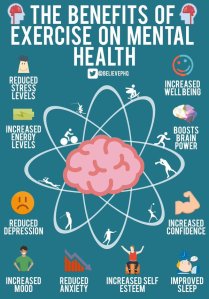
  • Get physical exercise.  If you exercised prior to your loss, try to maintain the same routine. If you did not exercise prior to your loss visit your doctor before embarking on a physical exercise routine. Physical exercise can improve the way you feel.
  • exercise and mental health
  • Eat right and get enough sleep.  Maintaining a healthy diet and getting proper sleep is essential for functioning as well as you can. If you are having difficulty with either, visit your doctor.
  • Be aware of short-term relievers – these can be food, alcohol/drugs, anger, exercise, TV, movies, books, isolation, sex, shopping, workaholism, etc. Most of these things are not harmful in moderation but when used to cover-up, hide or suppress our grief they get in the way of the work grief requires.
  • Take the time to do the things you need to do for yourself.  When you feel up to it, engage in activities to which you feel drawn. It could be visiting a place you haven’t been to in a while, walks in nature, reading, etc.
  • Pamper yourself. Treat yourself well. Do things for yourself that are helpful like walks, being with people who are nurturing to you, and inexpensive activities

Grief is a lifelong process-a marathon, not a sprint.  

Maintaining space to do the work grief requires and engaging in activities and health habits that help me do that work is the only way to endure.  

physical mental well being


Why I Have To Talk It Out

I admit I’m full of words.  When my mama came to pick me up when her best friend was babysitting for awhile, she said, “You can’t have her yet, she’s telling me all kinds of things!”

More than once my mouth got me in trouble.

It’s still the source of most of my problems.

But for a time after Dominic left I found that the only words I could muster beyond what was absolutely necessary were written in my journal.  Because the words I wanted to say were bitter and harsh and tasted bad as they came up my throat and threatened to roll off my tongue.

I didn’t want to tell the story of that early morning knock.  I didn’t want to speak aloud the terror that gripped my soul, the literal shattering of my heart, the unholy darkness that enveloped me.

I HAD to make phone calls.  I was forced to say, “Dominic is dead” over and over and over.  Then I wanted to hide in silence and stay on the fringe of conversations that filled our home and the church before we buried him.

It seemed easier to swallow the words than taste them.

But I couldn’t do that forever.

Eventually the words began to rot inside me and make the pain even worse.  I had to let them out.  I had to talk about it.  All of it.

The actual events.

The feelings associated with the accident.

The pain of choosing a cemetery plot, a casket, an order of service, of writing an obituary, of burying my son.

The awful emptiness that one life missing makes in a family of six.

The fact that at some point I woke from the stupor enough to wonder how the God I had worshiped for all these years let this happen.

And I needed someone to listen.  I needed someone to be a witness to my words.  It was no longer enough to write them down, wrap them up and hide them away.

They had to be spoken so that the power they had over my soul could be broken.

business-authenticity

Thank God for people who are willing to listen!  

I have friends and family who let me recite the same thing over and over and over so that each telling helps my heart toward healing.

I have several online and in-person communities of bereaved parents who do the same (and more!) because they understand precisely how I feel and can offer hope from their own stories of healing.

Listening is love in action.

If you know someone whose heart carries great grief-and child loss is not the only hard journey hearts are makingoffer to listen. 

Give up a few minutes to hear how they are really doing, what is really hard, what they really need to say but may be afraid to speak aloud.  Leave spaces in conversation so a heart can work up the courage to share.  Don’t be quick to offer platitudes that shut down deep discussion.  

It often takes many, many repetitions of traumatic events for a heart to begin to heal. 

And each time you grant someone permission to share and listen to his or her story, you are applying balm to a weary soul.  ❤

listening is a postive act

Grounding Exercise for Anxiety

Grief has a traveling companion:  Anxiety.  And it is relentless.

Before Dominic ran ahead to heaven I had no idea that along with sorrow, missing and heartache, I would have to battle a creeping sense of dread that could turn an ordinary day into a nightmare.

I’ve learned to plan ahead and minimize triggers I can identify, but sometimes I find myself suddenly overwhelmed with no easy means of escape.

That’s when I apply this technique.

It is amazingly effective and can be done anytime, anywhere without another soul even knowing I’m doing it.

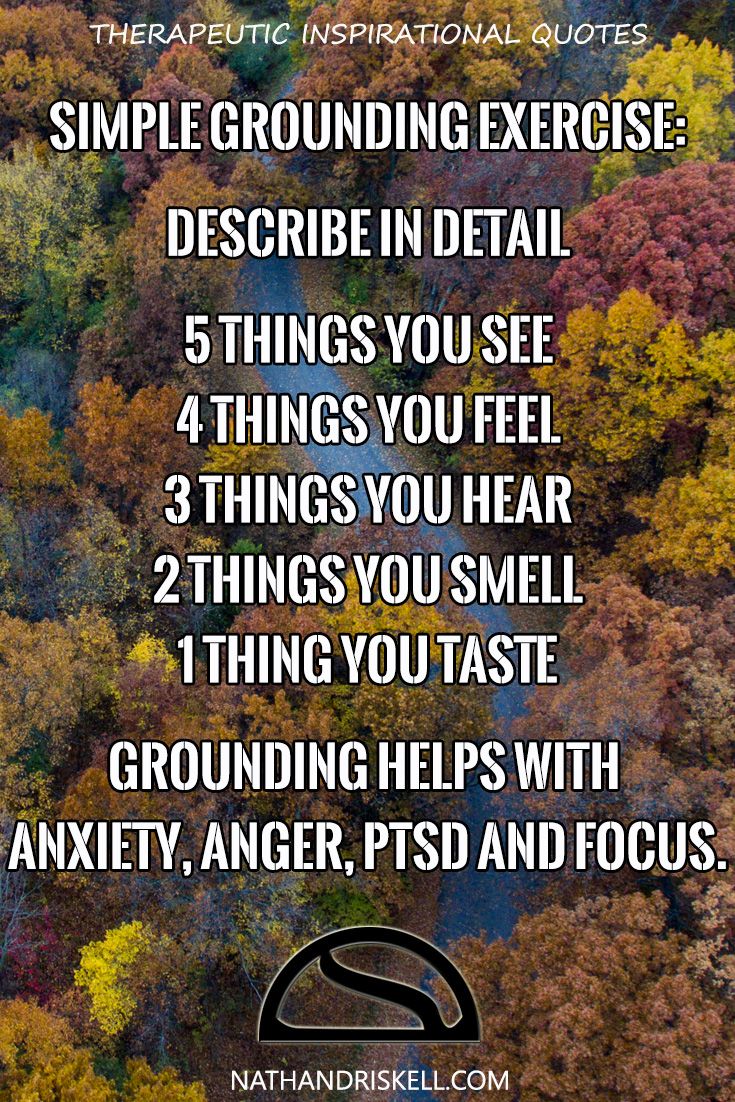
I begin by taking five deep breaths-often I will place my hand on my diaphragm to remind me to breathe deeply.

Then I find:

  • five things I can see;
  • four things I can touch (I don’t have to touch them but if I can, it helps-even my own fingertips or my shirt or purse);
  • three things I can hear;
  • two things I can smell;
  • one thing I can taste.

I use my fingers to silently count down the list. 

While it doesn’t always erase my anxious feelings, it always tames them. 

Taking charge and taking action (even silent, mental action) helps give my heart the space it needs to regroup and reassess the actual “danger” my body is responding to.

Try it.  It’s easy.  It’s free.  And it works.

grounding exercise fall trees

Trying to Hold off the Holidays

Here they come round the bend like a pack of dogs chasing that rabbit on a racetrack.

No way to slow them down, no way to step to the side and ward off the relentless message that Thanksgiving and Christmas are coming soon-so, so soon.

Internet ads scream, “You’ve got to buy it NOW!  You’re running out of time!”

Billboards, radio and television ads, and calendars count down the days.

Decorations assault my eyes and ears and nose (thank you pumpkin everything!).  I cannot get away.  There’s no where to hide.

pumpkin spice

So I have decided to take the offensive.  I will do the things that must be done as quickly, as efficiently and as quietly as possible.

I am sending Thanksgiving cards instead of Christmas cards.  I like the fall colors better than traditional yuletide hues anyway.  No one says the yearly update letter has to be postmarked in December.

Our gift-giving is much simpler now than before Dominic ran ahead to Heaven.  I’m less inclined to wrap dozens of presents to pile under the tree and more likely to give cash or gift cards along with a heartfelt note.   So I will get all this together before the weather warrants a fire here in the Deep South.

I’m easily overwhelmed.

And too much of anything just seems like entirely. too. much.

Instead of loads of decorating that involves changing out all the everyday with holiday, I will put out a few bright things and lots of candles.

glowing candles huff post

Flickering light in approaching darkness speaks hope to my heart.

I will concentrate on people, not on things.  I am making space on the calendar for casual conversation instead of constant motion.

I won’t be swept along by the yuletide current, struggling for air, barely making it to January and glad the holidays are over.

Sip and savor.

That’s my motto.

I’m sticking to it.

coffee cup fall leaves

Spoon Theory Applied to Bereavement

I thought I would follow up yesterday’s post with another one to help folks recognize when they NEED to rest.

I don’t know about you but I have a hard time figuring that out sometimes.

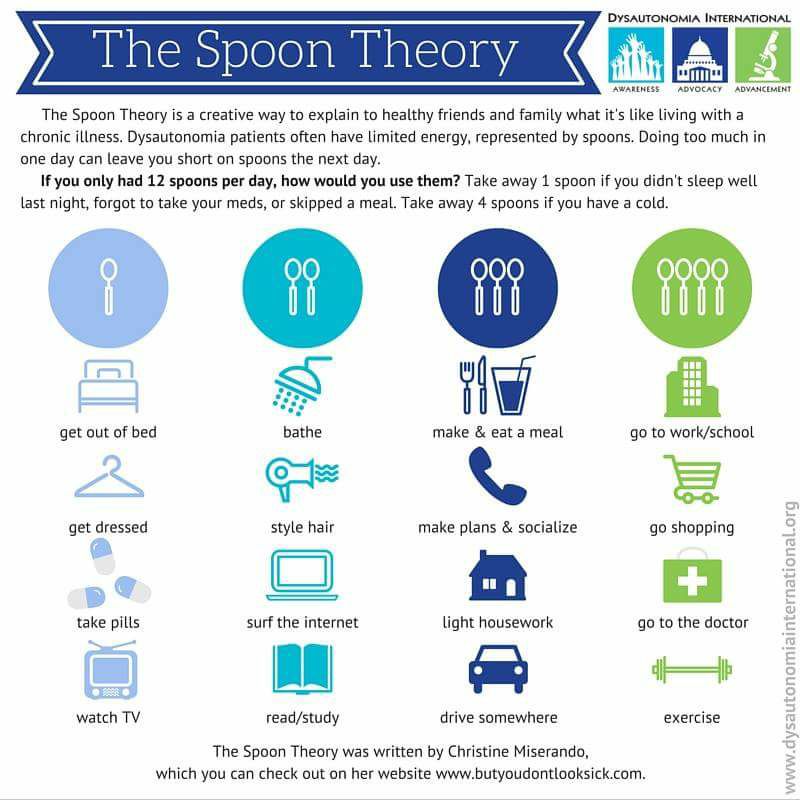
One approach that has helped me is something called “Spoon Theory”.

Spoon Theory was first described (as far as I know) by Christine Miserandino of butyoudontlooksick.com.

The original article pertains to chronic illness.  But when I stumbled across it a couple years ago it really clicked with me.

The basic idea is that everyone starts with a finite number of “spoons” representing the energy, attention and stamina that can be accessed for any given day. When you do something, you remove a spoon (or two or three) based on the effort required.  When you have used up all your spoons, you are operating at a deficit. 

Like a budget, you can only do that so long before you are in big trouble.

The only change I would make is to say that in the first months and years, most bereaved parents have far fewer than 12 spoons. 

Grief uses at least half of them by itself.

But it’s helpful for me to recognize that I do not have an infinite supply of energy and stamina regardless of what I think has to be done or how many more hours there are in a day.  I’ve written about that in this earlier post:   Emotional Bankruptcy: I Can’t Spend the Same Energy Twice

And I think it’s a great graphic to show to family and friends so they can understand why we simply CAN’T do everything we used to do.

spoon theory


Repost: No. It’s a Complete Sentence

When news that Dominic left us spread, our yard was filled with friends and family here to help bear the burden of grief and loss.

Our house was bursting with people and food and phone calls-more coming and going than our gravel lane had seen in a lifetime of living up in the woods.

It was beautiful and terrible all at the same time.

Read the rest here:  No. It’s a Complete Sentence.

Feel and Deal to Heal

If I touch a hot stove my hand jerks away almost before my mind registers the searing pain.  It’s reflex.  Our bodies were designed to react to and protect us from things that cause pain.

Run away.  Don’t go back.  Set up barricades and warning signs so that others can be protected.

Most of the time, this reaction serves us well.

But sometimes those reflexes keep us from healing.

Anyone who’s had major surgery knows that when the nurses come in the next morning saying, “We’re going to get you out of bed today!”, the last thing you want to do is swing your legs over and stand up.  It HURTS!

We want to avoid what hurts, not embrace it.

So it’s no surprise that when we suffer deep emotional wounds, our first response is to try to run away or bury them or ignore them.  The last thing we want to do is face them.

But if I am to heal, I have to face them.  I have to take hold of each place where the dagger of grief and sorrow and regret and anger has pierced my heart and examine it closely.  I have to decide what to do with it, how to integrate it into my life after loss.

Grief is work!  That is one of the reasons grievers need solitude as well as companionship on this journey.  And that is why grief can’t be hurried along.  It takes a great deal of time to do the work grief requires.

If instead of facing our pain, we try to run away or distract ourselves or numb ourselves with alcohol, food or drugs, we only prolong the process.  Grief will not be ignored forever.

healing doesnt mean damage never existed

We must FEEL what we need to feel.

Then we must DEAL with those feelings-it might mean seeking a professional counselor or a trusted friend.  Online or in-person grief support groups are a wonderful resource. Journaling can help too.  But we have got to acknowledge and work through these feelings.

And then we can begin to HEAL  Hearts that have embraced and made some sense of grief can begin to beat again.  They can begin to love again and feel joy again.  They can learn to carry both sorrow and happiness-to remember and honor the missing child while also honoring and loving family and friends still here.

It’s not a “once and done” exercise.

I have repeated these steps over and over in the soon to be [nine] years since Dominic ran ahead to heaven.  New feelings show up at the door of my heart and I have to choose to feel them, to search for what they mean and why they are here and then allow them to be woven into the fabric of who I am NOW-this side of child loss.

It takes courage and stamina and determination, but it is the only way forward.  

owning-our-story-and-loving-ourselves-through-the-process

Anxiety is Awful!

I’ve written before about anxiety and child loss here.  No matter the cause of death, the FACT of a child’s death seems to create the perfect conditions for a parent’s body and mind to experience anxiety, dis-ease, fear and often a sense of impending doom.

My world was rocked to its foundation the moment I heard the words, “He was killed in a motorcycle accident”.  

The worst thing I could imagine had come true.  

There was no protection from it happening again, no guarantee that THIS unbearable pain would be the ONLY unbearable pain I would have to carry.

I think my body chemistry was instantly transformed that morning to include rapid heartbeats, shallow breathing and a horrible creepy tension that climbs my spine and clenches its claws tightly at the base of my skull.

Before Dominic left us for Heaven I was not an anxious person.

No matter what happened, I generally took it in stride, looked for a solution and moved forward armed with an arsenal of choices to meet the problem head on.

Now, I can be pushed into a corner by an ordinary phone call that lasts too long.  I can feel trapped if a price fails to ring up properly and I have to wait to have it corrected by a head cashier.  I can become positively frantic when I reach in  my purse and can’t find my keys even though I know for a fact I put them there and if I look a bit harder I’ll find them.

Traffic makes my heart go pitter-patter.  The doorbell sends me flying to make sure it’s the UPS man and not another police officer to tell me heartbreaking news.

If I try to multi-task (which I rarely do) I am soon overwhelmed and have to sit down to catch my breath.

I only shop in stores where I’m familiar with the aisles and where products I need are shelved.

I check and re-check directions if I have to go to an unfamiliar address and leave with double the time needed to get there in case I get lost.  Making on-the-fly course corrections doesn’t happen.

I pull off and have to figure out where I am.

And heaven forbid the phone rings past midnight -I wake with a start and even a wrong number means I won’t sleep for the rest of the night.

This is not “worry”.  It’s not “borrowing trouble from tomorrow”.  It is not an indication that my faith is weak or I’m “caving in” to my feelings.

It’s an uncontrollable physiological response to various stimuli.

So please, please don’t judge me or other bereaved parents for making choices about where we go, when we go and how much we go-most of the time we are anticipating an anxious response and trying to beat it.  

We are doing the best we can.  

Honest.

courage doesn't always roar male liion

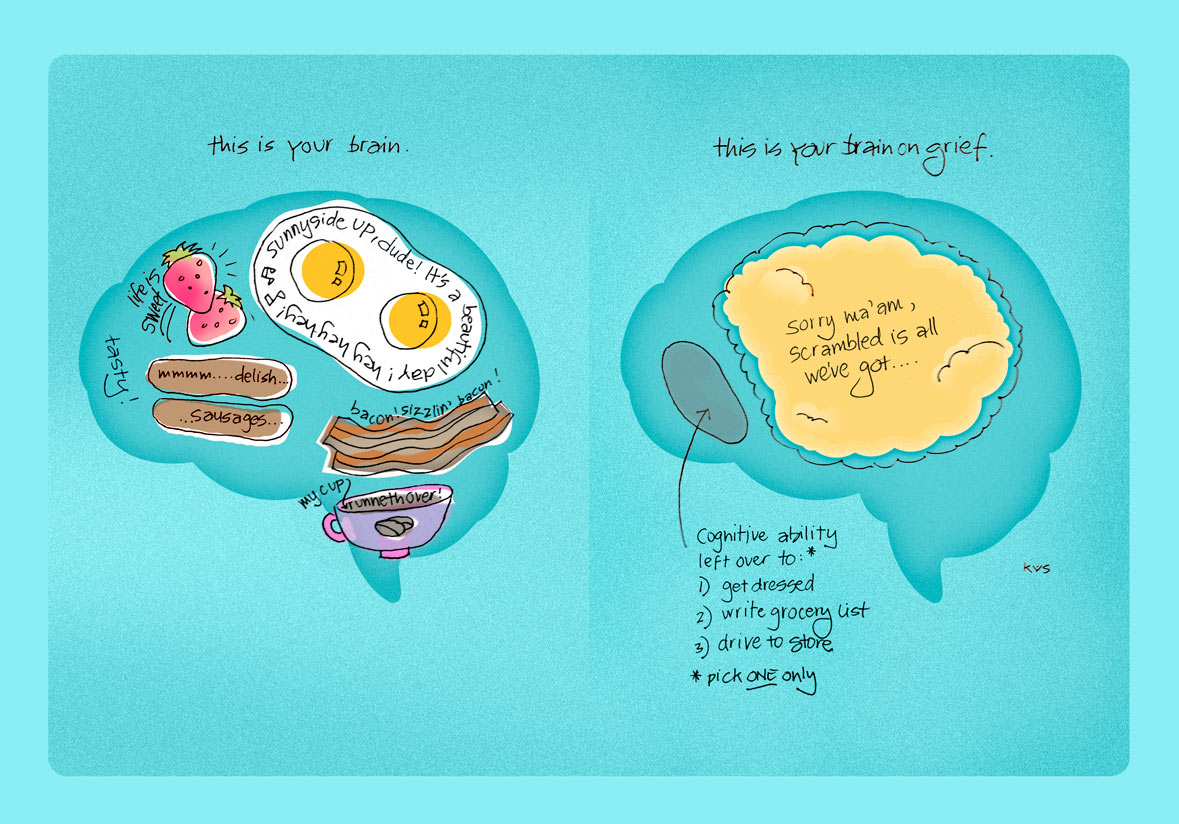
Repost: Grief Brain: It’s a Real Thing!

You are not going crazy because you can’t remember your best friend’s name.

You haven’t lost your mind because you can’t find your car keys, or the purse you put them in, or get lost in a store.

It’s grief brain.

And it’s a real thing….

Read the rest here:  Grief Brain: It’s a Real Thing!