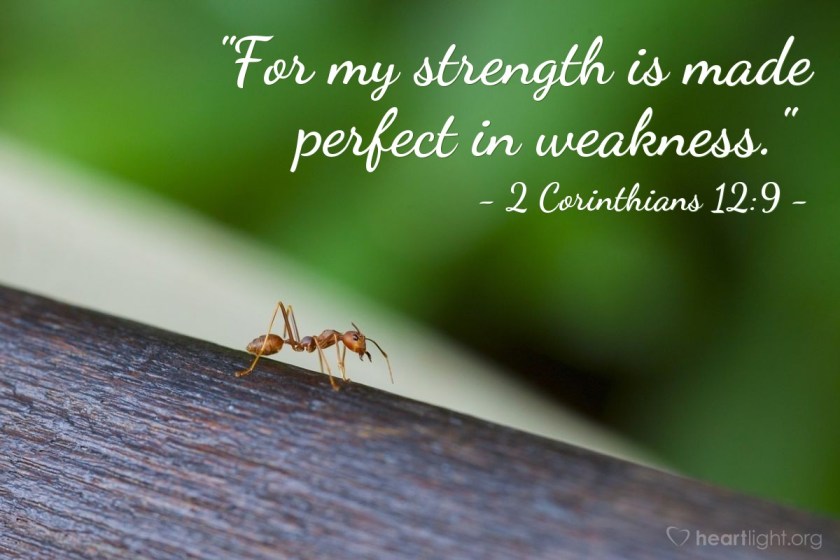
My friend and fellow bereaved mom, Margaret Franklin, Ryan’s mom, shared a beautiful Dutch word with me “Sterkte” (pronounced STAIRK-tah).
It literally translates “strength” or “power” but culturally means much more. It means bravery, strength, fortitude and endurance in the face of fear and insumountable odds through the empowering strength of God in me.
I have loved Scripture as long as I can remember. When I was in second grade I got the notion to read the whole Bible straight through-in the King James Version. I made it to Leviticus before I threw in the towel.
By the time my kids were grown I had read and studied Scripture for decades.
But three years before Dominic ran ahead to Heaven I realized my reading had become rote-I felt like I “knew” all the stories. So I slowed my study to a crawl-only one chapter a day-and I usually copied the whole chapter plus my notes into a journal. I had just finished this time through the Bible in January before Dom was killed in April.
And all that truth stored in my mind and heart was what I “read” for months when my eyes were too full of tears to see print on a page.
I can’t stop the clock or the sun or the days rolling by.
Those of us who are more than a couple months along in this journey (or any journey that involves tragedy and loss) know that it is ABSOLUTELY POSSIBLEto feel worse than in the first few days.
Maybe it’s the time of year or maybe I’m just more attentive to the questions of others right now.
Whatever the reason, I’ve encountered so many hurting hearts recently struggling to square their experience of devastating loss with their faith in a loving and all-powerful God.
I write about my own struggle over and over in this space but this series of posts is an orderly exploration of doubt, pain, faith and the hope I’ve found in Christ Jesus.
When my perfectly healthy, strong and gifted son was killed instantly in a motorcycle accident on April 12. 2014 my world fell apart. My heart shattered into a million pieces. And after three and a half years, I’ve yet to even FIND all of those pieces much less put them back together.
So what does a heart do when that happens?Because, try as I might, I cannot stop time.
Even THAT awful day only lasted 24 hours.
When the sun rose again, the pain was still there. And behind that pain and mixed with it was something else-disappointment, disaffection, distrust.
When I was asked several months ago to speak to a group of hospice care workers, I titled the presentation “Lifting the Veil on Grief”.
One of the topics I covered was how experiencing the death of a loved one-especially out-of-order or untimely death- can cause even the staunchest believer to doubt.
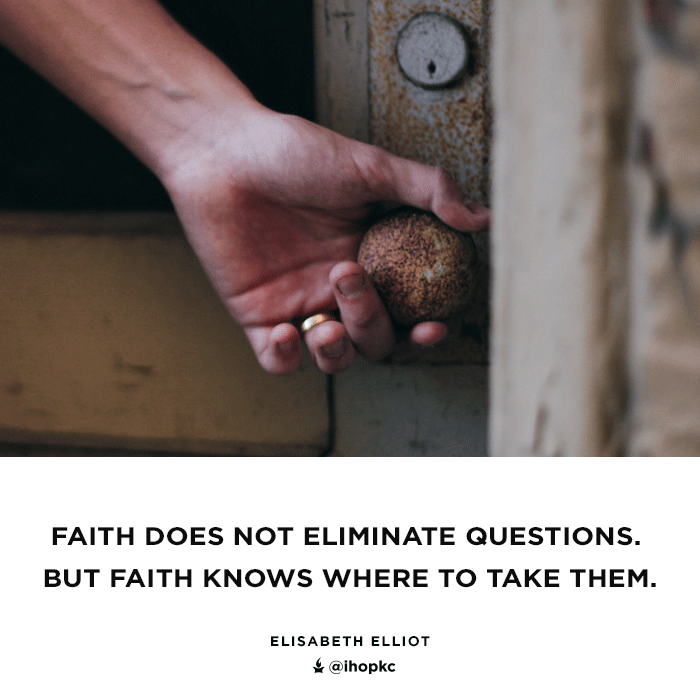
And the first thing I said was, “Doubt in the face of overwhelming sorrow and hard circumstances is absolutely normal. But doubt is NOT disbelief.”
So often friends, family, clergy, social workers and others want to steer hearts away from doubt because they are afraid that entertaining questions or expressing disappointment in God will always lead to someone losing faith.
The opposite of faith isn’t doubt, it’s certainty.
Anne Lamott
Somewhere in the pursuit of truth and light, the Protestant reformation embraced at least one of the very practices it sought to discard.
I absolutely believe that by the time Martin Luther tacked his theses to the door the church needed reforming.
Men’s traditions and human “wisdom” had adulterated the pure truth and freedom of Christ’s Good News. No longer a source of liberation, it had been transformed by those in power into a form of bondage.
But humans are a stubborn and prideful lot and it wasn’t long before the liberators became slave drivers.
“Sola Scriptura” didn’t allow for any deviation from the accepted interpretation of those Scriptures. And the interpretation often went past the text and included making absolute assertions about how God works in the world.
Men began to once again place God in a box.
My intentions are not always yours,
and I do not go about things as you do.
9 My thoughts and My ways are above and beyond you,
just as heaven is far from your reach here on earth.
Isaiah 55:8-9 VOICE
So much of the “faith” handed down today through Sunday School lessons and sermons is one that simply doesn’t leave room for mystery or for doubt or, honestly, for many of the actual Bible stories if you read them straight from the Book and not get them second hand from a loose retelling .
Jesus Himself-the exact representation of the Father (Hebrews 1:3)-didn’t greet skeptics with absolute proof. He pointed to the work He was doing, the truth He was telling and the miracles He performed but He left it to the audience to decide if that qualified Him as the Christ.
Yet we treat those who bring questions to the table of grace at best as immature and at worst as apostates or faithless wannabes.
How far we have fallen from Paul’s declaration: “We walk by faith and not by sight.” (2 Corinthians 5:7)
Worse, we often condemn those who want desperately to come trembling to their church to seek other people and spaces outside the community of faith where their questions will be tolerated.
I love how Philip Yancey spoke of this in a recent blog titled, “A Time To Doubt”:
Jesus had the opportunity to subdue doubts for all time. He could have appeared with a choir of angels on Pilate’s porch the Monday after his resurrection and triumphantly declared, “I’m back!” Or, he could have staged a spectacular display before thousands in the Roman Forum. Instead, he limited his appearances to small groups of people who had already demonstrated some faith in him—which tells me something about the kind of uncoerced faith that God values.
In one of those small gatherings, the apostle who would earn the nickname “doubting Thomas” confronted Jesus. I love that scene, for two reasons. First, it shows the gentle way Jesus treated a doubter, when he had a perfect chance to scold him or pile on the guilt. Listen to Jesus’ approach: “What proof do you need, Thomas? Want to touch my wounds? Shall I eat something for you?”
Second, I note the poignant fact that the other disciples, who had already encountered the risen Jesus, included Thomas in their midst. To them, Thomas was a heretic: he defiantly refused to believe in the Resurrection, the cornerstone of Christian faith. Even so, they welcomed him to join them behind closed doors. Had they not, Thomas may never have met the resurrected Jesus.
Perhaps that gives a model for how the church should handle doubters now. Can we provide a safe, welcoming place for those who need more light?
Philip Yancey, “A Time to Doubt”
I know so, so many people who suffer greatly-often through no fault of their own and sometimes due to the fault and sin of others-who struggle to square their experience with all the declarations they’ve heard about “how God works”.
I know others who have crossed every “t” and dotted every “i” on the long list of “what good Christians do and God rewards” and are living a life of desperation and sadness because life hasn’t turned out anything like what they thought they were promised.
Is it any wonder they are trying to figure things out?
Doubt is not denial.
If someone is asking questions, they are still seeking.
John Drummond points out that Jesus consistently made a distinction between doubt and unbelief.“Doubt is can’t believe; unbelief is won’t believe. Doubt is honesty; unbelief is obstinacy. Doubt is looking for light; unbelief is content with darkness.” (quoted by Philip Yancey, A Time to Doubt)
Jesus invited honest questions.
He only chastised the religious leaders who thought they knew it all.
Perhaps we could do the same and make space for those who are walking through a desert place to refresh themselves, renew their hope and restore their faith.
**If anyone is honestly searching, they are welcome to use the “contact” option to send me an email and begin a dialogue. ❤**
As a little girl, temptation looked like cheating on a spelling test or sneaking a cookie from a tray that was supposed to be for after supper.
As a young adult temptation looked like going places and doing things I knew weren’t wholesome or savory.
As a middle-aged wife and mother of four temptation looks like blaming God and forsaking my faith because one of my children is dead.
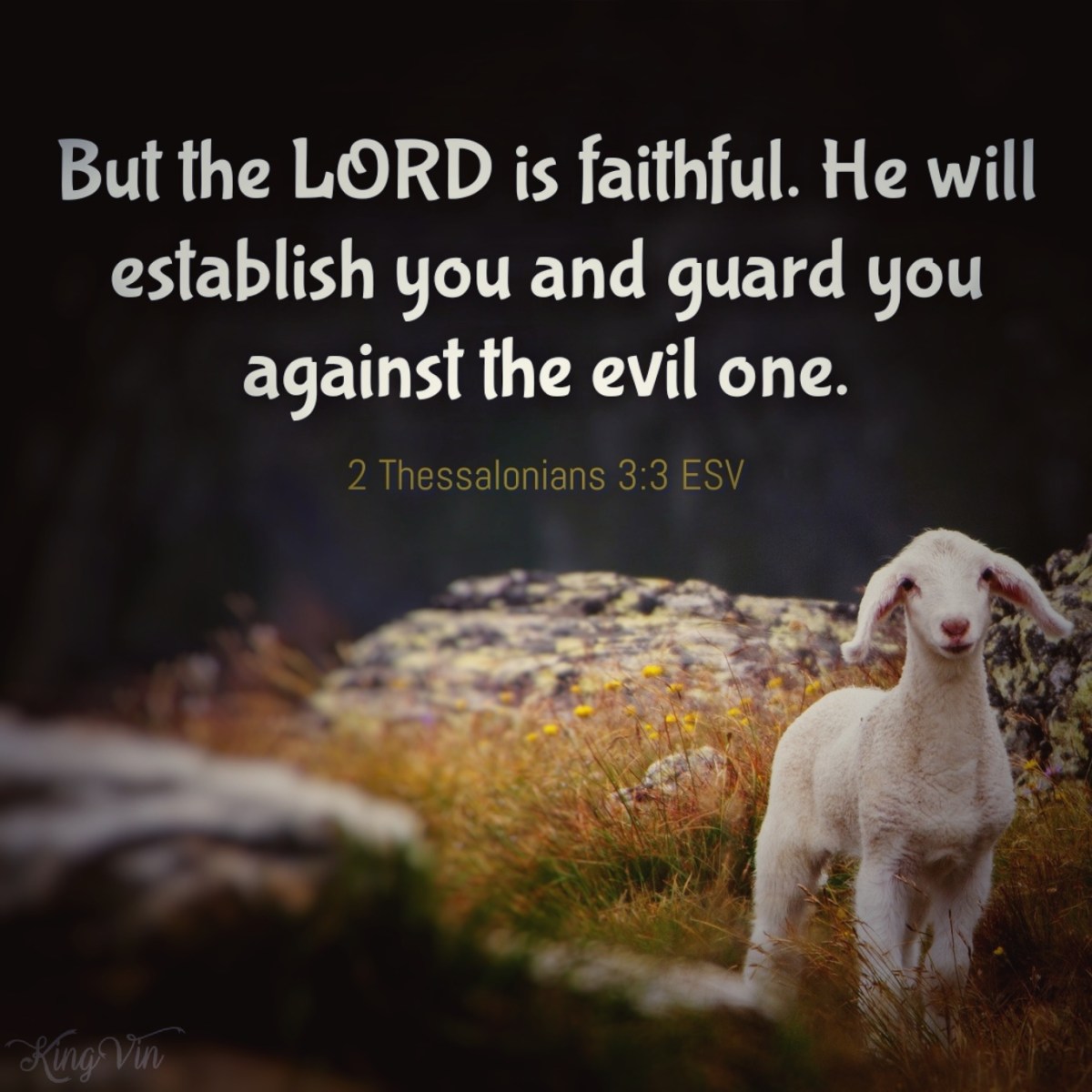
But God is faithful.
At every step of my life, when tempted to do what I knew in my heart was wrong, He has provided a way out even when I refused to take it.
Little children are often constrained by the thought that their parents might find out and punish them. Teens and young adults might be afraid they will get a ticket or get kicked out of school or end up needing bail. By the time you get as old as I am, you’ve figured out that there are lots of things you can get away with and no one but you will know.
God knows.
And He cares.
When the enemy of my soul whispers, “What good is serving a God who didn’t save your son?” the Holy Spirit answers, “Eternal good, even in temporary pain”.
When doubts creep up and flood my mind, truth steps in and pushes them back.
When I feel the pain of loss in every cell of my body, overwhelmed by the weight of it, undone by the thought of years and years to carry it, my Shepherd King reminds me that He bore it all-the sin, the pain, the shame and the awful separation from the Father-so that I could stand.
Am I tempted?
Yes.
Often.
Am I doomed to give into that temptation and turn away from the only Source of strength and hope I have?
No.
Absolutely not.
I can reach out (it’s really just a short distance because He’s never far), grab hold (He’s already holding on to me) and lean in to my Father’s arms as He carries me past the doubts, the fears, the worry and brings me Home.
The story of Zechariah, Elizabeth and John the Baptist is one of my favorites for so many reasons.
It speaks hope to my heart: these two old folks had given up on the idea that they might yet have a child, yet God brought forth life where human thinking said it was impossible.
It wasn’t just ANY life, it was a promised life, a planned life, a purposeful life. John came in the spirit and power of Elijah to make hearts ready for Messiah.
And then there is the oh, so understandable reaction of Zechariah when he was told he’d be a father: “Really? How can I be sure?”
I’m a member of several online bereaved parents groups.
They are safe spaces to share my heart and be assured the ones who read what I write understand my pain.
Over the years, I’ve been blessed to develop friendships with some of the women who, like me, have experienced child loss and who have made a choice to seek God in the Valley of the Shadow of Death.
Evelyn Fannell is one such friend.
I was drawn immediately to her honest but grace-filled posts and comments in our groups. I recognized a heart that was full of Scripture but was, like me, dissatisfied with pat answers to the difficult questions a mother has when her child is taken suddenly, unexpectedly and tragically.
When life throws you a curve, even if you hurt so much you feel like giving up or giving in, remember to breathe. Deeply. Hold on to that breath as though it were your last, and it will get you through the next moment. And you’ll get through the next one, and the one after that, and the one after that…until that when you see your beloved again.
Just remember to breathe.
Evelyn Fannell, Remember to Breathe, page 169
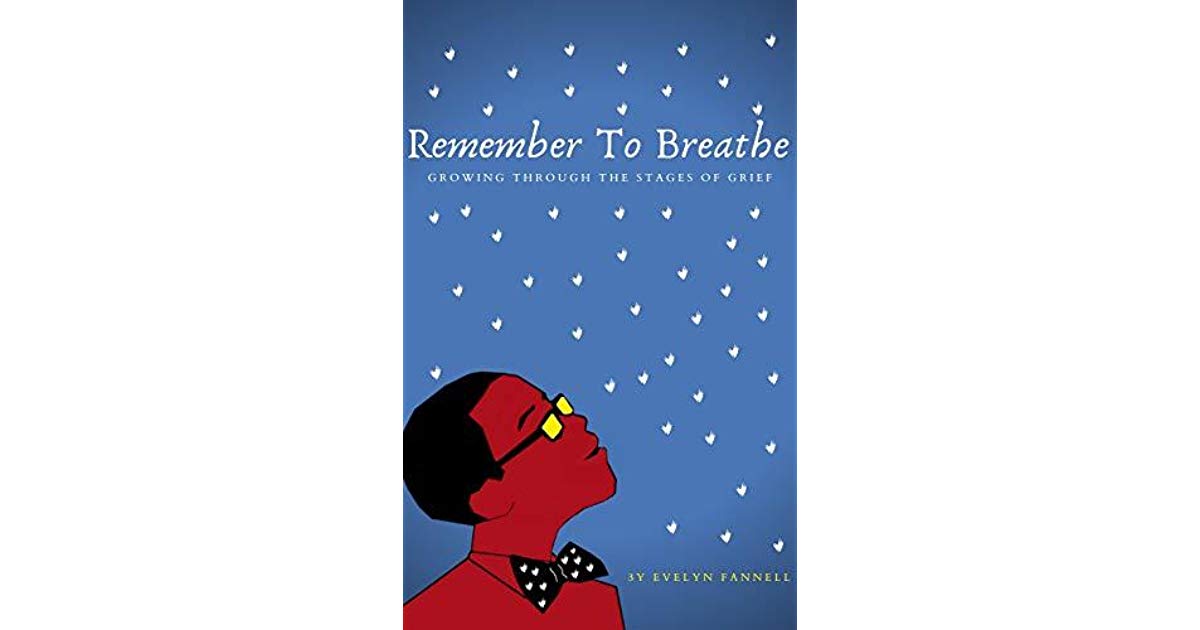
She has written a memoir that is honest, helpful and hope-filled.
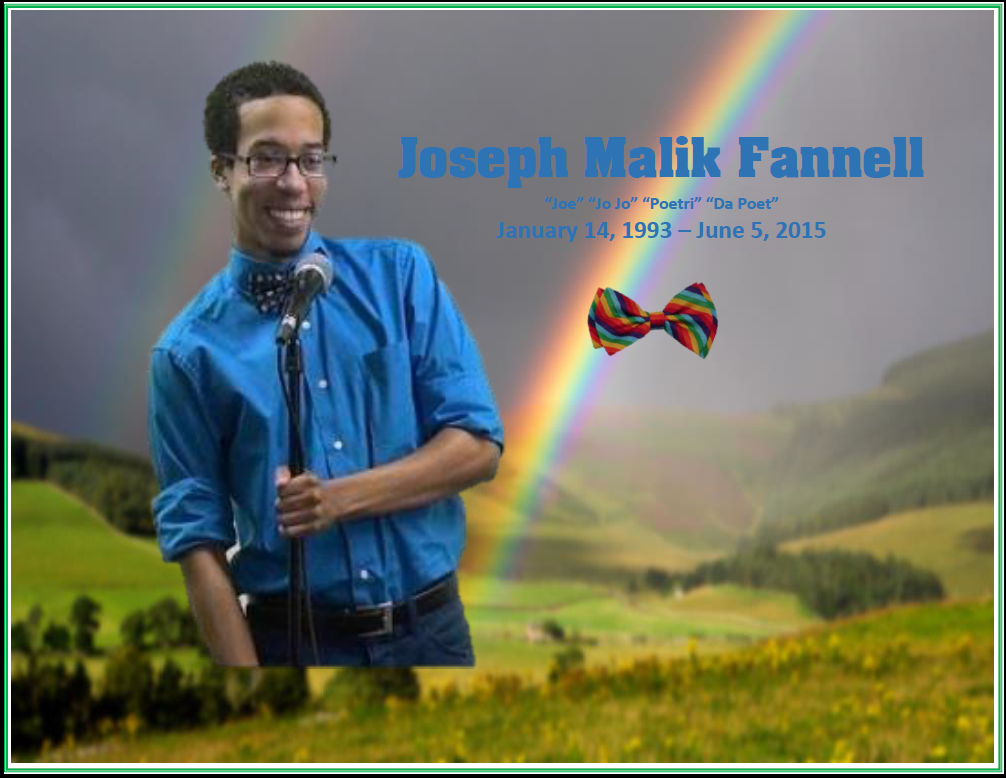
Her son, Joseph, was killed by a distracted driver just a short distance from his destination.
No mama’s heart is prepared to get THAT phone call. It knocks the wind right out of you. But from the beginning, Evelyn knew if she was to survive this, she had to remember to breathe.
In Remember to Breathe, Evelyn draws on her experience walking the road of child loss and her relationship with her Savior and weaves them together in a way that grieving parents will find authentic and encouraging.
Even in my dreams, God reminded me to live and to breathe.
There aren’t words to describe how devastating it has been to lose my youngest child. But I have learned and grown through the experience of grief, and one of the lessons I’ve learned is something I think applies in a lot of different situations.
It is okay NOT to be okay.
Evelyn Fannell, Remember to Breathe, page 43
I’ve said here before that we have to exhale in order to inhale.
Remember to Breathe is one woman’s account of doing just that-letting go of the things and thoughts that weigh us down on this journey and inhaling the grace, mercy and courage of our Shepherd.
If your heart is longing for an authentic example to follow, I highly recommend this book. ❤











 thelifeididntchoose