I know that when I first stumbled onto a bereaved parent group, it was one of the things I was looking for: evidence that the overwhelming pain of child loss would not last forever.
Some days I was encouraged as those who had traveled farther down this path posted comments affirming that they could feel something other than sorrow.
Some days I was devastated to read comments from parents who buried a child decades ago asserting that “it never gets better”.
Who is right?
What’s the difference?
Do I have any control over whether or not this burden gets lighter?
It was eleven years in April since Dominic ran ahead to Heaven and I’ve learned a few things since then.
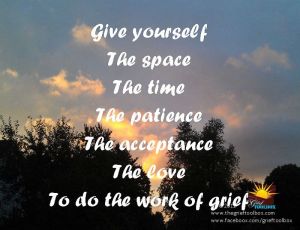
Time, by itself, heals nothing. But time, plus the work grief requires, brings a measure of healing.
If I cling with both hands to my loss, I can’t take hold of the good things life still has in store for me.
Longing for the past all the time only brings sorrow. I cannot turn back time. Days, weeks, years will keep coming whether or not I choose to participate in them. I will rob my heart of potential joy by focusing exclusively on the sorrow I can’t undo.
Daily choices add up. When I lean into the small things required each day, I build confidence that I can do the bigger things that might still frighten me. Making phone calls eventually helps me show up to a meeting or to church. I strengthen my “can do” muscle every time I use it.
Doubt doesn’t disappear. Facing my doubt forces me to explore the edges of my faith. It does no good for me to stuff questions in a drawer and hope they go away. They won’t. I have to drag them into the light and examine them. Doubt is not denial. If God is God (and I believe that He is!) then my puny queries don’t diminish His glory. He knows I’m made of dust and He invites me to bring my heart to Him-questions and all.
My mental diet matters more than I might think. I have to be very careful what I feed my mind. If I focus on sadness, tragic stories, hateful speech and media that feeds my fears and despair then those feelings grow stronger. If instead I focus on hopeful stories, good conversation with faithful friends and inspiring quotes, verses and articles I feed the part of my heart that helps me hold onto hope.
I need a space where I can be completely honest about what this journey is like. Bereaved parents’ groups have been that space for me and have been an important component of my healing. But even there I must be cautious about how much time I spend reading other parents’ stories if I notice that I’m absorbing too much pain and not enough encouragement.
Grief is hard.
It’s work.
And that work is made up of dozens of daily choices that are also often difficult.
I don’t expect to be healed and whole this side of eternity. But I do know that if I consistently do the work grief requires I will be stronger, more whole and better able to lean into the life I have left than if I don’t.
I want to live.
I want to honor my son by living a life that’s more than just limping along, barely making it, struggling for each step.
I’ll be honest-there are definitely times when “faking it” is the easier path. Chatty neighbors, standing in line, professional meetings or chance encounters lend themselves to light conversations that don’t need to include ALL my feelings or current grief experience.
But there are other times when being real, honest and authentic is not only preferable, it’s necessary.
I cannot fake it forever.
It took me awhile to figure that out.
Child loss is hard. Child loss impacts a family forever. Child loss is not “curable” or “solvable” and it’s not helpful to pretend it is.
So for the relationships that matter, I try to be transparent.
❤ Melanie
There’s a common bit of advice in grief circles: Fake it until you make it.
It’s not bad as far as it goes and can be pretty useful-especially just after the initial loss and activity surrounding it.
Like when I met the acquaintance in the grocery store a month after burying Dominic and she grabbed me with a giant smile on her face, “How ARE you?!!! It’s SO good to see you out!!!”
I just smiled and stood there as if I appreciated her interest, a deer caught in headlights, silently praying she’d live up to her talkative past and soon move on to another target.
Faked it.
Boom!
BUT there comes a time when faking it is not helpful. In fact, it’s downright dangerous.
Because if I fake it long enough and get good enough at it, I can convince myself that I have done the work grief requires.
Grief will not be ignored forever.
It bubbles up in physical symptoms and sleepless nights. It boils over in anger and impatience and anxiety and nervous habits.
There is no way through but through. It has to be faced head on.
Life circumstances kept me distracted and busy for the first four or five months after Dominic ran ahead to heaven.
I cried, screamed and was heartbroken-I definitely had my moments. But for the most part I functioned at a pretty high level.
It wasn’t until things slowed down that I had my come apart.And it caught me by surprise.
I was forced to sit in silence and face the feelings. I was compelled to hear my heart shatter-over and over again.
I’ve now had over a decade of this burden of sorrow. Years to think about, work on and pray through the pain.
I’m learning to pay attention to my own heartbeat, to my body, to my triggers, to my joy-bringers, my joy-stealers and my limitations. I’m beginning to accept the bellycrawl progress through this tunnel of darkness by focusing on the bright light at the end.
I still fake it sometimes-it’s not worth it to me to get into a long conversation with that person I only see every year or so. Too much time, too much energy and too little reward.
But I’m learning to be more genuine with the people that matter most. I’m learning to be honest about how I feel, what I need and how much I can do.
And I refuse to allow busyness to creep up on me so that I don’t have the time and energyto continue doing the work grief requires.
It’s not uncommon for clients to be asked by their counselor, “What does happiness look like for you?”.
Because, let’s face it, few of us seek counseling unless we are unhappy or dissatisfied with our current life.
Unlike physical healing, mental, spiritual and emotional healing are rather subjective and it’s important to know what we’re aiming for when seeking help in moving our hearts toward wholeness (or at least, “less brokenness”).
So it’s not surprising that another bereaved parent was asked this question during a session recently. She brought it to the greater community because she felt that she didn’t have a good answer or, really, any answer at all.
I get it.
Child loss is devasting.
In the early days after Dominic ran ahead to Heaven, the idea of “happiness” was as foreign to me as living on Mars. Possible, maybe, but highly improbable and not something I wanted to pursue.
Before death walked through my door, I didn’t find it necessary to parse the difference between happiness, contentment and joy.
Now, I find it absolutely critical.
Happiness is a feeling that everything is going my way-sunshine and roses, no uncomfortable circumstances, no insurmountable challenges. If I’m honest, even before child loss, I wasn’t always happy. It’s easy to idolize my “before” life into somethin it was not.
Contentment, on the other hand, is a settled trust in God’s goodness, mercy and love regardless of my current circumstances. I, like Paul, can LEARN to be content when I focus on the eternal story the Lord is writing that will proclaim His glory for ever and ever. I have to remind my heart every day of truth-even when it doesn’t want to hear it.
Joy is a burst of sweetness and delight-like biting into a perfect strawberry or being greeted with a slobbery kiss from a toddler who has stood by the window, waiting for your arrival. I can choose to make much of these moments or overlook them.
Eleven years on this road, while I find happiness elusive and contentment a work-in-progress, I find looking for joy rewarding.
I live on acreage that is mostly native grasses and weeds. Sometimes when I look out at the rough, uncut vista all I see is a raggedy mess. It is so unlike the tidy, mowed, landscaped lawns I grew up with as a child.
But when I WALK through the fields and look closely, there are dozens of different wildflowers tucked amid the weeds.
That’s how I’ve come to think of life after my son ran ahead to Heaven.
Life itself isn’t what I want or how I thought it would be- not predictable or beautiful (by my earlier standards of beauty). But there are STILL beautiful moments, relationships and events that I can treasure.
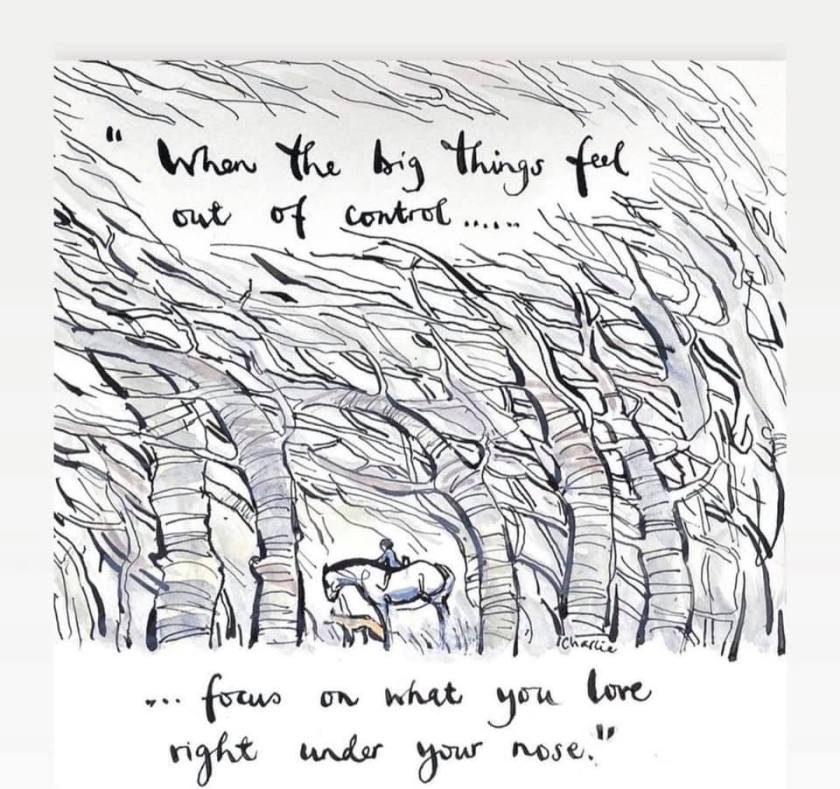
I’ve learned to focus on those and hold them close.
Most days are pretty good now but this habit continues to feed my soul.
When a particularly hard day comes, it helps me from falling so far down the rabbit hole of despair that I can’t climb back out.
May the Lord help all of us find the beauty and blessing that remains even as we miss our children and look forward to seeing them again in Heaven.
I’m ending Bereaved Parents Month by sharing this post because I still have moments when I marvel that I’ve survived.
❤
It was the question I asked the bereaved mother that came to my son’s funeral.
It was the question a mother asked me as we stood by her granddaughter’s casket, surrounded by family and flowers.
And it is the right question.
Because when the breath leaves the body of your child, and you look down at the shell that used to be the home of a vibrant, living soul, you simply can. not. breathe.
I know I’m not the only one who carries a calendar in my head that threatens to explode like a ticking timebomb.Days that mean nothing to anyone else loom large as they approach.
The date of his death.
The date of his funeral.
His birthday.
My birthday.
The day he should have graduated from law school.
On and on and on.
How can I survive these oppressive reminders of what I thought my life would look like? How can I grab hold of something, anything that will keep my heart and mind from falling down the rabbit hole of grief into a topsy-turvy land where nothing makes sense and it’s full of unfriendly creatures that threaten to gobble me whole?
When I was a young mother, my brother used to love to sit back and wait to see how many things I could do at once.
I could hold a baby, iron a shirt and talk on the phone at the same time. I could pick things up with my toes when I didn’t want to disturb the sleeping child in my lap and couldn’t reach the object with my hand.
Four children in six years, breastfeeding, homeschooling and taking care of all the household chores meant that I got pretty darn good at keeping multiple balls in the air at the same time.
Those days are over.
Like so many things at this point in my life I don’t know how much of what I experience and feel is a function of getting older (definitely middle aged here!) and how much is attributable to grief following the death of Dominic.
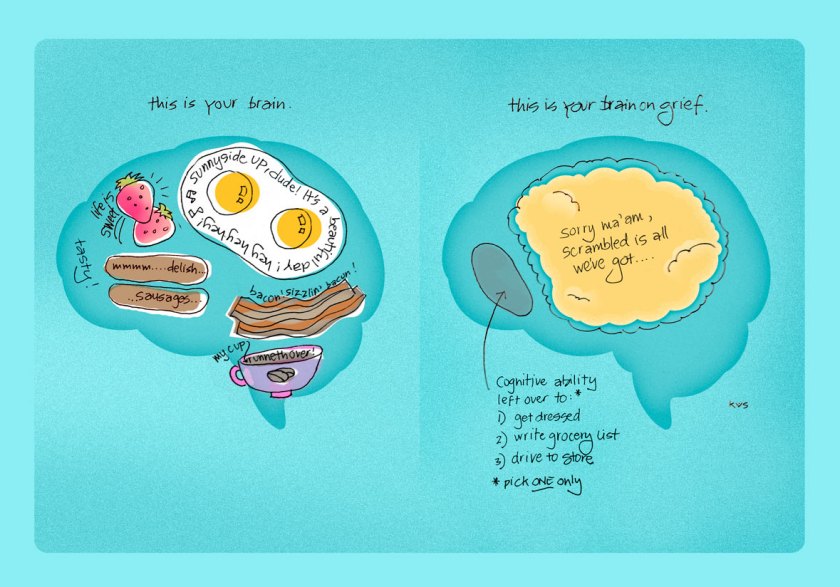
But this I do know: I am only able to focus on a single task, thought, desire or problem at a time. If I try to multi-task, I might as well cry, “Uncle!” from the start.
It’s a little discouraging.
Often I feel like I’ve wasted an hour or a day or even a week. What exactly did I get done?
But it’s also a kind of freedom.
My household isn’t nearly as busy as it once was so there’s really no need to rush from here to there or stack task on top of task.
I’m learning that taking time, talking to people for as long as they need me, doing something well even if I don’t do it quickly are all perfectly acceptable ways to spend a day.
And while I miss so much of who I was before Dominic ran ahead to heaven, I don’t miss the frantic craziness of trying to do too much in too little time.
I wrote this post December, 2015. It hadn’t been long since I joined an online community of bereaved parents and began to see that I wasn’t the only one who had friends and family that misunderstood child loss.
I was spending a lot of time in my life trying to help others comprehend, just a little, what it felt like to bury a child.
Trying to give them a tiny taste of how this pain is so, so different than any other I had experienced. Begging them to toss the popular ideas bandied around that grief followed “stages” and was “predictable”.
I re-share every so often because it seems to help, a little. I’m re-sharing today in honor of Bereaved Parents Month.
People say, “I can’t imagine.“
But then they do.
They think that missing a dead child is like missing your kid at college or on the mission field but harder and longer.
A tender broken heart can make all kinds of excuses for less-than-gracious behavior or words.
I know that often we grievers bear the brunt of others’ well-meaning but misplaced and sometimes downright painful advice, remarks, looks and gossip and that makes it easy to rationalize returning like for like.
But I’m not responsible for THEM, I’m responsible for ME.
❤ Melanie
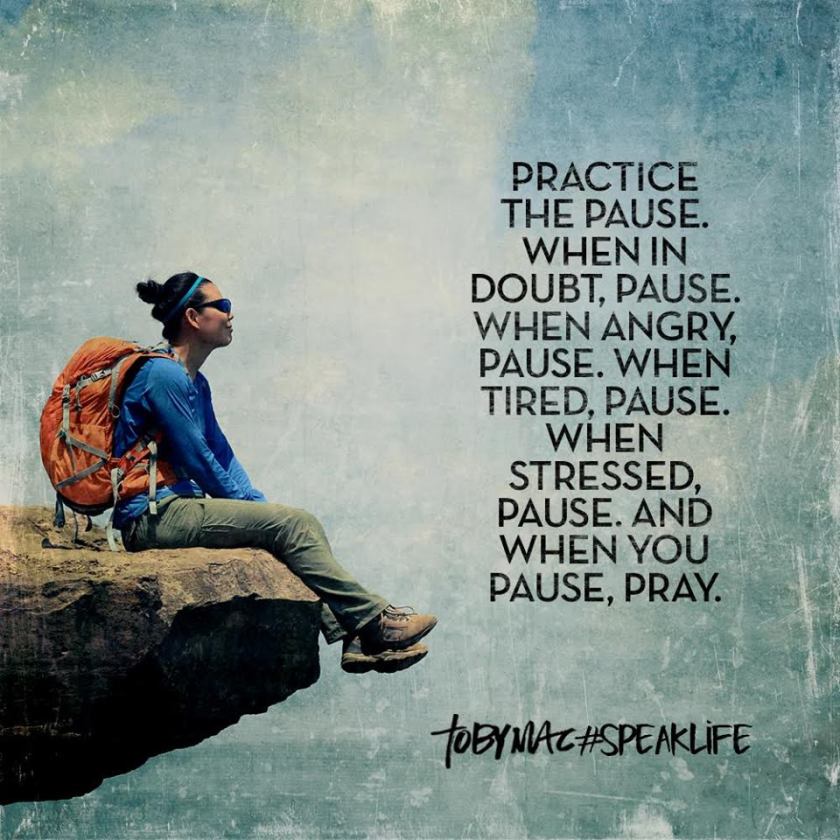
Oh, how I need to learn to practice the pause!
I’m getting better, but still react when I should reflect.
I need to do thisEVERYtime.
Lord, help my stubborn heart slow down and give me grace to yield and allow You to melt it, mold it and make it more like Your own!
It would be lovely if life were neatly divided into seasons or sections.
But like so many things, there are no clean lines between now and what used to be.
Who I am today is shaped by who I was the day before.
I think that’s one of the things I enjoy most about fiction-authors are free to wander back and forth among character’s thoughts, past experiences and present reality.
It makes for a more complete story.
Each year about this time (in the waning days of my Season of Sorrow) I usually stop and take stock of how far I’ve come and how grief continues to shape my life.
There are many, many ways I’ve healed and am healing:
I no longer cry every day.
I feel true joy!
The pain of losing Dominic doesn’t dominate me although it plays like Background Music-not always demanding my attention.
I celebrate my family and my family’s milestones with genuine excitement and once again enjoy planning get togethers, birthdays and (most!) holidays.
I function at a higher level and am able to rejoin some groups and participate in some activities I just couldn’t manage in the early years.
I’ve made peace with the questions that won’t be answered this side of eternity.
I’ve incorporated traumatic loss into my understanding of Who God is and how He may work in world while accepting I don’t always like it.
I attend baby showers, weddings and even funerals without bringing all my lost dreams or personal sadness to the event.
I laugh-a lot. It feels good again to belly laugh at family memories or new jokes.
I can extend hospitality once more. That was a core component of my pre-loss life and personality and I missed it.
But there are many ways in which grief and loss continues to inform how I walk in the world:
I absolutely, positively cannot multitask! I have to break daily chores into single actions so I can focus and accomplish one thing at a time. I used to be able to cook, talk on the phone, bend over and motion to a child needing help with school all at once. Not anymore! Just recently I lost an important piece of mail most likely because I was looking at it while chatting to a family member. I put it down and cannot for the life of me remember where it is.
I become anxious when around too many people-especially if they are people I don’t know or the venue is one with which I’m unfamiliar. This even happens in the car driving in new places. I was never an anxious person before. In fact, I was typically the voice of calm in a group of friends panicking over some small detail that went awry. I try not to share my anxiety, but it’s there and it takes a huge amount of energy to corral it and keep it from escaping into wild demonstrations like running from a room. (I do a lot of counting/visualizing/breathing and self-soothing.)
I don’t like noise. To be fair, I never really did but now it’s exacerbated. Shopping can be a real trial when stores insist on blasting music in hopes it makes patrons feel like spending more money. I, for one, just want to get what’s on my list and get the heck out of Dodge! I love children but I can’t tolerate the incessant chatter little ones bring to a Sunday School classroom or a Vacation Bible School craft table. I used to be the first one to volunteer for those posts but I just. can’t. do. it. anymore.
I crave predictability. I know, I know, of all people I should understand control is an illusion. I do. But the tiny details of life-like planning meals, choosing clothes, cleaning routines and evening quiet times- are things I want to be able to count on. Routine is my friend. It helps my mind (such as it is) operate on reliable pathways. I’ve never been a big fan of random, but now it’s something I try to avoid at all costs.
I need solitude. I’m still processing some things. I imagine I’ll be doing that the rest of my life as different experiences from NOW interact with my loss. I cannot do that in the presence of others. I need to think, reflect, write, read and walk it out. That means I have to devote time and space to being alone. If circumstances prevent me from quiet solitude for too long my blood pressure climbs, my patience disappears and little things grow large.
I don’t sweat the small stuff (usually-see above!). If time, effort or money can remedy it then it’s just. not. a. problem. I’ve learned the hard way that life and love are the most important things in life. Everything else might be nice but it’s not essential. I’m not minimizing the stress and strain of broken pipes, wrecked cars or lost jobs. It’s just that eventually those are situations that can be fixed. And lest you think I’ve not experienced any of those, I have. My first thought whenever anything happens I once perceived as “the worst thing that could happen” is, “It’s absolutely, positively NOT the worst thing that can happen”.
I need to observe a careful rhythm of commitment and freedom on a daily, weekly and monthly basis. I always kept my big calendars each year and tossed them into a box of “if I ever need to know these things”. When I look back on how busy we were as a young family I’m astounded at the pace we kept, the places we went, the hours I was frantically working to fulfill all our obligations along with the things we just wanted to do. I’m sure some of this is a function of age-I’m no spring chicken any more-but I know in my bones it’s also a function of the ongoing toll grief takes on my body, mind and soul. I can only manage a few days of busyness in a row until I need a complete shut-down for at least twenty-four hours or more. I refuse to schedule any but the most difficult to get appointments in a week where I’ve already inked in other commitments.
Sleep, regular exercise and good food are necessary for me to face life with a good attitude. This is probably true of most folks but just a day or two of fast food, no outdoor walks or interrupted nights and I’m toast. I’m not a whole foods, organic everything kind of gal but I try to eat a variety of fresh and less-processed meals. When I’m home I have an almost two mile path through woods and up gentle inclines that builds muscle, exercises my lungs and body and gives me ample time to drink in the beauty of birds, wildflowers and leafy trees. If you’ve ever been to my home you know that the rest of the crowd can stay up as long as they want to but I’m headed upstairs between eight and nine. Of course I get up before the sun, so my total hours are roughly the same but there’s something about that pre-midnight sleep that restores me like no other.
I could probably list dozens more, less obvious, ways grief still shapes the me of today. But it no longer binds me like it did in the early days. I’m better able to work around the difficult bits and still make a meaningful life with the people I love.


















 thelifeididntchoose