I remember as a young mother of four working hard to keep my kids safe.
Next to fed and dry (two still in diapers!) that was each day’s goal: No one got hurt.
It never occurred to me THEN to add: No one got killed.
Because the most outlandish thing I could imagine was one of them falling or touching a hot stove and us having to rush to the emergency room.
Then I became a mother of teens and one by one they acquired a driver’s license and motored away from our home.
That’s when I began to beg God to spare their lives.
One particularly frightening test was when all four went to Louisiana-my eldest driving and the rest in the van with her. I made them call me every hour and tell me they were OK. It was the first time I realized that I could lose every one of them in a single instant should they crash-all my eggs in one basket.
I was glad when that day was over. Although the irony is they were no “safer” at the end of those 24 hours than they were at the beginning.
Because what I know now, but didn’t know then is this: There is no such thing as“safe”.
Not the way we like to think of it-not the way we add labels to devices, seat belts to cars, helmets to everything from bicycles to skateboards. Of course we should absolutely take precautions!Many lives are saved by them every single day.
But. BUT…
Life is more random than we want to admit.And there is no defense against random.
There is no way to screen for every underlying physical abnormality, no way to drive so well you can stop the drunk or inattentive driver from plowing through a stop sign, no way to anticipate every foolish choice a young person might make that ends in disaster instead of a funny story.
My first response when Dominic died driving his motorcycle was that I wanted my surviving sons to sell theirs. They did so out of respect for me. Neither of them wanted their mama to have to endure a second knock on the door and the same message delivered twice.
I receive it as a sacrifice offered in love from them.
Because it was.
Since Dominic left us almost four ( now five!) years ago, I have had to deal with my desperate need to keep my living children safe.
And it is a real struggle.
Each child is involved in a career that includes inherent risk. None of them are foolhardy, but they are exposed-perhaps more than many-to potential bad actors and dangerous circumstances.
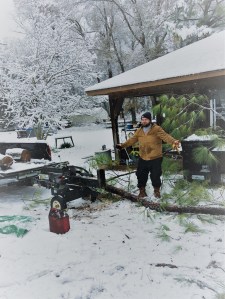
This branch fell just minutes after my son was standing in that spot splitting logs.
How I long for those days when I could tuck everyone in, turn out the lights and sleep soundly because all my chicks were safe inside my own little coop! How I wish the only danger I thought about or knew about was a bump on the head from hitting a coffee table!
How my heart aches for one more moment of blissful ignorance!
But I can’t live in some imagined water color past. I have to live in the world as it is.
So I remind my heart that safe is an illusion-no matter where we are. Life is not living if it’s only about preserving breath and not about making a difference.
My first instinct as a mother and a shepherd is always, “How can I help?”
I routinely set aside my own needs for the needs of others. Not because I’m so selfless but because that’s how I’m made-I’ve always had the heart of a caretaker.
That’s not a bad thing, most of the time.
But if taking care of others means NOT taking care of myself, then in the end, I’m of no use to anyone. When I allow every bit of energy-emotional, physical, psychological and spiritual-to drain away until there’s nothing left, I am unable to meet my most basic needs, much less the needs of others.
I’ve written before that grief puts a hole in my bucket. It guarantees that no matter how much is poured in, I’m never truly full.
I’ve also written about setting boundaries and trying to preserve margin as I walk this Valley. I have to create space between me and the people around me if I’m going to make it through.
But there are some other steps I can take to help ensure my heart is strong enough for the journey. It’s not always about what I don’t do.
Sometimes it’s about what I choose TO do.
Here are some ideas for self-care in grief (or reallyANYhard place in life):
Be patient with yourself. There is no time frame for grief. Each heart is unique. Extend grace to yourself, just as you would to a friend. Try not to take on extra responsibilities. It’s better to allow for some flexibility in obligations during this time (even around holidays!).
Listen to your body and your heart: If you need to cry, then cry. If you need to sleep, then do so. If you need to talk to someone, seek out someone who will listen. If you need to reminisce, then take the time. It is important for the grieving process that you go with the flow.
Lower expectations for yourself and communicate this new reality to others. You are not able to operate as you did before loss. Your capacity for interacting with others, managing tasks and being available for the needs of others has been dramatically altered. Own up to it, and let others know that it will be some time before you can shoulder the responsibilties you once did.
Let others know what you need from them. No one is a mind reader. While we who are bereaved think our needs are obvious, it’s simply not the case. Communicate to family and friends how they can support you.
Accept the help of others. Understand that grief is hard work. It requires a great deal of energy and can be exhausting. Even though we place a high value on self-sufficiency, it is important to ask for, and accept, help from those close to you. Others careand genuinely want to be of assistance, but usually do not know what to specifically offer. In particular, it is vital to know who will listen and be supportive. Sharing your story out loud is one key to healing. And, remember that professional guidance is also available
If you need counseling, get it! There is NO shame in asking for help. Get all the support you need. There are many bereavement support groups as well as counselors or spiritual advisors who specialize in bereavement counseling. Don’t hesitate to contact a medical and or mental health specialist if you have feelings of hopelessness or suicidal thoughts.
Accept your feelings. Feelings are neither right nor wrong, they just are. Sadness, loneliness, fear, confusion, anger—these are among the many feelings you may experience, and are completely normal. Emotions are often raw early in the grief process, but it is important to express them. Attempting to stifle feelings usually leads to an emotional outburst at an inconvenient time.
Face your feelings. The painful emotions associated with grief are a natural and normal response to loss. You can try and suppress them or hide from them all you want but in the end this will only prolong the grieving process. Acknowledging your pain and taking responsibility for your feelings will help you avoid the complications often associated with unresolved grief such as depression, anxiety, substance abuse, and health problems.
Express your feelings. The most effective way to do this is through some tangible or creative expression of your emotions such as journalling, writing a letter expressing your apologies, forgiveness and the significant emotional statements you wish you had said, or art projects celebrating the person’s life or what you lost.
Keep a journal. Writing down your thoughts and feelings can help you to validate and work through your grief.
Feel whatever you feel. It’s okay to be angry, to yell at God, to cry or not to cry. It’s also okay to laugh, to find moments of joy, or to let go when you’re ready. Your grief is your own and no one can tell you when you should be “over it” or when to “move on.”
Pay attention to physical needs. It’s easy to ignore your health when all you want to do is give up and give in. However, it is even more important NOW to take care of yourself. Eat balanced meals (set an alarm if you have to), try to get adequate rest (get medication if you need to) and make sure to get in some physical activity every day (set a timer if necessary).
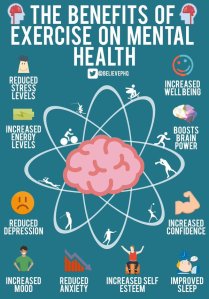
Get physical exercise. If you exercised prior to your loss, try to maintain the same routine. If you did not exercise prior to your loss visit your doctor before embarking on a physical exercise routine. Physical exercise can improve the way you feel.
Eat right and get enough sleep. Maintaining a healthy diet and getting proper sleep is essential for functioning as well as you can. If you are having difficulty with either, visit your doctor.
Be aware of short-term relievers – these can be food, alcohol/drugs, anger, exercise, TV, movies, books, isolation, sex, shopping, workaholism, etc. Most of these things are not harmful in moderation but when used to cover-up, hide or suppress our grief they get in the way of the work grief requires.
Take the time to do the things you need to do for yourself. When you feel up to it, engage in activities to which you feel drawn. It could be visiting a place you haven’t been to in a while, walks in nature, reading, etc.
Pamper yourself. Treat yourself well. Do things for yourself that are helpful like walks, being with people who are nurturing to you, and inexpensive activities
Grief is a lifelong process-a marathon, not a sprint.
Maintaining space to do the work grief requires and engaging in activities and health habits that help me do that work is the only way to endure.
I used to spend every New Year’s morning with my Bible, my thoughts and my Lord.
I wrote each family member’s name in my journal and waited for the Holy Spirit to give me a verse to pray for them for the next year.
I would end with my own name and ask God what good works He had planned for me.
When I look back over these journals I realize that what I had essentially been doing for decades was asking God for “One Little Word” to focus my energy, resources and attention each year.
I honestly believe that every human on the face of the Earth is here for a reason. They are not a random collection of cells and neurons. They are created in the image of an Almighty God to impact the people around them in specific ways.
So I challenge you to ask the God of the universe to give you One Little Word for 2018.
And then hold every potential commitment up to that light to determine if it is really part of God’s plan for you this year.
For some of my hurting parent friends the word may be “healing” or “rest” and that’s just fine. For others it may be “endurance” or “perseverance” and that’s fine too.
When Dominic first left us, it felt like I would never get to choose anything again-it felt like I would always be at the mercy of life just happening TO me.
But in these months and years since, I’ve found that I DO have choices.
I have many, many choices every. single. day.
I can choose bitterness or I can choose love.
I can choose blame or I can choose grace.
I can choose to isolate my wounded heart or I can choose to integrate my experience into who I am and invite others to join me on the journey.
I can choose to live in the past-which isn’t really living at all-or I can choose to face each new day and see what it has to offer.
I can choose to elevate my missing child so high that his siblings have no hope of measuring up or I can choose to remember the good AND the bad of who he was and how he walked in the world.
I can choose to complain about how others don’t understand or I can choose to educate them on what child loss feels like, how it impacts all aspects of my life and how it will be part of my experience until the day I join my son.
I can choose to be ashamed of my tears or I can choose to display them proudly as testimony of the love I have for my son.
I can choose to be upset that others fail to mention his name or I can choose to mention it myself, making him as natural a part of the conversation as my living children.
I can choose to ignore the way grief impacts my ability to do all the things I once did or I can choose to make wise accommodations for my limitations.
I can choose to close my heart to love and laughter or I can choose to honor Dominic by loving and laughing anyway.
I choose life.
Because as long as I breathe, I carry the light of Dominic’s life with mine.











 thelifeididntchoose