The question is starting to pop up with greater frequency in our closed bereaved parent groups: How do you make it through the holidays after child loss?
So for the next few days I’m going to share again from the many posts I’ve written in the past four years addressing different aspects of holiday planning, celebration, family dynamics and just plain survival for grieving parents and those who love them.
❤ Melanie
Most parents feel a little stressed during the holidays.
We used to be able to enjoy Thanksgiving before our 24/7 supercharged and super-connected world thrust us into hyper-drive. Now we zoom past the first day of school on a highway toward Christmas at breakneck speed.
For bereaved parents, the rush toward the “Season of Joy” is doubly frightening.
Constant reminders that this is the “most wonderful time of the year” make our broken hearts just that much more out of place. Who cares what you get for Christmas when the one thing your heart desires–your child, alive and whole–is unavailable…
It’s all well and good when things are going just dandy to post a daily, “I’m thankful for [whatever]”.
It’s another thing entirely when the bottom has fallen out or your world is turned upside down or your heart is shattered and you can’t find even the tiniest spark of gratitude in your dark world.
Yet the Bible clearly states I am to “give thanks in all circumstances” (I Thessalonians 5:18)
Watching my father grieve my mother is the second hardest thing I’ve ever had to do.
Grieving my own son, watching my husband and children grieve him too, is the hardest.
I observe Papa’s expression, hear the weariness in his voice, note the far off stare when conversation drifts to mundane and unimportant things and realize that was exactly how I looked and sounded in the first months after Dominic ran ahead to Heaven.
I love my mama.
And I spent a lot of time with her these past two years since the fall and heart attack that changed everything in August, 2017.
But I was not her daily caregiver. My schedule didn’t revolve around whether or not someone could stay with her so I could go somewhere else-even if it was just down the road-for more than an hour.
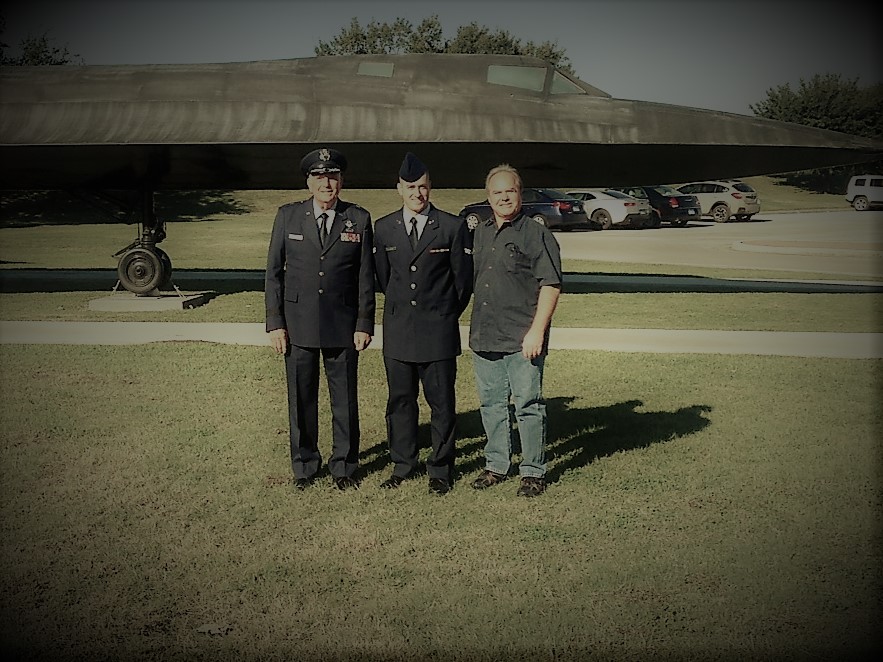
One of the last photos we took with Mama. She was so proud of her great-grandson.
I called each day and talked to Papa, checking on them both, but then I was free to do or not do whatever I wanted to without considering her need to be attached to oxygen and her limited endurance to do anything even then.
I tried to be supportive. I made multiple trips down to the farm and tried to give Papa some space and freedom.
That’s just not the same as 24/7 care.
His grief for the wife with whom he spent 58 years is deeper and wider than my heart can understand.
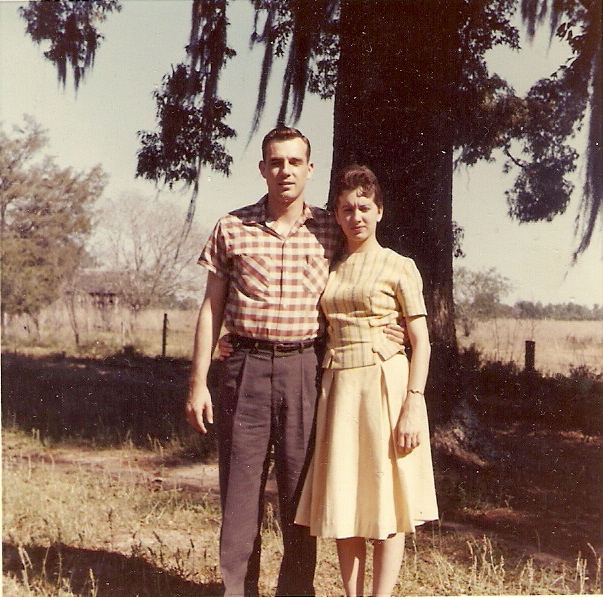
Mama and Papa in the early days.
Just as my grief for the child I had carried, birthed, raised and cared for was impossible for him to fully comprehend.
Dominic is his grandson. And as grandparents go, my parents were extremely involved in my kids’ lives-showing up to not only the important events and occasions but also to many mundane and everyday moments.
But the gap between even frequent visits and daily living is huge.
So while I cannot feel precisely what Papa is feeling about Mama-his wife-I can absolutely understand how very devastating his loss is.
Our losses are different in kind but not in quality.
When I look at him, I’m looking in a mirror.
Grief etched everywhere.
Pain across his forehead.
Heartache painted on his lips.
I am so sad that I am no more able to touch that deep wound and render healing than anyone was able to touch mine and do the same.
No one can do the work he has to do but himself-not even someone who has done the same work in her own life.
All I can offer is to walk with him, no matter how hard it gets, for as long as it takes just like he did (does!) for me. ❤
I know it is hard. I know you don’t truly understand how I feel. You can’t. It wasn’t your child.
I know I may look and act like I’m “better”. I know that you would love for things to be like they were: BEFORE.But they aren’t.
I know my grief interferes with your plans. I know it is uncomfortable to make changes in traditions we have observed for years. But I can’t help it. I didn’t ask for this to be my life.
I know that every year I seem to need something different. I know that’s confusing and may be frustrating. But I’m working this out as I go. I didn’t get a “how to” manual when I buried my son. It’s new for me every year too.
When faced with the upcoming holidays and already rapid heartbeat and fading strength, the last thing a bereaved parent wants to hear is , “Make a plan”.
But the truth is, if you don’t it will be so. much. worse.
No one can tell YOU what the plan should be. Each family is unique. Each year brings different challenges-declining health, moves, children or grandchildren born and a dozen other variables that must be accounted for THIS year versus years past.
I have learned so much since that day when Dominic left us suddenly for Heaven.
Some of the things I know now are things I wish I didn’t know at all.
Many serve me well-not only in how I respond to my own pain and loss-but also how I respond to the pain and loss in the lives of those I love.
I had to practice them again when my mama was desperately ill and then joined Dominic and Jesus.
It reminded me how hard it is for those who have not walked this Valley of the Shadow of Death to really comprehend how their words and actions either truly support or subtly wound already hurting hearts.
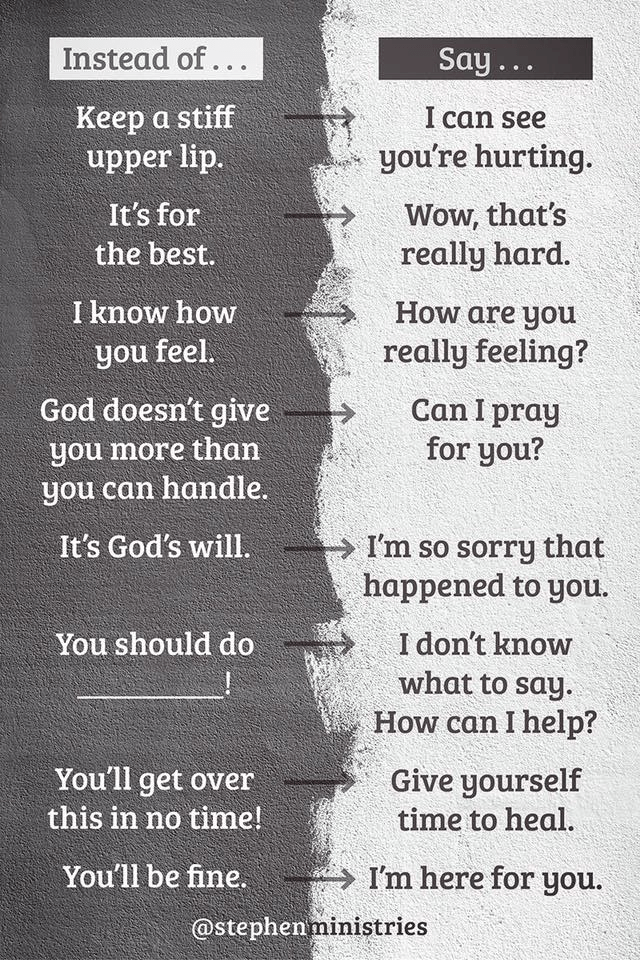
So here’s a short list of things things to say and do that I believe actually HELP grieving friends and family:
Not everyone leaves earth quickly. Some are ill for a long time. It’s natural for friends to want to stop by home or hospital to see a sick loved one and show support for the family. Please call ahead to see if it’s convenient. If it’s not, then don’t come. Respect that while it may feel like a reunion to you and others gathered in the living room or the waiting room it’s a very sober and frightening and stress-filled time for the family. Loud laughing and back-slapping are often unwelcome reminders that the person in the bed can do neither.
Please don’t impose your desire to help on the family’s unwillingness to accept it. Offer-that’s wonderful and appreciated-but there may be circumstances you don’t know about that just make it hard or impossible for them to let you do what you would like to do. It’s really, really hard to use the limited energy available to politely turn down an offer.
When you stop by to pay respects, try not to overstay your welcome. You’ll probably never notice that the family is working hard to extend hospitality and make small talk. It’s exhausting. You are not the only people “stopping by for a minute” while the family is trying to take care of funeral details. They are deciding on what clothes their loved one will be buried in, what photos to include in a memorial slide show, what will be served at dinner after the service, who will sing or speak or play a piano solo. There’s just no energy left for small talk. Express condolences, leave the dessert or congealed salad and leave them to the little bit of quiet they may enjoy before the next few days of crazy.
Take time to write notes of remembrance if you can. Facebook comments, text messages, emails, written notes or cards are wonderful! These can be gathered together, printed and saved as a beautiful tribute.
If you haven’t played an active role in the deceased’s life or the life of their family recently, don’t show up and insist on “inner circle” privileges now that they are gone. This is not the time to force reconciliation or expect a family reunion type celebration. While that may be the ultimate outcome of this traumatic and life-altering event, respect those that have maintained relationship over the years.
Instead of asking, “Let me know if there’s anything I can do”, say, “How may I serve you in the days and months to come?”. Grievers may not have an immediate answer, but ask again in a week or so after others have drifted away. Also consider asking if specific things may be helpful.
Please don’t wander around the house. Respect the family’s privacy.
Don’t ask personal questions such as “How did he die?” or “What happened?”. If the bereaved want you to know, they will tell you.
Be attentive to body language.
Allow grievers to lead.
Don’t ignore comments that indicate it’s time to go.
Accept that what you may want to do and what is truly helpful may be two very different things.
Fewer words are almost always better than idle chatter.
I know it is hard. I know you don’t truly understand how I feel. You can’t. It wasn’t your child.
I know I may look and act like I’m “better”. I know that you would love for things to be like they were: BEFORE.But they aren’t.
I know my grief interferes with your plans. I know it is uncomfortable to make changes in traditions we have observed for years. But I can’t help it. I didn’t ask for this to be my life.