“The worst conceivable thing has happened, and it has been mended…All shall be well, and all shall be well and all manner of thing shall be well.” ~Julian of Norwich
I’m not sure when I first read this quote, but it came to my mind that awful morning. And I played it over and over in my head, reassuring my broken heart that indeed, the worst had already happened, and been mended.
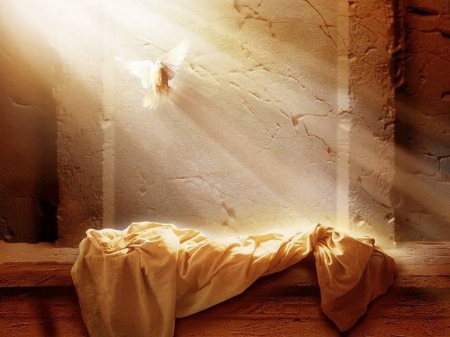
Death had died.
Christ was risen-the firstfruits of many brethren.
Today is the day on the church calendar when we pause and reflect on the Last Supper, and the last words of Jesus to His disciples.
A year’s worth of sermons is contained in John 13-17 but this week I have been drawn to just one verse:
[Jesus said] ‘Now I am giving you a new command—love one another. Just as I have loved you, so you must love one another. This is how all men will know that you are my disciples, because you have such love for one another.’
Yesterday was eight long years since Dominic left for Heaven. It’s hard to wrap my mind around the distance between the last time I hugged him and now.
But I can still feel the shape of where his shoulders would fit in my arms.
I know exactly who I’m missing-and I miss him every bit as much today as the first moment I learned he wasn’t coming home.
❤
When I imagine something I’ve never actually experienced-even when I might say “I miss such and such” it’s not the same as when I’ve had something and it’s been taken away.
I can only miss the imaginary in an ephemeral, insubstantial way. I miss what I once possessed in a tangible way.
I know exactly the size and shape and sound and substance of the person that SHOULD be here but isn’t.
Once the stone was rolled in front of the tomb there was no more denying the fact that whatever the disciples thought Jesus was going to do was not at all what He did.
None of them thought the story was going to end like this and yet here they were having buried their Master and their dreams.
Most of us can relate to a time when we thought our dreams were God’s dreams and we were on the path to victory only to round the next bend and head straight to defeat-or worse.
The eternal weight of the space between Jesus’ death and resurrection will only be known on the other side of this life, for the scriptural references are filled with both majesty and mystery. Though Jesus’ full assignment in those days is beyond comprehension, the disciples’ disillusionment is not.
Alicia Britt Chole
It can be tempting to try to distract our hearts from the pain of failure, dashed dreams, death, rejection or other hard-to-process feelings.
But that’s not how to heal.
If we pay close attention to what the disciples did in the wake of Jesus’ death, we see modeled a better way:
They gave themselves permission to bury the dream. It’s important to acknowledge and commemorate loss. That’s one of the reasons we have societal rituals surrounding death. It’s not about hopelessness, it’s about accepting reality. A heart needs to mark these moments.
They returned home to rest. “Rest is essential-a need, not a luxury” (Chole, 204). So often we seek frantic activity when faced with loss. We move our bodies in hopes it will distract our minds. But it never works. We may be able to push off the pain for a time yet it won’t be ignored forever. It’s so much better to give our bodies and souls the rest they need so we can process pain from a place of relative strength rather than exhaustion.
They didn’t isolate themselves. The disciples remained in community with one another. They intentionally maintained relationships. It is so easy to look for the nearest corner where we can lick our individual wounds. But telling, retelling and sharing our sorrow creates space for mutual healing.
Most of us will not see the resurrection of our dreams within three days. In fact, some of our dreams are sown for future generations to reap. Even then, obedience is never a waste; it is an investment in a future we cannot see. When we dream with God, our dreams-even in burial-are not lost; they are planted. God never forgets the ‘kernel of wheat [that] falls to the ground and dies’ (John 12:24).
What grows from that painful planting is God’s business. But sowing in faith is ours and, like the early disciples, our faithfulness is never sown in vain.
Alicia Britt Chole
When Dominic ran ahead to Heaven, part of me wanted to run away too. There were moments when I thought if I could just get started and keep going I’d reach someplace where the pain couldn’t reach me.
But that simply isn’t true.
I had to face the fact my son wasn’t coming home. I had to face the reality that I’d live the rest of my life in expectant hope, waiting for the fulfillment of Christ’s promise to redeem and restore.
Like that kernel of wheat, I had to choose to plant my dreams in the soil of God’s faithful love, extravagant grace and abundant mercy, trusting Him to make them grow.
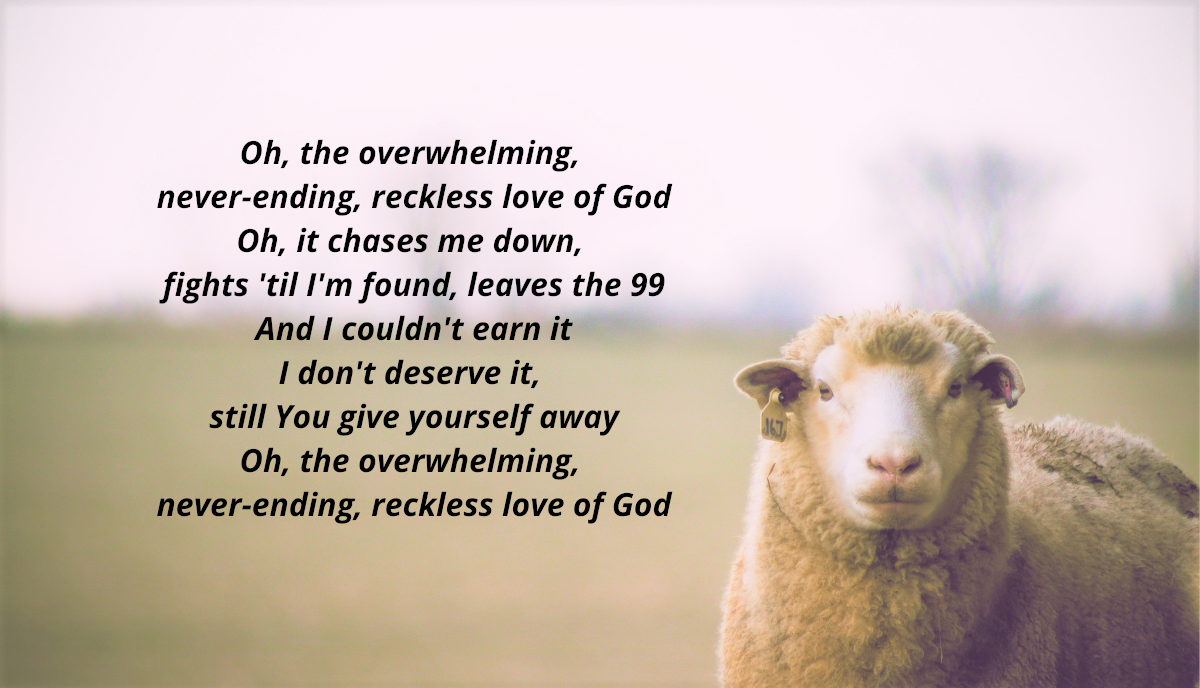
I love, love, love the song “Reckless Love” but I have friends who find even the title offensive.
I tend not to get into debates with folks over things like that but this is one gauntlet I’m happy to bend down and pick up.
Because the word “reckless” has more than one meaning.
In this instance the lyrics don’t refer to crazy, undisciplined, random action but instead to abundant, overwhelming, extravagant action unrestrained by concern it may be rewarded in any way.
This is the love of God in Christ demonstrated by the cross and resurrection.
It was also the love shown by Joseph of Arimathea when he boldly petitioned Pilate for Jesus’ body, prepared it according to Jewish burial customs and placed it in his own (costly and newly hewn) tomb. By doing so he was declaring Jesus’ death an honorable one-an act that was akin to blasphemy or treason since Jesus had been labelled an enemy of God and of the Roman state.
It was totally reckless.
Joseph risked his reputation and possible his freedom to honor a dead man…Joseph of Arimathea gave Jesus his resting place. It was a treasured, costly space reserved for himself, but Joseph gifted it to Jesus. Further, Joseph gave this risk-laden treasure to Jesus at a time when Jesus could not-from Joseph’s perspective-do anything else for him.
Alicia Britt Chole
I’m ashamed to say that I often withhold love, help and encouragement from others because I deem them unworthy or I fear being taken advantage of.What if they can’t return the investment?
Without getting into a theological debate, Jesus’ sacrifice was and is sufficient for ALL sin. His blood was poured out without regard to merit (because for whom would He have then died?). His love IS reckless-abundant, overwhelming, extravagant-without concern for whether or not it will be reciprocated.
And this same love is poured out on me and can be poured out through me if I respond to the Spirit’s call.
So today’s fast is withholding.
What part of my heart or life am I withholding from the One who died to save me?
What gift has He extravagantly given that I am hoarding?
Where am I damming up His goodness, mercy, grace and love instead of pouring it out on others?
Joseph’s actions stir something within me: an ache possible too deep for words….Whatever part of me I have reserved for me-for my self-I long to give it away to Jesus. When we offer to Jesus the place we have reserved for ourselves, He surprises us by filling that space with His resurrected life. By offering his resting place to Jesus, Joseph transformed a tomb from a place of death for himself into a place of victory for his God.
Many of us who’ve spent decades in church can attest to filling a position because it answered a need deep inside of us rather than because of our love for Jesus.
It’s entirely possible to be near the things and people of God-even God Himself- and not be attentive to or aware of the Presence of Christ.
There were lots of folks around the cross.
Some were paid to be there-for the Roman guards it was just another day at work. Some were there against their will-the two thieves were going to be crucified somewhere it just happened to be next to the Son of God.
Some wished they weren’t there as they watched their son (Mary) and beloved rabbi (John) die. Some were just walking by and were either curious or not depending on their dispositions.
Today Chole invites me to think about where I am in relation to the cross-am I near but not listening?
Am I “doing” but not “loving”?
Is my body occupying a pew or a pulpit while my spirit is far away?
Paid to be close to Jesus: nearest and yet farthest away. The paycheck can change your perspective whether paid in cash or praise. The soldiers valued Jesus’ stuff more than His life. As they kept themselves busy around the cross, they numbed themselves to His voice.
Today, fast God-as-job. Whether your check comes from a church or not, consider ways in which you, too, may be near in body but absent in spirit, taking care of Jesus’ stuff but now attending to His voice. Proximity does not automate intimacy. Only love transforms “near” into “for”.
Chole identifies several groups that were in proximity to Jesus as He was dying on the cross.
Perhaps two people were silenced by grief or gently sobbing.
The others were taunting Him, mocking Him and reveling in His [apparent] inability to save Himself or be rescued by the Father He claimed close connection to.
They had no idea that His death was a last act of willing submission and laying aside of His power, position and possible retribution against those who had put Him there.
Love held Him to the cross-not nails or impotence.
So today I fast criticism.
I will fast judging others based on half-truths or even whole ones that cast them into a role other than as an image-bearer of our God.
Every single person I meet is bearing up under some kind of burden. Every face I see has an untold story behind the smile, frown, scowl or tears.
And every single human being is known and loved by the God who made them and the Savior who died to redeem them.
Today, fast criticism. From the clerk moving slowly to the homeless vet on the streets, consider carefully that Jesus knows them by name. Today, seek to know more, assume less, and air prayers for Jesus’ ‘least of these’ boldly in the presence of your shared Father God.
Alicia Britt Chole
**As promised, I am sharing thoughts on 40 DAYS OF DECREASE (a Lenten journal/devotional). If you choose to get and use the book yourself, I’ll be a day behind in sharing so as not to influence anyone else’s experience. **
I’ll just be completely honest here-there are some sins I don’t have much trouble avoiding. I’m not tempted to shoplift or physically harm others.
However, like all of us I have some pet sins I not only don’t avoid but I actually feed from time to time.
And like most folks, I justify my sin as “small” compared to the “big” sins of headline worthy wars or crimes or dastardly actions by those in power over those beneath them.
Why linger in the pain so many centuries after Christ’s resurrection? Because it was real. Perhaps we would live differently if we remembered more frequently (and more accurately) what the cross cost.
Alicia Britt Chole
The thing is, any time I choose to willfully so something God has expressly forbidden I am sinning.
In the Sermon on the Mount, Jesus enlarged our understanding of sin to include thoughts and intentions of the heart even when our outward actions appear above board.
By this standard I fall short very often-sometimes by slipping into inadvertent sin but also sometimes by actively choosing that which momentarily satisfies my flesh but dishonors my Savior.
After Dom ran ahead to Heaven it was very, very hard to justify to my heart the benefits of continuing to walk the narrow path.
I was focused on what I thought was unfair and unkind-the death of my son-and found it difficult to focus on what I knew to be true-that God was all-loving and good.
‘It’s God who ought to suffer, not you and me,’ say those who bear a grudge against God for the unfairness of life. The curse word expresses it well: God be damned. And on that day, God was damned. The cross that held Jesus’ body, naked and marked with scars, exposed all the violence and injustice of this world. At once, the Cross revealed what kind of world we have and what kind of God we have: a world of gross unfairness, a God of sacrificial love.
Philip Yancey
Little by little, as I leaned heavily into His lovingkindness, mercy and grace, I once again could chooseWillful Obedience.
Today’s challenge is to fast from willful sin.
To lay down my tendency to arrange sin in categories ranging from “acceptable” to “hell-worthy” which makes some OK and excusable.
May I be more aware of the cost Christ paid and choose to honor that sacrifice in my daily life.
Jesus died for our sin. Why then do we work to keep it alive? What benefit do we perceive ourselves receiving? Does that benefit outweigh the cost Christ paid? This is not a simplistic call to stop sinning. No, this is a sincere call for us to start loving Jesus to a degree that compels us to walk away from sin where we can and get help where we can’t.
I remember vividly the first time I read through the passage in Exodus 12 describing God’s instructions to the Israelites for the initial Passover.
The Lord impressed on my spirit that while the blood was necessary (sacrifice had to be made) it was obedience of each person to place themselves under that blood that saved them from the death angel.
They were spared because they believed and acted according to that belief, trusting God to do what He said He would do.
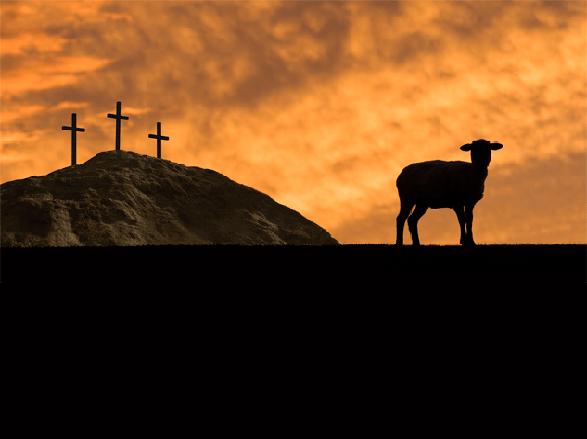
It’s the same with the blood of Christ-He is the sufficient Sacrifice and the full payment for sin.
For you know that it was not with perishable things such as silver or gold that you were redeemed from the empty way of life handed down to you from your ancestors, but with the precious blood of Christ, a lamb without blemish or defect.
1 Peter 1:18-19
It can be hard to believe that over the long years life may include. It can be difficult to refrain from adding something else to the abundant gift of peace and victory over death Jesus offers.
His easy yoke and light burden are often weighed down by earthly desires and worries I’m not made to carry.
This whole season has been about laying things aside-attitudes, habits, incorrect theology.
Today’s fast is about taming desire and choosing simplicity (in some form or fashion). Try not to buy anything today (or even shop for something).
Jesus is enough. His shed blood was sufficient for our salvation. Adding to Him only distracts us….Jesus’ yoke is easy and His burden is light. (Matthew 11:29-30). Our additions are not.
Alicia Britt Chole
Try not to add anything to the perfect grace and mercy of our Lord.
Receive the fullnessof a life lived like the sparrows-justtoday, only today.
The precious flow began before, not on, the cross. Jesus’ blood was shed at every point of rejection. Through fists and staffs and whips, Jesus’ blood fell in Caiaphas’s house and Pilate’s palace and every point in between.
Alicia Britt Chole
**As promised, I am sharing thoughts on 40 DAYS OF DECREASE (a Lenten journal/devotional). If you choose to get and use the book yourself, I’ll be a day behind in sharing so as not to influence anyone else’s experience.**











 thelifeididntchoose