Grief Work 2025: Healthy Boundaries in Grief

As a people-pleasing first born who hates conflict, giving in has always been  easy for me. It’s only later that I wish I hadn’t.  

So for most of my life, setting personal boundaries has been challenging.

But in the aftermath of child loss, healthy boundaries are no longer optionalthey are necessary for survival.  

So what are healthy boundaries?

  • Saying “no” without guilt
  • Asking for what you want or need
  • Taking care of yourself
  • Saying “yes” because you want to, not out of obligation or to please others
  • Behaving according to your own values and beliefs
  • Feeling safe to express difficult emotions and to have disagreements
  • Feeling supported to pursue your  own goals
  • Being treated as an equal
  • Taking responsibilty for your own emotions
  • Not feeling responsible for someone else’s emotions
  • Being in tune with your own feelings
  • Knowing who you are, what you believe, what you like

~sharonmartincounseling.com

What does this look like in real life?

  • Not being “guilted” into engaging in social/family/church activities before I am ready
  • Letting family and friends know when I need encouragement, companionship, solitude, help or space
  • Keeping or making doctor’s appointments and staying on top of my physical well-being by sleeping/eating/taking medication/exercising as best I can
  • Participating in what is helpful and life-giving to me when I want to and not because I feel like I have to.  
  • Giving myself space and time to figure out how losing a child impacts my beliefs, my sense of self, my understanding of the world-being honest about questions and about struggles.  If I have to take a break from church for awhile, that’s OK.
  • Expecting support from friends and family to do the work grief requires.  If some in my circle can’t do this, then I’ll put those relationships on hold until I feel stronger. I am not required to live up to other people’s standards.
  • Embracing and acknowledging my own emotions.  Not expecting someone else to “make me better”.  No one can take away the sorrow and pain of child loss.  It is excruciating.  There is no way through but THROUGH.  Face the feelings.  Get help from a counselor if necessary.  Join a support group.  Find safe friends.  But I will not be able to distract myself or ignore the heartache forever.
  • Understand that though I share the loss with others-a spouse, my surviving children, my child’s grandparents, etc-I am not responsible for how they are dealing with loss. I may offer help, may arrange counseling (especially for children), should strive toward an environment where feelings can be expressed-but I can’t work through their loss experience for them.  
  • Pay attention to my own feelings and what triggers grief attacks.  When I can, plan around the triggers.  When I can’t, accept the feelings and go with them.  If I need to leave a venue, leave.

What it doesn’t look like:  

Healthy personal boundaries are not an excuse for bad behavior.  They are not to be used as blunt instruments to bully others into submission or to advance my own agenda against theirs.

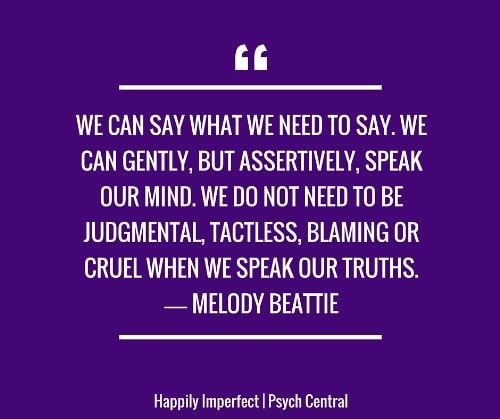
My boundaries don’t give me the right to be hateful, hurtful or unkind.  They are not permission to pitch fits, make public displays or belittle others.  

say-what-we-need-to-say-gently

And they are absolutely NOT a reason to plaster hate speech across social media.  If I have a personal relationship issue then it needs to be handled personally and privately not publicly. Vague Facebook statuses that suggest I’ve been offended by half my friend list are off limits.

Establishing healthy personal boundaries is work.  

Already exhausted from grief, the last thing I want is more work.

But if I don’t defend the space and time I need to do the work grief requires I cannot make progress toward healing.

If I don’t limit my interaction with those who are unhelpful or downright hurtful, I will be dragged down further in the mire of sorrow and sadness.

If I don’t purposely pursue physical, emotional and psychological healthgrief will kill me.

Bereaved Parents Month 2025: Grace and Space

It took me a little while to realize that if I was going to survive this lifelong journey I had to make some changes in how and when I responded to requests to do something, be somewhere or participate in outside events.   

Because no matter how worthy the request, there was only so much of me to go around and I was forced to spend nearly all my energy and time and effort on figuring out how this great wound was impacting me and my family.

I cannot overemphasize how much strength and energy is needed to do the work grief requires.

Read the rest here: Grace and Space

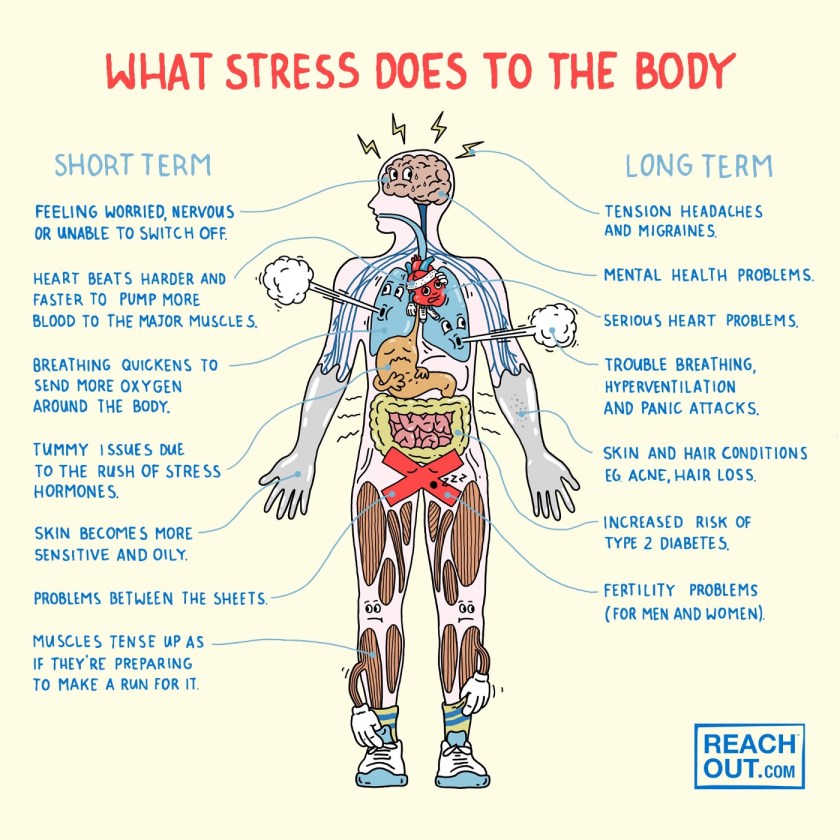
It would be so helpful if there was an app to track stress like there is to track spending.

Wouldn’t it be marvelous to get an alert that said, “Low Balance”, for mental, physical and psychological reserves like the one you can get for your bank account right before you are heading to overdraft territory?

But there isn’t.

And few of us are very good at gauging just how much is left in our mental wellness accounts which means we often keep giving when the well is more than dry.

I’d be lying if I said I spend the same amount of time crying, lamenting and bent over in agonizing pain that I did in the early days of mourning Dominic. I’ve found a way to keep him close, to trust his soul to Jesus and to (largely) live in the present instead of always longing for the past.

There are days, though…

Some days are easy to anticipate-birthdays, holidays, the awful anniversary of his leaving-and some sneak up on me. I can often trace my overwhelming sadness to a specific trigger or memory dug up in a drawer or found in a pile of photos.

Occasionally, I have a horrible weepy day for no discernable reason.

That’s when I walk my heart back through recent events and always come to the same conclusion-I’ve let myself run dry:

  • I’ve overcommitted.
  • I’ve not planned rest.
  • I’ve had hard pain days.
  • There’s been family drama.
  • Someone I love is sick.
  • I’m sick.
  • A deadline looms large.
  • There’s some major unpredictability going on.
  • I’ve counseled too many people without enough time to regain my own emotional stores.
  • I’m not sleeping well.
  • I’m doing too much and not listening to my body.

What I’ve come to understand is that stress is a HUGE impact on my grief and how I experience it.

I won’t patronize folks reading this with a simplistic (but wholly unhelpful!) suggestion to “reduce or avoid stress”.

For heaven’s sake! If we could do that with a snap of our fingers we would hardly need someone to tell us to take advantage of that solution.

Truth is, stress is often largely outside our control.

But there ARE some things I can make choices about. So I do. I look ahead at the calendar and note upcoming milestone days. I plug in doctor’s appointments, birthdays and holidays. I review every invitation to celebrations or lunch in light of what is already inked in.

I’ve learned to be honest with folks about my limitations and send a card or gift through the mail if I can’t be there in person. I sometimes suggest an alternative date and time if the one a friend offers just doesn’t work for me. I stand firm in my opinion that “no” is a complete sentence and as long as I’m kind and gracious it is not incumbent upon me to offer an explanation for why I’m turning down an invitation.

And if I have an unexpectedly hard day-from grief or activity or because of my RA-I drop back the next day to allow time to recuperate and rest (if at all possible).

The reality is that child loss means there is ALWAYS a certain low-level hum of stress in my life.

Adding to that already higher-than-average stress means it’s easy for me to be tipped into unhealthy territory.

Crying is only the tip of the iceberg.

Health problems, heart problems, relationship issues and other long-term consequences often result.

It’s not only OK for me to set boundaries to protect my health and my heart,

It’s absolutely, positively the right thing to do.

So, What Exactly IS Forgiveness?

Recently someone asked me for my definition of forgiveness.

It caught me off guard.

She had been sharing details of a very painful situation with someone who is clearly intent on making her life difficult “just because”.

I had to think about it.

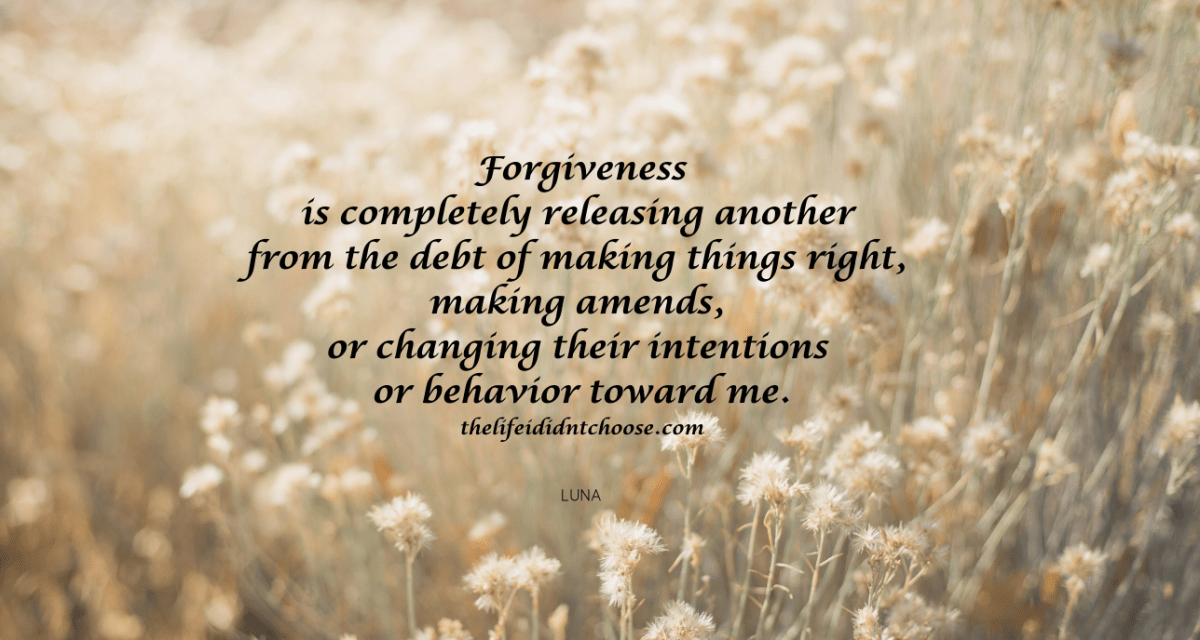
After a few seconds I told her that at its most basic level, I thought forgiveness was completely releasing another from the debt of making things right, making amends or changing in their intentions or behavior toward me.

And then I realized it was precisely what I thought even though I’d never framed it exactly like that before.

I’ve sat with my words for a several days now and I have a few more thoughts.

My definition may lack precision in terms of theology but it is absolutely congruent with lived experience.

It bridges the gap I (and many others) feel between what feels like real forgiveness (releasing the debt) and also still not trusting a particular individual enough to allow them in my life.


I can’t imagine a single soul walking in this world for very long without having at least someone wound them deeply. And it’s no good just trying to ignore the pain or paper it over or distract yourself from it. I eventually find it gnaws a hole in my heart.

When that happens, it’s necessary (for my own mental, emotional and spiritual health) to face it and deal with it.

That’s when the choice to forgive can release the energy that will otherwise be expressed in bitterness or anger or sarcasm or avoidance or unfulfilling and often harmful choices.

If I forgive-release another from the debt of making things right or making amends or changing in their intentions or behavior toward me-then I am no longer held hostage to what they do or don’t do, say or don’t say.

It is real and freeing.

Doing that, I can more accurately evaluate whether the individual is a safe one whom I can allow back into my life:

  • Is their behavior consistent?
  • Are their intentions good and loving or hurtful and mean?
  • Can I trust them?

You do not have to allow them back in if they are not worthy of that privilege.

So, so many bereaved parents have been wounded in so, so many ways.

Sometimes by those they love. Sometimes by strangers who contributed to the death of their child. Sometimes by others who have made it difficult or impossible to do the work grief requires.


Those that inflict the wounds may be repentant or they may not.


That’s outside our control.

But we all have the opportunity to make the choice to release the debt and free ourselves of the ongoing burden of caring whether they are sorry or not.

And that is work well done.


Grief Work 2024: Healthy Boundaries in Grief

As a people-pleasing first born who hates conflict, giving in has always been  easy for me. It’s only later that I wish I hadn’t.  

So for most of my life, setting personal boundaries has been challenging.

But in the aftermath of child loss, healthy boundaries are no longer optionalthey are necessary for survival.  

So what are healthy boundaries?

Read the rest here: Healthy Boundaries in Grief

Word Of The Year 2024

It’s kind of funny that a new calendar and a new year prompt folks who’ve been perfectly content to coast through the old one to make bold declarations of change. 

I suppose it is the nature of humans to pause at the threshold and think crossing over means something more than a single footstep. 

I’m tempted to join in from time to time myself.

The thing that stops me is a fundamental understanding that no matter what prayers, proclamations or promises we lift, declare or make to ourselves or others, time has a way of unraveling them all. 

Still, when I began to see social media prompts to “pick a word” for 2024, I actually entertained it for a few seconds. 

Instead of inspirational words like “perseverance”, “joy”, “presence”, “love”, etcetera, the only word that came to my mind was “boundaries”. Which sounds kind of selfish and not all that aspirational. 

I think it probably springs from a place deep inside my soul.

A place I don’t often explore and even more rarely pay attention to. But a place I probably (definitely!) need to listen to and take seriously. 

I have joked since turning sixty that if someone wants to mess with me “they picked the wrong decade!”. 

Easier said than done. 

A lifetime of bending over backwards (the name of my imaginary yoga studio) has bent my heart, life and personality toward giving in and giving up. Child loss took so much out of me that what was a tendency BEFORE is practically a policy AFTER. 

Too often it’s too much trouble to try to explain why I need space, time, love, attention and just common courtesy. So I stuff, stuff, stuff and do whatever someone asks regardless of how much it costs in terms of time, effort or energy. 

I’m trying to learn how to say (without being snarky) I don’t think I can meet a person’s expectations. I’m trying to learn how to take up space and quit shrinking into a corner. 

I won’t lie. 

It’s hard. 

And I’ve been met with resistance. 

But this year I’m determined to make it stick.  

Emotional Exhaustion: Spoon Theory Applied to Child Loss

We like to think we are invincible, full of infinite energy and able to handle anything life may throw at us. It’s understandable considering Western society places a premium on heroic endurance in the face of adversity or challenge.

Truth is, though, our emotional, physical and mental energy are not infinite. We ALL have an absolute rock bottom where we simply cannot do one. more. thing.

And living with child loss means I exhaust my resources sooner than many.

I love this concrete representation of my limitations. It has helped me understand that it’s OK to say, “no” and it’s human to have to.

I hope it gives you courage to do the same. 

❤ Melanie

The basic idea is that everyone starts with a finite number of “spoons” representing the energy, attention and stamina that can be accessed for any given day. When you do something, you remove a spoon (or two or three) based on the effort required.  When you have used up all your spoons, you are operating at a deficit. 

Like a budget, you can only do that so long before you are in big trouble.

Read the rest here: Spoon Theory Applied to Bereavement

Bereaved Parents Month 2023: I STILL Need Grace and Space

It took me a little while to realize that if I was going to survive this lifelong journey I had to make some changes in how and when I responded to requests to do something, be somewhere or participate in outside events.   

Because no matter how worthy the request, there was only so much of me to go around and I was forced to spend nearly all my energy and time and effort on figuring out how this great wound was impacting me and my family.

I cannot overemphasize how much strength and energy is needed to do the work grief requires.

Read the rest here: Grace and Space

Stress Impacts Grief

It would be so helpful if there was an app to track stress like there is to track spending.

Wouldn’t it be marvelous to get an alert that said, “Low Balance”, for mental, physical and psychological reserves like the one you can get for your bank account right before you are heading to overdraft territory?

But there isn’t.

And few of us are very good at gauging just how much is left in our mental wellness accounts which means we often keep giving when the well is more than dry.

I’d be lying if I said I spend the same amount of time crying, lamenting and bent over in agonizing pain that I did in the early days of mourning Dominic. I’ve found a way to keep him close, to trust his soul to Jesus and to (largely) live in the present instead of always longing for the past.

There are days, though…

Read the rest here: How Stress Impacts Grief

Please Don’t Ask My Kids How I Am Doing, Ask Me

It may seem like the easiest way to get an inside scoop on how I’m REALLY doing-but don’t do it.

Please don’t ask my kids how I’m doing.

Respect the fact that they have their own grief burden.  Respect family privacy and understand you are putting them in an impossible position.

Read the rest here: Please Don’t Ask My Kids How I Am Doing