Dismantling The Past

I’ve spent the last two days rearranging our family room.

Since my husband has retired, we no longer use it as we once did and I realized a few weeks ago that it was ridiculous to have it set up the way it’s been for decades when our needs have drastically changed.

So we decided to tackle the job of sorting/moving/dismantling books, videos (yes, we still have a few!), DVDs, CDs and random other bits and pieces of a life long lived in the same place.
For those of you who have moved often you may have been spared the detritus of papers stuck in cracks and crevices on bookcases with the promise to yourself you’ll “put them where they go when I get a chance”.

Me, not so lucky.

I’ve found treasures-scribbles of younger days from my now (very!) grown children-and sad reminders of projects begun and left hanging because we got too busy to see them through.

The one thing I celebrated in taking apart, digging through and tearing down was this: totally destroying and trashing an old, old, old television stand from back in the day when TVs were far too heavy and far too thick to mount on walls or above fireplaces.

I’d always hated that thing.

We bought it as young marrieds when our budget was tight and floor space was precious in our first small home. It did the job but it was just not my style. And at the time, I wasn’t bold enough or strong enough to speak up and advocate for a different choice.

Oh, there are wonderful memories of my two oldest kids putting on shows dressed up in fun costumes and singing along to our cassette tape playlist. We have more than one photo of that delightful era.

But there were years and years of putting up with something that no longer served our needs (because it was here, bought and paid for, and convenient) instead of ditching it and buying something that would both serve and bring delight.

Closest picture I could find to what we had.

So other than a long march down memory lane, what does this have to do with child loss?

I’ve learned since Dom left us that I’ll no longer stay silent when a habit, a situation, a relationship or a piece of furniture doesn’t serve my current mental, physical, psychological, emotional or spiritual circumstances.

I won’t wait for someone else to notice I’m upset or sad or happy or delighted.

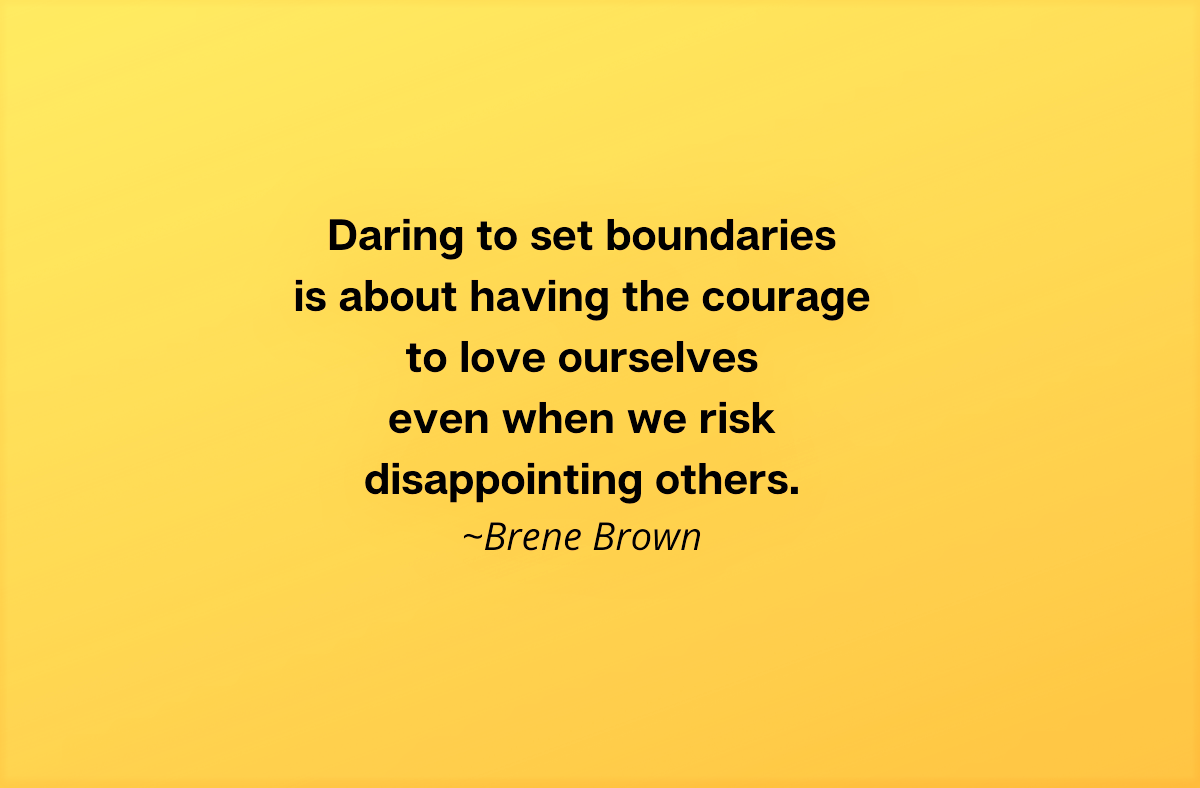
I’ve learned to speak up for myself and ask for things I need. I’m learning (haven’t made the progress I’d like!) to set boundaries and tell others that they may come thus far and no closer. I’m trying harder to rid my life of what is unhelpful and unhealthy.
I’m definitely a work in progress.

And most of the work won’t have such a satisfying and concise conclusion as when I cheerfully watch the pieces of that old TV stand go up in smoke.

But I’m committed to continue dismantling the parts of my past that no longer serve my present.

The Necessity of Setting Healthy Boundaries in Grief

As a people-pleasing first born who hates conflict, giving in has always been  easy for me. It’s only later that I wish I hadn’t.  

So for most of my life, setting personal boundaries has been challenging.

But in the aftermath of child loss, healthy boundaries are no longer optional, they are necessary for survival.  

So what are healthy boundaries?

Read the rest here: Healthy Boundaries in Grief

Honesty Doesn’t Have to Be Rude

Like I’ve said before, my emotions will leak out somewhere. I can’t keep them bottled inside forever.

When I choose to be honest AT THE TIME it’s so much better.

When I let folks know that what they say, do, expect from and thrust upon me is unhelpful or overwhelming or even painful, they usually respond with gratitude.

They almost always accept my boundaries.

Those of us walking the Valley often say that those who aren’t just can’t understand. They don’t know what they don’t know.

That’s true.

But they can be educated about some of what we know.

Read the rest here: Hey Fellow Griever-Being Honest Is NOT Being Rude

Bereavement and Spoon Theory: THIS Is Why I’m Exhausted!

We like to think we are invincible, full of infinite energy and able to handle anything life may throw at us. It’s understandable considering Western society places a premium on heroic endurance in the face of adversity or challenge.

Truth is, though, our emotional, physical and mental energy are not infinite. We ALL have an absolute rock bottom where we simply cannot do one. more. thing.

And living with child loss means I exhaust my resources sooner than many.

I love this concrete representation of my limitations. It has helped me understand that it’s OK to say, “no” and it’s human to have to.

I hope it gives you courage to do the same.

❤ Melanie

The basic idea is that everyone starts with a finite number of “spoons” representing the energy, attention and stamina that can be accessed for any given day. When you do something, you remove a spoon (or two or three) based on the effort required.  When you have used up all your spoons, you are operating at a deficit. 

Like a budget, you can only do that so long before you are in big trouble.

Read the rest here: Spoon Theory Applied to Bereavement

Healthy Boundaries: I Don’t Have to Be Someone’s Punching Bag

I first shared this years ago in response to some parents’ comments about friends and even family who simply would not relent in offering unsolicited advice or worse, graceless observations on how they “should be” handling their grief.

While I am all for assuming the best about folks, I am not an advocate of submitting oneself to bullying.

Boundaries are not only helpful, they are absolutely, positively necessary for anyone. And especially for wounded hearts.

You do not have to be anyone else’s punching bag!

❤ Melanie

There are some people who make it a habit to be insensitive.

They are the ones who delight in speaking their mind regardless of how it hurts another heart.  They pride themselves on “telling it like it is” and justify the fallout as a necessary consequence of “opening the eyes” of people they consider “blind to the truth”.

And while I believe that it is my duty as a Christ follower to forgive these folks when they hurt my feelings, I do not believe that I am required to continue to offer my heart to them to be tossed to the ground and trampled.

Read the rest here: Boundaries: I’m Not a Punching Bag

Setting Healthy Boundaries in Grief

I think child loss forces many of us to reflect on where (or if) we’ve set healthy boundaries in relationships.

I know it did for me.

I found that I had too long allowed what others might think of me or say about me to determine my priorities. But when I was no longer able to give, give, give I had to learn to draw a line.

It’s not only OK to have boundaries, it’s imperative if your heart is to have the space and time available to do the work grief requires.

❤ Melanie

As a people-pleasing first born who hates conflict, giving in has always been  easy for me. It’s only later that I wish I hadn’t.  

So for most of my life, setting personal boundaries has been challenging.

But in the aftermath of child loss, healthy boundaries are no longer optional, they are necessary for survival.  

So what are healthy boundaries?

Read the rest here:  Healthy Boundaries in Grief

In The Early Days I Was a Walking Nerve

If you are in the early days of this hard, hard journey, do what you have to and find the safe circle that gives you time, space and grace to help your heart toward healing.

It may take longer than you’d like, but resting from the constant pressure of trying to protect yourself from the hustle and bustle in a world where child loss is misunderstood and frequently ignored will make a difference.

Read the rest here: A Walking Nerve

How Stress Impacts Grief

It would be so helpful if there was an app to track stress like there is to track spending.

Wouldn’t it be marvelous to get an alert that said, “Low Balance”, for mental, physical and psychological reserves like the one you can get for your bank account right before you are heading to overdraft territory?

But there isn’t.

And few of us are very good at gauging just how much is left in our mental wellness accounts which means we often keep giving when the well is more than dry.

I’d be lying if I said I spend the same amount of time crying, lamenting and bent over in agonizing pain that I did in the early days of mourning Dominic. I’ve found a way to keep him close, to trust his soul to Jesus and to (largely) live in the present instead of always longing for the past.

There are days, though…

Some days are easy to anticipate-birthdays, holidays, the awful anniversary of his leaving-and some sneak up on me. I can often trace my overwhelming sadness to a specific trigger or memory dug up in a drawer or found in a pile of photos.

Occasionally, I have a horrible weepy day for no discernable reason.

That’s when I walk my heart back through recent events and always come to the same conclusion-I’ve let myself run dry:

  • I’ve overcommitted.
  • I’ve not planned rest.
  • I’ve had hard pain days.
  • There’s been family drama.
  • Someone I love is sick.
  • I’m sick.
  • A deadline looms large.
  • There’s some major unpredictability going on.
  • I’ve counseled too many people without enough time to regain my own emotional stores.
  • I’m not sleeping well.
  • I’m doing too much and not listening to my body.

What I’ve come to understand is that stress is a HUGE impact on my grief and how I experience it.

I won’t patronize folks reading this with a simplistic (but wholly unhelpful!) suggestion to “reduce or avoid stress”.

For heaven’s sake! If we could do that with a snap of our fingers we would hardly need someone to tell us to take advantage of that solution.

Truth is, stress is often largely outside our control.

But there ARE some things I can make choices about. So I do. I look ahead at the calendar and note upcoming milestone days. I plug in doctor’s appointments, birthdays and holidays. I review every invitation to celebrations or lunch in light of what is already inked in.

I’ve learned to be honest with folks about my limitations and send a card or gift through the mail if I can’t be there in person. I sometimes suggest an alternative date and time if the one a friend offers just doesn’t work for me. I stand firm in my opinion that “no” is a complete sentence and as long as I’m kind and gracious it is not incumbent upon me to offer an explanation for why I’m turning down an invitation.

And if I have an unexpectedly hard day-from grief or activity or because of my RA-I drop back the next day to allow time to recuperate and rest (if at all possible).

The reality is that child loss means there is ALWAYS a certain low-level hum of stress in my life.

Adding to that already higher-than-average stress means it’s easy for me to be tipped into unhealthy territory.

Crying is only the tip of the iceberg.

Health problems, heart problems, relationship issues and other long-term consequences often result.

It’s not only OK for me to set boundaries to protect my health and my heart,

It’s absolutely, positively the right thing to do.

❤

Grief: Setting Healthy Boundaries

As a people-pleasing first born who hates conflict, giving in has always been  easy for me. It’s only later that I wish I hadn’t.

So for most of my life, setting personal boundaries has been challenging.

But in the aftermath of child loss, healthy boundaries are no longer optional, they are necessary for survival.  

So what are healthy boundaries?

Read the rest here: Healthy Boundaries in Grief

Limping Toward Tomorrow

As hard as I may try to help those around me understand how very difficult it is to walk on in this life I didn’t choose, my efforts often go awry.

I forget to make a phone call, I assume some plans are in place, I mistake silence for assent, I’m unaware of secondary pressures or I simply underestimate pent up feelings waiting for an opportunity to be expressed and what I thought would be a regular encounter ends up being an uncomfortable or painful confrontation.

And I’m trapped. No where to go, no where to hide. Stuck in an unfruitful conversational circle.

No matter how carefully I listen, how cautiously I employ “I” statements and affirm another heart’s perspective, it isn’t enough. Because what they really need from me is something I can’t give: to make life like it was “before”.

But we both know that’s not possible. So I become the sacrificial punching bag-the person they pummel until the negative energy is spent.

I want to agree to disagree and lay down arms. I want to walk away, hang up the phone, run and hide.

I don’t.

Because if there were a way for me to relieve this built-up inner pressure (without hurting another heart) I’d do it too.

But there isn’t. So I take the licks.

I add that to my sack of “Things You Have To Endure Post Child Loss” and carry on.

Limping.

Still moving.

Just barely, some days.