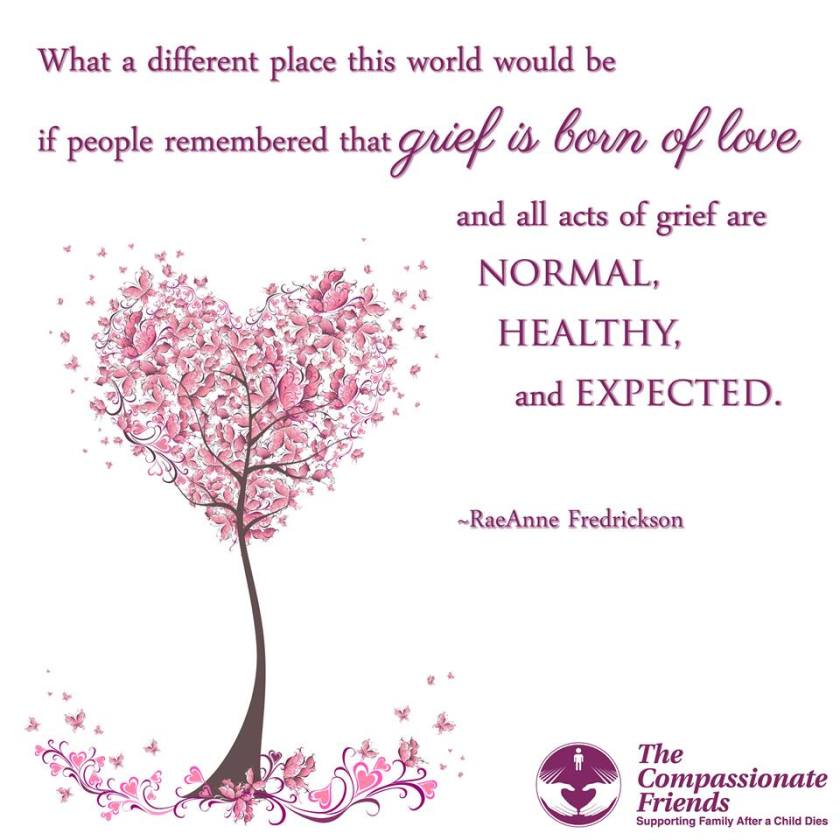
Every time I come home from a retreat, a conference or a bereaved parent support group meeting I am reminded again that the range of “normal” in grief-especially child loss-is so very wide.
Still crying after a decade? Absolutely normal.
Trouble getting dinner on the table or remembering your child’s school schedule? Yep. That’s normal.
Struggling with crowds, back-peddling on commitments, feeling trapped by phone conversations, shopping when you are least likely to run into someone you know? Perfectly normal.
Our losses range from very recent to decades old and we all acknowledge that our behavior, our feelings, our ability to handle change, nearly every aspect of our lives is impacted by the death of our child.
So if you are wondering if your expression of grief is normal, it is.
Our lives were shattered.
Our hearts were broken.
Picking up the pieces, whatever that looks like, is absolutely, positively normal.
While I certainly had no real idea in the first hours or even weeks what losing a child entailed, I understood plainly that it meant I would not have Dominic to see, hold or talk to.
I wouldn’t be able to hug his neck or telephone him.
He wouldn’t be sitting at my table any more.
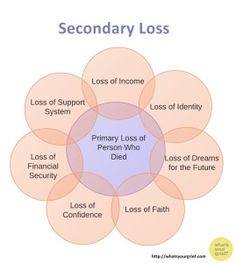
But the death of a child or other loved one has a ripple effect. It impacts parts of life you might not expect. As time went on, I was introduced to a whole list of losses commonly called “secondary losses”.
Here are just a few:
Loss of a large chunk of “self”. Dominic possessed part of my heart and part of my life. It was violently ripped away when he died. There is part of me that was uniquely reflected from him-like a specialty mirror. I can never access that part of me again.
Loss of identity. Before Dominic died I was one kind of mother. I was a mother of four living children who were making their way in the world as successful adults. I was a mother looking forward with happy anticipation to the next years. Now I am still a mother of four children but one whose heart has been changed by tragedy and sorrow. Tomorrow is still bright, but there’s a shadow just behind it.
Loss of self-confidence. I used to enter a room without a thought to how I’d be received or perceived. That’s definitely not the case now. I’m self-conscious-constantly wondering if I’m saying or doing the right thing. I never know if a grief trigger will (at best) pull my attention away from conversation or (at worst) send me scurrying for the bathroom.
Loss of sense of security. I think every parent has moments of fear over his or her child. When they first go off someplace without us, when they get a driver’s license, travel abroad, go to college. But all the awful things I imagined didn’t hold a candle to the reality of waking one morning to a knock on my door and the news that Dominic had been killed. The bottom fell out of my (relatively) safe world. Bad things, random things can and do happen. Once it happened to ME, it changed how I processed everything. The passing years have softened some of the anxiety but I will never be able to assume safety again.
Loss of faith. I did not “lose” my faith. I never once doubted that God was still working, was still loving and was still in control. But I most certainly had to drag out every single thing I thought I knew about how I thought He worked, loved and superintended the world and examine it in light of my experience of burying my son. It took a long time to work through all the pat answers I had been offered and myself doled out to others for years that didn’t fit with my new reality. I am learning that doubt is not denial and that I have to live with unanswered questions.
Loss of family structure. I’ve written before that a family is more than the arithmetic total of the number of members. There were six of us. But we were so much more than six when we were all together! Our talents, personalities and energy were amplified in community. When Dominic’s large presence was suddenly whisked away, every relationship got skewed. We’ve fought our way back to a semblance of “whole” but still miss him terribly. We can function, but we will never be the same.
Loss of my past. Memories are funny things. They are plastic and subject to change. And my recall of an event is limited to my own perspective. For a memory to be rich and full, I need input from others who were there as well. One vessel of family memories is no longer available to add his unique contribution. Every time I pull out a photo or dig down deep in my heart to draw up a treasured moment, I realize I’ve lost something I can not recover. The joke, the glance, the odd detail are all gone.
Loss of the future I anticipated. I’m a planner by nature. Not a detailed, OCD, got-everything-in-order kind of planner, but a “big picture” kind of planner. When Dominic left us in 2014, things were going (pretty much) according to plan. Each child was well on his or her way to the career path they had chosen. I was easing into an empty nest and exploring options for life after homeschooling. My husband was entering his last few years of a lengthy career. It’s hard to explain to anyone who hasn’t experienced it, but when your world is shaken by child loss, everything gets scrambled. You can’t just pick up where you left off and keep going with the pieces that remain.
There’s a prolonged period of confusion and everyone is impacted differently and in ways you could never imagine. All of us have changed dramatically in the years since Dominic left us. He is not the only thing missing from the rest of our lives. Holidays are altered. Birthdays are different. We have to plan special events around uncomfortable milestone dates that roll around every year whether we want them to or not. It’s a constant readjustment to life as it IS instead of life as I thought it WOULD be.
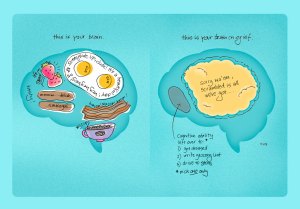
Loss of ability to focus and function. Oh, how this surprised me! I was in some kind of zone for the first month after Dominic left. My other children were home, we had to make it through planning his funeral, two graduations and cleaning out his apartment. I also had to handle paperwork for my husband to take short-term disability due to grief. I cried a lot, wrote down dozens of notes but managed to do what I had to do. Then I crashed. I couldn’t remember a thing. I couldn’t read more than a couple sentences at a time. I hated the telephone. I could barely stand to hear the television. I had to make a list of the most basic things like brushing my teeth, feeding my animals, turning off all the lights before bed. It was awful! And it didn’t really get better for well over a year.
I still suffer from a very short attention span, low tolerance for noise and an inability to accommodate last minute changes. I don’t schedule anything back to back. I live in a rural area and sometimes shop in the nearby town. I will start the day with a long list and shorten it repeatedly as I go along because driving in traffic, crowds and random sounds ramp up my anxiety and make me want to go home with or without what I came for. I have changed the way I do so many things. My pre-loss memory has never returned.
Loss of patience. I am at once impatient and long-suffering. I have zero patience for petty grievances, whining and complaining. Yet I have compassion for other people living hard and unhappy stories. I berate myself for not being “better” and, at the same time, extend grace to others who aren’t “better” either. I want to shake people who bowl over weak, hurting, desperate souls. I don’t have time for moaning about rain when you were planning a picnic but will listen for hours to a mama tell me about her missing child.
Loss of health. I had a number of chronic health conditions before Dominic ran ahead. Within the first year of his departure, I was hospitalized twice. My experience is not unique. Some parents suffer immediate health effects (heart attack, blood sugar spikes, anxiety/depression) and some see a slow decline over time. In part because child loss, like any stressor, will negatively impact health and also because sometimes bereaved parents stop doing the things that help them stay healthy. At almost five years, I’ve learned how to manage the stress better although some of my health issues continue to get worse. It’s hard to tease apart what is age, what is disease and what is grief.
When your child leaves this life before you do, it changes everything.
Not only things you might expect, but many you’d never imagine.
It’s a constant balancing act, readjusting every day to new challenges.
But of all the factors that promote healing, there is NO SUBSTITUTE for time–not in the physical world of surgery and broken bones and deep wounds and not in the inner world of emotional pain and brokenness and sorrow.
Our bodies are made to be amazingly resilient.
Most people don’t really think of surgery as an assault on the body, but it is.
The surgeon knifes through layers of flesh and tissue that are designed to keep intruders out, mucks about inside, does what he or she came to do, and closes up–hopefully without introducing bacteria into the wound. Some medication may be prescribed to promote healing, control pain and reduce the risk of infection.
Then the patient goes home to recover.
But it is really TIME and the body’s own healing powers that do the lion’s share of the work.
Our hearts and minds can be resilient too.
Frequently, someone who suffers an assault on their emotions may not bear outward signs and symbols to mark what they’ve been through. And well-meaning friends and family can forget that healing has only begun and is far from complete.
Sometimes broken people feel pressured to put on a brave face and to stuff their feelings.
For the body, ignoring doctor’s orders to rest after surgery can mean another hospital stay due to complications that might have been avoided if the patient had been given sufficient time to recover.
Emotionally wounded people can end up with complications from pressure to rejoin regular activities and engage society in ways for which they are not yet ready.
It takes TIME to heal from burying a child or any other traumatic loss.
There is no way to rush the healing. It takes HOURS AND HOURS to think about, respond to and process the feelings that overwhelm anyone who is grieving or trying to cope with emotional upheaval of any kind.
So be patient with yourself.
Understand that there will be good days and bad days.
There will be forward movement and steps backward.
Sometimes it will be easy to do something or go somewhere and the next time it might be really hard.
And don’t be afraid to let others know you are still healing.
Deep emotional wounds require great care and an extended period of time to heal if the healing is to be sound and free from unnecessary complications.
You are not selfish to draw boundaries around what you can and can’t do, what you will and won’t allow and where and when you engage with others-you are being wise.
For those walking with the wounded: extend grace and be patient.
Thank God you are not bearing this burden and be mindful of placing demands or pressure on the wounded to heal according to a predetermined timetable.
Then support them in their effort to give themselves the TIME they need to heal.
Twenty-four hours separate one of the most outlandish global parties and one of the most somber religious observances on the Christian calendar.
Many of the same folks show up for both.
Mardi Gras, “Fat Tuesday”, is the last hurrah for those who observe Lent-a time of reflection, self-denial and preparation before Resurrection Sunday.
It’s a giant party-food, fellowship and fun-a wonderful way to celebrate the blessings of this life.
Ash Wednesday, by contrast, is an invitation to remember that“from dust you came and to dust you will return”.
None of us get out of here alive.
Even where the Gospel is preached every Sunday there are those who forget this life is hard and often full of pain and suffering.
If your experience so far has looked more like Mardi Gras and less like ashes, well, then-be thankful.
But don’t be deceived.
“From dust you came and to dust you will return.”
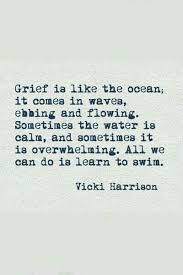
For some of us it was a similar twenty-four hour turnaround that upset our world, tossed us headfirst into the waves of sorrow and burned that truth into our hearts, not just dabbed it on our foreheads.
Sometimes I feel excluded from fellowship with the saints because I can’t join in the celebratory spirit of a worship service.
When the hymns only focus on our “victory in Jesus” my heart cries, “Yes-but perhaps I won’t see the victory this side of heaven.”
When the congregation claps and dances to feel-good songs that celebrate the sunshine but ignore the rain, my eyes swim with tears because I know the reality of a downpour of sorrow.
Because sometimes praise is a sacrifice.
Church needs to be a place where we can share the pain as well as the promise that Christ will redeem it.
Jesus Himself said, “in this world you will have trouble”.
So I can’t claim allegiance to the Church of the Perpetually Cheerful.
I want to create space for the hurting and broken and limping and scared.
How about a new denomination that acknowledges the truth that life is hard.
Instead of the “Overcoming Apostolic Praise-filled Ministers of Eternal Optimism” I would name it the “Trudging But Not Fainting Faithful.“
I remember as a young mother of four working hard to keep my kids safe.
Next to fed and dry (two still in diapers!) that was each day’s goal: No one got hurt.
It never occurred to me THEN to add: No one got killed.
Because the most outlandish thing I could imagine was one of them falling or touching a hot stove and us having to rush to the emergency room.
Then I became a mother of teens and one by one they acquired a driver’s license and motored away from our home.
That’s when I began to beg God to spare their lives.
One particularly frightening test was when all four went to Louisiana-my eldest driving and the rest in the van with her. I made them call me every hour and tell me they were OK. It was the first time I realized that I could lose every one of them in a single instant should they crash-all my eggs in one basket.
I was glad when that day was over. Although the irony is they were no “safer” at the end of those 24 hours than they were at the beginning.
Because what I know now, but didn’t know then is this: There is no such thing as“safe”.
Not the way we like to think of it-not the way we add labels to devices, seat belts to cars, helmets to everything from bicycles to skateboards. Of course we should absolutely take precautions!Many lives are saved by them every single day.
But. BUT…
Life is more random than we want to admit.And there is no defense against random.
There is no way to screen for every underlying physical abnormality, no way to drive so well you can stop the drunk or inattentive driver from plowing through a stop sign, no way to anticipate every foolish choice a young person might make that ends in disaster instead of a funny story.
My first response when Dominic died driving his motorcycle was that I wanted my surviving sons to sell theirs. They did so out of respect for me. Neither of them wanted their mama to have to endure a second knock on the door and the same message delivered twice.
I receive it as a sacrifice offered in love from them.
Because it was.
Since Dominic left us almost [twelve] years ago, I have had to deal with my desperate need to keep my living children safe.
And it is a real struggle.
Each child is involved in a career that includes inherent risk. None of them are foolhardy, but they are exposed-perhaps more than many-to potential bad actors and dangerous circumstances.
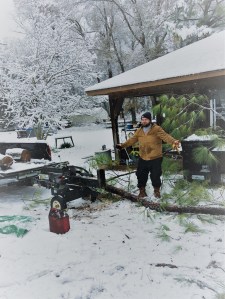
This branch fell just minutes after my son was standing in that spot splitting logs.
How I long for those days when I could tuck everyone in, turn out the lights and sleep soundly because all my chicks were safe inside my own little coop! How I wish the only danger I thought about or knew about was a bump on the head from hitting a coffee table!
How my heart aches for one more moment of blissful ignorance!
But I can’t live in some imagined water color past. I have to live in the world as it is.
So I remind my heart that safe is an illusion-no matter where we are. Life is not living if it’s only about preserving breath and not about making a difference.
One of the things even the most uninformed person understands about loss is that the first birthday, the first Thanksgiving, the first Christmas and all the “firsts” after loss will be hard.
But one of the things no one tells you about is that a heart will mark the “lasts” just as much.
The last time I saw him.
The last time I spoke to him.
The last time I hugged his neck and smelled the unique fragrance that was my son.
Every year as I approach the anniversary of the day Dominic left this life and stepped into Heaven, I also remember all the last times.
It’s hard on a heart to think about and wish that somehow I had made more of those moments. I long to have just one more opportunity to say what needs to be said, to see his smile, hear his voice, and hug his neck.
But there’s no going back.
So part of the pain of marking the milestones is knowing there is no way to change a thing. Not only the FACT that my son is gone, gone, gone. But also the FACT that whatever I said or did or left unsaid or undone is utterly and undeniably carved in stone.
I don’t know why this anniversary is hitting my heart harder than last year. Maybe it’s because I recognize how much life has happened since Dominic left us. Maybe it’s because I think in terms of decades. Maybe it’s because there are so many exciting family celebrations that he won’t be part of.
I have no idea.
But it’s nearly eleven long years since my son crossed the threshold of his family home. It’s nearly eleven years since I heard that familiar deep “Hey!”. It’s nearly eleven years since I waved him down the driveway and hollered, “Be careful!” as he drove back to his apartment.
I am thankful for the faithful love of my God and my family. I am thankful for the compassionate companionship of friends. I am thankful that I am still standing after the awful blow that I was sure would knock me so far down I’d never get up again.
But I miss him. I miss him. I miss him.
I will never be able to watch the early spring flowers bloom again without also remembering that it was those blossoms that heralded the good weather that lured him to take his motorcycle that night.
I will never hear Spring Break plans without counting the days between his last Spring Break trip and the day he met Jesus.
I cannot step outside and smell the grass growing, feel the breeze blowing and hear the birds singing without my heart skipping beats and doing the math. Today marks less than two months before the day he left us.
I understand that for others-if they remember at all-Dominic’s departure is a day circled on the calendar.
For me, it’s an entire season.
I mark every single day that led up to that day. I remember every single conversation, meeting, text and phone call. I remember all the things I did and regret all the things I didn’t do.
While the world is celebrating new life, I’m remembering a life that ended.
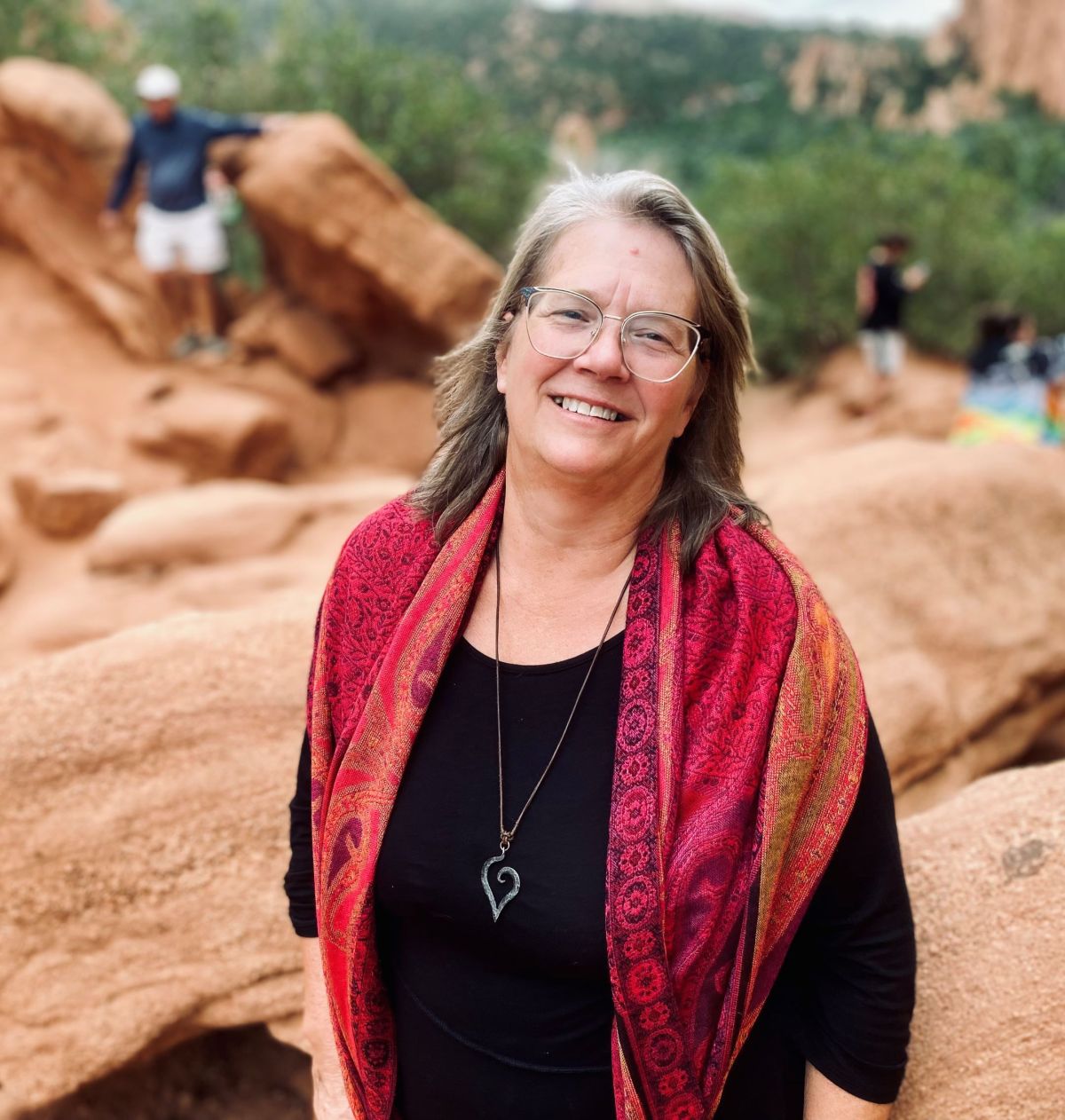
I shared this for the first time last year around this time. I’d had a difficult previous several months and my face showed it.
From February to the first part of September 2025, things were looking up.
I launched my “official” ministry: Heartache and Hope; was hosting monthly in-person bereaved parent support meetings; there were several opportunities to share with other groups around the country; and all four of my women’s retreats were fully booked.
Then September 14th my father suffered a life-altering stroke and I became his full time caregiver for three months. In December, my sweet granddaughter Holly entered the world a little early and after only two weeks on earth joined Dominic in Heaven.
I look at my face now and there are more lines than ever. My body screams every morning when I call on it to get up and get going.
But if I’ve learned one thing on this journey, it’s this: Make memories and TAKE THE PICTURE!
Every photo is precious when you can’t make any new ones.
❤ Melanie
I have never been one of those women who lied about her age.
My weight…well, you will have to threaten me with something that matters to get THAT number out of my lips.
But I’ve noticed this year more than others since Dominic left us that the wear and tear of years and tears and life and loss are showing up on my face as well as my hips.
I am definitely the worse for wear.
I’m sixty-two and for the first time in my life I am religious about applying under eye cream and moisturizing lotion to my face each morning and night.
I don’t want to be the sore thumb in the family pictures!
I’m not sure it’s working. I’m not sure anything can erase or roll back the marks that life and love and loss have etched on my face.
I’m not sure I want to.
Because each wrinkle, each line, each saggy, baggy skin flap says, “I loved, I lived and I am surviving-even though it’s hard.”
Before Dom left I was camera shy. I still am, a bit. But I’m trying hard to suck up my pride and my insecurity and let those flashes pop. Memories are made one day at a time and photos help preserve them.
So whether I’m at my best, at my worst or somewhere in between, I won’t say no to a Kodak moment.
I wish I had more of them from “before”.
I wish I hadn’t’ been so darned particular about what I looked like, what I was wearing and whether or not my wrinkles or big butt showed.
Worse for wear?
Who cares?
This one wasn’t made to last.
For instance, we know that when these bodies of ours are taken down like tents and folded away, they will be replaced by resurrection bodies in heaven—God-made, not handmade—and we’ll never have to relocate our “tents” again. Sometimes we can hardly wait to move—and so we cry out in frustration. Compared to what’s coming, living conditions around here seem like a stopover in an unfurnished shack, and we’re tired of it! We’ve been given a glimpse of the real thing, our true home, our resurrection bodies! The Spirit of God whets our appetite by giving us a taste of what’s ahead. He puts a little of heaven in our hearts so that we’ll never settle for less.
It’s easy to understand why. We live in a world full of sound bytes, memes, tweets and T-shirt slogans.
But life can’t be reduced to such little snippets, even if we wish it could.
Not every biography has the perfect “beginning, middle, end” arch that makes for a good and satisfying story.
Some of us can’t tie up our experiences in tidy boxes, with colorful bows and a lovely tag line that inspires thousands.
We are living unfinished, messy, hard stories that keep shifting, changing and require us to face mountain after mountain and valley after valley.
And we stumble.
A lot.
I suppose it’s tiresome for our friends to have to slow down, turn around, bend down and help us get back up over and over and over.
Many of our compassionate companions turn into personal trainers at some point: “You can do it! Try harder! Push farther! You’ve got to work at it! Don’t give up! Come on, don’t you want to get stronger, fitter, better????”
The hidden message? If I wanted to badly enough, would try hard enough, work long enough or get the right help, I could “fix” this. I could emerge from child loss whole, healed and healthy.
And when I don’t, they get frustrated, disgusted or just plain bored and leave me lonely on the trail. They walk away and forget-because they CAN forget.
I’ve said it before and I’ll say it again: If you think it’s hard to watch your friend struggle with a broken heart, a shattered life, doubts and regrets, it’s harder to live it.
You can walk away. I can’t. You can go home, close the door and think of something else. I go home, close the door and am flooded with thoughts, emotions and overwhelming grief.
If I could “fix it” don’t you think I would?
But I can’t.
I will continue to have a messy, untidy, unfinished life this side of Heaven.
And I will keep climbing, struggling and stumbling.
There are so many life circumstances that plunge a heart into darkness.
Child loss is certainly one of them, although not the only one.
And when you’re in the dark, stumbling around, trying to avoid the sharp corners and looking, looking, looking for a tiny sliver of light to guide you out, it is terrifying.
If you don’t have a pocket full of matches or a flashlight or a lantern, you are at the mercy of whoever cares enough to come back for you.
I am so thankful for the friends and family who never tire of my fearful cries when I find myself in dark places.
They come running.
They don’t leave me there.
Sometimes all they have is a tiny candle themselves, a sliver of hope they are clinging to. But they raise it high , share its glow with me and together we take a step forward toward the brighter light of day.
I will never, ever forget the ones who come to me with a torch.
I firmly believe that our friends and extended family want to reach out, want to help, want to walk alongside as we grieve the death of our child.
I am also convinced that many of them don’t because they don’t know how.
It may seem unfair that in addition to experiencing our loss, we also have to educate others on how to help us as we experience it, but that’s just how it is.
The alternative is to feel frustrated and abandoned or worse.
So here’s a list of helpful tips (and a great infographic!) for interacting with bereaved families:
Express condolences and show you care. Don’t avoid me, please! You cannot make me any sadder. I need to hear from you.
Refer to my child by name. Dominic is STILL my son. He is still part of my story. But because he’s no longer visible, his name often goes unspoken. Please talk to me about him, use his name, tell me a story of how he impacted your life or a memory that makes you smile. It makes me smile too.
Actively listen and be supportive. It’s hard to listen to someone tell you how much they are hurting and not offer advice or think of ways to “fix” them. I can tell you from experience that what I need most on my darkest days is for someone to say, “It IS dark. I’m so sorry.” Silence is OK too. Not every quiet moment needs to be filled with chatter.
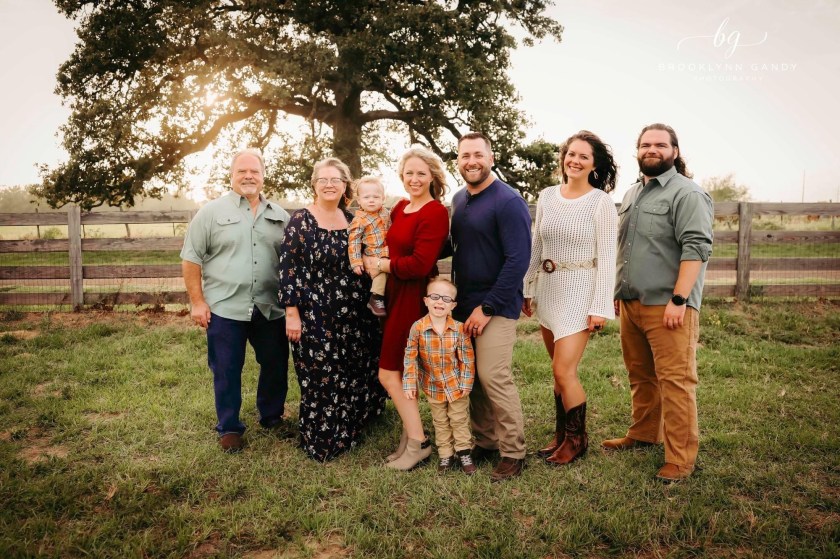
Understand that each family and family member will grieve in different ways. You may have observed child loss before but what you saw in one family may not translate to the next. There are no hard and fast rules for this awful journey. The age of the child, family background and structure, manner of death-all these impact grief. In addition, mothers and fathers, sisters and brothers all bring their personalities, stage of life, beliefs and experiences to the journey. There were five of us left behind when Dominic ran ahead. We were each devastated but expressed it in very different ways. Nearly five years later, those gaps have widened, not narrowed.
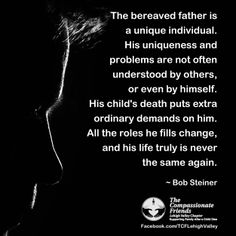
Fathers grieve too. Sometimes support focuses almost exclusively on the mother. In part because of a common notion that mothers are somehow emotionally closer to their children than dads. In part because many men are less demonstrative and may do a good job hiding grief. Whatever the reason, don’t assume one parent is dealing “better” with the loss than another (mother or father) just because he (or she) is not crying openly. No one escapes this awful blow unscathed.
Don’t overlook siblings. Surviving siblings are sometimes referred to as “forgotten grievers”. If they are very young, people may think they are relatively unaffected by the death of a brother or sister. If they are grown and out of the home, people may figure that the siblings’ own, very full and very busy, lives keep them preoccupied. While some of that may be true-to an extent-most surviving siblings are deeply impacted by the death of a brother or sister, regardless of age. Not only have they lost a member of the family and changed birth order, they have also lost the family they knew, the parents they knew and a co-keeper of memories and secrets. Bereaved parents are often overwhelmed with grief for their living children as well as the child that is missing. One of the best gifts anyone gave me was reaching out to my surviving children. It helped my heart to know that they had friends who were supporting and loving them well.
Be yourself. People often feel awkward and stiff when approaching a bereaved parent or family member. That’s perfectly understandable. The bereaved seem so fragile (are so fragile!) that folks are afraid the wrong word or touch might shatter them into a thousand pieces. But what your friend or family needs right now is the you they’ve always known and loved. If you are a hugger, hug! If you are a storyteller, tell stories (appropriate ones, ones of the missing child). If you are a cook and cleaner, then cook and clean. Our family was blessed by our friends doing exactly what they had always done-come alongside in their own special way. So much had changed in our world that familiar touchstones, familiar routines and familiar faces were a real comfort.
Keep in mind words matter. Now is not the time to try to satisfy your curiosity about exactly “what happened”. Loud joking is rarely welcome. Many bereaved families find it hard to laugh in the first days, weeks, months because it feels like betrayal. Don’t offer platitudes intended to help them “look on the bright side” or consider that “it could be worse”. There is nothing worse than burying your child. Nothing. Listen and take direction from the person you are comforting. Follow his or her lead. And if something less than helpful slips out, own it and apologize.
It’s never too late to reach out. NEVER. Sometimes people stay away at first for lots of reasons. Or they show up for the memorial service and then fade into the background. After a bit, even if they want to reach out, they may feel embarrassed by the long absence. Don’t be. So many people stop calling, visiting and texting within the first weeks that your outstretched hand of friendship will be a welcome beacon of hope. If you need to, apologize for your absence. Be honest. Admit you were scared or whatever.



























 thelifeididntchoose