Bereaved Parents Month 2026: Supporting Surviving Siblings

Grieving parents often face the additional challenge of trying to help their surviving children process the death of a sibling.

While there are many factors that influence how a particular child understands and works through his or her grief, age at time of bereavement plays a significant role.

Children’s grief can look very different than that of the adults around them. And that grief may resurface later on as the child grows and matures, even long after the death of a loved one.

I came across this helpful article that lists common bereavement reactions by age group and have reprinted it in its entirety. It was originally published at KidsHealth New Zealand. http://www.kidshealth.org.nz

Key Points to Remember About Bereavement Reactions:

  • how any child or young person grieves when someone they love has died will depend on many things
  • babies, children and teenagers tend to grieve in bursts, and at other times will look for reassurance and comfort in their normal routines and activities
  • bereaved children and teenagers will need ongoing attention, reassurance and support – it is not unusual for grief to resurface later on, even well after the death

How any child or young person grieves when someone they love has died will depend on many things, such as their:

  • age
  • gender
  • their developmental stage
  • personality
  • ways they usually react to stress and emotion
  • relationship with the person who has died
  • earlier experiences of loss or death
  • family circumstances
  • how others around them are grieving
  • amount of support around them

Babies, children and teenagers may often seem unconcerned, playing or doing their usual activities, so adults can assume they are not properly aware of the death, or affected by it. They are, but in their own ways. Babies, children and teenagers tend to grieve in bursts, and at other times will look for reassurance and comfort in their normal routines and activities.

Bereaved children and teenagers will need ongoing attention, reassurance and support. It is not unusual for grief to resurface later on, even well after the death. This can happen as they move through different life milestones, and develop as individuals.

Babies and Toddlers:

At this young age babies and toddlers don’t have an understanding of death nor the language to say how they are feeling. However, they can definitely experience feelings of loss and separation and are likely to pick up on the anxiety or distress of close adults or others around them.

Common reactions can include:

  • looking for the person who has died
  • being irritable
  • crying more
  • wanting to be held more; being clingy
  • being less active – quiet, less responsive
  • possible weight loss
  • being jumpy, anxious
  • being fretful, distressed

How to help them:

  • keep routines and normal activities going as much as possible
  • hold and cuddle them more
  • speak calmly and gently to them – and be calm around them
  • provide comfort items, such as a cuddly toy, special blanket etc

Preschoolers

At this age children find it hard to understand that death is permanent. They are also at a stage of magical thinking, for example, thinking someone will come alive again or thinking somehow they made someone die. They understand separation though, and feel insecure and frightened when the familiar things around them change. This age group needs a lot of reassurance that they will be safe and looked after.

Common reactions can include:

  • looking for the person who has died
  • dreams, or sensing the presence of the person who has died
  • fearfulness, anxiety
  • clinginess
  • being fretful, distressed
  • being irritable; having more tantrums
  • withdrawing, being quiet, showing a lack of response
  • changes in eating
  • difficulty in sleeping
  • toileting problems, bed wetting, soiling
  • regressing in progress; for example, returning to crawling, wanting a bottle

How to help them:

  • keep routines and normal activities going as much as possible
  • tell them you know they are sad – start to teach and use words that describe feelings
  • tell them they are safe, and who is looking after them
  • keep separated from them as little as possible
  • comfort them with hugs, cuddles, holding their hand, and by encouraging them
  • speak calmly and gently to them – and be calm around them
  • explain death as part of life, so they come to understand it bit by bit. Using some examples in nature may be helpful, such as watching plants grow, bloom and die or seasons change
  • provide comfort items, such as a cuddly toy, special blanket etc
  • encourage play – children can often use play to help them process what’s happened; for example, sand play, puppets, dolls, writing, drawing, painting and various physical activities

Primary School Children

Primary school children are still learning to understand death and can have some confused thoughts about it. They may think death is temporary, or that the person who has died may still feel things, such as coldness, hunger or loneliness etc. They may ask where the person is now, and have blunt questions to ask about what happened to them and to their body. Explaining death to them is very important.

Common reactions can include:

  • looking for the person who has died
  • having dreams about, or sensing the presence of, the person who has died
  • blaming themselves for the death
  • being easily distracted, forgetful
  • being anxious; having increased fears, such as of the dark, of others’ safety
  • clinginess – wanting to be near you or others more
  • withdrawing, being quiet, showing a lack of response
  • being fretful, distressed, not wanting to go to school
  • feeling embarrassment; feeling different from others; may conceal their loss
  • physical complaints, such as tummy aches, headaches, aching
  • being irritable, having more tantrums, being defiant, or developing antisocial or aggressive behaviour
  • changes in eating or sleeping habits
  • toileting problems, bed wetting, soiling

How to help them:

  • frequently reassure them they are safe, and who is looking after them
  • keep routines and normal activities going as much as possible
  • tell them you know they are sad – start to use words that describe feelings
  • keep separated from them as little as possible
  • allow questions and provide honest answers
  • comfort them with hugs, cuddles, holding their hand, and by encouraging them
  • speak calmly and gently to them – and be calm around them
  • explain death as part of life, so they come to understand it bit by bit. Using some examples in nature may be helpful, such as watching plants grow, bloom and die or seasons change
  • let them help in planning the funeral or something to remember the loss
  • provide comfort items, such as a cuddly toy, special blanket etc
  • encourage play – children often can use play to help them process what’s happened; for example, sand play, puppets, dolls, writing, drawing, painting and various physical activities

Older Children (10-12 years)

Common reactions include:

All of the above relate to this age group, but it’s important to be aware that by this age children know death is final. They are also more aware of how adults and others around them are reacting to death. This group may also:

  • be especially anxious about the safety of family and friends, and themselves
  • try very hard to please adults and not worry them, and so not let themselves grieve
  • feel stronger emotional reactions, such as anger, guilt, sense of rejection
  • want to take on more adult responsibilities, trying very hard to please
  • feel embarrassment; feel different from peers; may conceal their loss
  • become more focused on what’s happened and ask questions, think about it a lot, have dreams about it, and perhaps want to talk about it often to others

How to help them:

They need all of the help in the previous section plus:

  • time to talk with you and other trusted adults, when they need to
  • regular reassurance – spoken, and with encouraging physical touch (such as hugs, pat on the back etc).
  • honesty about events, and feelings
  • to know you understand their grief
  • regular encouragement
  • avoid expectations of adult behaviour – allow them to be the age and stage they are

Teenagers

By adolescence, death is accepted as part of life, but it may not have affected a teenager personally yet. Their reactions may fluctuate between earlier age group reactions and reactions that are more adult.

Teenagers will often want to be more with friends than family as they seek support. They may find the intensity of emotion overwhelming or scary and not be able to find the words or ways to talk about them with others. They may want to feel they’re coping, and be seen to be, but inside be hurting a great deal, or be putting their emotions on a shelf for a later time.

Death can so shake teens that some react with risk taking behaviour – to escape the feelings and reality and as a source of comfort; for example, drinking, drugs, more sexual contact or reckless driving.

Common reactions can include:

  • being easily distracted, forgetful
  • having difficulty concentrating at school
  • being unsettled in class, a change in class performance, not wanting to go to school
  • being overwhelmed by intense reactions, such as anger, guilt, fear
  • having difficulty expressing intensity of emotions, or conflict of emotions
  • blaming themselves for the death
  • anxiety – increased fears about others’ safety, and their own
  • having questions or concerns about death, dying, mortality
  • dreams about, or sensing the presence of, the person who has died
  • wanting to be near family or friends more
  • withdrawing to be alone
  • physical complaints, such as tummy aches, headaches, aching
  • being irritable, defiant, more antisocial or displaying aggressive behaviour
  • risk-taking behaviour to escape, to comfort, or to prove they’re alive and strong; for example, drinking, drugs, more sexual contact or reckless driving
  • changes in eating, sleeping habits
  • bedwetting
  • jokes or humour, masking feelings
  • saying, or acting like, they don’t care
  • wanting to take on more adult responsibilities, trying very hard to please
  • strained relationships with others – fear or awkwardness about being close to others
  • feeling embarrassment; feeling different from peers; may conceal their loss
  • a sense of loneliness – isolation
  • a change in self-image, lower self-esteem
  • possibly suicidal thoughts
  • possibly moving from sadness into depression

How to help them:

  • be honest and let them know what’s happening
  • be willing to listen, and available to talk about whatever they need to talk about
  • acknowledge the emotions they may be feeling—fear, sadness, anger
  • it can be helpful for parents, or other adults, to share their own feelings regarding the loss
  • frequently reassure them they are safe, who is caring for them, and which adults they can trust to ask for further support
  • keep routines and normal activities going as much as possible
  • talk to them about grief – what it is, that it’s normal, that everyone is different
  • avoid expectations of adult behaviour – allow them to be the age and stage they are, encourage them to express their thoughts and feelings – give them ideas of things they could try, such as doing physical activities, writing, singing, listening to music, talking with friends, reading etc
  • allow questions and provide honest answers
  • comfort them with hugs, cuddles, holding their hand, and by encouraging them
  • speak calmly and gently to them – and be calm around them
  • talk about death together; answer any questions they may have
  • let them help in planning the funeral or something to remember the loss

Bereaved children and teenagers will need ongoing attention, reassurance and support. It is not unusual for grief to resurface later on, even well after the death. This can happen as they move through different life milestones, and develop as individuals.

If you are concerned about any extreme reactions, or if you think the young person may have become depressed, contact your doctor or other trained adviser, such as a counsellor, senior staff member from their school, social worker, community or youth worker or a local family support agency.

Originally published on: http://www.kidshealth.org.nz

Navigating Grief: What is a Grief Circle?

Our family is navigating deep grief a second time.

In January, my granddaughter, Holly, was gathered into the arms of Jesus after only two weeks on earth-almost to the minute.

Once again my children are plunged beneath the flood of hurt, pain, questions and sadness of child loss.

This time my oldest son and his wife are the center of the circle. Their sons are the immediate next ring. My two other earthbound children, my husband and I are slightly more removed.

But distance from the center does not necessarily indicate the degree to which the same loss might reignite old feelings, trauma, anxiety and unwanted physical, mental and spiritual responses to grief.

A grief circle is comprised of those most closely impacted by a loss.

The world likes to draw it tight because even if it doesn’t represent the reality of those involved. Expanding the circle expands the need for compassion and compassion might well demand action.

Drawing it smaller also gives the curious permission to ask personal questions from those close to the loss (and who may have information they desire) without feeling guilty about asking the question.

May I give a piece of (unsolicited) advice?

Please. Don’t.

Please don’t ask my children how I’m doing.

Please don’t ask my son and daughter, the uncle and aunt of Holly, how their brother is doing or how I am doing.

Please don’t ask my son how his wife is doing. He is also a parent of a child he can no longer hold.

Please don’t assume that being slightly removed from the center of loss means being removed from the pain and damage such a loss entails.

You are welcome to ask me anything. Both my experience and age mean I’m better equipped to answer or not answer as I am able.

I have found that Holly’s brief life and death have impacted me in ways I don’t understand and am still trying to process. She is my grandchild. I don’t love her less because her life on earth was brief.

Since I’ve walked this broken road, I am oh, so aware of what lies ahead for both my son and daughter-in-law as parents, their sons as surviving siblings and my own children as doubly grieved siblings.

I remember thinking when we gathered in the AirBnB the night after the long, long day Holly took her last breath how heavy, powerless and hopeless I felt.

No words could undo what had happened.

No hug could press the pieces of broken hearts back together.

No amount of wishing, wishing, wishing would turn back a clock that had relentlessly brought us forward to this very moment.

My family is knit together in ways and with bonds no one would choose.

We keep our phones with us “just in case”. We share travel itineraries, traveling companions’ contact information, and we answer phone calls from one another no matter where we are or with whom.

The grief circle is larger than most folks would like to admit and it remains intact over time and across distance.

There is no “fix” for grief.

No “getting over” or “past” loss.

There is moving forward and I am so, so proud of my family for choosing that hard path.

But here we are again.

And it is going to take more time than anyone outside our circle would like to admit.

Navigating Grief: No Such Thing as “Safe”

I remember as a  young mother of four working hard to keep my kids safe. 

dominic and siblings little children at nannys

Next to fed and dry (two still in diapers!) that was each day’s goal:  No one got hurt.  

It never occurred to me THEN to add:  No one got killed.  

Because the most outlandish thing I could imagine was one of them falling or touching a hot stove and us having to rush to the emergency room.

Then I became a mother of teens and one by one they acquired a driver’s license and motored away from our home.  

That’s when I began to beg God to spare their lives.

One particularly frightening test was when all four went to Louisiana-my eldest driving and the rest in the van with her.  I made them call me every hour and tell me they were OK.  It was the first time I realized that I could lose every one of them in a single instant should they crash-all my eggs in one basket.

I was glad when that day was over.  Although the irony is they were no “safer” at the end of those 24 hours than they were at the beginning.

Because what I know now, but didn’t know then is this:  There is no such thing as “safe”

Not the way we like to think of it-not the way we add labels to devices, seat belts to cars, helmets to everything from bicycles to skateboards.  Of course we should absolutely take precautions!  Many lives are saved by them every single day.  

But.  BUT…

Life is more random than we want to admit.  And there is no defense against random. 

There is no way to screen for every underlying physical abnormality, no way to drive so well you can stop the drunk or inattentive driver from plowing through a stop sign, no way to anticipate every foolish choice a young person might make that ends in disaster instead of a funny story.

IMG_1795

My first response when Dominic died driving his motorcycle was that I wanted my surviving sons to sell theirs.  They did so out of respect for me.  Neither of them wanted their mama to have to endure a second knock on the door and the same message delivered twice.

I receive it as a sacrifice offered in love from them. 

Because it was.  

Since Dominic left us almost [twelve] years ago, I have had to deal with my desperate need to keep my living children safe. 

And it is a real struggle.

Each child is involved in a career that includes inherent risk.  None of them are foolhardy, but they are exposed-perhaps more than many-to potential bad actors and dangerous circumstances.

julian and branch in snow
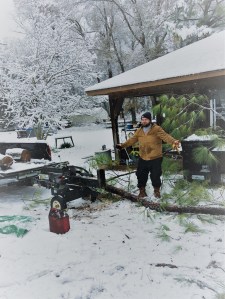
This branch fell just minutes after my son was standing in that spot splitting logs.

How I long for those days when I could tuck everyone in, turn out the lights and sleep soundly because all my chicks were safe inside my own little coop!  How I wish the only danger I thought about or knew about was a bump on the head from hitting a coffee table!

How my heart aches for one more moment of blissful ignorance!

But I can’t live in some imagined water color past.  I have to live in the world as it is.  

So I remind my heart that safe is an illusion-no matter where we are.  Life is not living if it’s only about preserving breath and not about making a difference.

And I let go.  

Over and over and over.

I release them  to be who they were meant to be. 

Even if it costs more than I am willing to give.  

fiona james and julian at james wedding by water

Navigating Grief: Helpful Tips for Interacting With Bereaved Families

I firmly believe that our friends and extended family want to reach out, want to help, want to walk alongside as we grieve the death of our child.

 I am also convinced that many of them don’t because they don’t know how.  

It may seem unfair that in addition to experiencing our loss, we also have to educate others on how to help us as we experience it, but that’s just how it is.

The alternative is to feel frustrated and abandoned or worse.  

So here’s a list of helpful tips (and a great infographic!) for interacting with bereaved families:  

Express condolences and show you care. Don’t avoid me, please!  You cannot make me any sadder.  I need to hear from you.

friends hugging

Refer to my child by name.  Dominic is STILL my son.  He is still part of my story.  But because he’s no longer visible, his name often goes unspoken.  Please talk to me about him, use his name, tell me a story of how he impacted your life or a memory that makes you smile.  It makes me smile too.

Actively listen and be supportive.  It’s hard to listen to someone tell you how much they are hurting and not offer advice or think of ways to “fix” them.  I can tell you from experience that what I need most on my darkest days is for someone to say, “It IS dark.  I’m so sorry.”  Silence is OK too.  Not every quiet moment needs to be filled with chatter.

listening is a postive act

Understand that each family and family member will grieve in different ways.  You may have observed child loss before but what you saw in one family may not translate to the next.  There are no hard and fast rules for this awful journey.  The age of the child, family background and structure, manner of death-all these impact grief.  In addition, mothers and fathers, sisters and brothers all bring their personalities, stage of life, beliefs and experiences to the journey.  There were five of us left behind when Dominic ran ahead.  We were each devastated but expressed it in very different ways.  Nearly five years later, those gaps have widened, not narrowed.

Fathers grieve too.  Sometimes support focuses almost exclusively on the mother.  In part because of a common notion that mothers are somehow emotionally closer to their children than dads.  In part because many men are less demonstrative and may do a good job hiding grief.  Whatever the reason, don’t assume one parent is dealing “better” with the loss than another (mother or father) just because he (or she) is not crying openly.  No one escapes this awful blow unscathed.

bereaved fathers

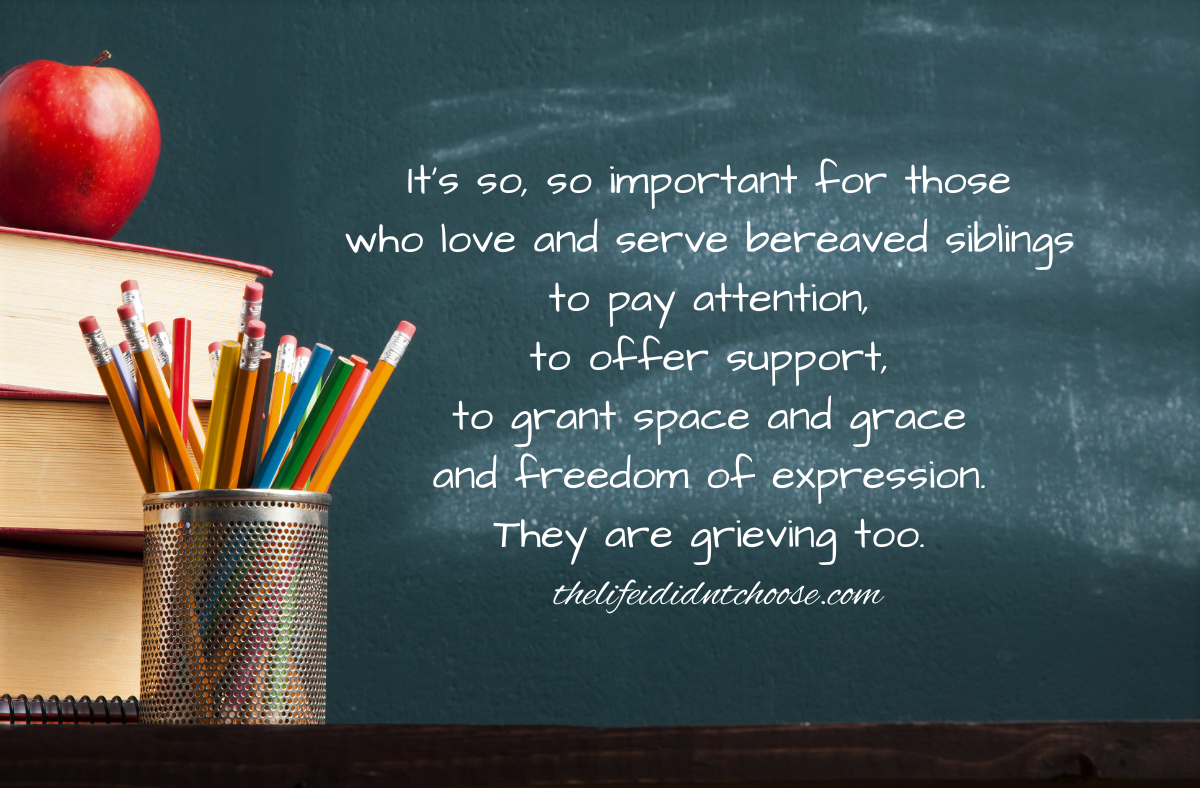
Don’t overlook siblings.  Surviving siblings are sometimes referred to as “forgotten grievers”.  If they are very young, people may think they are relatively unaffected by the death of a brother or sister. If they are grown and out of the home, people may figure that the siblings’ own, very full and very busy, lives keep them preoccupied.  While some of that may be true-to an extent-most surviving siblings are deeply impacted by the death of a brother or sister, regardless of age.  Not only have they lost a member of the family and changed birth order, they have also lost the family they knew, the parents they knew and a co-keeper of memories and secrets.  Bereaved parents are often overwhelmed with grief for their living children as well as the child that is missing. One of the best gifts anyone gave me was reaching out to my surviving children.  It helped my heart to know that they had friends who were supporting and loving them well.

kids cartoon

Be yourself.  People often feel awkward and stiff when approaching a bereaved parent or family member.  That’s perfectly understandable.  The bereaved seem so fragile (are so fragile!) that folks are afraid the wrong word or touch might shatter them into a thousand pieces.  But what your friend or family needs right now is the you they’ve always known and loved.  If you are a hugger, hug!  If you are a storyteller, tell stories (appropriate ones, ones of the missing child).  If you are a cook and cleaner, then cook and clean.  Our family was blessed by our friends doing exactly what they had always done-come alongside in their own special way.  So much had changed in our world that familiar touchstones, familiar routines and familiar faces were a real comfort.

Keep in mind words matter.  Now is not the time to try to satisfy your curiosity about exactly “what happened”.  Loud joking is rarely welcome.  Many bereaved families find it hard to laugh in the first days, weeks, months because it feels like betrayal.  Don’t offer platitudes intended to help them “look on the bright side” or consider that “it could be worse”.  There is nothing worse than burying your child.  Nothing.  Listen and take direction from the person you are comforting.  Follow his or her lead.  And if something less than helpful slips out, own it and apologize.

pencil-drawing-bereaved-mother

It’s never too late to reach out.  NEVER.  Sometimes people stay away at first for lots of reasons.  Or they show up for the memorial service and then fade into the background.  After a bit, even if they want to reach out, they may feel embarrassed by the long absence.  Don’t be.  So many people stop calling, visiting and texting within the first weeks that your outstretched hand of friendship will be a welcome beacon of hope.  If you need to, apologize for your absence.  Be honest.  Admit you were scared or whatever.

Then show up. 

Stick around.

You don’t have to be perfect.  

Just be present.  

bereaved families infographic

Grief Work 2025: A Letter to My Living Children*

I shared this for the first time eight years ago.

Before my mother’s illness and death, before the frighteningly early arrival of our little Captain and his brother, before an overseas deployment, a destructive hurricane, Covid19, my husband’s cancer diagnosis and too many other stressful events to list.

I have watched my kids meet every challenge-sometimes with grace, sometimes with grit, sometimes with both.

They are different people than they would have been if Dominic still walked beside us. They know things their peers can’t even guess.

We all lost so much when we lost Dom. But we still have each other.

And that’s a treasure.

I never thought it possible to love you more than I already did.

But I do.

Your brother’s untimely departure has opened my heart in a whole new way to the glory that is your presence.  It has made me drink you in like water in the desert.

No more do I take even a moment for granted.  Never again will I be “too busy” to listen to you, to hug you, to greet you on the porch when you decide to make your way back home.

I promised you when that deputy came to the door we would survive.

And we have.

beach-and-family-better

I promised you that I would never raise Dominic onto a hallowed pedestal that obliterated his orneriness and only kept track of his laudable qualities.

I pray I have lived up to the promise.

We are changed-every one of us.

I am so very proud of you for continuing to live.  It would have been easy to give up.  It would have been easy to “live for the moment” and give in to hedonism.

You haven’t done that.

You have had to carry more weight than you should.  I am so very anxious to see how you take this awful  pain and weave it into your own stories-how this dark thread helps define who you become and how you choose to impact your world.

You have lent me your strength when mine was waning.

You have checked on me and loved me and borne patiently with me and with one another when it would have been easier to walk away and try to create a life outside this place of brokenness and vulnerability.

I am always cautious when ascribing feelings and words to our departed Dominic-it’s easy to make him say or feel whatever is most convenient since he’s not here to dispute it.  But I am certain of this:  while he would never, ever have wanted us to bear this awful burden, he would be so, so proud of the way we have supported one another in doing so.

Like always, our family has closed ranks and lifted together the weight that would have crushed us individually.

It’s who we are.

It’s who we have always been.

desimones uab family

*I am absolutely convinced that Dominic is very much ALIVE today in the presence of Jesus.  But for now, I’m denied his daily companionship,

Grief Work 2025: Grief is a Family Affair

Child loss is also often sibling loss.  

In addition to their own heartache, bereaved parents carry the heartache of their surviving children.  

The family everyone once knew is now a family no one recognizes.  Hurting hearts huddle together-or run and hide-and it is so, so hard to find a way to talk about that pain. 

There is definitely a time and place for professional counseling.  Many, many families benefit from having a trained individual, outside the immediate grief circle, guide them in exploring feelings, developing coping strategies and learning to live life this side of loss.

But there is also something to be said for arranging casual open-ended activities with surviving siblings, parents and even grandparents where space and a more relaxed atmosphere often leads to honest sharing.

This graphic has lots of excellent suggestions for how to craft such a space.

Not all will be suitable for every family, but every family should be able to find a few that fit.

I’ll add these guidelines that may help your family make the best choice for YOU:

  • Don’t force it.  If you make an offer of an activity and it drops with a thud to the ground, let it go.  You might be able to do it another time.
  • Don’t make it (what my kids like to say!) a “mandatory option”.  There must be no guilt or coercion invading this space.  If one or more of your family members consistently refuse to join in, consider asking a close family friend to take that individual out alone and see what might be going on.
  • If you choose a movie or other story-themed activity, LOOK UP THE PLOT!  I can’t tell you how many times we were sideswiped by a death scene or some other heavy emotional plot twist.  There may be a time when your family is prepared to experience those things together (we can now) but it may not be yet.
  • Mix and match more structured activities with open-ended ones like walks outside, watching the sunset, sitting on the beach, hanging at the pool, playing a game (not too competitive-that will sometimes bring out hidden anger).
  • If you have a family with a broad range of ages you might have to do some things with the littles and some with the older kids.  You can always add one or two activities a month or quarter where everyone (or as many as are available) gets together.
  • If your children, spouse, parent or other close griever begins to talk-let them.  If tears flow-that’s progress!  If ugly feelings are expressed, listen.  Try not to be defensive.  Try to hear the hurt behind the words.  It’s OK to set ground rules like using “I” statements and not blaming.  But don’t shut them out or shut them down.  

These are just ideas.  

Google is your friend and your phone is probably already in your hand or pocket-use it.

Find things that fit YOUR family. 

The only way through is through.  

You have to feel and deal to heal.

selfcare for families

Grief Work 2025: Setting Aside Time to Grieve

One of the trickiest parts of life as a bereaved parent is navigating the space between our surviving children and the giant hole left by the one (or more) who have run ahead to Heaven.

There are so many ways I might cling too hard to what’s lost and not lean hard enough into what continues to bring blessing and beauty to everyday life.

I’ve learned it’s best to find quiet moments in which I can journal the feelings that might be unhelpful or downright hurtful to express to others.

 ❤ Melanie

One of the commitments I made out loud and in my heart the day Dominic left us was this:  I was not going to let his death tear my family apart.  

I was not going to let him become the sainted brother that stood apart and above his siblings.  

I was going to continue to give as much of my time, effort, love and presence to each of the three I had left as I had done when there were four on earth beside me.

I’ve been more or less successful in keeping this promise.

I have no doubt that if you asked my living children, they could give you examples when I’ve failed.  Some days are just too much.  Some events are too hard to attend.

Some moments I am overwhelmed

and undone

and there’s no way to hide it.  

But I’ve learned a few things that help me be present, attentive and joyful for the beautiful things that are happening around me.

One of those is to set aside time whenever possible to “pre-grieve” an upcoming celebration or gathering.

hand-coffee-roosevelt

I allow my heart to feel all the things it needs to feel.  I journal the questions and comments and (sometimes) anger that would otherwise overflow and ruin a moment.  I write to Dominic and tell him how much I miss him, how much I wish he were here and how very hard it is to mark another happy occasion without him.

I mentally rehearse walking in, greeting people, making small talk. 

I think ahead to any big moments that might tap emotions I need to hold in check.  I even plan an “escape route” should I need it. Just knowing it exists has always been enough so far. 

Sometimes I find a song that suits my mood.  

I cry.  

And then I choose a token I can wear or slip in my pocket to remind me that I’ve got this.

I can show up and smile (honestly) because I’ve already loosed the dam of grief and let the stored up torrent flow over the spillway.

I’ve learned the hard way that memories are precious.  I don’t want the ones I’m making now to always be tainted by sorrow and loss.  

Dominic is never far from my thoughts and always in my heart.  

I’m not abandoning nor forgetting him.

I honor him by honoring his siblings.  

Love lives.  

happy birthday balloons no words

Bereaved Parents Month 2025: Sibling Grief Reactions By Age Group

Grieving parents often face the additional challenge of trying to help their surviving children process the death of a sibling.

While there are many factors that influence how a particular child understands and works through his or her grief, age at time of bereavement plays a significant role.

Children’s grief can look very different than that of the adults around them.

And that grief may resurface later on as the child grows and matures, even long after the death of a loved one.

Read the rest here: Sibling Grief Reactions By Age Group

Grieving Siblings: National Siblings Day and Silent Sorrow

Today is National Siblings Day. It’s fun for those of us who haven’t had to bury a brother or sister to post silly photos and memories.

But for those who have lost a sibling today is bittersweet.

Want to know how to love someone who is missing a brother or sister?

Ask them for a favorite memory. Tell them you recognize it hurts. Don’t dismiss their grief and rush to ask about a surviving mother or father.

Love them. Be there.

❤ Melanie

I am always afraid that Dominic will be forgotten.  

I’m afraid that as time passes, things change and lives move forward, his place in hearts will be squeezed smaller and smaller until only a speck remains.

Not in my heart, of course.

Or in the hearts of those closest to him, but in general-he will become less relevant.

But he is not the only one who can be forgotten.  I am just as fearful that my living children will be forgotten.

Read the rest here: The Forgotten Ones: Grieving Siblings

Christmas 2024: Surviving Siblings and Christmas

I first shared this post in 2016 when we had muddled through the first two holiday seasons after Dominic left us and were headed for a third.

Now facing our eleventh, there are some things that have changed a lot (adding grandchildren and losing my mama) and some things that remain the same (the ongoing struggle to balance everyone’s needs and expectations with the reality of sorrow).

I still find the principles I outlined years ago to be the best way to approach the season. We certainly don’t always get it right but we continue to strive to honor one another, to honor the true meaning of Christmas and to honor Dominic.

❤ Melanie

How do I honor the child for whom memories are all I have and love well the children with whom I am still making memories?

That’s a question I ask myself often.

And it is especially difficult to answer for celebrations and holidays, special events and birthdays.

Read the rest here: Surviving Siblings and Christmas