What Does it Mean to “Support” Someone?

Thank God for ADA requirements!

It wasn’t that many years ago when automatic doors were hard to find in places where they most certainly would have been helpful.

I remember approaching doors, arms full of bags and each hand grasping a child, hoping, hoping, hoping some nice person would be there to open it for me.

Many times there was.

Sometimes all I got was a glare and a sidestep from an empty-armed, able-bodied person.

I would manage to push the door open with my elbow but inside I was seething.

“Really?  Really!!  What makes you think getting out of the way is the same as opening the door?” 

(Thank goodness my thoughts are not displayed on an overhead sign! 🙂 )

In this Valley, I’ve discovered there is an emotional counterpart to the woman or fellow who refuses to actively help an overwhelmed mama.

There are those who see the burden I’m carrying and simply step aside.

I guess their rationale is that by not adding to the weight of my load, they somehow make it lighter. 

But it doesn’t work that way.  

As a matter of fact, knowing that my pain is seen but ignored is so much harder than thinking I’m just invisible.

Support means:

1. bear all or part of the weight of; hold up. 

2.  give assistance to; enable to function or act.

Support is going to cost you something.  It’s going to require action, time, energy, effort, commitment and resources. 

when the world whispers give up

I know it’s hard. 

Life is hard.  

But active, compassionate companionship is what knits hearts together no matter what struggle they are facing.  

And hearts that are bound by shared struggle and love are the strongest of all.  

friends uplift the soul little girl


Repost: Vocabulary Lesson: Learning the Language of Grief and Loss

How do you speak of the unspeakable?

How do you constrain the earth-shattering reality of child loss to a few syllables?

How do you SAY what must be said?

I remember the first hour after the news.  I had to make phone calls.  Had to confirm my son’s identity and let family know what had happened.

I used the only words I had at the time, “I have to tell you something terrible. Dominic is dead.”

Read the rest here:  Vocabulary Lesson: Learning the Language of Grief and Loss

Repost: Stronger Together

I’m not making a political statement.

Instead, it’s a very personal truth that I repeat often to myself: We are Stronger Together.

Read the rest here:  Stronger Together

Too Scared to Stay

How many reading this enjoy roller coasters?  Or scary movies? Or action films?

My guess is that most like one or the other or all three.

Why?  Because it’s fun to dip our emotional toe into deep water when we know we can take it out at any moment.

We experience a sort of “high” when the “fight or flight” adrenaline pumps through our veins but our minds know full well that we are in no real danger.

What’s much more difficult is to commit to experience in real time with real people the real emotional roller coaster of hard situations and unending sorrow or pain.

Then people tend to withdraw because they are too scared to stay.

I am so sorry that broken hearts are wounded further when friends or family just can’t bear the pain of watching us hurt and run away instead of walking with us.

leaf heart

They are afraid.  I used to be afraid too.  But I’m not afraid now.

My new bravery was purchased at great cost.  And I don’t want to waste it.

This Valley is teaching my heart to reach out further, quicker, more often and to stick around longer than I was willing to before.

hands-passing-heart

I want to stand with and speak courage to wounded hearts.  

I want to help healed hearts that choose to be brave and commit to walk with those in pain. 

And I am learning to extend grace to the hearts who choose to run away.   

Fear is powerful and I can’t blame them.

But for those who remain, I am so, so grateful.  

always leave people better than you found them


Bereavement: How Other People Can Help

I ran across this infographic awhile ago and LOVE how it puts things in an easy to see and easy to follow format.

It’s a great tool-not only for those grieving the loss of a loved onebut for anyone going through a rough patch.  

bereavement how others can help graphic

I Get It-I Really DO Get It.

I write a lot about what bereaved parents (me!) wish others knew or understood about child loss and this Valley we are walking.  And I am thankful for every person outside the child loss community who chooses to read and heed what I write.

But I want to take a minute to tell those of you who are not part of this awful “club” that I get it-I really do get itwhen you need to put distance between yourself and me or other people walking a broken road.

We all love to think that life is a never-ending ascent toward bigger, better and more enjoyable moments.

Our children are born and we think only of their future, not their future deaths. We plan for retirement never imagining that some dreadful disease may keep us from enjoying that nest egg we so carefully set aside.

So when my son died-or your friend’s daughter died-it was an affront to the way you want to think about how the world works.  It’s an unavoidable reminder that we are not in control, no matter how many plans we make.

Trust me, if I could, I’d run away from it too.  

I’d turn down the other aisle in the grocery store to avoid coming face-to-face with tears. I’d take me out of my own Facebook newsfeed so that the sad posts of recycled photos didn’t upset my morning coffee.  I’d change my pew or enter the sanctuary from another door to make sure I didn’t run into me and have to say something when I had no idea what to say.

I’d let days, weeks, months slip by between phone calls and then convince myself that really, I wasn’t ignoring my friend, I was “giving her space”.

I really, really do get it.

I am a reminder that no one is immune to tragedy.  I am a walking, talking advertisement for the unpredictability of life.  

My life is your worst nightmare.

And who wants to face that?

losing a child is unimagineable every persons worst nightmare

*If you would like to join with me in ministry to bereaved parents and their families, you can make a tax-deductible donation using this link:

https://square.link/u/cNen14Q1

International Bereaved Mother’s Day

International Bereaved Mother’s Day is observed the Sunday before Mother’s Day in the United States.  This year it’s Sunday, [May 4, 2025].

I didn’t even know such a day existed until I was a mom that needed it.

For those of us who have children in heaven, setting aside a day to acknowledge that unique mother/child relationship is helpful.

Traditional Mother’s Day is meant to be a time of celebration.  A day when children send cards or flowers or give gifts to honor their mom and let her know that years spent pouring into their lives are appreciated.

Lots of church pews and restaurant tables are filled with family as children come home to be with mom.

But Dominic can’t come home.

That makes Mother’s Day complicated for me.  

It means that while I am thrilled to spend it with the children who can make it home, there is always a tinge of sadness to the celebration.  And I hate that. Because they deserve a whole-hearted mama. 

So I’m thankful this other day exists. Thankful for a day when I can think about and speak about and embrace the child that won’t be with me next weekend.

Because Dominic is STILL my son.  He is still very much a part of my heart.  And I need to be able to speak that aloud for others to hear.  

Some mamas will be drawing or painting hearts on their hands and writing their missing child’s name inside as a beautiful outward testimony to an inward reality.  Every day we carry our missing child in our hearts.  

international bereaved mothers heart brave and courageous

So if you know a bereaved mama, give her a hug Sunday.

Make time and give space for her to share.  

And then listen, love and lift her up.  

still choose you

Thankful for Support

My grandmother had two sisters who didn’t have any children.  

They were often tapped as babysitters when someone in the family needed to leave their kids home for an extended period of time.  And while my aunts meant well, and certainly were never hateful or cruel, there was a giant gap between what they THOUGHT they knew about children and what they ACTUALLY knew.

So many sentences began with, “If you were my child….”  But I wasn’t.  And the boundaries set between me and my parents had been hashed out through trial and error in real time in real life-not some hypothetical perfect world.

It’s like that in my grief journey as well.  

There have been many well-meaning but woefully uninformed people who offered advice.  Some of it was helpful but most of it was predicated on misinformation and lack of real-life experience.

The MOST helpful advice has come from fellow bereaved parents.

They share their hearts and their hopes, their failures and their victories, their fears and their faith.  They don’t have to-they could simply focus on their own pain and refuse to offer aid.  

But moms and dads a few steps ahead of me in the Valley turn back and hold out a hand and say, “This way.  I’m right here with you.  You can make it!”

And for that I am oh. so. thankful.


buckets to put out flames

Repost: Subtitles

My husband is the child of immigrants.  And even thirty years after coming to America, my in-laws preferred their native Italian to English.

So when we would be in a crowded room, comments flying, I struggled to keep up with what was being said because I didn’t speak the same language.

Sometimes feelings got hurt because what one of us thought we were saying was not what the other person heard.

Read the rest here:  Subtitles

Healthy Boundaries in Grief

As a people-pleasing first born who hates conflict, giving in has always been  easy for me. It’s only later that I wish I hadn’t.  

So for most of my life, setting personal boundaries has been challenging.

But in the aftermath of child loss, healthy boundaries are no longer optional, they are necessary for survival.  

So what are healthy boundaries?

  • Saying “no” without guilt
  • Asking for what you want or need
  • Taking care of yourself
  • Saying “yes” because you want to, not out of obligation or to please others
  • Behaving according to your own values and beliefs
  • Feeling safe to express difficult emotions and to have disagreements
  • Feeling supported to pursue your  own goals
  • Being treated as an equal
  • Taking responsibilty for your own emotions
  • Not feeling responsible for someone else’s emotions
  • Being in tune with your own feelings
  • Knowing who you are, what you believe, what you like

~sharonmartincounseling.com

What does this look like in real life?

  • Not being “guilted” into engaging in social/family/church activities before I am ready
  • Letting family and friends know when I need encouragement, companionship, solitude, help or space
  • Keeping or making doctor’s appointments and staying on top of my physical well-being by sleeping/eating/taking medication/exercising as best I can
  • Participating in what is helpful and life-giving to me when I want to and not because I feel like I have to.  
  • Giving myself space and time to figure out how losing a child impacts my beliefs, my sense of self, my understanding of the world-being honest about questions and about struggles.  If I have to take a break from church for awhile, that’s OK.
  • Expecting support from friends and family to do the work grief requires.  If some in my circle can’t do this, then I’ll put those relationships on hold until I feel stronger. I am not required to live up to other people’s standards.
  • Embracing and acknowledging my own emotions.  Not expecting someone else to “make me better”.  No one can take away the sorrow and pain of child loss.  It is excruciating.  There is no way through but THROUGH.  Face the feelings.  Get help from a counselor if necessary.  Join a support group.  Find safe friends.  But I will not be able to distract myself or ignore the heartache forever.
  • Understand that though I share the loss with others-a spouse, my surviving children, my child’s grandparents, etc-I am not responsible for how they are dealing with loss. I may offer help, may arrange counseling (especially for children), should strive toward an environment where feelings can be expressed-but I can’t work through their loss experience for them.  
  • Pay attention to my own feelings and what triggers grief attacks.  When I can, plan around the triggers.  When I can’t, accept the feelings and go with them.  If I need to leave a venue, leave.

What it doesn’t look like:  

Healthy personal boundaries are not an excuse for bad behavior.  They are not to be used as blunt instruments to bully others into submission or to advance my own agenda against theirs.

My boundaries don’t give me the right to be hateful, hurtful or unkind.  They are not permission to pitch fits, make public displays or belittle others.  

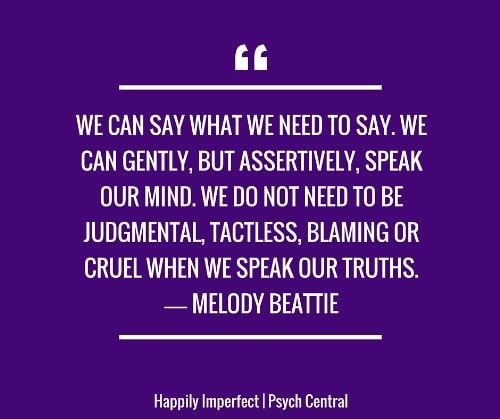
say-what-we-need-to-say-gently

And they are absolutely NOT a reason to plaster hate speech across social media.  If I have a personal relationship issue then it needs to be handled personally and privately not publicly. Vague Facebook statuses that suggest I’ve been offended by half my friend list are off limits.

Establishing healthy personal boundaries is work.  

Already exhausted from grief, the last thing I want is more work.

But if I don’t defend the space and time I need to do the work grief requires I cannot make progress toward healing.

If I don’t limit my interaction with those who are unhelpful or downright hurtful, I will be dragged down further in the mire of sorrow and sadness.

If I don’t purposely pursue physical, emotional and psychological health, grief will kill me.