Navigating Grief: What’s Normal?

Every time I come home from a retreat, a conference or a bereaved parent support group meeting I am reminded again that the range of “normal” in grief-especially child loss-is so very wide.

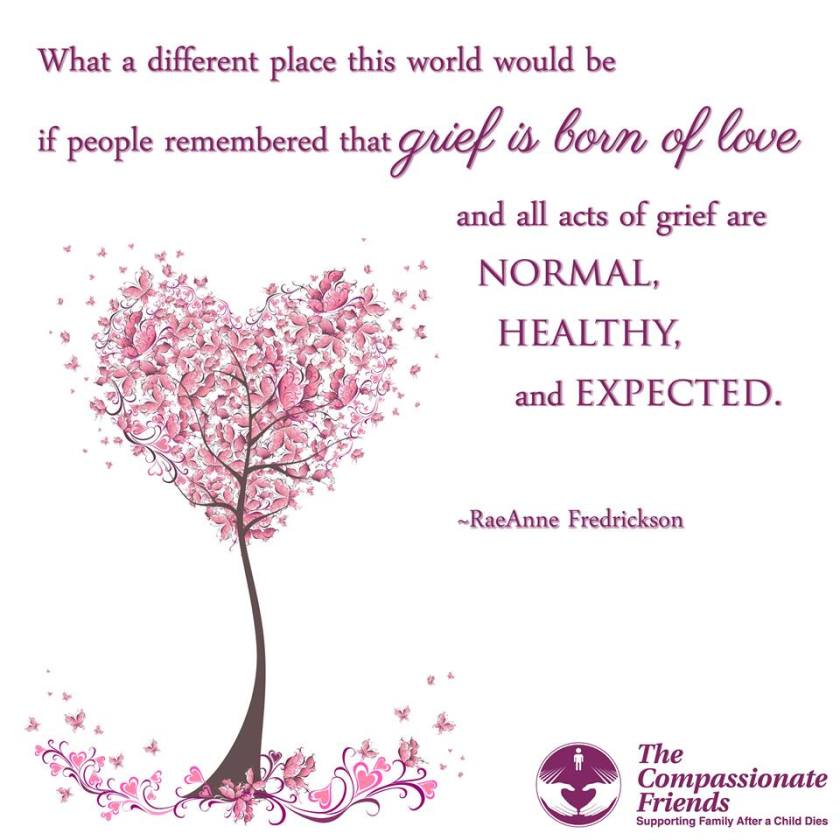
Still crying after a decade? Absolutely normal.

Trouble getting dinner on the table or remembering your child’s school schedule? Yep. That’s normal.

Struggling with crowds, back-peddling on commitments, feeling trapped by phone conversations, shopping when you are least likely to run into someone you know? Perfectly normal.

Our losses range from very recent to decades old and we all acknowledge that our behavior, our feelings, our ability to handle change, nearly every aspect of our lives is impacted by the death of our child.

So if you are wondering if your expression of grief is normal, it is.

Our lives were shattered.

Our hearts were broken.

Picking up the pieces, whatever that looks like, is absolutely, positively normal.

Navigating Grief: Living Forward, Owning My Mistakes

Life is really rather unforgiving, isn’t it?

I can only live forward and there are no do-overs.

No amount of regret can roll back the clock and give me another chance to do it right, do it better or just do it at all.

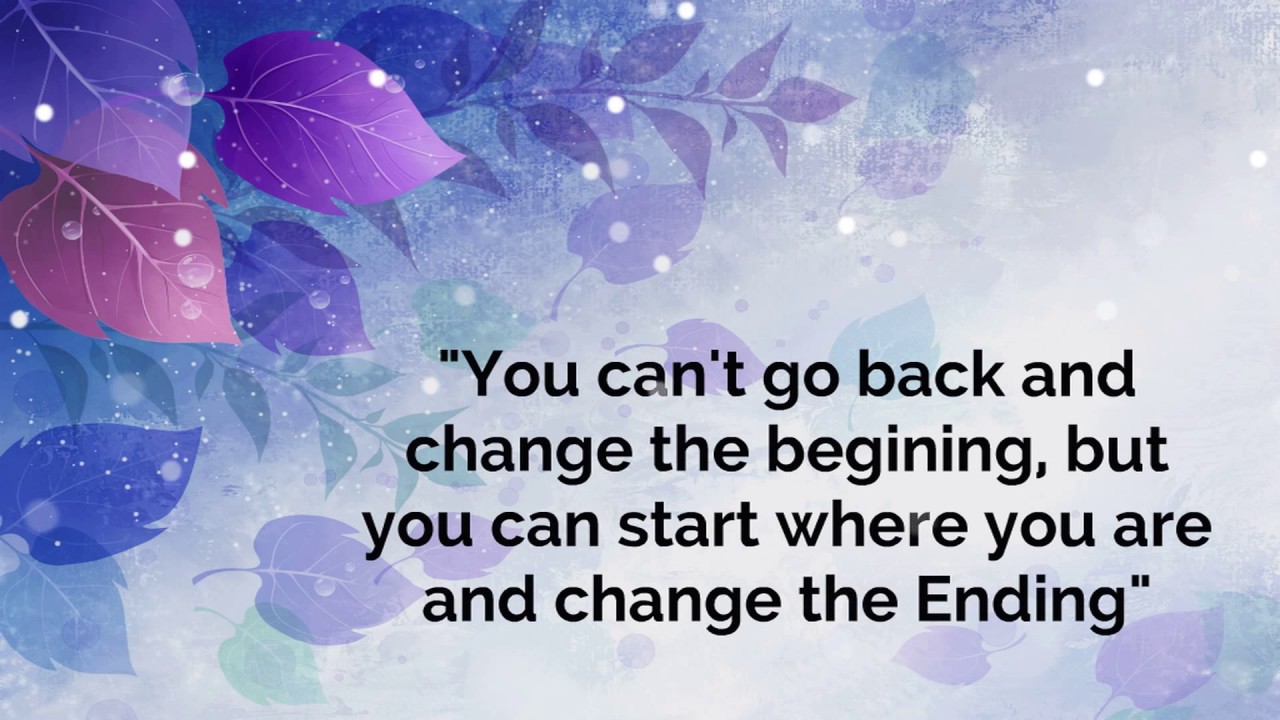
I can’t undo or redo my past.

If I’ve made blunders, hurt hearts, missed opportunities or just plain screwed up, I have to live with that. And other people might have to live with the damage I’ve inflicted.

I need to own that.

But it is not helpful to let regret stop me working NOW to repair, restore and rebuild relationships.

Sometimes my best efforts may be rebuffed.

If I’ve hurt someone’s heart they have every single right to tell me, “No. I won’t let you back in.” I don’t get to establish a timeline for their healing. But if I don’t try to make amends I can be sure the rift won’t be mended.

If someone has hurt me I can choose to look beyond that pain, forgive the offense and commit to begin now, leaving the past in the past, and start fresh.

If so much time has passed that it feels awkward-so what? Embarrassment is a small price to pay for restoration.

So write a letter.

Send a card.

Make a phone call.

Offer peace.

There’s a proverb that’s been spoken by my family for years. It goes like this. A young man asks an old farmer, “When’s the best time to plant a tree?”

The old man answers, “The best time to plant a tree was twenty years ago. But the next best time is now.”

Image result for best time to plant a tree image

I can’t go back and sow seed or plant trees when I wish I had.

But I can start now and plant for the future.

Who knows what kind of fruit it might bear?

Navigating Grief: Time, By Itself, Does NOT Heal All Wounds

Time, by itself, does not heal all wounds.  

But of all the factors that promote healing, there is NO SUBSTITUTE for time–not in the physical world of surgery and broken bones and deep wounds and not in the inner world of  emotional pain and brokenness and sorrow.

Our bodies are made to be amazingly resilient.  

Most people don’t really think of surgery as an assault on the body, but it is.

The surgeon knifes through layers of flesh and tissue that are designed to keep intruders out, mucks about inside, does what he or she came to do, and closes up–hopefully without introducing bacteria into the wound. Some medication may be prescribed to promote healing, control pain and reduce the risk of infection.

Then the patient goes home to recover.

But it is really TIME and the body’s own healing powers that do the lion’s share of the work.

Our hearts and minds can be resilient too.

Frequently, someone who suffers an assault on their emotions may not bear outward signs and symbols to mark what they’ve  been through.  And well-meaning friends and family can forget that healing has only begun and is far from complete.

Sometimes broken people feel pressured to put on a brave face and to stuff their feelings.

For the body, ignoring doctor’s orders to rest after surgery can mean another hospital stay due to complications that might have been avoided if the patient had been given sufficient time to recover.

Emotionally wounded people can end up with complications from pressure to rejoin regular activities and engage society in ways for which they are not yet ready.

It takes TIME to heal from burying a child or any other traumatic loss.

There is no way to rush the healing.  It takes HOURS AND HOURS to think about, respond to and process the feelings that overwhelm anyone who is grieving or trying to cope with emotional upheaval of any kind.

ok to just breathe

So be patient with yourself.

  • Understand that there will be good days and bad days.
  • There will be forward movement and steps backward.
  • Sometimes it will be easy to do something or go somewhere and the next time it might be really hard.

And don’t be afraid to let others know you are still healing.

Deep emotional wounds require great care and an extended period of time to heal if the healing is to be sound and free from unnecessary complications.

You are not selfish to draw boundaries around what you can and can’t do, what you will and won’t allow and where and when you engage with others-you are being wise.  

For those walking with the wounded:  extend grace and be patient.

Thank God you are not bearing this burden and be mindful of placing demands or pressure on the wounded to heal according to a predetermined timetable.

Then support them in their effort to give themselves the TIME they need to heal.

smiling through tears

Navigating Grief: Darkness and Fear

I was afraid of the dark until I was almost forty years old.

My fear was rooted in scary childhood moments and even years of adult experience could not rip it from the soil of my psyche. I never could convince my heart what my head knew to be true: there was nothing in the dark that wasn’t also there in the light.

It was fear, not darkness, that controlled me.

There is great darkness in grief.  So many unanswerable questions, so much anquish, so much pain.

And there is darkness in many other painful, unchangeable circumstances.

The darkness can hide things that I see clearly in the light.  And if I’m not careful, I  can allow the darkness to foster fear and keep me from venturing futher.

In my own strength, depending on my own resources, I am afraid.

But when I call out from my scary place to the God Who made me, I can face the fear in confidence He hears and cares.

When I am afraid, O Lord Almighty, I put my trust in you.

Psalm 56:3 GNT

Sometimes believers in Christ can convince themselves that admitting their world is dark with pain or suffering or questions diminishes the power of God–that it speaks ill of God or that it means God is insufficient to uphold us in our weakness.

If I pretend that I’m never afraid, or that I never experience darkness, I am denying others my aid.

Even worse, I may be shaming them to silence, sending the message that if they are experiencing pain, something is wrong with THEM.

How many people are sitting in our pews with broken hearts and broken lives, afraid to reach out for help because–in addition to the pain of their broken life–they live under condemnation?

Life is full of pain and darkness.  Even for those who follow Jesus.

When I deny that truth, I also refuse to testify to God’s power to help me carry on and give me the courage to face my fear.

God is the God of the day AND the God of the night.  

I do not diminish Him by admitting that I experience both.

He invites me to lean into Him and to hold hands with His children as I journey on, even when it’s dark.

“Christians with this unflinching faith in the sovereign God do not deny grief. But even in their darkest hours, they borrow God’s strength. In their tears and pain they cling to God who will never let them go. What the Savior has done for others He will do for you. When you are shaken, and you know that life will never be the same again, you can trust and not be afraid. You can live in HOPE with the sturdy confidence that God will dry your tears and put you on your feet again.”

“Grief, Comfort for Those Who Grieve and Those Who Want to Help” by Haddon W. Robinson

A Prayer for the Broken-Blessing the Dust

There are many times in my life when I’ve felt small and unseen.

Many times when my spirit sank so low I couldn’t even remember “up” much less find it.

But there is no moment so humbling as the one when I came face-to-face with the undeniable FACT that my son had exhaled for the last time.

Walking into the sanctuary where his body lay still, unnatural and absolutely silent, my heart shattered into even smaller pieces.

So I understand Job’s cry.

I cry out to You for help, but You do not answer me; when I stand up, You merely look at me.

Job 30:20 HCSB

I know what it is to fall to the ground in utter dejection, complete hopelessness and pray, pray, pray that life leaves my body because the pain is unbearable.

That’s one reason Lent is a kind of relief every year.

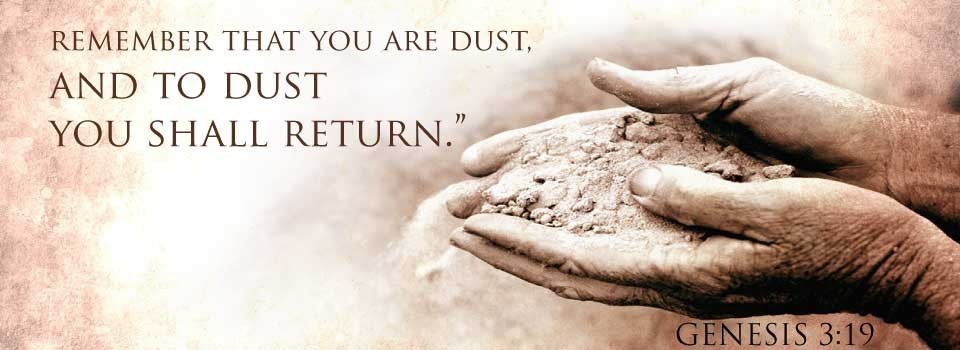
It’s a season when others join me in admitting that from dust we came and to dust we will return.

Image result for from dust to dust

But it’s also a season of hope.

Because while Lent forces my heart to focus on my frailty, it points me toward my Savior.

The One who made us is the One who rescues us.

The One who saves us is the One who sees us.

The One who sees us is the One who longs to comfort us.

I love this blessing by Jan Richardson:

“All those days
you felt like dust,
like dirt,
as if all you had to do
was turn your face
toward the wind
and be scattered
to the four corners

or swept away
by the smallest breath
as insubstantial—

did you not know
what the Holy One
can do with dust?

This is the day
we freely say
we are scorched.

This is the hour
we are marked
by what has made it
through the burning.

This is the moment
we ask for the blessing
that lives within
the ancient ashes,
that makes its home
inside the soil of
this sacred earth.

All those days
you felt like dust,
like dirt,
as if all you had to do
was turn your face
toward the wind
and be scattered
to the four corners

or swept away
by the smallest breath
as insubstantial—

did you not know
what the Holy One
can do with dust?

This is the day
we freely say
we are scorched.

This is the hour
we are marked
by what has made it
through the burning.

This is the moment
we ask for the blessing
that lives within
the ancient ashes,
that makes its home
inside the soil of
this sacred earth.

So let us be marked
not for sorrow.
And let us be marked
not for shame.
Let us be marked
not for false humility
or for thinking
we are less
than we are

but for claiming
what God can do
within the dust,
within the dirt,
within the stuff
of which the world
is made
and the stars that blaze
in our bones
and the galaxies that spiral
inside the smudge
we bear.”

—Jan Richardson, Blessing the Dust, For Ash Wednesday

It’s no secret I am frail, prone to break-even shatter-into the tiniest bits of dust.

But that doesn’t stop my God from gathering what’s left to make something beautiful.

When I find myself face down in the dirt, no strength to lift my head, I remind my heart, “[Do] you not know what the Holy One can do with dust?”

Navigating Grief: When Life Looks More Like Ash Wednesday than Fat Tuesday

Twenty-four hours separate one of the most outlandish global parties and one of the most somber religious observances on the Christian calendar.

Many of the same folks show up for both.

Mardi Gras, “Fat Tuesday”is the last hurrah for those who observe Lent-a time of reflection, self-denial and preparation before Resurrection Sunday.

It’s a giant party-food, fellowship and fun-a wonderful way to celebrate the blessings of this life.

Ash Wednesday, by contrast,  is an invitation to remember that “from dust you came and to dust you will return”.  

None of us get out of here alive.

Even where the Gospel is preached every Sunday there are those who forget this life is hard and often full of pain and suffering.

If your experience so far has looked more like Mardi Gras and less like ashes, well, then-be thankful.

But don’t be deceived.

“From dust you came and to dust you will return.”

For some of us it was a similar twenty-four hour turnaround that upset our world, tossed us headfirst into the waves of sorrow and burned that truth into our hearts, not just dabbed it on our foreheads.

Sometimes I feel excluded from fellowship with the saints because I can’t join in the celebratory spirit of a worship service.

When the hymns only focus on our “victory in Jesus”  my heart cries, “Yes-but perhaps I won’t see the victory this side of heaven.”

When the congregation claps and dances to feel-good songs that celebrate the sunshine but ignore the rain, my eyes swim with tears because I know the reality of a downpour of sorrow.

Because sometimes praise is a sacrifice.

offerings

Church needs to be a place where we can share the pain as well as the promise that Christ will redeem it.

Jesus Himself said, “in this world you will have trouble”.

So I can’t claim allegiance to the Church of the Perpetually Cheerful.

I want to create space for the hurting and broken and limping and scared.

How about a new denomination that acknowledges the truth that life is hard.

Instead of the “Overcoming Apostolic Praise-filled Ministers of Eternal Optimism” I would name it the “Trudging But Not Fainting Faithful.

By all means enjoy the “Fat Tuesdays” in life.

Drink them in, dance, celebrate! 

But remember that it can change in a heartbeat.

And that it HAS changed for many of us.

There is hope.

All is not lost.

But in the meantime, it’s hard.

An Invitation: Lenten Journaling Guide

I don’t know about you, but this year I feel especially beat up.  I’ve had personal circumstances and family circumstances that have once again plunged me beneath the heavy and impenetrable fog of grief. 

It will be an unbelievable twelve years since Dominic ran ahead to Heaven on April 12th. He died the Saturday before Palm Sunday and was buried the Monday after Easter. 

When the dates and days don’t correspond, I feel like most years I experience it all twice.   


Photo by Katie Jewell Photography

And even though I depend on the observance of Lent to walk my heart through this Season of Sorrow, I just don’t have it in me to look up verses, parse their meaning and try to derive some deeper spiritual lesson from any of it. 

But I want something structured to keep my focus from drifting away from the truth which keeps me anchored to hope. 

If that resonates with you, then this Lenten Journaling Guide might be something that helps your heart too.  I’d love to have company.

Before we start, I want to say this:  Lent is not about performance. It is an invitation to walk honestly with Jesus.

For those who carry grief, surrender can feel complicated.

Some days you may have many words. Other days you may have none.

Both are sacred.

This journal is a gentle companion — not a task list. Move slowly.

Skip a day if needed. Linger where the Spirit meets you. You are not behind. You are not failing.

You are walking a broken and sacred road.

Holding space for grief. Pointing toward hope.

~ Melanie

You can download the Lenten Journal Guide here:

https://www.heartacheandhope.org/_files/ugd/fc3456_75aa51759a284a54a56f1316980a3391.pdf

THIS Wednesday is Ash Wednesday and Lent begins on Thursday.

Navigating Grief: What is a Grief Circle?

Our family is navigating deep grief a second time.

In January, my granddaughter, Holly, was gathered into the arms of Jesus after only two weeks on earth-almost to the minute.

Once again my children are plunged beneath the flood of hurt, pain, questions and sadness of child loss.

This time my oldest son and his wife are the center of the circle. Their sons are the immediate next ring. My two other earthbound children, my husband and I are slightly more removed.

But distance from the center does not necessarily indicate the degree to which the same loss might reignite old feelings, trauma, anxiety and unwanted physical, mental and spiritual responses to grief.

A grief circle is comprised of those most closely impacted by a loss.

The world likes to draw it tight because even if it doesn’t represent the reality of those involved. Expanding the circle expands the need for compassion and compassion might well demand action.

Drawing it smaller also gives the curious permission to ask personal questions from those close to the loss (and who may have information they desire) without feeling guilty about asking the question.

May I give a piece of (unsolicited) advice?

Please. Don’t.

Please don’t ask my children how I’m doing.

Please don’t ask my son and daughter, the uncle and aunt of Holly, how their brother is doing or how I am doing.

Please don’t ask my son how his wife is doing. He is also a parent of a child he can no longer hold.

Please don’t assume that being slightly removed from the center of loss means being removed from the pain and damage such a loss entails.

You are welcome to ask me anything. Both my experience and age mean I’m better equipped to answer or not answer as I am able.

I have found that Holly’s brief life and death have impacted me in ways I don’t understand and am still trying to process. She is my grandchild. I don’t love her less because her life on earth was brief.

Since I’ve walked this broken road, I am oh, so aware of what lies ahead for both my son and daughter-in-law as parents, their sons as surviving siblings and my own children as doubly grieved siblings.

I remember thinking when we gathered in the AirBnB the night after the long, long day Holly took her last breath how heavy, powerless and hopeless I felt.

No words could undo what had happened.

No hug could press the pieces of broken hearts back together.

No amount of wishing, wishing, wishing would turn back a clock that had relentlessly brought us forward to this very moment.

My family is knit together in ways and with bonds no one would choose.

We keep our phones with us “just in case”. We share travel itineraries, traveling companions’ contact information, and we answer phone calls from one another no matter where we are or with whom.

The grief circle is larger than most folks would like to admit and it remains intact over time and across distance.

There is no “fix” for grief.

No “getting over” or “past” loss.

There is moving forward and I am so, so proud of my family for choosing that hard path.

But here we are again.

And it is going to take more time than anyone outside our circle would like to admit.

Navigating Grief: No Such Thing as “Safe”

I remember as a  young mother of four working hard to keep my kids safe. 

dominic and siblings little children at nannys

Next to fed and dry (two still in diapers!) that was each day’s goal:  No one got hurt.  

It never occurred to me THEN to add:  No one got killed.  

Because the most outlandish thing I could imagine was one of them falling or touching a hot stove and us having to rush to the emergency room.

Then I became a mother of teens and one by one they acquired a driver’s license and motored away from our home.  

That’s when I began to beg God to spare their lives.

One particularly frightening test was when all four went to Louisiana-my eldest driving and the rest in the van with her.  I made them call me every hour and tell me they were OK.  It was the first time I realized that I could lose every one of them in a single instant should they crash-all my eggs in one basket.

I was glad when that day was over.  Although the irony is they were no “safer” at the end of those 24 hours than they were at the beginning.

Because what I know now, but didn’t know then is this:  There is no such thing as “safe”

Not the way we like to think of it-not the way we add labels to devices, seat belts to cars, helmets to everything from bicycles to skateboards.  Of course we should absolutely take precautions!  Many lives are saved by them every single day.  

But.  BUT…

Life is more random than we want to admit.  And there is no defense against random. 

There is no way to screen for every underlying physical abnormality, no way to drive so well you can stop the drunk or inattentive driver from plowing through a stop sign, no way to anticipate every foolish choice a young person might make that ends in disaster instead of a funny story.

IMG_1795

My first response when Dominic died driving his motorcycle was that I wanted my surviving sons to sell theirs.  They did so out of respect for me.  Neither of them wanted their mama to have to endure a second knock on the door and the same message delivered twice.

I receive it as a sacrifice offered in love from them. 

Because it was.  

Since Dominic left us almost [twelve] years ago, I have had to deal with my desperate need to keep my living children safe. 

And it is a real struggle.

Each child is involved in a career that includes inherent risk.  None of them are foolhardy, but they are exposed-perhaps more than many-to potential bad actors and dangerous circumstances.

julian and branch in snow
This branch fell just minutes after my son was standing in that spot splitting logs.

How I long for those days when I could tuck everyone in, turn out the lights and sleep soundly because all my chicks were safe inside my own little coop!  How I wish the only danger I thought about or knew about was a bump on the head from hitting a coffee table!

How my heart aches for one more moment of blissful ignorance!

But I can’t live in some imagined water color past.  I have to live in the world as it is.  

So I remind my heart that safe is an illusion-no matter where we are.  Life is not living if it’s only about preserving breath and not about making a difference.

And I let go.  

Over and over and over.

I release them  to be who they were meant to be. 

Even if it costs more than I am willing to give.  

fiona james and julian at james wedding by water

Navigating Grief: Seeing Scripture as an Eternal Love Story

When I began to view Scripture as an eternal love story, it opened my heart to the truth that even when this broken world results in pain, sorrow and unbearable (without Jesus) burdens, Love is writing a better ending.  

I don’t have to like what’s happening but I can lean in and grab hold of my Shepherd King who will always guide me through the awful.  

I may ache for a lifetime but will rejoice for eternity.

Does that negate the pain?  

NO!

Does it make it bearable?

YES!