Feel and Deal to Heal

If I touch a hot stove my hand jerks away almost before my mind registers the searing pain.  It’s reflex.  Our bodies were designed to react to and protect us from things that cause pain.

Run away.  Don’t go back.  Set up barricades and warning signs so that others can be protected.

Most of the time, this reaction serves us well.

But sometimes those reflexes keep us from healing.

Anyone who’s had major surgery knows that when the nurses come in the next morning saying, “We’re going to get you out of bed today!”, the last thing you want to do is swing your legs over and stand up.  It HURTS!

We want to avoid what hurts, not embrace it.

So it’s no surprise that when we suffer deep emotional wounds, our first response is to try to run away or bury them or ignore them.  The last thing we want to do is face them.

But if I am to heal, I have to face them.  I have to take hold of each place where the dagger of grief and sorrow and regret and anger has pierced my heart and examine it closely.  I have to decide what to do with it, how to integrate it into my life after loss.

Grief is work!  That is one of the reasons grievers need solitude as well as companionship on this journey.  And that is why grief can’t be hurried along.  It takes a great deal of time to do the work grief requires.

If instead of facing our pain, we try to run away or distract ourselves or numb ourselves with alcohol, food or drugs, we only prolong the process.  Grief will not be ignored forever.

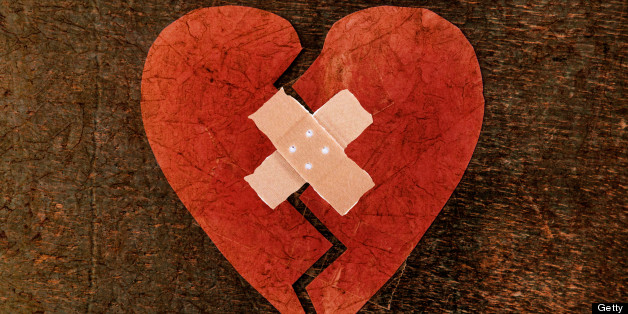
healing doesnt mean damage never existed

We must FEEL what we need to feel.

Then we must DEAL with those feelings-it might mean seeking a professional counselor or a trusted friend.  Online or in-person grief support groups are a wonderful resource. Journaling can help too.  But we have got to acknowledge and work through these feelings.

And then we can begin to HEAL  Hearts that have embraced and made some sense of grief can begin to beat again.  They can begin to love again and feel joy again.  They can learn to carry both sorrow and happiness-to remember and honor the missing child while also honoring and loving family and friends still here.

It’s not a “once and done” exercise.

I have repeated these steps over and over in the soon to be [nine] years since Dominic ran ahead to heaven.  New feelings show up at the door of my heart and I have to choose to feel them, to search for what they mean and why they are here and then allow them to be woven into the fabric of who I am NOW-this side of child loss.

It takes courage and stamina and determination, but it is the only way forward.  

owning-our-story-and-loving-ourselves-through-the-process

Wounded Healers

I’ve come to believe that my wounds and the grace God has provided in my woundedness are not my personal possession.

God did not cause my pain, but He is redeeming it.  He is molding me into a different person than I would have been if Dominic hadn’t run ahead to heaven.  And that person has more compassion and grace and mercy and patience than the person I was before.

If I hide my wounds then I am hiding the hope He has hidden in my heart.  

I won’t do that.  

“Now that we know what we have—Jesus, this great High Priest with ready access to God—let’s not let it slip through our fingers. We don’t have a priest who is out of touch with our reality. He’s been through weakness and testing, experienced it all—all but the sin. So let’s walk right up to him and get what he is so ready to give. Take the mercy, accept the help.”

Hebrews 4:14-16 MSG

Nobody escapes being wounded.  We all ar wounded people, whether physically, emotionally, mentally, or spiritually.  The main question is not ‘How can we hide our wounds?’ so we don’t have to be embarrassed, but ‘How can we  put our woundedness in the service of others?’  When our wounds cease to be a source of shame, and become a source of healing, we have become wounded healers.

Jesus is God’s wounded healer:  through his wounds we are healed.  Jesus’suffering and death brought joy and life.  His humiliation brought glory; his rejection brought a community of love.  As followers of Jesus we can also allow our wounds to bring healing to others.  ~ Henri Nouwen

brennan manning share our wounds

Thank God, the Father of our Lord Jesus Christ, that he is our Father and the source of all mercy and comfort. For he gives us comfort in our trials so that we in turn may be able to give the same sort of strong sympathy to others in theirs. Indeed, experience shows that the more we share Christ’s suffering the more we are able to give of his encouragement. This means that if we experience trouble we can pass on to you comfort and spiritual help; for if we ourselves have been comforted we know how to encourage you to endure patiently the same sort of troubles that we have ourselves endured. We are quite confident that if you have to suffer troubles as we have done, then, like us, you will find the comfort and encouragement of God.

2 Corinthians 1:3-7 PHILLIPS

Sharing our wounds makes us vulnerable.

When we allow ourselves to become vulnerable, we invite others to do the same.

In this community of mutual vulnerability, healing is possible.

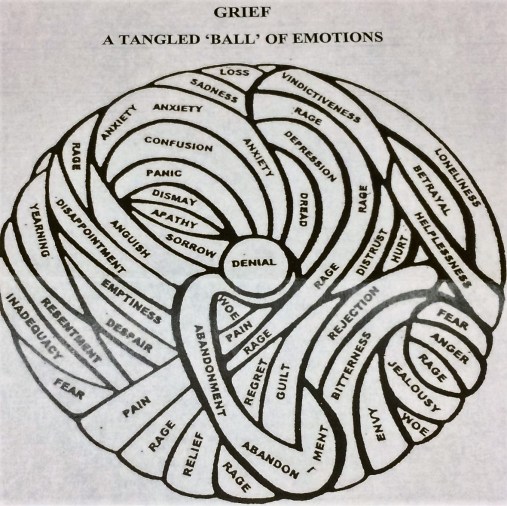
Grief-A Tangled Ball of Emotions

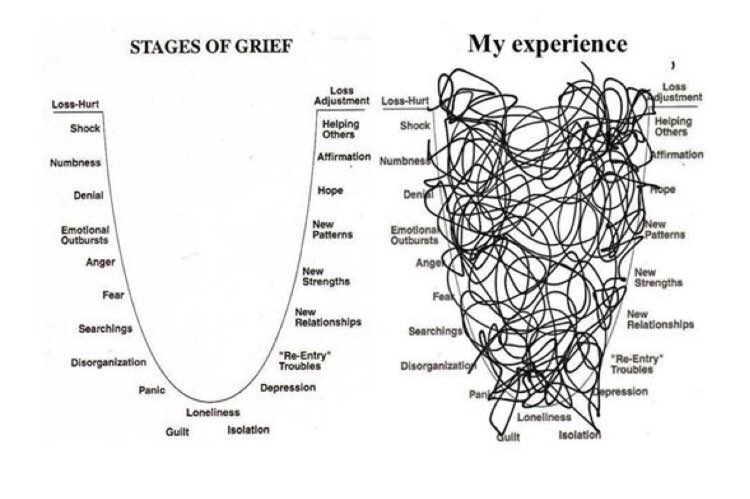
Someone posted this image yesterday on Facebook-they had received a copy in a therapy session and found it a helpful way to picture grief.  

I wanted to share it because perhaps you may find it helpful as well.  ❤

I think it’s one of the very best ways to think about grief for several reasons:

  • First, it accurately represents the many emotions that are part of grief and lossit’s not “just” sorrow or missing-it is so many other things as well.  And some of those emotions catch me off guard because I don’t always recognize them as grief-related.
  • Second, it illustrates how tangled and interwoven these emotions can be. Teasing out where one feeling begins and ends is really hard.  Separating a single emotional strand can be almost impossible.
  • Third, emotions experienced in the grieving process are not necessarily sequential.  There’s no certain charted course through the Valley of the Shadow of Death.  My experience may be very different from yours in terms of what I feel and when I feel it.
  • Finally, the sphere is a perfect representation of how my feelings may circle back around again and again as new experiences post-loss remind me of yet another part of life that has been impacted by my son’s unexpected and untimely death.

grief a tangled ball of emotions.jpg

Stages of Grief ? Nope.

Ever since Elizabeth Kubler Ross published her best-sellling book, “On Death and Dying” both professionals and laypersons have embraced her explanation of the “five stages of grief”.  

The model has been used as a faulty standard to measure grievers’ “progress” for decades.

Trouble is, she got it wrong.  

And it is especially wrong for bereaved parents or anyone who suffers traumatic or sudden death.

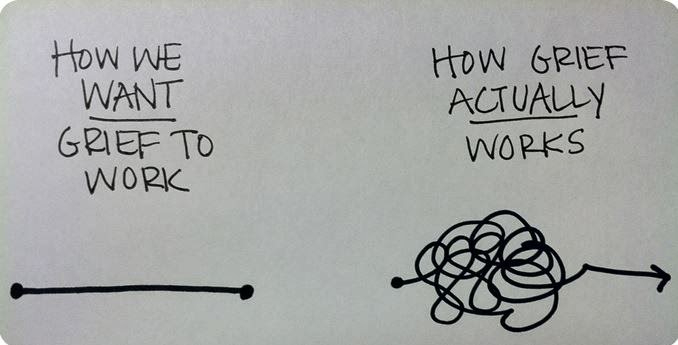
Grief does NOT look like this:

Kubler-Ross

It looks like this:  


mixed stages of grief


Repost: How to Respond When Someone Shares Their Pain

We’ve all been there-we ask a routine question and someone refuses to play the social game.  

We say, “How are you?” and they answer honestly instead of with the obligatory, “I’m fine.  You?”

Suddenly the encounter has taken an unexpected turn.

“Oh, no!  I don’t know what to say,” you think.

Read the rest here:  How To Respond When Someone Shares Their Pain

Repost: What Does Healing Look Like?

As I continue to walk this Valley, my heart asks the question, “What does healing look like?”

Fewer tears?  Check.

More laughter? Check.

Better able to function? Check.

Read the rest here:  What Does Healing Look Like?

Longer Than Three Days: Waiting for Resurrection

It is tempting to forget that there were three long days and nights between the crucifixion and the resurrection beause the way we observe this season rushes us past the pain to embrace the promise.

But it’s not hard for me to imagine how the disciples felt when they saw Jesus was dead.  It was neither what they expected nor what they prayed for.

Read the rest here:  Living Between the Crucifixion and the Resurrection

Healing? Curing? Same Thing?

Healing and curing are not the same thing.

Healing is a process that takes as long as it takes and may never be complete this side of eternity.  It’s a folding in of the hard parts of my story, an acknowledgement of the way I am changed because of the wounds I’ve received.  It involves scar tissue and sore spots and ongoing pain.

healing is not the absence of pain silhouette of sorrow

To be cured is to be free of the effects of disease or injury.  

And there is no cure for child loss.

I will never be free of the effects of burying a child this side of Heaven.

I did not understand the difference until it was my heart bearing an incurable wound.

The thing about healing, as opposed to curing, is that it is relational. It takes time. It is inefficient, like a meandering river. Rarely does healing follow a straight or well-lit path. Rarely does it conform to our expectations or resolve in a timely manner. Walking with someone through grief or through the process of reconciliation requires patience, presence, and a willingness to wander, to take the scenic route.

~Rachel Held Evans, Searching for Sunday

It really IS all about relationship.

Relationship first with the Living God through His Son, Jesus.

The ongoing life-giving ministry of His Spirit calls courage to me as I travel this Valley and sings hope to my heart when I cannot hear anything else.  

He will not leave me in my distress.

He does not abandon me in my darkest hour.

flesh-and-heart-may-fail

But it is also about relationship with others.

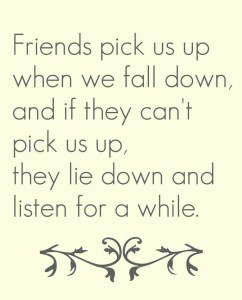
Relationship with those willing to meander with me along this unlit and winding path.  They are the ones who give me courage to carry on. They are the ones who lift me up when I am unable to lift myself and who lie down with me when even their best pep talk is not enough to get me off the floor.

friends pick us up

They have listened to me tell and retell my story.

The first time I told it, I didn’t have a clue what to say or how to say it-what to leave in, what to leave out.  How do you condense a life-sized earthquake to a novel, much less a few sentences?

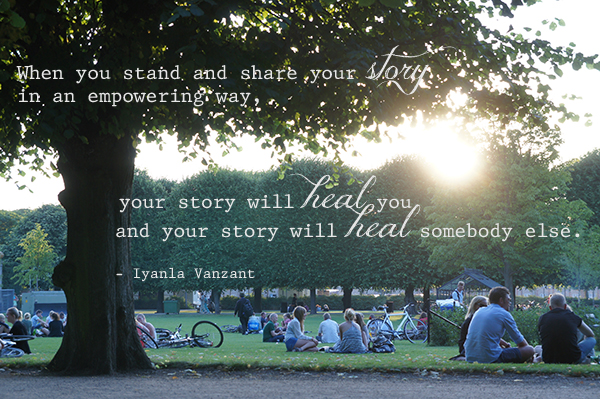
But I find as I practice telling my story, it is healing.

Sometimes it’s as if I speak without my mind being engaged and listening,  I have an “aha” moment-suddenly recognizing a new insight and another place that needs work or has received healing.

I’ve learned that there is no substitute for companionship on this journey.  

My healing depends on the faithful Presence of my Shepherd

AND

the faithful presence of friends who refuse to leave even when it seems we are lost in the wilderness of grief together,

relationshipmatters-pic


Repost: Silence Doesn’t Serve Anyone Well

One of the reasons I write is to share my grief experience with others.

I realized when tossed into the ocean of sorrow that of all the things I had heard about or read about, surviving child loss was never mentioned.

Read the rest here:  Silence Doesn’t Serve Anyone Well

Subtle Disapproval

I mention that today is a hard day to someone who knows my story and the words fall with a loud “thud!”  between us.

I don’t know whether to pick them up or not and she isn’t having anything to do with them.

So I move on to another topic.  Clearly this one isn’t going anywhere.

There are lots of ways to send messages of disapproval.  You can “just say NO” like kids are told to do in anti-drug and anti-bullying campaigns.  You can rant and rave and argue and rail against someone or something in person and on social media.

Or you can just ignore someone when they spill what matters to them like an offering on the ground at your feet.

The opposite of love is not hate.

It’s indifference.

The opposite of support is not opposition.

It’s looking the other way.

Strangers line streets to cheer marathoners on-offering cups of water and words of affirmation.

“You can do it!”  “Keep going!”  “You are more than half-way there!”  “Don’t give up!”

hobbling-runner

And yet many of us are running the race of our lives without a cheering section.

I get ityou are so very tired of the fact that I am so very tired.  I have worn out the welcome mat to the door of your heart.  It DOES get old when I bring the same baggage with me each time we talk.

baggage

Trust me, I’m working hard at unpacking it.  I’m doing all I can to lighten my load and what I ask you to help me carry.

But it is a slow, slow process.

And every time I need help or encouragement and don’t get it, another brick is added to the suitcase.

You might think you are helping me learn to ignore the pain by ignoring my mention of it but I don’t have that luxury.

It’s my heart wound, not yours.  

It’s my child buried, my child not here, my child gone from sight-how exactly should I ignore that?  Which of your children could you put away for a lifetime and forget was ever here?

If you want to help me lighten the load,

let me unpack my pain by telling my story.

If you want me to finish the race strong,

cheer me on.

best way you can help me