Christmas 2025: “He Wouldn’t Want You to be Sad” and Other Myths

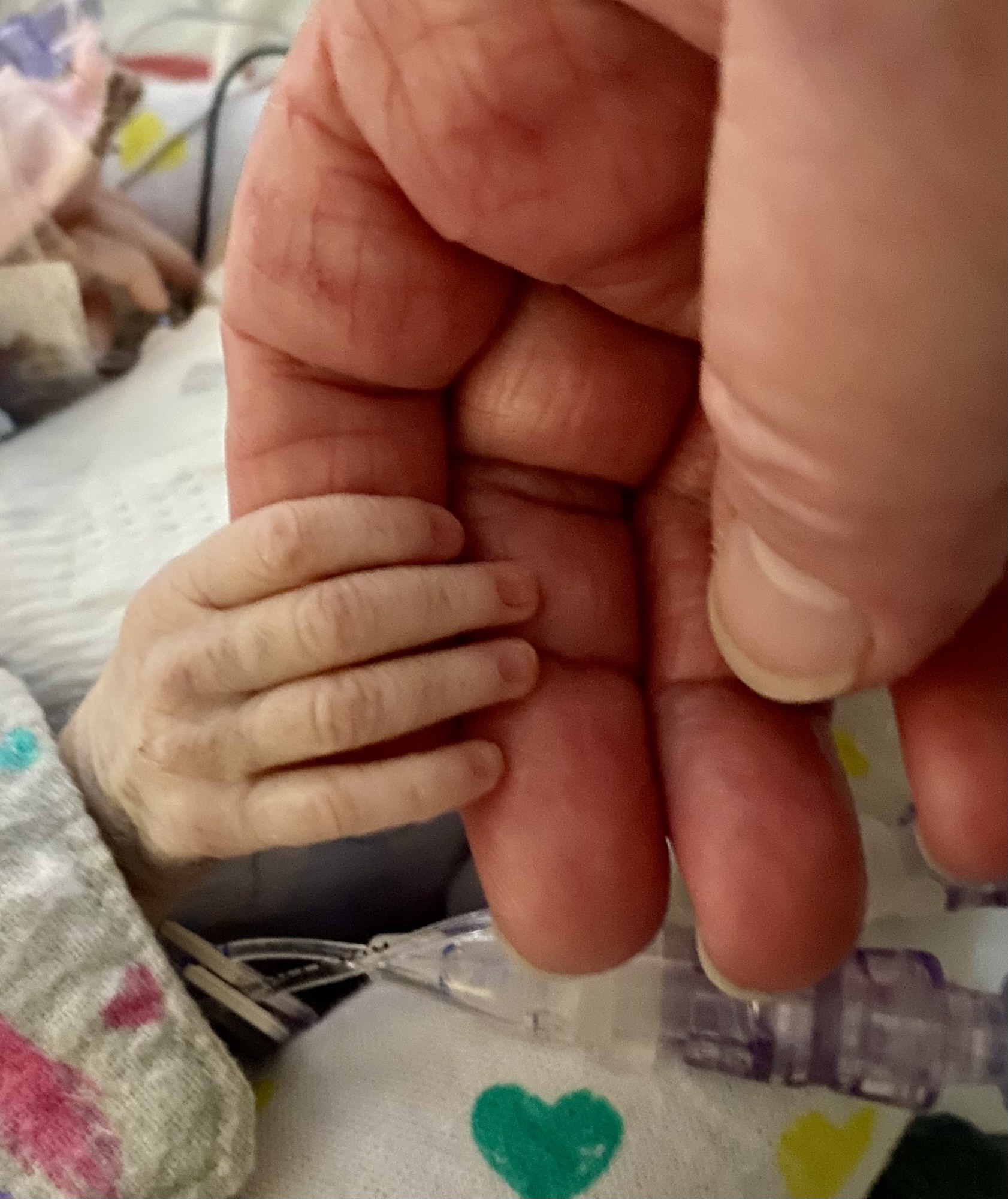
If I got ten grieving parents in a room we could write down fifty things we wish people would stop saying in about five minutes.

Most of the time folks do it out of ignorance or in a desperate attempt to sound compassionate or to change the subject (death is very uncomfortable) or simply because they can’t just hush and offer silent companionship.

And most of the time, I and other bereaved parents just smile and nod and add one more encounter to a long list of unhelpful moments when we have to be the bigger person and take the blow without wincing.

But there is one common phrase that I think needs attention

Read the rest here: “He Wouldn’t Want You to be Sad” and Other Myths

Advent 2025: [Nearly] Blind Trust

It was one thing for Mary, who saw the angel Gabriel and was overshadowed by the Holy Spirit to have confidence that the growing child inside her belly was the Son of God.

It was quite another for Joseph, her betrothed, to take her word for it.

Contrary to the way we like to imagine “the olden days” intimate liaisons before marriage were just as common then as now. Betrothed couples were considered married in every way except physical consummation of the relationship. And not everyone waited for the final ceremony.

Read the rest here: Advent: [Nearly] Blind Trust

Christmas 2025: Why, Oh Why, Is Christmas So Hard???

I first shared this a few years ago when I really thought I should have reached a place in my grief journey where holidays weren’t as difficult as they were at first.

But what I realized then and what has been confirmed since is that every year has new and unique situations that make Christmas a fresh challenge each time.

As the twelfth Christmas without Dominic rapidly approaches, I am pondering the question:  “Why, oh why, is Christmas so hard?” 

I think I’ve figured out at least a few reasons why.

For me, probably THE biggest reason Christmas is hard is because it throws off the routine I depend on to shepherd my heart through a day.  It’s easiest for me to manage when I have at least a couple of hours of quiet time each morning.  I need those silent moments to let my heart feel what it needs to feel, to cry if I must and to orient my thoughts after, once again, “remembering” that Dominic isn’t here.

Changing schedules and extra commitments mean that some nights I stay up later than usual and can’t manage to get out of bed in time to have those hours.  Extra people in the house mean that they may get up and join me in the living room.  While I love the company, I have to be honest and say I would love it more a little later in the day.

Another reason I struggle at Christmas is because all (almost all!) the family is together in one place.  This may sound odd to anyone who hasn’t buried a child, but when every single person I care most deeply for is together, it highlights the space where Dominic SHOULD be but ISN’T. 

Other times of the year we are more or less a full circle-as long as one or two others are missing, it kind of feels like maybe, just maybe, Dominic is away for awhile instead of away for the rest of my life.  But when we are all gathered round the table or the tree or the fireplace, it is oh, so obvious that he isn’t here.

ask me about the empty chair

Buying presents and filling stockings I go down the list.  I have to skip Dom because he won’t be here to open gifts or pull out his favorite candy from a Christmas sock.  I can’t even mail him a package where he is.  So I try to focus on the fact that his Christmas is the best one, because he is with the One Who IS Christmas.

But my heart still hurts, still yearns for one more hilarious morning when the camcorder won’t work or one of our sleepy young adults refuses to roll out of bed while the rest of us are waiting.

We are waiting now for a different kind of morning-one where the light dawns and never dims.

While I am in no way ashamed of the grief I carry-great love means great grief- I do try not to burden others with my tears at events or in places where smiles should rule.  The Christmas season multiplies those occasions and calls for so. much. energy.  just to maintain my “happy face” for the masses.  It’s exhausting in a way only other grievers can truly understand.  

straw that broke camel back

And, of course, we celebrate Christmas in the US during what my grandmother used to call “the dark of the year”.  Shorter days, longer nights means less time outside, less sunshine to generate the feel-good hormones I depend on to get me through each moment.  When the nights come early and linger long, my mind has more time to ruminate on what was and what will never be again.  

Finally, because Christmas is stressful for everyone for different reasons, people can just be a little harder to deal with-less flexible, more impatient, quicker to take offense or give it.  All that emotional drama can overwhelm my heart in a flash-leaving me speechless, crying and anxious.  It’s no one’s fault.  It just is what it is.

For all these reasons-and dozens more-Christmas is an especially difficult time of year for this hurting heart.

So I try to be gentle to myself and to extend the same grace to ME that I extend to others.

I remind my heart that it is perfectly OK to turn down invitations when I just. can’t. go.

I lean into the Promise born in the manger-Emmanuel, God with us-and hold on with both hands.  

christ-in-christmas

Advent 2025: A Willing Heart

It’s easy to read the stories of Zechariah and Mary, both visited by the angel Gabriel with unlikely and hard-to-believe messages, and wonder why Zechariah was struck dumb when he asked a question but Mary was commended.

The difference is heart attitude.

26-28 Then, six months after Zacharias’ vision, the angel Gabriel was sent from God to a Galilean town, Nazareth by name, to a young woman who was engaged to a man called Joseph. The girl’s name was Mary. The angel entered her room and said, “Greetings to you, Mary. O favoured one!—the Lord be with you!”

29-33 Mary was deeply perturbed at these words and wondered what such a greeting could possibly mean. But the angel said to her, “Do not be afraid, Mary; God loves you dearly. You are going to be the mother of a son, and you will call him Jesus. He will be great and will be known as the Son of the most high. The Lord God will give him the throne of his forefather, David, and he will be king over the people of Jacob for ever. His reign shall never end.”

34 Then Mary spoke to the angel, “How can this be,” she said, “I am not married!”

35-37 But the angel made this reply to her—“The Holy Spirit will come upon you, the power of the most high will overshadow you. Your child will therefore be called holy—the Son of God. Your cousin Elisabeth has also conceived a son, old as she is. Indeed, this is the sixth month for her, a woman who was called barren. For no promise of God can fail to be fulfilled.”

38 “I belong to the Lord, body and soul,” replied Mary, “let it happen as you say.” And at this the angel left her.

Luke 1:26-38 PHILLIPS

Zechariah was a priest who had studied the Torah and should have understood the sovereignty of God. He didn’t ask a question about how Gabriel’s prophecy would come true, he asked for proof that it WOULD come true.

He questioned God’s character and faithfulness.

Mary was a poor young woman who was (most likely) unfamiliar with Scripture except what she had heard in the synagogue.

She knew how babies were made and asked a very practical question.

She wasn’t suggesting God COULDN’T do it, she simply wondered HOW He would do it.

It is portrayed so sweetly in Christmas plays and Christmas movies:

Mary bowing her head in response to the angel Gabriel’s announcement that she has been chosen to bear the Savior.

I don’t know what went through her mind before she answered.  I’m not sure she had a clue what submission to God’s will would look like as it played out across the months and years.

I only know that she was willing.

And God honored her willingness to bend her knee and her heart regardless of the unknown cost.

I’m not as noble as Mary.  I didn’t answer quickly when God allowed my life to be turned upside down. I kicked and screamed and resisted as long as I could.

But who can fight Almighty God?

How can I carry on if I resist the Only One Who can carry me?

My heart still balks.

It. Is. Still. So. Very. Hard.

But I bow my head and heart each morning and ask for the grace to make it true:

“Behold, I am the servant of the LORD; let it be to me according to your word.” ~Luke 1:38

hand-coffee-roosevelt

QUESTIONS:

  • I know most of the people reading this are bereaved parents. While Mary was indeed “highly favored” the role for which she was chosen was one of heartache as well as honor. If you knew then what you know now, would you have still chosen to bear and love your child?
  • It is absolutely OK to bring our questions, doubts and fears to God. Do you see the difference between Zechariah’s and Mary’s questions? Or do you think there was a difference? Why or why not?
  • Have you reached a point of submission regarding the loss of your child? If you have, how did you get there? If you haven’t, what lament do you need to offer up to God so His grace and strength can fill your heart?
  • It’s easy to read Bible stories like make-believe fairy tales and discount the flesh and blood humans who lived them in real time. Does it help your heart hold onto hope to realize that none of them could see the end from the beginning? Does it encourage you that they were able to rest in the Lord’s faithful and unfailing love? Why or why not?

PRAYER:

Father God,

Oh, how I long for Mary’s faith! How my heart yearns to be always willing, always wanting to let You do whatever You deem good and right. But I balk at giving up control-even as I admit I have no control-to You or anyone else.

I am often dismayed and even angry at the things You allow. I am distraught that You don’t intervene when You most certainly can and I think You most definitely should.

Help me submit willingly to Your plan. Help me wait patiently for the fruit of obedience. Give me strength to endure even when the road is long and the path inky darkness.

You are Faithful and True. You are Light and Life. Help me hold onto that truth and rest in Your goodness and love.

Amen

Christmas 2025: Surviving Siblings and Christmas

I first shared this post in 2016 when we had muddled through the first two holiday seasons after Dominic left us and were headed for a third.

Now facing our twelfth, there are some things that have changed a lot (adding grandchildren and losing my mama) and some things that remain the same (the ongoing struggle to balance everyone’s needs and expectations with the reality of sorrow).

I still find the principles I outlined years ago to be the best way to approach the season. We certainly don’t always get it right but we continue to strive to honor one another, to honor the true meaning of Christmas and to honor Dominic.

❤  Melanie

How do I honor the child for whom memories are all I have and love well the children with whom I am still making memories?

That’s a question I ask myself often.

And it is especially difficult to answer for celebrations and holidays, special events and birthdays.

I’ve probably had it a bit easier than many bereaved parents.  

My children were all adults when Dominic left us for Heaven.

We have strong relationships and a track record of talking things through.  So I can ask them about what is helpful to them and tell them what is hard for me.  We all acknowledge that we are finding our way in the dark and that changing circumstances make it important to keep the lines of communication open.

We are experiencing our ninth set of holidays this year and have yet to establish a pattern or routine that works every time.

But here are some things we are learning together-some things my children are teaching me about surviving siblings and Christmas:

  • Parents shouldn’t try to hide their grief.  This one is hard.  As moms and dads we want so badly to create a safe world for our children-even our adult children!  Yet we know by painful experience that it is impossible.  When I try to hide my grief (which I cannot do successfully) I’m adding stress to an already stress-filled situation.  That grief is going to escape somewhere-if not in tears, then in raised voices, impatient looks and short tempers.  Children (even very young children) know that you are sad.  Let them know by your example that it’s OK to be sad.  Share your heart (in age-appropriate ways) and by doing so, give them permission to grieve as well.
  • Don’t force your child to grieve the same way you do.  Some children find it easier to be open about emotions than others.  The outward emotional expression of grief is different in each person.  For some it looks like what we expect: tears, sadness, sorrow. For others it may look like anger or denial or an unwavering commitment to “keep everything the same”.  Some children become very anxious about the safety of other family members. Some may remain stoic-don’t force emotional responses. Do some reading/research on grief in children and be prepared for the different ways a child may express their pain.
  • Ask you child(ren) how they feel about certain events/traditions/remembrance ideas. Even young children may have strong opinions about what feels good and what feels awful.  It’s tough to find a balance among competing needs but at least knowing how different family members are experiencing the holiday gives parents an idea of how it might be accomplished.  Sometimes surviving siblings can help parents find a creative solution to the quandary of how to honor the missing child and how to bless surviving children.
  • Don’t require that your child(ren) participate in every event or gathering. This is especially helpful for older children-but parents should be sensitive to the young ones as well.  Give your child(ren) permission to say, “no” if they don’t want to be part of a particular event. Some parents want to do balloon releases or light candles at a special service for their missing child. What’s healing for the parent may not be healing for a surviving sibling. That’s OK.  Do the same for family gatherings.  Don’t force a sibling to contribute a “favorite memory” or “story” during a family memorial time.
  • Grant space and remain flexible.  Things that sound like a good idea while still far off on the calendar can feel overwhelming as the day approaches.  Sometimes no matter how much I WANT to do something, I. just. can’t.  It’s the same for surviving siblings.  Be gracious and allow for changing feelings/circumstances.  They may truly wish they could commit or participate but realize that when the day is here, they just don’t have the emotional energy to do it.
  • On the other hand, be alert if a child withdraws completely.  Withdrawal may be a silent scream for help.  The pain may have become too great to process but the child doesn’t know how to ask for help.  You are the parent.  You can’t “fix” your child.  But you can take him or her by the hand and lead them to someone who can discern the best way to give them the skills to cope with the loss of their sibling.
  • Affirm your living child(ren).  Let them know that you love them in ways that are most meaningful to them.  Every person has a unique “love language”-a preferred way to be loved.  Learning what speaks to your child(ren)’s heart helps to ensure that they don’t feel forgotten or overlooked even as you grieve the child that is missing from your family circle.
  • Express appreciation for your child(ren)’s continued support for your own grief. My kids are a vital part of my grief support system-just as I am for them.  We all love Dominic and our hearts all hurt and miss him.  I am thankful every minute of every day that they listen to me, let me cry and love me through hard moments.
  • Understand that sometimes your surviving child(ren) might need to leave the missing sibling behind or set him or her aside for an event or celebration.  It’s hard to remain in the shadow of “the one gone before”.  They may not want that special day to be referenced as “so many days/months/years since we lost ______”.  Of course our mama or daddy hearts can’t help but think of it that way!  BUT-this is THEIR day, THEIR moment.  Let them have it.  It takes nothing away from your love for the missing child to affirm and lavish love on the child you can still hold.
  • Remember, that just like for you-each year may be different.  What works one time may not work this time.  Extend, and be willing to receive, grace  

I am trying hard to love and honor and support the children still with me and also make room for Dominic, who lives in our hearts.

It’s a delicate balancing act on a spiderweb of intersecting strings-I’m still learning and it’s hard.  

But love is ALWAYS worth the cost.

Christmas 2025: Inviting Grief to the Table-Holiday Host Etiquette

Spending holidays with friends and family while grieving is hard. No one is really comfortable-neither the bereaved nor those hosting them.

But there are ways to welcome grief to your table, to pave the way for the broken and bruised to join you, if they are able.

Here’s something that’s been going around social media circles this holiday season and offers advice on hosting the bereaved this Christmas.

❤  Melanie

Holiday Host Etiquette by Sarah Nannen

(Emphasis and paragraphs added)

“If you’re inviting someone to your home and they’re grieving, be sure you’re inviting their grief to attend, too. It will be there, anyway.

Read the rest here: Inviting Grief to the Table: Holiday Host Etiquette

Christmas 2025: What Grieving Parents Want Others to Know

People say, “I can’t imagine.“

But then they do.

They think that missing a dead child is like missing your kid at college or on the mission field but harder and longer.

That’s not it at all.

It isn’t nostalgia for a time when things were different or better or you talked more: it’s a gut-wrenching, breath-robbing, knee-buckling, aching groan that lives inside you begging to be released.

There is no smooth transition up the ladder of grief recovery so that you emerge at the top, better for the experience and able to put it behind you.

We’ve all heard the much touted theory that grief proceeds in the following stages:

  • denial
  • anger
  • bargaining
  • depression
  • acceptance

And people (who haven’t experienced grief) tend to think it’s a straight line from one stage to another, gradually going from bottom to top and then on with life.

But it just isn’t true.

Reality is, these “stages” coexist and fluctuate back and forth from day to day and even hour to hour.

Grief remakes you from the inside out.

Losing a child has made me rethink everything I believe and everything I am.  It has changed and is changing my relationship with myself and with others in ways I couldn’t imagine and often don’t anticipate.

And it is hard, hard work.

Life around us doesn’t stop.  Grieving parents return to work, continue to nurture their surviving children, keep getting up in the morning and taking care of daily details.

We are doing all the things others do, but we are doing them with an added weight of sorrow and pain that makes each step feel like wading through quicksand.

We want you to know we are doing the best we can.

Life without my child is like having a leg amputated–I am forced to learn to manage without it, but everything will always be harder and different.

And it will be this way for the rest of my life.

The one thing a grieving parent DOESN’T want you to know is how it feels to bury your child.

I don’t want anyone else to know what it means to leave part of your heart and a chunk of your life beneath the ground.

“But please: Don’t say it’s not really so bad. Because it is. Death is awful, demonic. If you think your task as a comforter is to tell me that really, all things considered, it’s not so bad, you do not sit with me in my grief but place yourself off in the distance away from me. Over there, you are of no help. What I need to hear from you is that you recognize how painful it is. I need to hear from you that you are with me in my desperation. To comfort me, you have to come close. Come sit beside me on my mourning bench.”

Nicholas Wolterstorff   LAMENT FOR A SON

Christmas 2025: 25 Ways to Bring Hope to the Brokenhearted at Christmas

This is the twelfth Christmas without Dominic. There really are no words to describe the intersection of holiday cheer and another milestone in this journey of child loss.

I’m not sad all the time-far from it. Often I am very, very happy.

But I will never stop missing him, missing the family we used to be and missing our blissful ignorance of how quickly and utterly life can change in an instant.

And I will never outgrow the need to have others remember him as well, to encourage my heart and the hearts of my family members and to help us make it through another year, another Christmas. 

I’m certain that for some of my family and many of my friends, they are less and less aware of his absence.  That’s completely natural and understandable.  

But for me, his absence looms just as large THIS Christmas as it did that FIRST Christmas.

Even if you do realize how hard it is for grievers during the holidays, you might not have any idea how to show you care.

I came across this list originally published Family Life Today that gives 25 ideas to give holiday hope to the grieving and wanted to share it because I think it is wonderful.

I can promise you that any hurting heart would be delighted to have a friend or family member reach out in one or more of these ways. 

25 Christmas Gifts or Remembrances for the Brokenhearted

1.  A tree that can be planted in the family’s yard in memory of the loved one (or a gift certificate to a nursery that can be used to purchase a tree in the spring)

2.  Bibles, Christmas Poinsettias, or library books given as memorials

3.  Memorials to the local church or charities

4.  Home videos of the loved one (especially ones of activities that the family may not have)

5.  A scrapbook filled with pictures of the loved one

6.  Special Christmas ornaments (for example, if the child played the piano, see if you can find an ornament in the shape of a piano)

7. Books such as Streams in the Dessert and When Life is Changed Forever

8.  A personal item that would become a memento about the loved one’s personality or gifting

9.  Gift certificates to a cabin or lodge, or to a place that the loved one once enjoyed

10. An original poem about the deceased

11. A journal from friends and family with written memories about the deceased

12. A written tribute to the deceased (The Best Gift You Can Ever Give Your Parents by Dennis Rainey and David Boehi, explains how you can do this.)

13. Addressing their Christmas cards or notes

14. Joining them in holiday shopping or doing the shopping for them

15. Asking if you can help decorate their home for Christmas

16. Sharing homemade Christmas cookies

17. Arranging family photographs in albums

18. Inviting them to decorate a gingerbread house

19. Picking them up for Christmas services at church and holiday get-togethers

20. Helping them shop for that “perfect gift” that they can give to others in memory of their loved one

21. Decorating a small tree with ornaments that have special memories of the loved one

22. Helping them write holiday memories

23. Organizing a candle-light memorial for close friends and family

24. Having a family-time of singing some of the deceased’s favorite Christmas carols and hymns

25. Giving the brokenhearted blank journals to write Bible verses that remind them of God’s presence, such as 2 Corinthians 1:3-4a and Jeremiah 29:11

Advent 2025: Surprised By God’s Answer

We left Zechariah yesterday just stepping up to the Altar of Incense.

I like to put myself in the story and imagine him slightly trembling at this once-in-a-lifetime opportunity to creep closer than all but a handful of Israelites to the Holy Presence of God Almighty.

Perhaps he was already a little afraid.

Read the rest here: Advent: Surprised By God’s Answer

It’s Not *Just* Christmas

Several times this week I’ve had messages or seen posts from bereaved parents feeling like failures because Christmas is STILL hard, even many years after their child went to Heaven.

Some of them heaped the guilt on themselves but many were responding to a family member or friend who felt compelled to tell them they should “be better by now” or “remember their other children” or “not ruin the holiday for everyone else”.

Other broken hearted parents have shared that they actually felt stronger and better able to face Christmas in years past but this year is hitting differently.

For them, it might be because Christmas is never JUST Christmas.

We come to this season with memories and emotional baggage of a lifetime. And for bereaved parents, the heaviest load we carry is our child(ren)’s absence. We also bear the additional burden of this particular year’s challenges, losses, physical and emotional stress and whatever lesser, but also energy intensive, cares and responsibilities we may have.

So I’d like to encourage my fellow road weary travelers.

Be gentle with yourself.

Take care of yourself first (when possible-I know littles make that much harder). You cannot pour from an empty cup.

Have honest conversations with those that matter most to you and limit conversation with those that only make you sadder and more stressed.

If you are concerned about your earthbound children, now is a perfect time to take them aside-one on one- and let them know that if it had been THEM, they would be equally grieved and missed.

Remember that saying “no” is a complete sentence. You don’t have to make excuses or satisfy someone else’s curiosity.

If you are at your limit for making merry, don’t.

There is no moral imperative that Christ’s birth be celebrated at all (although I think it’s a beautiful tradition). You have not failed Him or anyone else if you can’t participate in all the church activities this time of year.

This is the twelfth Christmas for us after Dominic ran ahead to Heaven and it’s a tough one.

For the first time since the first one, I’ve been unable to do even one thing to get ready or incline my heart toward anything like a “regular” Christmas.

My father suffered a major stroke in September and I have been at his home with him since then. My oldest son is expecting his third child and his wife is having complications that guarantee this little one will make an early appearance. Every member of my family is in different places and we are reduced to short phone calls and text messages for connection.

I would usually at least have a lovely pine scented candle to light each dark morning and evening but my father can’t tolerate the smell. So even this one ritual has been denied.

I’m trying desperately to get care lined up for my dad while worrying about the ever changing status of my DIL and granddaughter. The internet is slow, cell service is worse and I spend way too much time just attempting to contact people.

My father refuses to go anywhere for Christmas and I will, undoubtedly, be with my son’s family by then if the baby comes.

I’m sharing all that to say this: Every other challenge and burden is heaped on top of the already unbearable weight of missing Dominic. I’ve been barely dragging myself through each day.

So I’m taking my own advice.

I talked to my family and together we’ve agreed that we are streamlining and eliminating everything except what’s necessary for the grandchildren to have Christmas. The adults are fine.

I love my father but he is in his right mind (despite the stroke) and if he wants to be alone at Christmas, that’s his choice.

I’m putting on my stretchy pants and enjoying whatever holiday cheer my husband, my children and I can muster as we (hopefully) bask in the glow of a tiny new life.

So if you are struggling, dear heart, find the way forward that lifts as many burdens as you can.

Refuse to take on another person’s baggage.

Jesus came so that we don’t have to carry this alone.

He is here-Immanuel-God With Us.