Lessons in Grief: Am I Normal?

Believe me, no one wonders more than I if the things I’m feeling, the things I’m doing and the rate at which I am healing is “normal”.

I belong to a couple of bereavement support groups and a recurring theme is, “Am I crazy?  Is this the way it is supposed to be?”

Sometimes grieving parents wonder these things because of their own misgivings.

But often, we question our feelings and experience because of external pressure.

And that is unfortunate and unfair.

When a mom brings her new baby home from the hospital, people are quick to remind her that life “will never be the same”.

She is encouraged to seek advice and help from friends and family and given space and time to figure out this new way of being.  As the years pass, she might express frustration and concern over the challenges of going back to work, sleepless nights, feeding issues, potty training, and dozens of other, everyday struggles that result from welcoming this little person into the family.  And that is just the beginning. 

No one thinks it strange that the ADDITION of a child is a life-long adjustment.

So, why, why, why is it strange that the SUBTRACTION of a child would also require accommodation for the rest of a mother’s life?

My heart grew larger when Dominic was born and the space that is his cannot and will not be filled by anyone or anything else.

I am learning each day to work around this empty spot.  I am becoming stronger and better able to carry the weight of grief that I must bear.

I can do many of the things I used to do before the only place I could visit Dominic was at the cemetary.

But I have to do them differently.  I need more help.  It takes more time. And sometimes I find after I plan to go somewhere that I am just not able to go after all.

I will never “get over” burying my son.

There will always be another mountain to climb, another loss to mourn, another hurdle to clear in this grief journey.

Dominic is part of me.  That didn’t change when he went home to be with Jesus.

The absence of his presence is EVERYWHERE.

And just for the record–missing the child I love for the rest of my life is perfectly normal.

We ALL Need a Little Affirmation Now and Then. Yes, Your Grief is Normal.

Today, five other bereaved moms will join me for a weekend retreat where we will share our stories, our children, laughter and tears.

Each of us brings something unique to the experience and each of us will walk away with something different to ponder in our hearts.

But one of the things I’ve discovered over and over when bereaved parents get together is this: we ALL still (even after years, decades) need affirmation that what we are feeling, thinking and struggling with is absolutely, positively normal.

❤ Melanie

Do you want to know one of the most repeated questions in grief support groups?  

It is, “Am I normal?”

In the midst of great loss,

in the middle of reconstructing a life that includes a giant hole,

while struggling to place one foot in front of the other,

parents who have buried a child are often worried about whether what they feel and how they act is “normal”.

Grieving a child is a complex and life-long process as I wrote about here: Am I Normal?

Ten Years: Yes, Dear Heart, You ARE Normal

Do you want to know one of the most repeated questions in grief support groups?  

It is, “Am I normal?”

In the midst of great loss,

in the middle of reconstructing a life that includes a giant hole,

while struggling to place one foot in front of the other,

parents who have buried a child are often worried about whether what they feel and how they act is “normal”.

Grieving a child is a complex and life-long process as I wrote about here: Am I Normal?

STILL Nothing “Normal” About It

I first shared this post in 2016 when I deeply resented anyone trying to tell me there would eventually be a “new normal” to this long road of sorrow and missing.

Since then I would say that I can concede there is a kind of “normal” that eventually takes over a life-even a life shattered by loss.

No matter how tempting it might be to climb under the covers and hide away in my room, biding time until it’s MY time, I can’t.

And little by little, the ordinary (and extraordinary) habits, pressures and circumstances of walking in the world require more and more of my attention forcing me to sequester Dominic’s absence to a part (instead of the whole) of my waking existence.

But I will tell you today-over nine years later-that there is STILL absolutely, positively NOTHING “normal” about my beautiful boy being here one moment and gone the next.

❤ Melanie

❤ Melanie

Something you hear early on in this grief journey is that one day you will find a “new normal”.

I hate that phrase.

Because while I have certainly developed new routines, new ways of dealing with life, new methods for quelling the tears and the longing and the sorrow and the pain-it is NOT normal.

Read the rest here: Nothing “Normal” About It

Dear Griever, You Are Absolutely Normal.

Do you want to know one of the most repeated questions in grief support groups?  

It is, “Am I normal?”

In the midst of great loss,

in the middle of reconstructing a life that includes a giant hole,

while struggling to place one foot in front of the other,

parents who have buried a child are often worried about whether what they feel and how they act is “normal”.

Grieving a child is a complex and life-long process as I wrote about here: Am I Normal?

No Two Grief Journeys Are The Same

It’s a nearly universal human tendency to try to fit another’s experience into our own.

Even though I try hard not to, I still often find myself saying things like, “I know just how you feel” or, “This worked for me, it ought to work for you”.

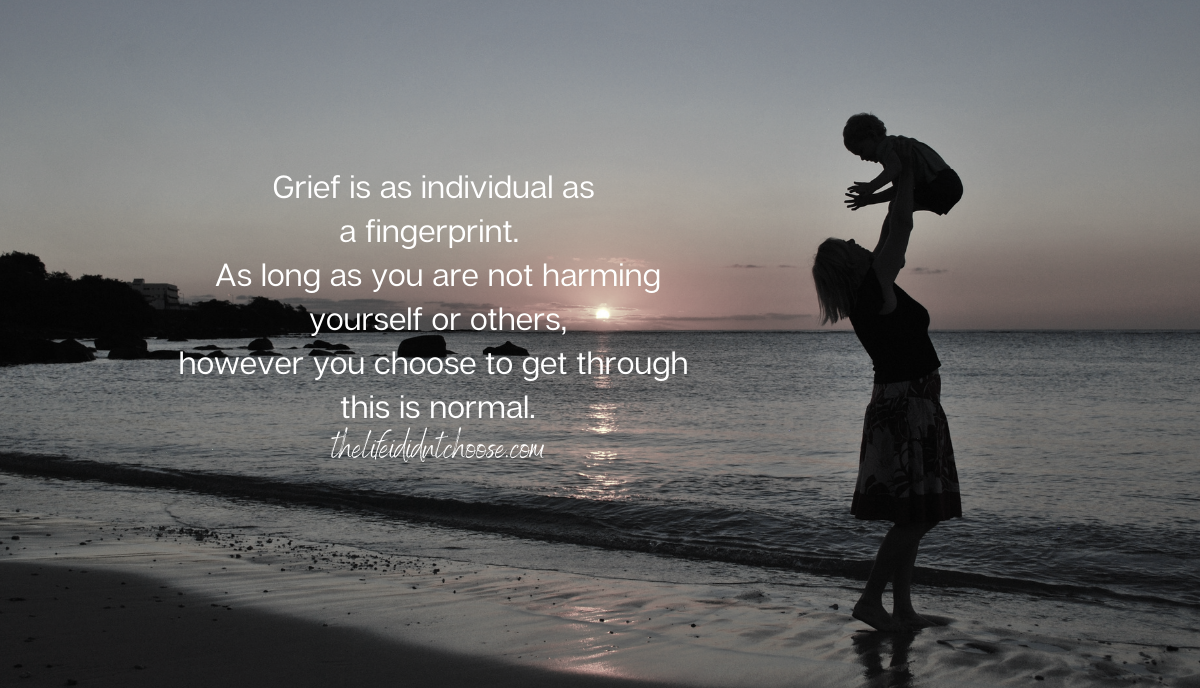
Trouble is, grief is as individual as a fingerprint.

Read the rest here: Grief Is As Individual As A Fingerprint

Child Loss: Nothing “Normal” About It

I first shared this post in 2016 when I deeply resented anyone trying to tell me there would eventually be a “new normal” to this long road of sorrow and missing.

Since then I would say that I can concede there is a kind of “normal” that eventually takes over a life-even a life shattered by loss.

No matter how tempting it might be to climb under the covers and hide away in my room, biding time until it’s MY time, I can’t.

And little by little, the ordinary (and extraordinary) habits, pressures and circumstances of walking in the world require more and more of my attention forcing me to sequester Dominic’s absence to a part (instead of the whole) of my waking existence.

But I will tell you today-over eight years later-that there is STILL absolutely, positively NOTHING “normal” about my beautiful boy being here one moment and gone the next.

❤ Melanie

Something you hear early on in this grief journey is that one day you will find a “new normal”.

I hate that phrase.

Because while I have certainly developed new routines, new ways of dealing with life, new methods for quelling the tears and the longing and the sorrow and the pain-it is NOT normal.

Read the rest here: Nothing “Normal” About It

You Are Absolutely, Positively Normal!

Do you want to know one of the most repeated questions in grief support groups?  

It is, “Am I normal?”

In the midst of great loss,

in the middle of reconstructing a life that includes a giant hole,

while struggling to place one foot in front of the other,

parents who have buried a child are often worried about whether what they feel and how they act is “normal”.

Grieving a child is a complex and life-long process as I wrote about here: Am I Normal?

What Exactly IS Normal In Grief?

It hurts my heart every time I hear it or see it written at the end of a long, heartfelt post in a bereaved parents’ group: “Am I normal?”

Because in addition to bearing the weight of child loss so many mothers and fathers wonder if what they are feeling, what they are thinking and what they are doing is within the range of “normal” for those who have buried a son or daughter.

If we didn’t closet the deepest and most difficult aspects of grief and loss hearts wouldn’t have to fret about whether or not their experience was common, expected, typical, ordinary and very, very NORMAL.

I just came home a couple days ago from a weekend retreat for bereaved moms and was reminded again that the range of “normal” in grief-especially child loss-is so very wide.

Still crying after a decade? Absolutely normal.

Trouble getting dinner on the table or remembering your child’s school schedule? Yep. That’s normal.

Read the rest here: Grief-So What’s Normal???

Looking For Normal

There are lots of social media memes floating around about 2020 being an interminably long series of disaster after disaster.

“If only it would end”, is the hidden hope whispered inside hearts longing for the calendar to turn from one year to the next.

“If only things would get back to normal!”

But there’s no magic in how we humans divide the days or months or years as this big blue marble travels round the sun and through the universe. It’s simply a convenient way to mark time.

And there’s no guarantee that time, by itself, rights anything. There’s no promise in the next sunrise that what’s been broken will be mended.

The rest of the world is learning what bereaved parents have known ever since the awful reality of child loss was laid at the door of their hearts: there’s no way back to “normal” once your world is violently torn from its moorings.

All you can do is assess the damage, pick up whatever pieces may still be viable and try your best to cobble them back together into usable shape.

(Photo by Giuseppe Bellini/Getty Images)

Some use the term, “new normal”, to describe a state that (most bereaved parents) eventually reach. A way of walking in the world with a profound limp, a wounded heart, a half-smile that hides tears threatening behind tightly closed eyes.

We make adjustments because we have to. The world doesn’t stop and ask permission before continuing on its merry way.

I would not wish this pandemic on a single soul.

I grieve (maybe more than many) over every person lost to Covid19. I cry every time I hear of another lonely elder separated by glass from human hugs and family kisses. I am counting the cost of witnessing traumatic deaths for nurses and doctors who have to hold hands as well as treat illness because visitors are not allowed in the rooms of the dying.

We haven’t begun to assess all the ways this pandemic is changing and will change us-individually and communally.

But if you’re waiting for 2020 to end, for a magic vaccine or for some other relatively instant and far-reaching cure to transform current reality, I think you will be waiting a long time (if not a lifetime).

I think, that like me, you will have to work through your own feelings and fears. You will have to decide what risks you can take.

You will have to figure out who and what in life is non-negotiable and hold onto that with both hands no matter what else happens.

Bereaved parents are good at this because we have to be.

If you are looking for trailblazers through unprecedented tragedy and unfriendly territory, follow them.

They can show you how it’s done.