Grief in Real Life: Give Sorrow Words

A few summers ago, I participated in an online discussion group with others who read ATLAS OF THE HEART* by Brene Brown.

It was a helpful exercise to map, name and explore emotions so that I can create more meaningful connections to myself and others.

I think I’ve been doing some version of this my whole life. Language matters. Being able to give any emotion-especially the deep pain and sorrow of child loss-matters.

Language is our portal to meaning-making, connection, healing, learning, and self-awareness….

Language shows us that naming an experience doesn’t give the experience more power, it gives us the power of understanding and meaning.

Brene Brown, ATLAS OF THE HEART, xxi

The morning Dominic ran ahead to Heaven, after I made the awful phone calls I reached for my journal.  

I knew if I didn’t start spilling the grief onto paper my heart would explode with sorrow.  

Since I learned to hold a pencil I’ve been writing. 

It’s how I sort my thoughts, figure out my feelings and express my heart. 

i-write-because-i-dont-know

A few months after and I found several online support groups. 

There I learned a whole other  Language of Grief and Loss.  The more I read what others shared, the better I understood my own experience and understood how to communicate that truth to others.

You might not keep a journal or write poetry or craft lengthy essays about your pain and that’s just fine.  There’s no magic in written words.

Find a safe space or person and speak it aloud.  

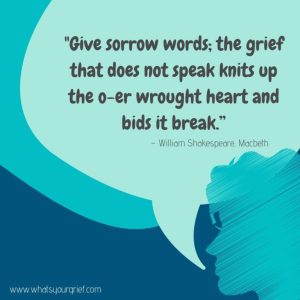
Sorrow unspoken swells. 

It can’t be contained.  

It will absolutely consume you.  

Give-sorrow-words shakespeare

*Warning: ATLAS OF THE HEART contains language that may offend some folks. I just don’t want anyone to be surprised. ❤

It would be so helpful if there was an app to track stress like there is to track spending.

Wouldn’t it be marvelous to get an alert that said, “Low Balance”, for mental, physical and psychological reserves like the one you can get for your bank account right before you are heading to overdraft territory?

But there isn’t.

And few of us are very good at gauging just how much is left in our mental wellness accounts which means we often keep giving when the well is more than dry.

I’d be lying if I said I spend the same amount of time crying, lamenting and bent over in agonizing pain that I did in the early days of mourning Dominic. I’ve found a way to keep him close, to trust his soul to Jesus and to (largely) live in the present instead of always longing for the past.

There are days, though…

Some days are easy to anticipate-birthdays, holidays, the awful anniversary of his leaving-and some sneak up on me. I can often trace my overwhelming sadness to a specific trigger or memory dug up in a drawer or found in a pile of photos.

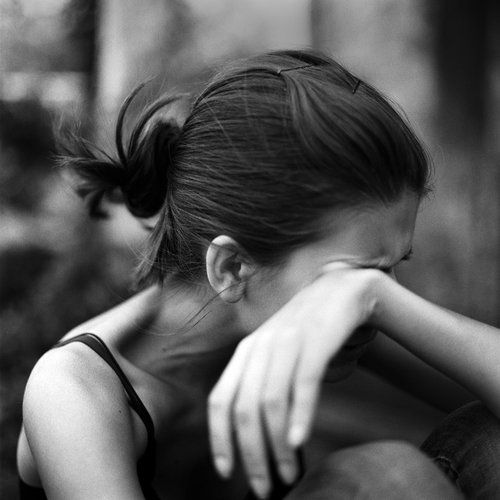
Occasionally, I have a horrible weepy day for no discernable reason.

That’s when I walk my heart back through recent events and always come to the same conclusion-I’ve let myself run dry:

  • I’ve overcommitted.
  • I’ve not planned rest.
  • I’ve had hard pain days.
  • There’s been family drama.
  • Someone I love is sick.
  • I’m sick.
  • A deadline looms large.
  • There’s some major unpredictability going on.
  • I’ve counseled too many people without enough time to regain my own emotional stores.
  • I’m not sleeping well.
  • I’m doing too much and not listening to my body.

What I’ve come to understand is that stress is a HUGE impact on my grief and how I experience it.

I won’t patronize folks reading this with a simplistic (but wholly unhelpful!) suggestion to “reduce or avoid stress”.

For heaven’s sake! If we could do that with a snap of our fingers we would hardly need someone to tell us to take advantage of that solution.

Truth is, stress is often largely outside our control.

But there ARE some things I can make choices about. So I do. I look ahead at the calendar and note upcoming milestone days. I plug in doctor’s appointments, birthdays and holidays. I review every invitation to celebrations or lunch in light of what is already inked in.

I’ve learned to be honest with folks about my limitations and send a card or gift through the mail if I can’t be there in person. I sometimes suggest an alternative date and time if the one a friend offers just doesn’t work for me. I stand firm in my opinion that “no” is a complete sentence and as long as I’m kind and gracious it is not incumbent upon me to offer an explanation for why I’m turning down an invitation.

And if I have an unexpectedly hard day-from grief or activity or because of my RA-I drop back the next day to allow time to recuperate and rest (if at all possible).

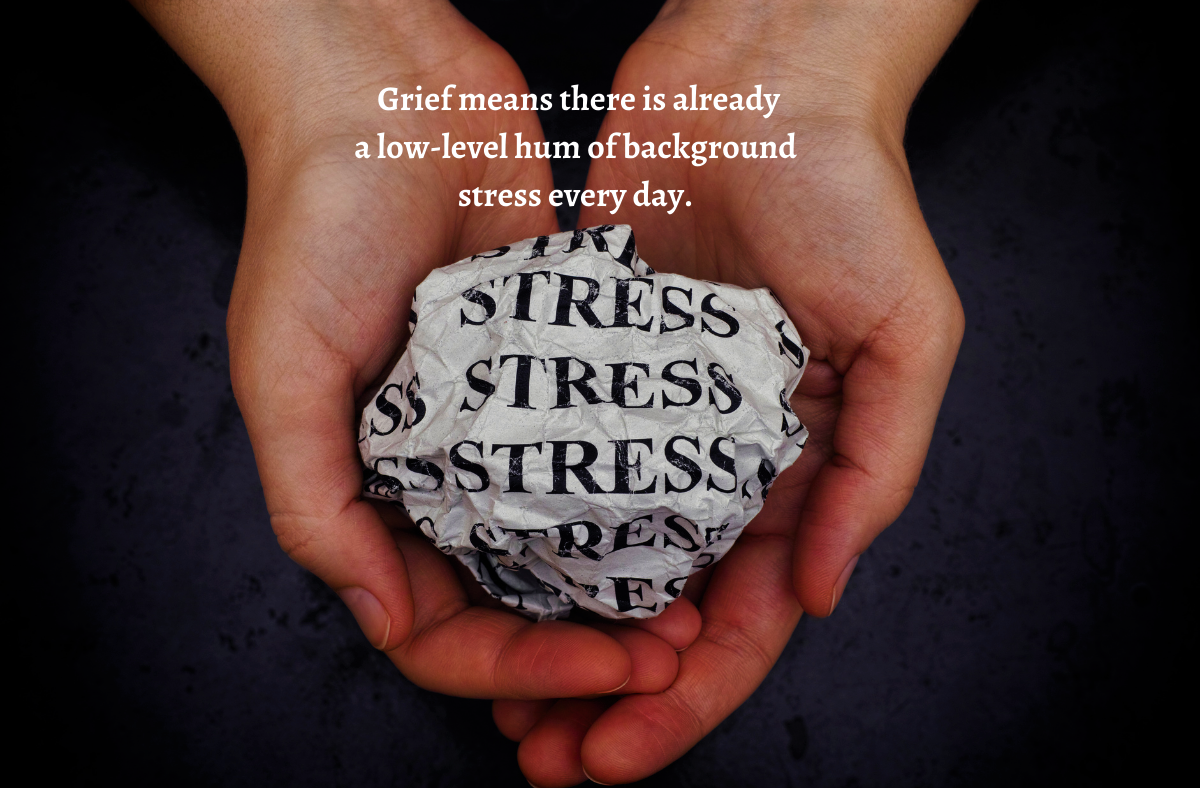
The reality is that child loss means there is ALWAYS a certain low-level hum of stress in my life.

Adding to that already higher-than-average stress means it’s easy for me to be tipped into unhealthy territory.

Crying is only the tip of the iceberg.

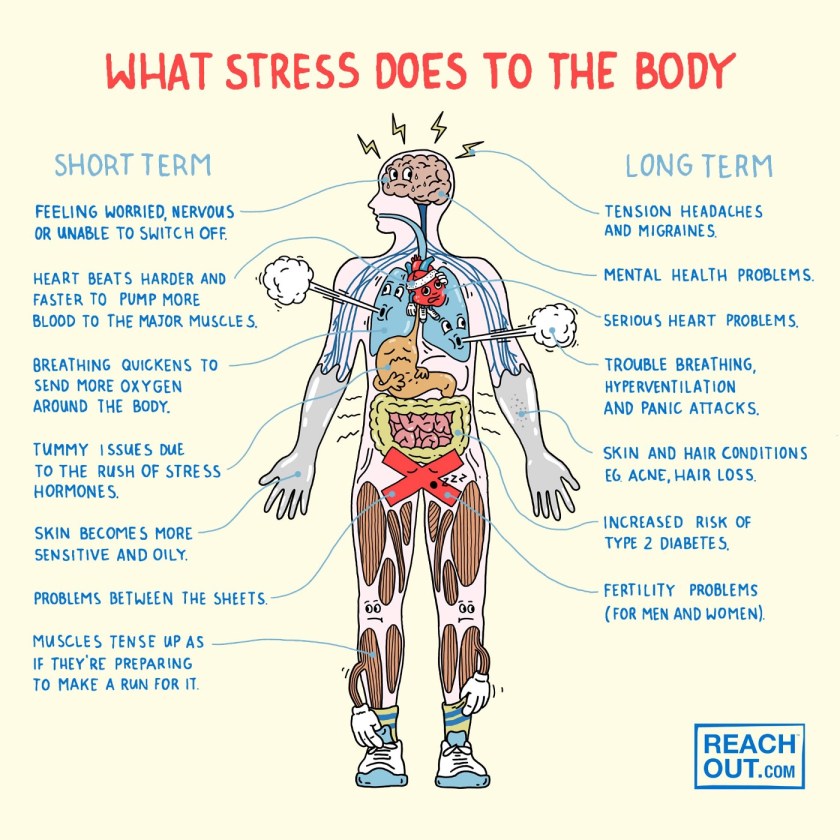
Health problems, heart problems, relationship issues and other long-term consequences often result.

It’s not only OK for me to set boundaries to protect my health and my heart,

It’s absolutely, positively the right thing to do.

❤

Anxiety is Really Awful!

I’ve written before about anxiety and child loss here.  No matter the cause of death, the FACT of a child’s death seems to create the perfect conditions for a parent’s body and mind to experience anxiety, dis-ease, fear and often a sense of impending doom.

My world was rocked to its foundation the moment I heard the words, “He was killed in a motorcycle accident”.  

The worst thing I could imagine had come true.  

There was no protection from it happening again, no guarantee that THIS unbearable pain would be the ONLY unbearable pain I would have to carry.

I think my body chemistry was instantly transformed that morning to include rapid heartbeats, shallow breathing and a horrible creepy tension that climbs my spine and clenches its claws tightly at the base of my skull.

Before Dominic left us for Heaven I was not an anxious person.

Read the rest here: Anxiety is Awful!

Bereaved Parents Month 2024: Physical Manifestations of Grief

Grief is not *just* feelings. It is so much more.

I shared this last year around this time in response to many, many comments and questions from bereaved parents about what felt like random or unusual physical manifestations of their own grief.

I hope it helps another heart navigate this life none of us would choose. 

❤ Melanie

It’s a well known fact that stress plays a role in many health conditions.  

And I think most of us would agree that child loss is one of (if not THE) most stressful events a heart might endure.  

So it’s unsurprising that bereaved parents find themselves battling a variety of physical problems in the wake of burying a child.  

Read the rest here: Physical Manifestations of Grief

Grief Work 2024: Physical Manifestations of Grief

Grief is not *just* feelings. It is so much more.

Often there are random or unusual physical symptoms that show up days, weeks or even years after a child has gone to Heaven.

An important and necessary part of grief work is learning to recognize the physical manifestations of grief and advocating for care from professionals who may not be able to make the connection unless the bereaved speak up and speak out.

❤ Melanie

It’s a well known fact that stress plays a role in many health conditions.  

And I think most of us would agree that child loss is one of (if not THE) most stressful events a heart might endure.  

So it’s unsurprising that bereaved parents find themselves battling a variety of physical problems in the wake of burying a child.  

Read the rest here: Physical Manifestations of Grief

Making Accommodations for Grief

The doctor I see every six months or so for my rheumatoid arthritis always fusses at me.

One of the routine questions is, “How’s your pain level?”

I usually say, “About a three.”

And then she looks at my hands and my feet-at the swollen joints and twisted toes-and shakes her head.

But here’s the deal:  sure they hurt, sure I can’t do all the things I used to do, sure I have to do many things differently than I did them when my hands and feet were unaffected by this disease-but I’m STILL moving and doing what needs to be done.

I don’t really know how to do anything else.

And that’s how it is with this grief I lug around-it’s heavier some days than others-but I’m STILL moving and doing what needs to be done.

I make daily concessions to my arthritic joints and I make concessions to my grief when I need to.

Read the rest here: Accommodating Grief

Bereaved Parents Month 2023: Physical Manifestations of Grief

Grief is not *just* feelings. It is so much more.

I shared this last year around this time in response to many, many comments and questions from bereaved parents about what felt like random or unusual physical manifestations of their own grief.

I hope it helps another heart navigate this life none of us would choose. 

❤ Melanie

It’s a well known fact that stress plays a role in many health conditions.  

And I think most of us would agree that child loss is one of (if not THE) most stressful events a heart might endure.  

So it’s unsurprising that bereaved parents find themselves battling a variety of physical problems in the wake of burying a child.  

Read the rest here: Physical Manifestations of Grief

Grief Work: Physical Manifestations of Grief

Grief is not *just* feelings. It is so much more.

Often there are random or unusual physical symptoms that show up days, weeks or even years after a child has gone to Heaven.

An important and necessary part of grief work is learning to recognize the physical manifestations of grief and advocating for care from professionals who may not be able to make the connection unless the bereaved speak up and speak out.

❤ Melanie

It’s a well known fact that stress plays a role in many health conditions.  

And I think most of us would agree that child loss is one of (if not THE) most stressful events a heart might endure.  

So it’s unsurprising that bereaved parents find themselves battling a variety of physical problems in the wake of burying a child.  

Read the rest here: Physical Manifestations of Grief

A Rough Week

Y’all! This morning marks seven days of exhausting emotional and physical effort that I absolutely, positively did not anticipate.

This time last week I was looking forward to being at home where I could finish up (way ahead, mind you!) prepping for the soon arrival of my grandjoys for a long visit.

I had nearly finished some major cleaning out and rearranging and figured I’d fiddle around the edges and do the exciting and much more rewarding tasks of gathering craft materials, organizing delicious snack recipes and rounding up fun bath time toys when I got an unexpected phone call.

My very dear friend (more like a sister) fell in her kitchen and broke her back (not her spinal cord, thank the Lord!).

Suddenly everything else was on hold, emergency protocol prevailed and I was swept up in a whirlwind of ambulance transports, emergency rooms and coordinating communication among friends and family members who couldn’t join us in the tiny cubicle while we waited for a doctor to diagnose her condition and determine her treatment.

[By the way, if you haven’t been in an emergency room lately can I just tell you they are overwhelmed, overrun and understaffed. Through no fault of their own, nurses and doctors are working with fewer resources and greater demands than ever before. So (as my Emergency RN daughter says), “Don’t do stupid things!”.]

It took multiple imaging scans and consults to determine that my friend would have to be admitted to the hospital at least for a few days but there were no available rooms. So the waiting continued.

By early Thursday morning she had a room and we began a new round of consultations and physical therapy to figure out the best way forward.

While she was there, I was back and forth.

Driving through rain and city traffic (not my favorite) an hour there and an hour back from my rural home was a real challenge. Getting up and dragging my behind out of bed while my autoimmune disease was acting up was another. Carrying bags and my friend’s prosthetic leg two and a half blocks downtown with my wonky and very painful wrist was yet one more. And can I admit I absolutely HATE face masks???

Let’s just say, it’s been an adventure.

I’m tired.

I’m once again reminded of the fact that I have far less reserve than I had before Dominic died.

Even though I’m stronger and better able to carry the load of grief and handle his absence I still experience a constant and unrelenting level of stress that means I simply do not have the ability to absorb extra demands on my emotions or physical strength like I used to.

And I am also reminded that people think because it’s been eight and a half years that I’m “back to normal”. They see me smiling, laughing, walking in the world like everyone else and assume it’s no big deal to take on additional responsibility.

But it is.

It is still very MUCH a big deal.

I can’t Spend the Same Energy Twice.

I’m not sharing to garner sympathy. I’m sharing because I hope that if you have also had a rough week you won’t feel so alone.

It’s OK to admit we don’t have the same energy or resources we once had.

It’s OK to ask for help.

It’s OK to not be OK.

Bereaved Parents Month 2022: Physical Manifestations of Grief

Grief is not *just* feelings. It is so much more.

I shared this last year around this time in response to many, many comments and questions from bereaved parents about what felt like random or unusual physical manifestations of their own grief.

I hope it helps another heart navigate this life none of us would choose.

 ❤ Melanie

It’s a well known fact that stress plays a role in many health conditions.  

And I think most of us would agree that child loss is one of (if not THE) most stressful events a heart might endure.  

So it’s unsurprising that bereaved parents find themselves battling a variety of physical problems in the wake of burying a child.  

Read the rest here: Physical Manifestations of Grief