Repost: Grief and Holiday Plans-Working Out the Details

My mother is in the hospital-lifeflighted on Wednesday night from her rural home to the nearest larger medical center.  She’s doing better but we have no idea when she may be released to go home.

So these next days I will be re-posting some blogs from last year.  I hope you will join me praying for my mama and also be patient with the lack of new content.  ❤

I live in Alabama where we are still sweating buckets under the late summer sun, so I understand if thinking about the holidays is the furthest thing from your mind.

School just starting, new routines in place-am I crazy?

Well, yes (you can find plenty of folks to back you up on that) and no-the days keep coming, one after the other, and these big days will be here sooner than we think.

Read the rest here:  Grief and Holiday Plans: Working Out the Details

The Power of Lament to Make Room for Thanksgiving

Thanksgiving was always my favorite holiday.

I loved everything about it:  the color scheme, the food (I love, love, love to cook-it was never a burden), family and friends gathered around the table, and the wonderful slowness of the day as it lingered into nightfall.

It was more flexible than Christmas for including all sorts of folks who otherwise didn’t have someplace to go. Living near colleges meant that  we welcomed students from around the world-we might have two or three dozen laughing faces milling about.

happy-thanksgiving


It was wonderful.

And I loved going around the circle, tummies bursting, to share what people were thankful for and why.

When Dominic left us everything  changed.

Oh, I was (and still am) so very thankful for so very many things-my family, daily physical provision, ongoing care and love of friends, the enduring faithful mercy of God.

photo (20)

But there’s something else too:  there is deep sorrow at the unavoidable FACT that when God COULD have stepped in and changed an outcome, He DIDN’T.

pain-behind-every-tear

And I’m having to learn to open my heart to thankfulness while also bearing witness to this pain.

Praise and lament in the same breath.

I have plenty of company.
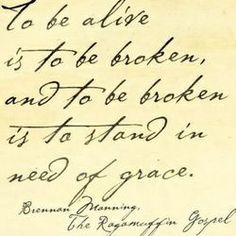
be broken brennan manningThe world we live in is full of pain and suffering.  Injustice reigns.  We make our way through thorns and by the sweat of our brow.

It is just plain hard.

The psalmist acknowledges that.  He doesn’t rush past the pain.  He doesn’t gloss over the broken places.

He empties his heart of the feeling that God has forgotten.  But he doesn’t stop there-he chooses to bring the emptiness back to the only One Who can fill it up again.

Like the psalmist, I’m learning  that I must exhale before I can inhale.

I must admit the burden of hopelessness to make room for the blessing of hope.

“With my voice I cry out to the LORD: with my voice I plead for mercy to the LORD.”

I ADMIT I FEEL ABANDONED:

In the path where I walk
they have hidden a trap for me.
Look to the right and see:
there is none who takes notice of me;
no refuge remains to me;
no one cares for my soul.

AND YET I WILL CHOOSE TO TRUST:

I cry to you, O LORD;
I say, “You are my refuge,
my portion in the land of the living.”

IN THE HOPE THAT GOD HEARS:

Attend to my cry,
for I am brought very low!

SO THAT MY TESTIMONY MAY BE ONE OF PRAISE:

Bring me out of prison,
that I may give thanks to your name!

Psalm 142, selected

As I sit at the table, cherishing the companionship of those I love and missing the one I can no longer see, I will embrace thanksgiving and lament.

I will exhale and inhale.

I will beg for grace and mercy because I can no longer beg to be spared from sorrow.

I will ask for eyes to see and a faithful heart while I wait.

worn snow


Repost: Grief and Holidays: What the Bereaved Need From Friends and Family

The election’s over and whether we like the outcome or not, the calendar pages still turn. 

Thanksgiving and Christmas are coming fast.  For some of us carrying the pain of loss, the holidays are a treacherous time.  

I’m reposting this link in the hopes it might help make things a little easier:

its hurting again

“I know it is hard.  I know you don’t truly understand how I feel.  You can’t.  It wasn’t your child.

I know I may look and act like I’m “better”.  I know that you would love for things to be like they were:  BEFORE.  But they aren’t.

I know my grief interferes with your plans.  I know it is uncomfortable to make changes in traditions we have observed for years.  But I can’t help it.  I didn’t ask for this to be my life.”

Read the rest here:  Grief and Holidays:What the Bereaved Need From Friends and Family

Repost: Thankful But Broken

Autumn-Leaves-32

Thanksgiving has always been my favorite holiday.

My birthday sometimes falls on the day itself, and I have often been able to celebrate with extended family and friends-a full table of food and a full house of fellowship.

I love the colors of fall, the scents of cinnamon and pumpkin, the freedom from gift-giving pressures that lets me focus on the people in my life.

Read the rest here:  Thankful But Broken

Holiday Planning Helps for Grieving Parents

As much as I hate the mashup of Halloween/Thanksgiving/Christmas that assaults my senses every time I walk into a store, it IS a reminder that, like it or not, the holidays are coming.

displays-before-halloween

I wrote these posts a few weeks back so that grieving parents and their families could begin to think about and make plans for year-end celebrations.

I know it’s hard-it continues to be hard for me as I approach the third (!) set of holidays without one of my children at the table.

But it is harder without a plan. 

So here are links to the posts.  I pray they are a small help for heartbroken mamas and daddies:

thanksgiving-day-4-wallpaper


Grief and Holiday Plans: Working Out the Details


family-reunion


Grief, Holidays and Hard Conversations


its hurting again


Grief and Holidays:What the Bereaved Need From Friends and Family


IMG_1378


Practical Ideas for Dealing with the Holidays after Child Loss

Practical Ideas for Dealing with the Holidays after Child Loss

This is the fourth in a series on making plans for the holidays after loss.

Yes, it’s early and no, you might not want to think about them-it’s really hard to imagine Thanksgiving and Christmas without the child you love.  BUT, the days will come whether we want them to or not. Here’s some help to navigate them.

If you missed the first three posts you can find them here:

Grief and Holiday Plans: Working Out the Details

Grief, Holidays and Hard Conversations

Grief and Holidays:What the Bereaved Need From Friends and Family.

It cannot be overstated:  holidays are extremely hard after loss.  Every family gathering highlights the hole where my son SHOULD be, but ISN’T.

There is no “right way” or “wrong way” to handle the holidays after losing a child.

For many, there is only survival-especially the very first year.

These days also stir great internal conflict:  I want to enjoy and celebrate my living children and my family still here while missing my son that isn’t. Emotions run high and are, oh so difficult to manage.

So I’m including some ideas from other bereaved parents on how they’ve handled the holidays.  Many of these suggestions could be adapted for any “special” day of the year.

Not all will appeal to everyone nor will they be appropriate for every family.  But they are a place to start.

If you have decided to make a Holiday Journal,  consider printing these ideas to put inside or copying out the ones that might be helpful for you.

Skip it.  

  • Sounds drastic and it is.  But for some families (especially if there are no small children involved) it is absolutely possible (and sometimes healing) to ignore all traditions and trappings associated with Thanksgiving and Christmas.
  • You might choose to serve others on these days by volunteering with a local organization offering meals to the homeless or disadvantaged in your community.
  • Take a holiday meal to hospital workers, police officers or firemen in your area.  You can do it anonymously or in the name of your child.

Consider traveling for the holidays.

  • On the first Thanksgiving after my son left us, we shared the weekend with our newly married son and his wife in another state.  It was the first time in my life I hadn’t spent the holiday with my parents.  It was still very hard, but helpful in a way.
  • Other families have chosen to rent a cabin or condo and have the same people involved but experience the season in another location.  Most try to choose a place with a natural focus for activity that isn’t all about the holiday-like skiing in the mountains or near a lake or beach.

Change how you do meals.

  • If your family traditions always include the same foods in the same house, you might want to eat the holiday meal in a restaurant instead.
  • You could swap up the timing of a meal-evening instead of noon or vice-versa.
  • Change up the guest list-include a few close friends along with family members (friends that understand your grief).  Sometimes it helps to have others not so affected by the loss in the mix.
  • If you have been the host but don’t feel like you can do it this year-definitely consider passing that to someone else.  And don’t feel guilty about it.
  • Include the missing family members at the table in some way. One bereaved mom wrote:  “My niece includes my  son and mom at events hosted in her home.  She sets a chair aside and places a photo in the seat and a commemorative bow on the chair back.”
  • Don’t make certain foods. I make giant plates of cookies but have not made shortbread cookies since my son left us.  It was his favorite and one of the few things that tempted him from his strict weight-lifting diet
  • Make your child’s favorites and enjoy eating them and sharing memories around the table.

Let others do the planning/cooking/communicating.

  • Explain to your family that you aren’t up to being the one to plan this year’s holidays.  Let someone else do it.  Participate if and when you can.  
  • Be kind, but stand your ground.

Make new traditions. 

  • If you go around the table at Thanksgiving saying, “I’m thankful for…“-it might not be something you can do this year.  That’s OK.
  • Light a candle for the missing child.  You might want to have those present share a favorite memory or you might simply want to have the candle create a silent presence.
  • Some families can’t bring themselves to use the same Christmas tree they used before loss so they get a new and/or different one.  Some don’t want a tree at all.
  • Some families have a separate tree full of ornaments or memorabilia for their missing child and use the main tree as usual for the rest of the family.
  •  “I have a separate tree for Z. . It’s filled with ornaments that remind us of him. They range from glass ornaments with his favorite candy inside to a Thomas the tank engine ornament. Collecting more ornaments for him as I’m out shopping for others helps me during this very painful time.”
  • Some families don’t hang any stockings while others hang them all, including the missing child’s.
  • Another family asks family members and friends to write a note to their son or share a favorite memory of him.  They place them in his stocking to be opened and read on Christmas Day.
  • “We asked everyone to do a random act of kindness in memory of our daughter and our friends’ son and to email it to us. We printed out all of the emails, put them in her stocking and read them as a family on Christmas morning. It was amazing to hear all of the lives touched as a result, and it took our focus off of our loss.”
  • My husband, children (all adults) and myself didn’t want to receive gifts from extended family the first year.  We still gave them, but asked that others refrain or give a donation in our son’s name.
  • Some families buy gifts that would be appropriate for another child the same age as their missing child (or the age they would be) and give them to  another child for Christmas.

Commemorate your child:  

  • Some bereaved parents put a Christmas tree with solar powered or battery powered lights on their child’s resting place.
  • Some parents take family photos and include a large photo of their missing child or a special family memento (like a stuffed animal or symbol on a shirt) to represent that child in the pictures.
  • Some families give donations in their child’s name to organizations that purchase Christmas gifts for needy families or food for families at Thanksgiving.
  • In some communities there is a “Blue Christmas” ceremony on December 21st each year in which families gather to remember lost loved ones with music, candles and sometimes a devotional message. Some are sponsored by local chapters of The Compassionate Friends.  If there is not one in your area, your church may be willing to host one.

Keep the same traditions:

  • For some families, keeping everything the same is the most comforting choice. Especially if there are young children involved, it may be the easiest way to go.
  • But feel free to ask for help.  If you are not up to shopping for children in the family, make a list, let someone else do it and wrap the presents for you. Or use an online shopping service (many offer gift wrap).
  • Same goes for holiday outings-maybe a good family friend or an extended family member could take the children this year and document it with photos.

Whatever you choose to do or not do, know that there’s no wrong way or right way.  

Be gentle with yourself-this is a hard road.  And a long one. 

Photo credit: State Farm via Visual hunt

Grief and Holidays:What the Bereaved Need From Friends and Family

I know it is hard.  I know you don’t truly understand how I feel.  You can’t.  It wasn’t your child.

I know I may look and act like I’m “better”.  I know that you would love for things to be like they were:  BEFORE.  But they aren’t.

I know my grief interferes with your plans.  I know it is uncomfortable to make changes in traditions we have observed for years.  But I can’t help it.  I didn’t ask for this to be my life.

I know that every year I seem to need something different.  I know that’s confusing and may be frustrating.  But I’m working this out as I go.  I didn’t get a “how to” manual when I buried my son.  It’s new for me every year too.

So I’m trying to make it easier on all of us.  

I’m trying to be brave and think ahead and offer up what I can to help you understand.

I’m not asking you to stuff your feelings.  But I am asking you to weigh your disappointment in things being different against my unfathomable sorrow in burying my child.

And this is what I need from YOU:

Acknowledge my loss.  It doesn’t matter if it has been a few months, a few years or even decades-every single time the whole family gets together, the hole where my child SHOULD be is highlighted.  Other people may have moved on, and I am stronger now than I was, but the missing is as hard today as it was the day he left.  I need you to acknowledge that even if you don’t understand it.

Be flexible.  Every day is different for me.  And even if we did a certain thing last year, it may not be something I want to repeat.  Life circumstances continue to evolve-living children grow and marry, grandchildren make their appearance, health issues may emerge and change physical capabilities-life keeps on regardless of loss.  So this year is DIFFERENT than last year.  For everyone.  If we all embrace flexibility, there’s less opportunity for breakage.  Rubber bounces.  Glass shatters.  I don’t want my loss to be the central focus, but it’s a huge part of my experience and I can’t ignore it.  Help me, please.

Give me space.  Grant space in the larger picture-don’t make showing up to every family event a “mandatory option”.  Understand that even with planning and the best intentions, I may wake up and realize that I. just. can’t. do. it.  Or I may come, but leave early.  And grant space in the details-if I walk out of a room, let me go.  It may be helpful for one person to check on me after a few minutes but don’t send the calvary to drag me back.  I don’t always want to detract from a gathering and I may need to cry, or gather myself, or just sit silently remembering my son.

Give me time.  Time by itself does not heal anything.  But time is a critical component of healing.  If this is the first holiday season after loss, don’t pressure me with artificial deadlines about what I want to do or whether or not I’m going to participate in this or that. And even if it’s not the first season, I still need time.  It will be the third set of holidays after my son’s departure and I’m still feeling my way in the dark.  Don’t force me to decide if I can’t.  Just go on with your plans.  If I can join in, I will.  If I can’t, then I won’t.  That’s the best I can do.  It’s how I have to live every single day right now.

Grant mercy.  I will mess up.  I will say things in the passion of loss that I regret.  Overlook it.  Don’t lash out or hit back.  My emotional tank is so empty sometimes that it’s a wonder I can still feel anything.  I am truly trying. Grant mercy.

Extend grace.  Grace is lavishing love on the unlovely. Forgiving when someone doesn’t ask for it.  Doing something for someone and not expecting anything in return.  Step up and step out in faith that loving me will help me heal.  Even when you can’t see that it makes a difference. Don’t stop.  Don’t withdraw.

Know that this is not what I would have chosen.

Child loss happened TO me.

It is out of my control.

And the calendar pages keep turning.  Every holiday season means another year gone without the companionship of the child I miss.

I want to continue to embrace life, to enjoy my loved ones, to make new memories.  But I need your help to make it happen.

Don’t abandon me now.

compassion is a choice

Grief, Holidays and Hard Conversations

For those using these posts as a guide for navigating the holidays after loss, I would recommend you view them all before having those hard conversations.  I may not be giving the information in the best possible order.   The last posts will contain ideas from other grieving parents and grandparents that might be very helpful in deciding what’s best for you and your family.  You can share these posts to your own Facebook page or follow the blog via email to have access to them for easy future reference.

You don’t have to bury a child to know that changing long-standing family traditions around holidays is a hard, hard thing.

Just ask a parent trying to work out Thanksgiving and Christmas for the first time after an adult child marries.  Suddenly the way things have “always been” are no longer the way things are.

Holidays typically involve so many more people and family members than everyday get-togethers and each person brings expectations, emotions and personal history to the table.

So, that is why I decided to run this series of posts NOW.  Because one of the things I have learned over the years is that giving people time to adjust to change is a good thing.

If you have made a Holiday Journal like I suggested, then use a page to list all the people that are typically part of your family’s holiday plans-you might want to make subheadings by holiday (and there may be other special get-togethers your family observes, so include those).

That list is a starting point for the people you may need to communicate with about the upcoming holidays.

Don’t feel like you have to include each individual in a unique communication-you can focus on those who are “in charge” of the gatherings/traditions and request that they pass it along.

Here are some specific tips for reaching out:

Understand that they DO NOT understand.

  • I know that unless someone has experienced child loss themselves, they really do not understand what it feels like.  (You might choose to share this post to help them understand-just a bit:What Grieving Parents Want Others to Know)  
  • No matter how much they may want to, they cannot really feel what I feel.  I have to constantly remind myself of that.

Don’t wait.

  • The closer we get to those dates on the calendar the more likely that others will assume you are just going to continue the traditions.
  • Most people dislike change.  And they hate it even more when it is a last minute change.  So don’t delay in at least giving those affected by your plans a “heads up” that things won’t be the same this year.
  • On a practical note people may need time to change plans if they involve making travel arrangements.

Decide how you will communicate your message.

  • Do you want to speak to them (on the phone or in person)?  This choice allows for subtle communication through tone and inflection but also requires immediate response.  Very few people can say, “I need to think about this” before blurting an answer.  Sometimes verbal exchanges can escalate quickly.
  • Do you want to write your message (text, message, email)?  This choice allows for a delayed response, gives a record of what was communicated but leaves room for misinterpretation because tone and inflection are hard to indicate by written word.  Let your heart and past experience with the person(s) be your guide.  It may be that it’s best one way for some and another way for others.

Acknowledge their loss.

  • Regardless of the relationship of other family members to your missing child, they have lost something  and someone too. They may not feel my pain precisely, but they feel the pain of losing a grandson, nephew, cousin and they feel the pain of losing who I was before burying my child.
  • They need space and permission to express their loss.

Use “I” statements.

  • Don’t accuse.  Don’t bring up every bad memory from Thanksgiving and Christmas past. Start from today and say, “I feel like I cannot do all (or some or any) of these things for Thanksgiving and Christmas this year.”
  • Be as honest as you can be.  Feelings are not wrong.  What we do with them may be wrong or hurtful.  But it’s OK to say, “I just can’t do this right now” or “I don’t know how to do this without my child”.

Expect resistance.

  • People naturally hate change.  We develop relationship ruts and it takes a lot of energy to climb out of them.  They may very well find great comfort in keeping things as “normal” as possible after your loss.
  • What is helpful for you may feel threatening to them.
  • Stand your ground without being combative.  You can say something like, “I understand this is very hard on you, and I am sorry that this is painful, but it’s just how it needs to be for me and my family to continue to heal.”

If you can, offer an alternative.

  • In subsequent posts I’ll share some ways other bereaved parents have approached the holiday season.  Maybe one of those ideas will appeal to you and you can offer it as an alternative to the way things were before loss.
  • You might suggest that extended family continue traditions they cherish and you join in for the part you feel you can endure.

Extend grace.

  • Assume the best.  Assume that your extended family and friends are trying to understand and do not want to add to your burden or cause you pain.  Re-read messages with an ear to what hearts are saying even when the words may fail to communicate that message.
  • Ask for clarification before you react. There is so much room for misunderstanding around holiday plans anyway and when you add loss to the mix, it can be a recipe for relational disaster.
  • Allow time before responding to something that hurts your feelings.  It may very well have been unintentional.

I know that all these suggestions require additional emotional energy when we feel we are already tapped out.  We are already carrying a load that can crush a spirit-it seems unfair that we have to initiate the conversation, offer alternatives and give grace.

But they do not understand.

And they may not know where to start.

We have to remain focused on the goal:  Surviving the holidays.

If your family includes young children, how you approach this season is even more important.  You are building memories for them, shaping their childhood experiences and helping them learn to cope with what will be a life-long challenge-living with grief.

Consider printing this post and slipping it in your journal if you are making one.  That way you  can refer back to it easily.

Tomorrow: What the bereaved need from family and friends…


Grief and Holiday Plans: Working Out the Details

I live in Alabama where we are still sweating buckets under the late summer sun, so I understand if thinking about the holidays is the furthest thing from your mind.

School just starting, new routines in place-am I crazy?

Well, yes (you can find plenty of folks to back you up on that) and no-the days keep coming, one after the other, and these big days will be here sooner than we think.

And for grieving parents, it takes some thinking, some planning and some preparation to meet both extended family’s expectations and extra responsibilities at Thanksgiving and Christmas while carrying a load of sorrow and pain.

One thing I am learning in this journey is that even though I wish someone else would blaze the trail for me, I’m going to have to do it myself.  And because every major milestone is overflowing with emotional booby-traps, I have to plan ahead.

I wrote this post Practical Ways to Love Grieving Parents at Christmas last year and it has some thoughts that many found helpful.

But I didn’t have it out there until right around Thanksgiving which might be too late for some folks to make adjustments in plans already made by others.

So even though it’s early, and even though I am and have always been one of those people that resents the “holiday creep” that blends everything after the Fourth of July into a hodge-podge of orange, brown, green and red (UGH!)-I’m going to spend the next couple posts on practical ways to plan ahead and relieve some of the stress of this time of year on bereaved parents.

Here’s a few things to get you started:

  • Find a notebook or journal (I use a 70 page spiral bound notebook) and write in large print “Holiday Journal” on the front cover.
  • Find or print copies of calendars from October through December and staple, tape or glue them on the very last pages or the back cover of your journal.
  • On the first page, note any dates (in order) of birthdays, regular family gatherings and trips, etc. that are already committed for those three months.
  • On the second and third pages make a heading:  BRAINSTORMING.  Then list what you like/dislike/hope for/dread about the upcoming holiday season. (an example:  I dread having the family together in one place because it makes my son’s absence that much more apparent) Don’t edit yourself-write it all down-we will refer to this later.
  • On the fourth and fifth pages make a heading: FAMILY TRADITIONS.  Then list all the things your family usually does for the holidays (if this is your first season after loss they will all be pre-loss traditions, if not, they may include both pre-loss and post-loss traditions)
  • Place your journal where you can get to it easily but out of reach of small hands and family pets.

Then take a breath-you. are. not. alone.

We’ll work together to establish a survival plan for the holidays.

Tomorrow:  Dealing with extended family and how to have those hard conversations.


June Challenge: Eight Legs and Eternity

Day Eight of Kathleen Duncan’s  June 1-30 challenge.

The prompt:  Write a story with eight legs or turn the eight sideways and use “infinity” (eternity) as your prompt.

Eternity is a long time.

Just try and wrap your mind around it.

But when you bury a child, that’s what you think about-the forever that comes when he left his earthly body and entered the Presence of Jesus.

So many hard days followed, so many tears, so much pain.  I wanted to escape to eternity with Dominic.

I would be there eventually anyway, why not now?

But it’s not up to me to determine when I go. So I remain, and try to find a way to make the days count, be useful and stay hope-filled.

And eight legs have helped me stay rooted in the “now” when my heart longs to be in “forever”.

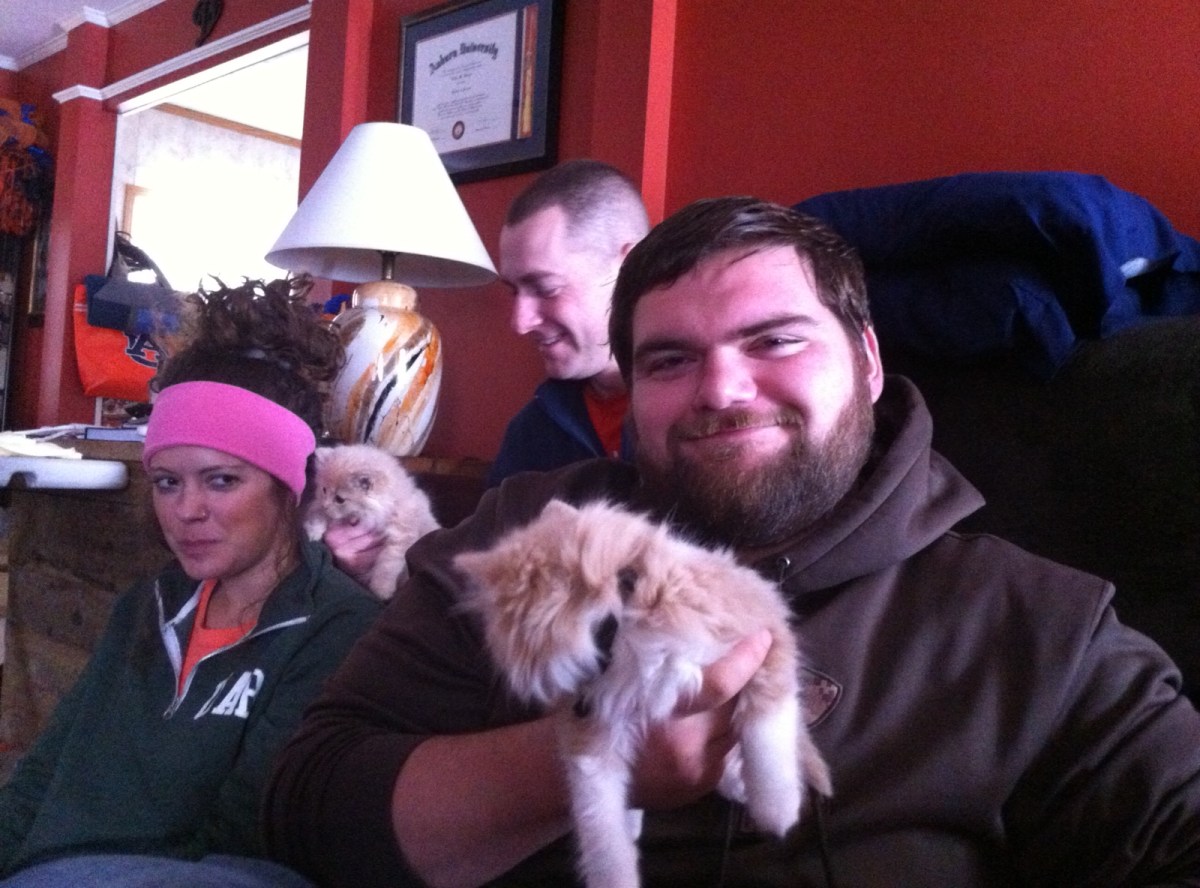
That first Thanksgiving after losing Dominic in April, we  visited our oldest son and his wife in West Virginia where she was a vet.

Touring Lillie’s office, we were introduced to two fluffy, orange kittens that had been abandoned by the road and brought there in hopes of finding a home.


IMG_2425

One look and I was smitten.

IMG_2422


It took less than five minutes to decide to take them back with us to Alabama.

Who could resist those faces?


At dinner that night, we brainstormed possible names.  I still have the list in my notes on my phone:  Kit Kat, Pumpkin, Scratch and Sniff, Cheetos, Doritos, Tostito.

We decided on names that reflected their roots- Moonshine and White Lightning.

After all, West Virginia is home to as many stills as hills.

Once we got back, their needs became part of my morning routine-a constant and undeniable reminder that I HAD to get out of bed.  And they made me laugh!

IMG_2509

Here is Lightning soaking up the sun in front of the picture window.


IMG_2439


Moonshine’s personality is more relaxed-why sit when you can lay down?


I used to be able to pick up both of them with one hand, now it takes two hands to pick up one of them!

DSC_0328

They have grown into good companions, great mousers, soft lap warmers and serious purr machines.

I’m very glad these eight legs live in my house.  

They’ve been excellent therapy for my hurting heart.

Benefits of Pet Therapy:

  • lowers blood pressure
  • improves cardiovascular health
  • releases endorphins (oxytocin) that have a calming effect
  • diminishes overall physical pain
  • the act of petting produces an automatic relaxation response, reducing the amount of medication some folks need
  • lifts spirits and lessens depression
  • decreases feelings of isolation and alienation
  • encourages communcation
  • provides comfort
  • lowers anxiety
  • creates motivation for the client to recover faster
  • reduces loneliness