Grief Work 2026: Sorrow and Joy Can Live in the Same Heart

I’d like to encourage my fellow travelers in this Valley today.

Often I write about and share the hardest parts of this journey. Because there are so, so many hard parts!

And they are rarely spoken about above a whisper (if at all!) in greater society. I am determined to be as honest as possible lest I know of a hidden danger along the way and fail to warn you.

But there are also precious joys tucked away along the difficult path.

The trick is to train your eye to see them and your heart to receive them.

I’ll be the first to admit that for months (probably two years) despair and sorrow and loss were all I could truly feel.

Bereft is the word I’d choose if forced to choose only one.

I became so adept at finding the sad in every situation I fell out of practice in finding anything else.

To be honest, it didn’t take much to find the sad. Holidays were duller, celebrations were always missing one, even a sunrise didn’t shine as brightly knowing Dominic was never going to set eyes on that day’s bright glow.

At some point, unbidden, a tiny spark of gratitude-like a wildflower among weeds-drew my heart to joy. Even if I tried, I couldn’t help responding to the fact that not every moment of every day was clad in mourning clothes.

Little by little color seeped back into my life.

I found that if I grabbed those bits, held them close and meditated upon them, they soon came closer and closer together. They grew to fill not just moments but sometimes hours.

Do not be distant, O Lord, lest I become so mired in yesterday’s hurts, that I miss entirely the living gifts this day might hold.“Liturgy for Embracing Both Joy & Sorrow” from Every Moment Holy Vol. II: Death, Grief & Hope

I’ve written before that Gratitude and Grieving coexist.

I can’t weigh all my blessings on a giant cosmic scale against the bruising of child loss and make it balance. But I have also realized that I don’t have to live in a constant state of bitter sadness just to prove I love my son.

Life continues.

It brings good things, hard things, beautiful blessings and awful bruising. I have-in the years since Dom left us-had challenges and triumphs.

I’m learning that if I pluck the flowers of joy when I see them, I’m better able to survive the moments of despair when they overtake me.
Grief Work 2026: Importance of Boundaries After Child Loss

As a people-pleasing first born who hates conflict, giving in has always been  easy for me. It’s only later that I wish I hadn’t.  

So for most of my life, setting personal boundaries has been challenging.

But in the aftermath of child loss, healthy boundaries are no longer optional, they are necessary for survival.  

So what are healthy boundaries?

  • Saying “no” without guilt
  • Asking for what you want or need
  • Taking care of yourself
  • Saying “yes” because you want to, not out of obligation or to please others
  • Behaving according to your own values and beliefs
  • Feeling safe to express difficult emotions and to have disagreements
  • Feeling supported to pursue your  own goals
  • Being treated as an equal
  • Taking responsibilty for your own emotions
  • Not feeling responsible for someone else’s emotions
  • Being in tune with your own feelings
  • Knowing who you are, what you believe, what you like

~sharonmartincounseling.com

What does this look like in real life?

  • Not being “guilted” into engaging in social/family/church activities before I am ready
  • Letting family and friends know when I need encouragement, companionship, solitude, help or space
  • Keeping or making doctor’s appointments and staying on top of my physical well-being by sleeping/eating/taking medication/exercising as best I can
  • Participating in what is helpful and life-giving to me when I want to and not because I feel like I have to.  
  • Giving myself space and time to figure out how losing a child impacts my beliefs, my sense of self, my understanding of the world-being honest about questions and about struggles.  If I have to take a break from church for awhile, that’s OK.
  • Expecting support from friends and family to do the work grief requires.  If some in my circle can’t do this, then I’ll put those relationships on hold until I feel stronger. I am not required to live up to other people’s standards.
  • Embracing and acknowledging my own emotions.  Not expecting someone else to “make me better”.  No one can take away the sorrow and pain of child loss.  It is excruciating.  There is no way through but THROUGH.  Face the feelings.  Get help from a counselor if necessary.  Join a support group.  Find safe friends.  But I will not be able to distract myself or ignore the heartache forever.
  • Understand that though I share the loss with others-a spouse, my surviving children, my child’s grandparents, etc-I am not responsible for how they are dealing with loss. I may offer help, may arrange counseling (especially for children), should strive toward an environment where feelings can be expressed-but I can’t work through their loss experience for them.  
  • Pay attention to my own feelings and what triggers grief attacks.  When I can, plan around the triggers.  When I can’t, accept the feelings and go with them.  If I need to leave a venue, leave.

What it doesn’t look like:  

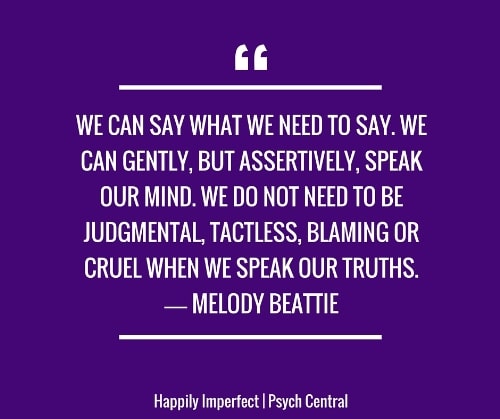
Healthy personal boundaries are not an excuse for bad behavior.  They are not to be used as blunt instruments to bully others into submission or to advance my own agenda against theirs.

My boundaries don’t give me the right to be hateful, hurtful or unkind.  They are not permission to pitch fits, make public displays or belittle others.  

say-what-we-need-to-say-gently

And they are absolutely NOT a reason to plaster hate speech across social media.  If I have a personal relationship issue then it needs to be handled personally and privately not publicly. Vague Facebook statuses that suggest I’ve been offended by half my friend list are off limits.

Establishing healthy personal boundaries is work.  

Already exhausted from grief, the last thing I want is more work.

But if I don’t defend the space and time I need to do the work grief requires I cannot make progress toward healing.

If I don’t limit my interaction with those who are unhelpful or downright hurtful, I will be dragged down further in the mire of sorrow and sadness.

If I don’t purposely pursue physical, emotional and psychological health, grief will kill me.

Grief Work 2026: How Trauma Affects Relationships and Healing

No matter how a child leaves this earth, it’s traumatic.

And trauma rewires our brains.

The “fight or flight” response that had previously been reserved for truly life-threatening situations gets woven in with memories and feelings and our bodies remain on high alert.

So before we know it, all kinds of ordinary, daily, and definitely not life-threatening situations evoke rapid heartbeat, shortness of breath, anxiety and fear. And the absolutely reasonable response is to get away from those things that make us feel that way.

So we do (or try to!).

We find ourselves running away from people who love us, who want to help us but who just might not understand why we’re running. We cocoon in our homes, in our own bodies and try to find that one safe space where fear and anxiety can’t find us.

But there is no such absolutely safe space.
Trauma rewires our brains, it’s true.

They can be rewired again.

So many good therapies are available for those of us who suffer in silence. Many are based on using physical cues to help a brain learn to distinguish between truly dangerous and only the memory of dangerous.

PTSD treatments and therapies

It is possible to venture out in the world again, to reach for and sustain connection, to lean into company instead of shying away.

Don’t stay hidden, afraid and alone.

Find a trained trauma counselor

Ask for help.

Grief Work 2026: Battling Despair With Truth

So much of this battle has been fought in my mind.

Really, even more than in my heart.

Because you can’t argue with sad or shock or missing or disappointment.

But you can absolutely argue with hopelessness (there is nothing to live for), apathy (there is nothing to do) and distrust (there is no one who can help me).

So I spend a lot of time filling my mind with truth and doing the best I can to empty it of lies.  Some days I’m more successful than others, but I battle on regardless.

dont let anyone rent space in your head toby mac

When hopelessness tries to take up residence I say:

Remember the word to Your servant upon which you have caused me to hope.

~Psalm 119:49

AND

Do you see what this means—all these pioneers who blazed the way, all these veterans cheering us on? It means we’d better get on with it. Strip down, start running—and never quit! No extra spiritual fat, no parasitic sins. Keep your eyes on Jesus, who both began and finished this race we’re in. Study how he did it. Because he never lost sight of where he was headed—that exhilarating finish in and with God—he could put up with anything along the way: Cross, shame, whatever. And now he’s there, in the place of honor, right alongside God. When you find yourselves flagging in your faith, go over that story again, item by item, that long litany of hostility he plowed through. That will shoot adrenaline into your souls!

~Hebrews 12:1-3 MSG

Apathy sits heavy on my chest and makes me want to give up and give in.  Why try if life is random and chaos is rampant? 

I push it off with:

28 We are confident that God is able to orchestrate everything to work toward something good and beautiful when we love Him and accept His invitation to live according to His plan. 29-30 From the distant past, His eternal love reached into the future. You see, He knew those who would be His one day, and He chose them beforehand to be conformed to the image of His Son so that Jesus would be the firstborn of a new family of believers, all brothers and sisters. As for those He chose beforehand, He called them to a different destiny so that they would experience what it means to be made right with God and share in His glory.

~Romans 8:28-30 VOICE

I remember that I still have work to do:  

“For we are His workmanship [His own master work, a work of art], created in Christ Jesus [reborn from above—spiritually transformed, renewed, ready to be used] for good works, which God prepared [for us] beforehand [taking paths which He set], so that we would walk in them [living the good life which He prearranged and made ready for us]. “

~Ephesians 2:10 AMP

The enemy of my soul whispers the same lie he told Eve in the garden, “God really doesn’t have your best interest at heart.  He’s holding out on you.  You can’t trust Him.”

I shout him down and declare:

all the promises of god are yes in christ

The God Who sent His only Son to save me will not let me go.  He will uphold me with His Righteous Right Hand.  Even in the flood of grief, the fire of trial and the darkness of despair, He is with me.  

carry you old age

I have verses and quotes and hymn choruses posted all over my house so that everywhere I turn, my eyes can land on encouragement.

I won’t win any awards with my decorating scheme, but I don’t care.

All of this will be dust one day. 

I’m building an eternal future that won’t rot, rust or decay.  

“3 Blessed is God, the Father of our Lord Jesus, the Anointed One! Because He has raised Jesus the Anointed from death, through His great mercy we have been reborn into a living hope— 4 reborn for an eternal inheritance, held in reserve in heaven, that will never fade or fail. 5 Through faith, God’s power is standing watch, protecting you for a salvation that you will see completely at the end of things.”

~ 1 Peter 1: 3-5 VOICE

Hallelujah!  Amen.

Grief Work 2026: Celebrate Those Baby Steps!

When my daughter was learning to walk, I would hover near-ready to catch her if she fell.

I covered sharp corners or moved furniture so that the chance of injury was minimized. I clapped and cooed each time she made a little progress-pulling up, cruising around the edge of the sofa and coffee table-those tentative moments when she was brave enough to let go and then plop on her bottom.

And finally, when she made her first unassisted steps between the security of holding on and my waiting arms.

It was a judgement free zone.  

I wasn’t looking for technical perfection or measuring progress according to any external metric.

crawling walking baby huff post

I didn’t rush the process. I couldn’t do it for her.  I could only support her own efforts toward the goal we both had in our hearts.  I never despised her baby steps.  

They were a beginning.  

And everything has a beginning.

When Dominic ran ahead to heaven, I felt like I was physically, mentally, emotionally and spiritually knocked to the floor.  I had no idea how I was going to make a life after this great blow.   I could barely get dressed, much less do anything that took more thought or energy than that.

I was overwhelmed.   I had to learn to walk all over again.

And I did it with baby steps, in a judgement free-zone I created for myself where I refused to gauge my progress against anyone else’s.

its all about the baby steps

Because baby steps count.

Here are some of the baby steps I’ve taken and am still taking:

  • Got up, got dressed, bought groceries.
  • Cooked dinner.
  • Cleaned the bathrooms.
  • Went to church.
  • Remembered a birthday and sent a card.
  • Drove to an unfamiliar place to meet someone for lunch.
  • Exercised.
  • Made phone calls.
  • Went to work.
  • Volunteered.
  • Slept through a whole night.
  • Organized a party.
  • Showed up to graduations, a couple funerals and a wedding.
  • Kept doctor’s appointments.
  • Laughed.

I have yet to hit my stride and I don’t think running is in my near future, but I am moving forward.  I’m making progress.  I don’t have to meet a timetable or get anyone else’s approval.  

It’s my journey.

And baby steps count. 

feet on path

Grief Work 2026: Balancing Solitude and Isolation

I’ve always loved my alone time.

As an introvert (who can, if pressed pretend not to be!) my energy is restored when I interact with one or two folks or no one at all.  A dream afternoon is writing while listening to nothing louder than the wind chimes outside my door.

I treasure solitude.

Since Dominic ran ahead to Heaven, I find I need even more alone time than before.

That quiet place is where I do my most effective grief work, undisturbed by interruptions and distractions.

But I need to be careful that solitude doesn’t shift into isolation. 

I have to remind my heart that spending time with others keeps me from falling so deeply down the well of despair that all I see is darkness.

I need human interaction to keep me connected to a world that, quite frankly, I might sometimes just as soon leave behind.

So how can I tell the difference between solitude and isolation?

Here are a few questions that help me figure that out:

  • Do I feel lonely, neglected or abandoned? If my alone time feels less like a gift and more like an unwelcome burden then it may be isolation rather than solitude.
  • Where are my thoughts taking me? Being alone is often the only way to “hear” my own thoughts without having to block out the noise and activity of other people. If I am sitting with myself, processing hard things or even beautiful things, resolving internal conflict, conjuring new ways to deal with difficult relationships or situations then solitude is doing its work. If, instead, I find my mind tangled up in fearful knots, filled with negative self-talk or unable to break a downward spiral into despair then I probably need to find someone to talk to.
  • Am I getting stronger or being drained? After the holidays or other hectic seasons I need time alone to recharge my batteries. Often it is almost a day-for-day exchange. I can feel tension melting away and strength returning. My mind begins to clear and life doesn’t feel so overwhelming. Solitude grants space for my body, mind and soul to be refreshed. When it slides into isolation I can feel the shift. Instead of waking refreshed and eager to greet a free day, I wake to dreading another long one alone. Instead of energy rising in my spirit, I can feel it draining away. Instead of thinking kindly of friends and family who choose to leave me be, I’m resentful no one has checked up on me.
  • Is there a helpful rhythm to my days alone or am I counting the hours until sundown? When I’m enjoying solitude, the hours feel like a welcome opportunity to do things (or not do things!) at my own pace and according to my own preferences. I sit with pen in hand and jot down a list knowing that if I complete it or if I don’t the only person I have to answer to is myself. No pressing appointments and no worrisome commitments. When I’m isolating, the hours feel like a long march through deep mud-every step tedious, treacherous and exhausting. I’m alone but I’m not getting any benefit from it. If I’m enduring instead of enjoying then I’m isolating.
  • Do I have an endpoint in mind? When I look ahead at a week on my calendar, I try to balance alone time with social commitments. A day or two alone (or with limited human interaction) is solitude. A week holed up in the house is isolation. If I find myself pushing off needed outings (to the grocery store, to run errands) then I ask myself, “why?”. Often it’s because I’ve drifted from solitude (helpful alone time) to isolation (unhelpful hiding).

I can shift myself out of isolation by choosing just one small social interaction.

I might text or message a friend, go to the grocery store and make a point of speaking to the clerk, call someone or show up at a church or community event even if I sit in the back and slip out early.

I’m never going to be that person who is up for every outing. That’s just not how I’m made and child loss has intensified my need for solitude.

But I don’t want to be alone and lonely, sinking deeper and deeper into a pit of my own making.

Some days it’s harder than others.

But I keep trying.

Father’s Day 2026: Seven Ways to Honor Grieving Fathers

Holidays are hard on bereaved parents’ hearts.

Even though our children are always on our minds, holidays act as megaphones, amplifying the missing, sorrow, grief and lost opportunity to build more memories.

So it’s particularly helpful when friends and family step up and step in, showing extra support on and around those extra hard days.

Here are seven ways you can bless a bereaved dad this Father’s Day:

MEET THEM WHERE THEY ARE IN THEIR GRIEF

Sometimes friends and family let their expectations of how parents should grieve and for how long influence the quantity and quality of the help they’re willing to give. I can’t emphasize enough that no one outside the child loss community really understands how very, very difficult and how very, very much time it takes for a parent to even wrap his or her mind around the fact their child is truly gone. Instead of pushing or pulling a grieving dad forward, simply accept where he is, meet him there and let him take the lead in conversation, activity and whether or not he can join in a Father’s Day celebration.

LET YOUR FRIEND KNOW YOU’RE THINKING OF THEM

This is probably the most important and the simplest way to make a difference in a bereaved dad’s life! I know we all get busy and let days and dates slip by. But set an alarm on your phone if you have to as a reminder. Send a text or make a call. Tell him you haven’t forgotten he will be missing his child and wishing his family was complete this Sunday, especially.

SAY THEIR CHILD’S NAME

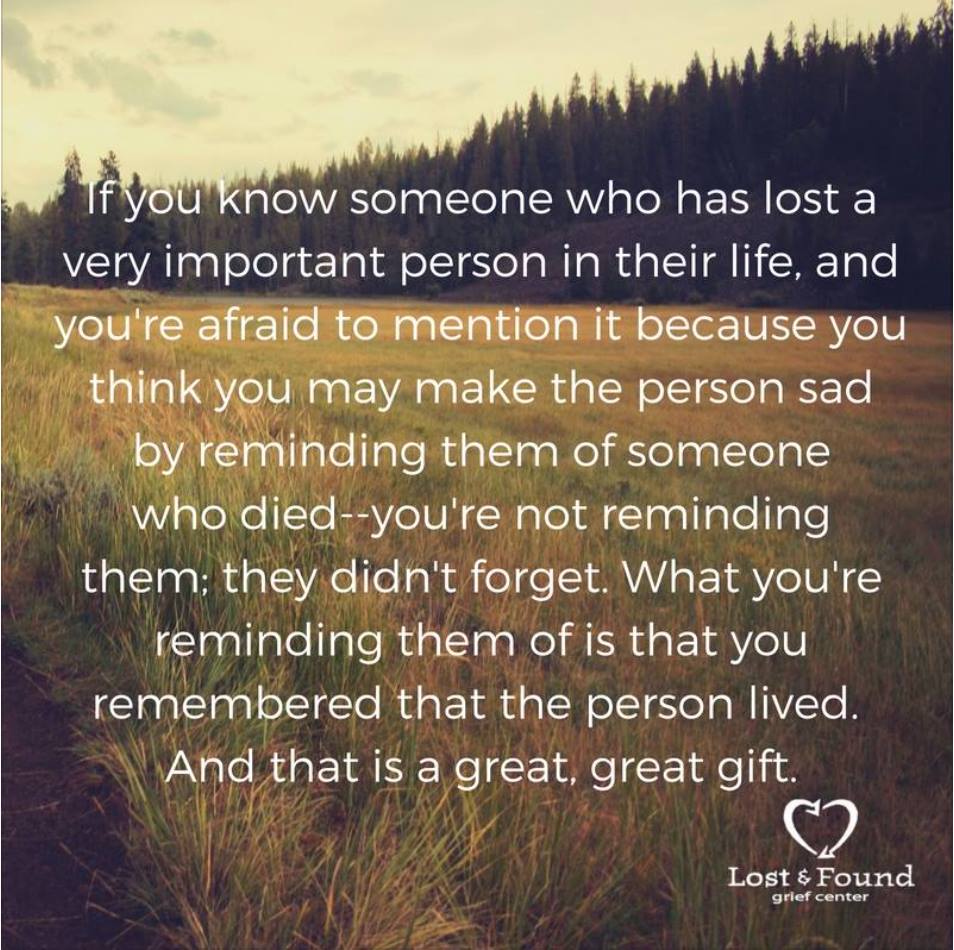
As the years go by it is often more and more unlikely for a parent to hear their missing child’s name spoken aloud. Yet it’s something we all long to hear. Sometimes friends and family are afraid that mentioning the child will make a dad “sad” or “remind him” the child is gone. Trust me, “sad” is something he feels often and he never forgets. Knowing someone else is willing to remember too is a great blessing.

SHARE MEMORIES OR DO SOMETHING TO HONOR THEIR CHILD-IF YOUR FRIEND IS READY

Not every grieving parent wants to talk about their child though many do. And even if they are ready, they may not want to talk about him or her right now. Pay attention and let them lead. If a bereaved dad is receptive, share a memory or photograph you might have of his child. Write a card and include details of how his child influenced your life. There are many ways to honor a child’s memory on important dates: make a meaningful donation, place a book in his honor, add to a foundation or scholarship that bears her name or send a small token that speaks of a child’s interests or personality.

SUPPORT SURVIVING SIBLINGS

Surviving siblings can be forgotten mourners. Grieving parents are frequently caught between their own needs and the needs of the children still with them. Child loss changes everything-for the whole family. So when friends come alongside and encourage and care for surviving siblings it helps everyone. Our family’s first Mother’s and Father’s Days were spent in company of friends of our children. It took a huge load off me and my husband to know the day was still special without all the focus being on us.

ENCOURAGE SELF-CARE

Grief from child loss is so overwhelming that often parents find themselves in a downward spiral where self-care is practically impossible. Even parents years into this journey sometimes say holidays and milestone days bring back the intense feelings of those first days. When that happens we need friends and family outside our immediate grief circle to help us find a path out of the darkness. Father’s Day is a great opportunity to offer a dad a healthy meal, take him on a hike or fishing expedition, or just sit and watch a ball game.

STAY IN THE PICTURE

Everyone gets busy and it’s completely natural that over time people forget days and dates. But Father’s Day doesn’t necessarily become easier for bereaved dads over time. So don’t assume because it’s been years that a dad isn’t still in need of extra support. Commit to checking in and helping keep his child’s memory alive.

Sometimes we just don’t know what to do for a grieving friend and often they aren’t able to express what might be helpful.

I hope these seven suggestions encourage you to try.

Father’s Day 2026: Insights From a Bereaved Dad

I belong to a number of closed online bereaved parent groups.  

I’m not sure if it is a function of gender or not, but the moms seem to be a bit more willing to share their feelings and to respond to the feelings of others.  

Every now and then, a dad speaks up. When he does, I usually pay close attention to this male perspective.

Wes Lake is a bereaved dad in our group who often has thoughtful posts that touch my heart.  This one in particular was a beautiful, true and helpful reflection so I asked him for permission to share.

He graciously agreed.  

” [I was] just thinking about 5 years down this road and some of the things I’ve learned:

Grief doesn’t usually kill you.

For a long time I wished the Lord would take me but apparently he had other plans because I’m still here. So if I’m still alive what choice do I have but to pick up the pieces of a shattered life and learn to live again. Yes, I’m severely disabled but I need to make the best of what I have.

It is not the hand your dealt, it is about how you play the cards.

world-doesnt-stop-for-your-grief

I have learned not to trust my emotions.

I will have the blackest of black days and a day later the world will look like there is hope. Nothing in child loss good or bad is forever other than the loss of our child.

On the bad days I hold out hoping for a better day.

good day bad day god is in all days lucado

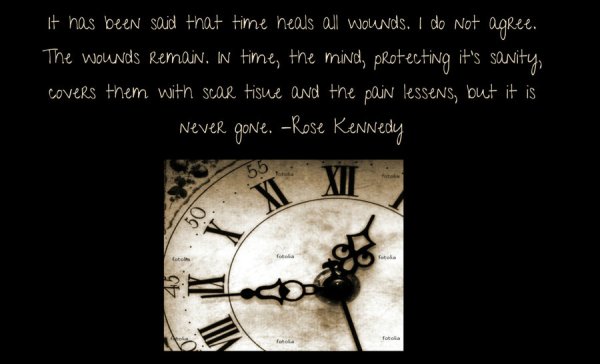
Time does heal but not in a way that most people think.  

Time shows you all the sides of grief. Time teaches you your limitations.  Time helps you to stuff the grief so you can function again.  Time shows you how to interact with a non-grieving world.

You don’t grieve any less, but your life gets easier.

it has been said that time heals all wounds rose kennedy clock

One other one not part is of the OP [overall process]-I had to come to grips with being happy.

For a long time I felt that experiencing the slightest sliver of joy was somehow being unfaithful to my daughter. I’m here to tell you that is a huge lie of grief. Just because you are experiencing good things does not mean you miss your child any less.

Being a martyr gets you no place good.”

~ Wes Lake, bereaved dad

grieving person is going to laugh again

Father’s Day 2026: The Silent Struggle of Fathers

I can’t pretend to understand exactly what it feels like to be a father who buries a child. I’ve only been able to watch from the outside as my husband absorbed the impact of that great wound.

But I can tell you this:  for dads, like moms, each holiday is another mile marker on the road of grief.

It is another poignant reminder that things are not as they were-they are not as they should be.  

father hurts too

Many men keep the hurt bottled up inside, don’t talk about it, don’t seek out fellow bereaved fathers, and don’t cry as much as their wives.

It is easy to forget and overlook the ongoing pain of child loss for fathers-especially when outward signs are few.  

But I promise you-that dad in the pew on Sunday-he’s hurting.

That man shaking hands and joking-he remembers.

He hasn’t forgotten that one of the special people that called him “Daddy” is no longer around to do it.

Tell him you remember too.

Speak his child’s name and share a special memory.

Acknowledge the pain.  Let him express his grief.  

And honor him as a father to ALL his children-those that walk the earth with him and those that don’t.  

good father unsung

Grief Work 2026: Some Choices Can Help My Heart Heal

I know that when I first stumbled onto a bereaved parent group, it was one of the things I was looking for: evidence that the overwhelming pain of child loss would not last forever.  

Some days I was encouraged as those who had traveled farther down this path posted comments affirming that they could feel something other than sorrow.

Some days I was devastated to read comments from parents who buried a child decades ago asserting that “it never gets better”.

Who is right?  

What’s the difference?

Do I have any control over whether or not this burden gets lighter?

It has been over twelve years since Dominic ran ahead to Heaven and I’ve learned a few things since then.

letting-go

Time, by itself, heals nothing.  But time, plus the work grief requires, brings a measure of healing.  

If I cling with both hands to my loss, I can’t take hold of the good things life still has in store for me.  

Longing for the past all the time only brings sorrow.  I cannot turn back time.  Days, weeks, years will keep coming whether or not I choose to participate in them.  I will rob my heart of potential joy by focusing exclusively on the sorrow I can’t undo.

Daily choices add up.  When I lean into the small things required each day, I build confidence that I can do the bigger things that might still frighten me.  Making phone calls eventually helps me show up to a meeting or to church.  I strengthen my “can do” muscle every time I use it.

Doubt doesn’t disappear. Facing my doubt forces me to explore the edges of my faith.  It does no good for me to stuff questions in a drawer and hope they go away.  They won’t.  I have to drag them into the light and examine them.  Doubt is not denial.  If God is God (and I believe that He is!) then my puny queries don’t diminish His glory.  He knows I’m made of dust and He invites me to bring my heart to Him-questions and all.

My mental diet matters more than I might think.  I have to be very careful what I feed my mind.  If I focus on sadness, tragic stories, hateful speech and media that feeds my fears and despair then those feelings grow stronger.  If instead I focus on hopeful stories, good conversation with faithful friends and inspiring quotes, verses and articles I feed the part of my heart that helps me hold onto hope.

I need a space where I can be completely honest about what this journey is like.  Bereaved parents’ groups have been that space for me and have been an important component of my healing.  But even there I must be cautious about how much time I spend reading other parents’ stories if I notice that I’m absorbing too much pain and not enough encouragement.

me too sharing the path

Grief is hard.  

It’s work. 

And that work is made up of dozens of daily choices that are also often difficult.  

I don’t expect to be healed and whole this side of eternity.  But I do know that if I consistently do the work grief requires I will be stronger, more whole and better able to lean into the life I have left than if I don’t.

I want to live. 

I want to honor my son by living a life that’s more than just limping along, barely making it, struggling for each step.  

So I do the work grief asks of me.  

Even when it’s hard.  

give yourself space to do the work grief requires