What, Exactly, IS “Grief Work”?

I have used the term for years and only recently has someone asked me to define it.

I guess I never realized that in all the writing about it, I’d never really explained what it meant.

So here goes.

The term was coined by psychiatrist Erich Lindemann in the 1940s. He worked with survivors of the Cocoanut Grove tragedy and observed that grievers experienced common symptoms, feelings and faced similar challenges. Through his work, he developed a theory of grief incorporating his observations and his technique for walking grievers through these common issues.
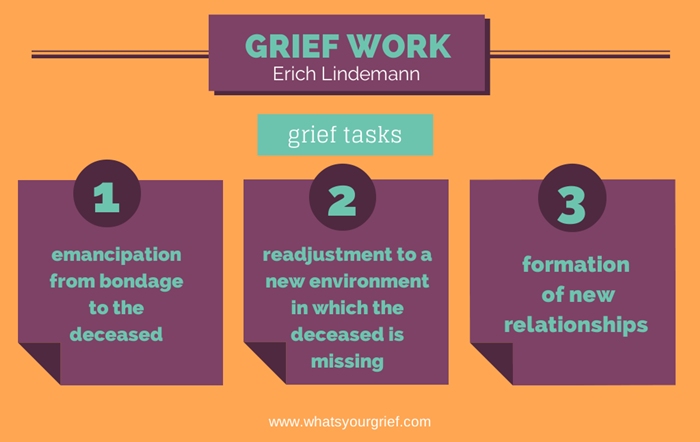
Image result for six stages of grief erich lindeman

Today the term has been expanded and is used widely to describe almost any approach to grief that includes specific techniques for helping someone walk the path of loss.

I use “grief work” to mean all the ways I (and others) must actively seek to identify, face, process, and ultimately incorporate the feelings, trauma and changes loss force upon us.

Grief work (in no particular order) can include but is not limited to:

  • Attending sessions with a professional, spiritual or lay counselor. Some people find it helpful to have a safe person outside the immediate grief circle to discuss feelings, concerns and relationship challenges that are generated by loss or exacerbated by loss. It’s best to find a counselor who specializes in grief, preferably child loss and/or traumatic loss (all child loss can be classed as traumatic loss). Other counselors may be too quick to label a bereaved parent’s grief as “abnormal” or “too lengthy” or “complicated” when it is, in fact, closely following observed timelines for dealing with child loss. If the first counselor you find isn’t a fit, try another. It’s OK to insist that you are heard, your feelings respected and your loss recognized for the life-shattering event that it is.
  • Finding, joining and participating in online or in person support groups. There are literally dozens of online support groups for bereaved parents. Some are designed to meet the needs surrounding specific types of loss such as sudden death, suicide, drug overdoses or loss to cancer or another disease or condition. Some are organized around certain faiths. Others may be rooted in geographic proximity and the online group might have a monthly or quarterly face-to-face meeting in the area. While it can sometimes be overwhelming to see the number of parents in such a group, it’s also extremely helpful to have a safe space to share things only another bereaved parent can understand.
  • Setting aside quiet time to think, process and possibly journal feelings. So much grief work must be done alone. Counselors can equip me with tools, support groups can give me real-life examples and encouragement but only I can do the nitty-gritty labor of teasing apart all the feelings and change grief brings with it. Journaling has been very helpful for me in putting words to what can sometimes be rather nebulous thoughts swirling around in my head. When I name what I’m feeling or experiencing, I can better construct a strategy for processing and living with it.
  • Walking back through memories, noting regrets, forgiving yourself and making peace with the past. We ALL have things we would have done differently. Death, being final, forces a heart to face that there is no chance to atone for past behavior. Words unsaid, things undone, opportunities missed are carved in the stone of yesterday. I spent many nights recounting my shortcomings as a mother, berating myself for what I didn’t do. Eventually I was able to rest on the simple fact that one thing I DID do was make sure Dominic knew he was loved.
  • Setting boundaries to give yourself and your family space and time to do grief work as well as to conserve emotional, relational and physical energy that’s in limited supply after child loss. So many of us live with few or no boundaries-responding to every request with a “yes”, adding things to the calendar without a thought to how exhausted we might be at the end of a day or week. Some of us are overtaxed at work or school. Some of us are hyper-involved in our churches, civic organizations or local politics. There are dozens of ways to be extended and just as many ways to live with that constant drain. Child loss forced me to recognize that I could no longer BE that person. I couldn’t afford the time, energy, mental space and emotional burden of saying “yes” anymore. I learned that “NO” is a complete sentence and began using it.
  • Practical considerations regarding your child’s belongings and other personal property. Many people might not consider this part of grief but it is. So many details to take care of, so many times I had to repeat the words, “My son was killed in an accident. I need to close this account.” So many copies of his death certificate mailed out to different agencies or companies, documenting the awful reality that he was never coming home again. Then there are questions of what to keep, what to store, what to give away. Should a room remain untouched if your child still lived at home? We had to clean out Dominic’s apartment only a few days after his funeral. It felt like I was boxing up everything beautiful about my boy.
  • Learning how to do holidays, birthdays, family gatherings, vacations and other gatherings. The empty chair looms larger when all the others are filled. If you have been the primary organizer of such events, it might surprise you to find the rest of the family still expecting you to be that person. Even if you aren’t the host for holidays, you will need to communicate to others if or how you feel comfortable participating.
  • Maintaining or regaining health after loss. Stress is one of the greatest contributors to so many health issues. Child loss is an unbelievably stressful experience. So it’s no wonder that many parents find themselves post loss with new or aggravated health problems. I had an appointment with my rheumatologist just one month after Dominic ran ahead to Heaven. It was critical that I tell her of my loss because in addition to whatever medical interventions she was prepared to prescribe, she needed to know I would be experiencing an extended period of intense stress that might necessitate closer observation and follow-up. As difficult as it may be to talk about, it’s important to inform your healthcare providers of your loss and to be absolutely honest about changes you’ve noticed in your body as a result.

There are probably a dozen or more subcategories of grief work I could list and some of you might think of ones I wouldn’t.
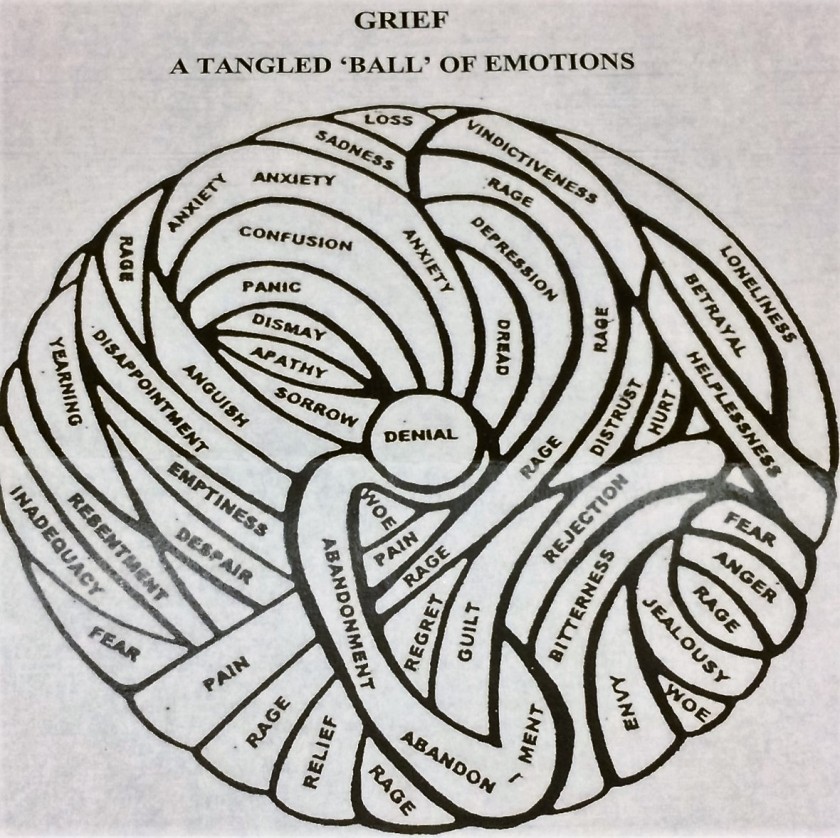
Grief IS work.

It is important, necessary and exhausting WORK.

It requires time, resources, effort and energy and cannot be hurried along.

But it is the only way a heart can begin to put the pieces back together.

Journaling My Way Home: Doubt Is Not Disbelief

When I was asked several months ago to speak to a group of hospice care workers, I titled the presentation “Lifting the Veil on Grief”.

One of the topics I covered was how experiencing the death of a loved one-especially out-of-order or untimely death- can cause even the staunchest believer to doubt.

And the first thing I said was, “Doubt in the face of overwhelming sorrow and hard circumstances is absolutely normal.  But doubt is NOT disbelief.”

So often friends, family, clergy, social workers and others want to steer hearts away from doubt because they are afraid that entertaining questions or expressing disappointment in God will always lead to someone losing faith.

That is untrue.

Read the rest here: https://thelifeididntchoose.com/2019/03/02/doubt-is-not-disbelief-journaling-my-way-home/

So What Did You Do With Your “Extra” Day?

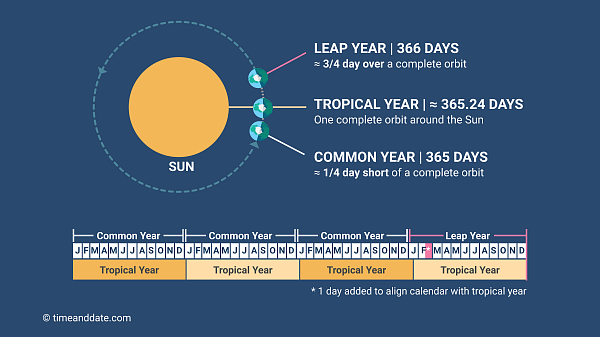
It rolls around every four years in man’s attempt to keep the calendar in tune with the cosmos.

It’s really a rather rough alignment but it’s the best we can do.

Truth is that each year there’s about one-quarter of a day unaccounted for even though our minds and bodies don’t notice so we tack on a whole day every four years and act like we catch up.

Image result for leap year image

We don’t.

Most of us plod along as if the Monday (or Saturday, this year) is just another day in a series. For some it’s a bonus work day (maybe a bit extra in the check this month?). For many it’s only a date.

But for the tiny portion of the population who were born or married on this date, it’s a celebration.

Once every four years they get to mark-on the very day-what most of us take for granted. Friends and families can gather and honor a life or a marriage without trying to figure out whether to do it the day before or the day after.

Image result for leap year image

This is the second Leap Day that’s rolled around since Dominic ran ahead to Heaven and it got me thinking about that little extra time each year or each month or each day holds that I hardly notice.

What if I took those moments (or hours) and wove them into something more meaningful than playing a game on my phone, watching another show on Hulu or scrolling through social media?

Image result for making the most of your time images

What if I choose to redeem those scraps of time that I normally toss away like they don’t matter?

  • In five minutes I can write a card, text or message to a friend.
  • In ten minutes I can call and set up a lunch or coffee date.
  • In thirty minutes I can preheat the oven and toss a storebought pie inside to take to my elderly neighbor.

So many opportunities to let someone know they are not forgotten nor unimportant.

February twenty-ninth didn’t really feel all that “extra” to me since I mostly did what I do every Saturday.

But it did make me think about how I spend my time.

How about you?

Image result for making the most of your time images

Setting Aside Time To Grieve Helps My Heart Hold On

One of the commitments I made out loud and in my heart the day Dominic left us was this:  I was not going to let his death tear my family apart.  

I was not going to let him become the sainted brother that stood apart and above his siblings.  

I was going to continue to give as much of my time, effort, love and presence to each of the three I had left as I had done when there were four on earth beside me.

I’ve been more or less successful in keeping this promise.

Read the rest here: Child Loss: Setting Aside Time To Grieve Helps My Heart Hold On

Blessing The Dust, A Prayer For The Broken

There are many times in my life when I’ve felt small and unseen.

Many times when my spirit sank so low I couldn’t even remember “up” much less find it.

But there is no moment so humbling as the one when I came face-to-face with the undeniable FACT that my son had exhaled for the last time.

Walking into the sanctuary where his body lay still, unnatural and absolutely silent, my heart shattered into even smaller pieces.

So I understand Job’s cry.

I cry out to You for help, but You do not answer me; when I stand up, You merely look at me.

Job 30:20 HCSB

I know what it is to fall to the ground in utter dejection, complete hopelessness and pray, pray, pray that life leaves my body because the pain is unbearable.

That’s one reason Lent is a kind of relief every year.

It’s a season when others join me in admitting that from dust we came and to dust we will return.

Image result for from dust to dust

But it’s also a season of hope.

Because while Lent forces my heart to focus on my frailty, it points me toward my Savior.

The One who made us is the One who rescues us.

The One who saves us is the One who sees us.

The One who sees us is the One who longs to comfort us.

I love this blessing by Jan Richardson:

“All those days
you felt like dust,
like dirt,
as if all you had to do
was turn your face
toward the wind
and be scattered
to the four corners

or swept away
by the smallest breath
as insubstantial—

did you not know
what the Holy One
can do with dust?

This is the day
we freely say
we are scorched.

This is the hour
we are marked
by what has made it
through the burning.

This is the moment
we ask for the blessing
that lives within
the ancient ashes,
that makes its home
inside the soil of
this sacred earth.

All those days
you felt like dust,
like dirt,
as if all you had to do
was turn your face
toward the wind
and be scattered
to the four corners

or swept away
by the smallest breath
as insubstantial—

did you not know
what the Holy One
can do with dust?

This is the day
we freely say
we are scorched.

This is the hour
we are marked
by what has made it
through the burning.

This is the moment
we ask for the blessing
that lives within
the ancient ashes,
that makes its home
inside the soil of
this sacred earth.

So let us be marked
not for sorrow.
And let us be marked
not for shame.
Let us be marked
not for false humility
or for thinking
we are less
than we are

but for claiming
what God can do
within the dust,
within the dirt,
within the stuff
of which the world
is made
and the stars that blaze
in our bones
and the galaxies that spiral
inside the smudge
we bear.”

—Jan Richardson, Blessing the Dust, For Ash Wednesday

It’s no secret I am frail, prone to break-even shatter-into the tiniest bits of dust.

But that doesn’t stop my God from gathering what’s left to make something beautiful.

When I find myself face down in the dirt, no strength to lift my head, I remind my heart, “[Do] you not know what the Holy One can do with dust?”

Grief Triggers: Why Does Coffee Make Me Cry?

Oh, the early days, weeks and even years of grief!

I was a giant walking nerve.

Every sight, sound, smell or even touch that reminded me of Dominic evoked a wave of sorrow that almost always ended in tears.

I cried in the grocery store, walking past Bath and Body Works in the mall, driving down the road when certain songs came on the radio, tidying up drawers and finding a long lost and forgotten something that Dominic tucked away for later.

Sometimes I just wanted to scream, “Don’t you know my son’s not here??!!”

But of course I couldn’t do that and walk around in society.

So the triggers were an outlet for that pent up energy, angst and sadness.

It was awful.

Especially when what I set out to do was something I really needed to do. I’d leave the house with a list of places to go, things to buy and people to see but often return having done only a fraction of it.

I’m better at it now.

I’ve grown stronger and am more skilled at carrying the burden of the disconnect between my heart and other hearts who haven’t experienced deep pain and loss.

I’ve learned how to fix my eyes on some distant point if cornered by a well-meaning friend asking how I am but not really wanting to hear about how Dominic’s death continues to impact our family.

I press my fingers together hard in an attempt to stop the sorrow rising up and threatening to undo me until I can escape to the bathroom, a quiet corner or my car.

And I’ve learned not to be ashamed of the tears that fill my eyes and slip down my cheek despite all my best efforts no matter where I am.

There is a Whole Series of “Lasts”


One of the things even the most uninformed person understands about loss is that the first birthday, the first Thanksgiving, the first Christmas and all the “firsts” after loss will be hard.

But one of the things no one tells you about is that a heart will mark the “lasts” just as much.

The last time I saw him.

The last time I spoke to him.

The last time I hugged his neck and smelled the unique fragrance that was my son.

Read the rest here: https://thelifeididntchoose.com/2019/02/15/a-whole-series-of-lasts/

Loving Bereaved Families: Helpful Tips


I firmly believe that our friends and extended family want to reach out, want to help, want to walk alongside as we grieve the death of our child

 I am also convinced that many of them don’t because they don’t know how.  

It may seem unfair that in addition to experiencing our loss, we also have to educate others on how to help us as we experience it, but that’s just how it is.

The alternative is to feel frustrated and abandoned or worse.  

Read the rest here: https://thelifeididntchoose.com/2019/02/13/child-loss-helpful-tips-for-interacting-with-bereaved-families/

So Many Grief Anniversaries: A Survivor’s Guide


There are more than you might think.  

Most folks would count the date of death and maybe the date of burial or memorial service.

But a mama’s heart counts it ALL.

I count the day he left, the day I was first able to view his body, the days of visitation, the day of the funeral and burial.

  • I count the day we cleaned out his apartment.
  • I count the day I notified credit card companies he would no longer require their services.
  • I count the day I received the death certificate.
  • I count the day I got his posthumous diploma.

And every year these dates roll around again to remind my heart of the pain I felt then and to pierce it afresh. 

Read the rest here: https://thelifeididntchoose.com/2018/02/12/how-can-i-survive-grief-anniversaries/

It’s All Part Of The Journey: Good Days, Bad Days

Will today be a good day or a bad day?

Not sure yet.

Mainly because what usually determines THAT is something that happens (or doesn’t happen) at some point after my morning quiet time.

But whether it’s a good day, a bad day or somewhere in between, it is absolutely, completely, utterly NORMAL for my emotions to change as I make my way down the path called “Child Loss”.

Read the rest here: https://thelifeididntchoose.com/2019/02/11/child-loss-good-days-bad-days-all-part-of-the-journey/