Holidays 2020: What The Bereaved Need From Friends And Family

I wrote this four years ago when I realized how hard it was for wounded hearts to tell friends and family what they needed around the holidays.

It’s been shared more than 130,000 times which might reflect that it hits the mark for at least a few folks. My prayer is it makes a difficult season a little less so.

If it speaks for you, feel free to share and let the ones you love know how they can make a hard season slightly easier on your heart. ❤


“I know it is hard.
  I know you don’t truly understand how I feel.  You can’t.  It wasn’t your child.

I know I may look and act like I’m “better”.  I know that you would love for things to be like they were:  BEFORE.  But they aren’t.

I know my grief interferes with your plans.  I know it is uncomfortable to make changes in traditions we have observed for years.  But I can’t help it I didn’t ask for this to be my life.

Read the rest here: Grief and Holidays:What the Bereaved Need From Friends and Family

A Walking Nerve

It’s hard to explain to anyone who hasn’t walked this path.

Deep pain and unfathomable sorrow stripped me of any reserve, any defense, any padding between the wider world and my oh-so-fragile heart.

I was a walking nerve.

Every awkward and less-than-thoughtful word or deed by friends, family and acquaintances rubbed me raw. I was utterly incapable of extending grace even as I knew I should and understood that most often their intentions were kind.

I had suffered a grievous wound and spent most of my energy just trying to protect what was left of my heart.

All I wanted to do was retreat to the safe cocoon of my own home. I unfollowed people on social media, I screened telephone calls, I rarely ventured out for anything but the most necessary supplies. It was the only way I could provide the space and time needed for my heart to heal enough to bear even the slightest brush with folks who might say or do the wrong thing.

It helped.

Eventually I found the strength to venture beyond the safety of home, family and the few friends with whom I felt comfortable and secure.

I could scroll through Facebook once again without reacting to every single post.

I went back to church and even showed up for covered dish socials where I couldn’t be certain which way the conversation would flow or who might get me blocked into a corner and ply me with questions.

I attended a few large gatherings: graduations, weddings and a Stephen Curtis Chapman concert.

So if you are in the early days of this hard, hard journey, do what you have to and find the safe circle that gives you time, space and grace to help your heart toward healing.

It may take longer than you’d like, but resting from the constant pressure of trying to protect yourself from the hustle and bustle in a world where child loss is misunderstood and frequently ignored will make a difference.

And one day, like me, you might well wake up and realize that what once felt like personal attacks are simply folks saying and doing foolish things because they haven’t been forced to learn the wisdom of compassion through unfathomable loss.

I’m still more sensitive than I used to be.

There are times I just can’t take crowds, unpredictable settings, offhand comments about death, dying, grief and heartache.

But I’m finally able to walk in the world without feeling I have to protect my heart at every turn.

It’s liberating and I’m thankful.

Many Kinds Of Grief: Eight Ways To Help Your Heart In Hard Times

Long time readers may have noticed that the past month there have been fewer original posts and more recycled ones.

I’m not sure precisely why, but it’s been a lot harder to put my thoughts and feelings into words than at any other time in this journey.

I’ve started and abandoned post after post. They languish in my “drafts” file and will, hopefully, eventually, be completed.

There’s just something about the rest of the world being forced to live in the no-man’s-land between what we used to take for granted and what we now have to face that makes it harder to talk about my personal experience.

Grief takes many forms and I believe the whole world is grieving now.

I can hear it. I can feel it.

All of us are facing (many for the first time!) the fact that control is largely an illusion. We climb into our vehicles and assume the person coming at us in the other lane will maintain their position but don’t know that he or she is distracted or medically impaired or drunk.

And then-BAM!-all bets are off. What we take for granted can change in an instant.

So I guess my challenge is in translating my particular grief into language others can understand and relate to.

For the first time I feel there’s a wider audience longing for the secret recipe to life after loss.

I know not every heart is suffering from physical loss of a loved one but I think there are some general principles I’ve learned that can help anyone who’s struggling to find a path through this difficult season:

  • Acknowledge what you’ve lost. It often helps to name what’s changed, what you miss, what you’ve had to give up. It may seem obvious but you might be surprised. When Dominic ran ahead to Heaven I knew I’d no longer have HIM. But what I didn’t realize at first was that I also lost the family I once knew (we were all changed), the me I used to be and the life I thought I’d have. There are Secondary Losses hidden inside every grieving heart.
  • Face your feelings. Consider journaling your thoughts. Often speaking or writing out a feeling is the first step to dealing with it. Grief isn’t just one feeling-although we tend to think of it that way. It’s A Tangled Ball of Emotions. I had no clue until it was me trying to unravel the strands and understand what to do with them. Emotions will leak out somewhere. Are you short-tempered and cranky? There’s probably something underneath those outward signs.
  • Think about your strengths and coping skills. What has helped you get through tough times in the past? How can you use the same set of skills or tools to tackle this challenge? Child loss is the greatest and most difficult thing I’ve ever faced. If you had asked me in the first five minutes if I’d survive I would have told you, “no way”. But I have. Largely by leaning into my faith in Christ (which I know not everyone shares) and depending on coping skills I learned over the years dealing with chronic illness and other hard things. What have you survived in the past? Use that to get through this.
  • Stay connected to the people who matter most to you. Social distancing is an unfortunate label for what is actually physical distancing. Social media, smartphones, Skype, Zoom meetings and other electronic means of connection are widely available and can help a heart stay in touch with friends and loved ones. When someone feels isolated he or she is much more apt to give up and give in. Humans were made for community. If you can’t be physically next to people, find another way to get close and stay in touch. It might well require more effort but it’s worth it.
  • Make a new routine. It’s not just babies that thrive on schedules. We all need a semblance of control and normalcy. Eat at regular times. Set up a work station/school station if the virus is keeping you at home. If possible, make sure each day includes some physical activity and outdoor air. Exercise, hobbies, family story time or shared movies are all things that could be included. Try to go to bed and get up at about the same time each day. For several months after Dominic left us, I wrote each day’s plan on an index card. When I found myself at loose ends, sitting staring into space and sinking into despair, I consulted my card. I moved on to the next thing and eventually found I’d made it through yet another day.
  • Limit your media diet. Let’s face it-most of us are easily drawn into an “us vs. them” mentality. And once we begin to think in those terms it’s harder and harder to see beauty in the world. It’s one thing to remain informed and it’s another to be absorbed by all the things over which we have no control. Focus on smaller things-friends, family and community. That’s where a heart can make a difference.
  • Practice discernment and draw a line between what is inconvenient and what is truly tragic. Lots of things can FEEL like the end of the world but very few things actually ARE. Life has changed dramatically but it’s still life. Work and school look different. Masks are uncomfortable. Celebrations might be virtual. Shopping without trying on clothes is a hassle. But none of those things equate to death or loss of income or being unable to visit an elder in a nursing home. There are absolutely, positively tragic aspects to this experience and (sadly) one or more of them may visit your family. But unless and until they do, save your energy in fretting over (relatively) minor inconveniences.
  • Remember that there are more chapters to your story. All of us have dark pages in the books of our lives. Some of us have several chapters’ worth. But as long as there is life, there is hope. My family HAS survived child loss/sibling loss. We are different, we are wounded, but we have survived. Some of the things we have learned are truly beautiful (although we wouldn’t have chosen to learn them this way). If you listen and pay attention, you will learn things too.

Truth is, grief can drag you down so low you don’t remember which way is up, much less how to get there. No one knows that better than a bereaved parent.

Still, there are things you can do even there that will help your heart hold onto hope.

Where there is hope there is light.

And light will always, always chase away the shadows.

The Keepers

Those of you who have followed the blog for a bit know that I’ve said over and over and over: there is no limit to the heartache you may have to endure in this life.

The past three years have been the most difficult since the very first year after Dominic ran ahead to Heaven in 2014.

But this memory popped up in my Facebook timeline the other day and reminded me that along with all the hard, there have been some beautiful blessings.

Two years ago around this time I was listening to day after day after day of witnesses giving first one account and then another of events that happened three years prior trying to frame facts so that the twelve jurors would vote a certain way.

Only my friends and family from miles away helped me hold onto the thin thread of hope that truth would prevail.

It was brutal and not something I ever want to repeat.

If you ever wonder if a phone call, text, card or message make a difference, just ask me.

I know beyond a shadow of a doubt that I would not have made it without them. 

Scripture Journal Challenge 2020: Week Two

Last year during the month of August I joined with others and participated in a Scripture Writing Challenge.

We committed together to read and write out short passages on grief every day.

I wrote companion posts and shared them.

Circumstances have prevented me from doing another in-depth study again this year but I thought it would be nice to collect the entries from last August in a weekly bundle and put them out there for anyone who might want to revisit them or try it for the first time.

So here’s the first week’s links (including how to set up a journal):

Setting up your journal and link to all the verses: August Scripture Journal Challenge: Verses on Grief

Day 8: Scripture Journal Challenge: Earth Has No Sorrow That Heaven Can’t Heal

Day 9: Scripture Journal Challenge: When I Can’t Trace His Hand I Trust His Heart

Day 10: Scripture Journal Challenge: Worn Out and Weary? Jesus Understands.

Day 11: Scripture Journal Challenge: A Living Hope

Day 12: Scripture Journal Challenge: The One I Run To

Day 13: Scripture Journal Challenge: My Righteous, Raging King!

Day 14: Scripture Journal Challenge: Suffering and Safe Places

It takes a bit of work and commitment to do this so I understand some hearts may not be in a place where that is possible.

But if you’ve missed feeding your soul with the Word of God this is an easy way to get back into the habit.

Why I Need To Tell His Story & Why I Need Someone To Listen

Every time I tell the story of Dominic, it helps to keep him real.

It reminds my heart that he lived, that he mattered, that he matters still.

And in the telling, I am giving away a little bit of him for another heart to carry. 

His light is passed to another soul that can pass it to another and another.

Read the rest here: Why We Have to Tell Our Stories & Why We Need Someone to Listen

You Are Absolutely Allowed To Mourn *Smaller* Losses

When your scale of awful is off the charts, there’s a tendency to dismiss anything less as merely inconvenient or inconsequential.

But that’s just not how our hearts work.

You can be shattered by child loss and still feel the slings and arrows of everyday losses, disappointments, discomfort and sadness.

It’s OK to mourn the things that don’t measure up to the pain and despair of burying a child.

It’s OK to admit that even ordinary things like an empty nest, changing circumstances, moving away from friends and family, ill health, family drama and dozens of other, smaller wounds prick your heart and make it bleed.

While child loss has helped me gain perspective on what’s truly important, irreplaceable and worth my time and energy, it has not created a protective and impenetrable barrier that guards my heart from further pain.

I am just as likely as anyone else to fall into a funk over a misunderstanding, a less-than-expected outcome, a disappointing phone call with a friend or some other everyday frustration. And, sometimes, there are truly hard and horrible things I’ve had to bear: my mother’s prolonged illness and death, my grandson’s premature birth, my son’s overseas deployment and other things I’m not at liberty to share because I’m not the main character in the story.

Child loss doesn’t mean there won’t be more pain in this life.

It doesn’t give me a pass on heartache.

And it is perfectly normal-actually perfectly and absolutely right-to be sad and mourn the smaller losses in life.

It means my heart’s still beating.

It means I’m still engaged with those around me.

It means I’m still present and invested in life.

And that’s a good thing.

Let The Morning Come In Our Hearts

I have written many times of my habit of greeting each new day watching the sun come up through my east facing living room window.

It never gets old.

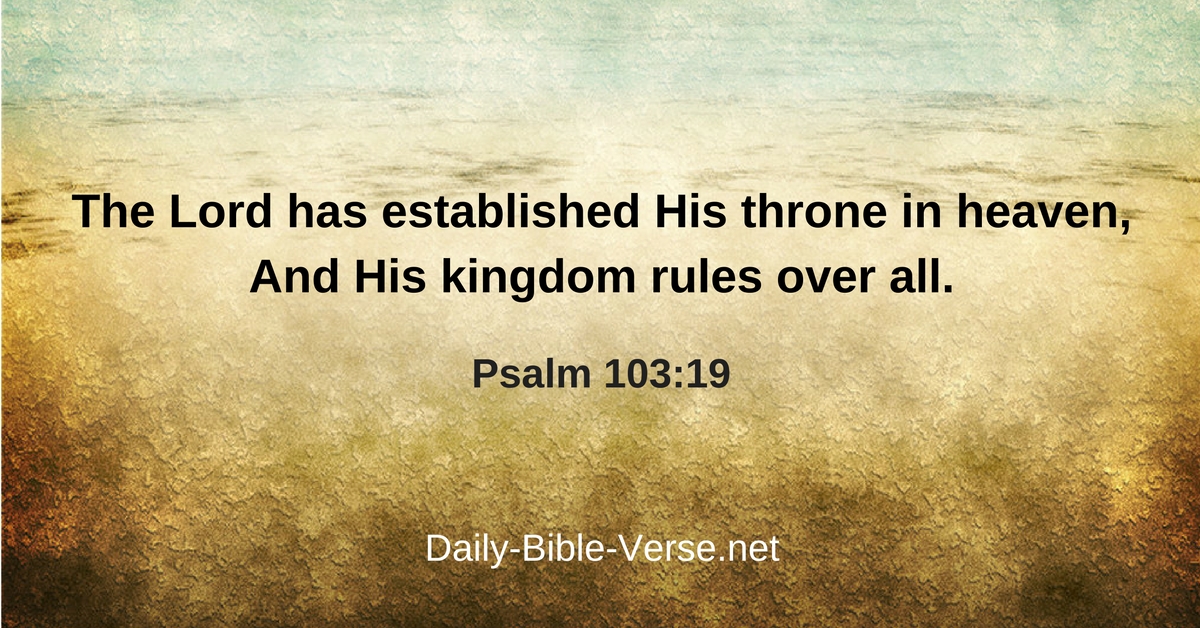
I cherish the reminder that despite how difficult things may be or how dark my heart might feel, God is still on His throne.

Daily Bible Verse | Heaven | Psalm 103:19

As the shadows fade and light pours through the window and illuminates the world outside, I remember that no night lasts forever and death doesn’t win.

John 11:25-26 | Jesus quotes, John 11 25 26, Jesus

It’s not always easy to choose life, Lord

Because then we have to struggle with who we are

and why we are, and who you are,

and what to do with who we are,

and why we are,and who you are.

We have to let you make us new, and being made anything always hurts.

Father,

Let the morning come in our hearts,

So morning can come in our lives,

And the world that needs a word of hope can hear

‘Death has lost, and life has won.”

Verdell Davis, Riches Stored in Secret Places

It IS painful to be made into anything.

And sometimes I resist.

But then the morning comes and once again I choose to yield my heart to the One who loves me best and is molding and making me more like Jesus.

Winds Across My Heart

I’m pretty far past what I call my “season of sorrow” so I don’t really know what came over me the other day.

But somehow the stars aligned or the slant of the sunshine or the smell in the air overwhelmed my heart.

Maybe it’s because Facebook faithfully reminds me of what happened on this date years ago. I know I can adjust the settings but I don’t because it’s both bitter AND sweet to be reminded.

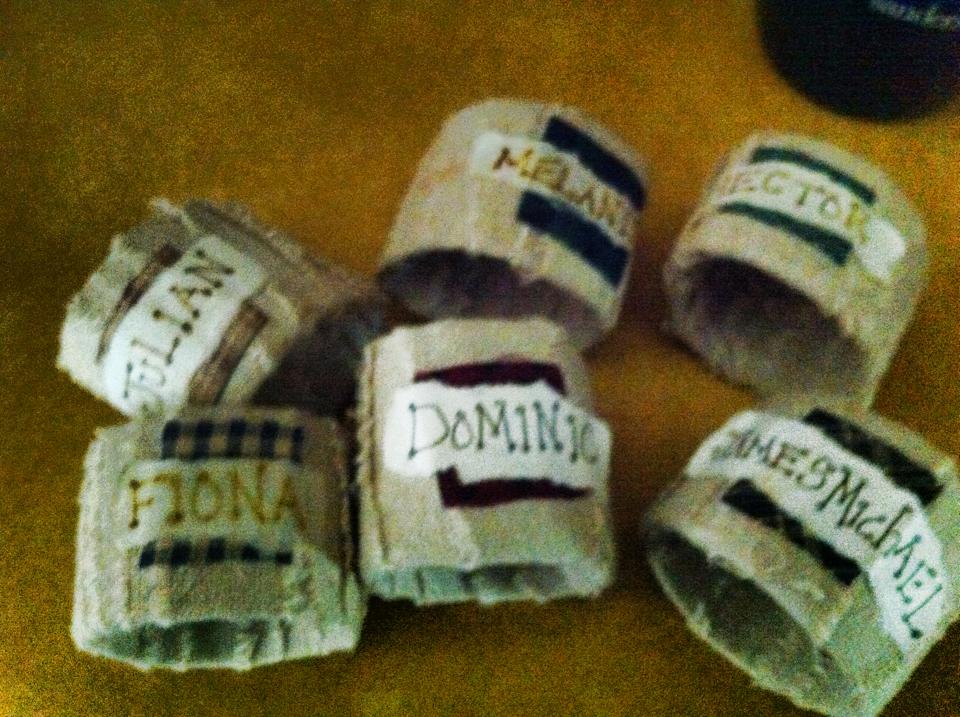
Our family used these napkin rings for years and years. Facebook reminded me there are a thousand ways to miss Dominic.

Maybe it’s because summers in Alabama involve fervent activity before nine in the morning with a long, hot lull until more fervent activity after five in the evening.

I really don’t know.

But that’s one of the conundrums of child loss.

I hit a wall and I had a cry and took a short nap (something I only do about five times a year) and I was better.

I try to manage my days to avoid these things but sometimes a little bit of this and a little bit of that blow winds of nostalgia and regret and longing and missing across my soul.

And all I can do is weather the storm.

Bereaved Parents Month 2020: Ten Ways To Survive Hard Grief Days

Even six years into this journey I have hard grief days.

I had one just this week and needed to remind my heart that while I can’t stop the waves from rolling in, I have ways to hang on and ride them out.

There are many, many ways to survive such days but here are ten that have proven helpful to me over and over again.

My hardest grief season begins in November and runs to the end of May.  Thanksgiving through Dominic’s birthday on (or near) Memorial Day are days full of triggers, memories and stark reminders that one of us is missing.

If I could fall asleep November first and wake up in June I’d do it.

But I can’t so I have to employ all the tricks I’ve learned in the nearly six years since Dominic ran ahead to heaven to survive those particularly challenging months.

Here are ten ways I survive hard grief days.

Read the rest here: Taking Care: Ten Ways to Survive Hard Grief Days