Fragile

If you’ve ever had major surgery you know that the outside looks whole way before the inside is healed.

That’s how it is with grief–those of us who have lost a child appear to be strong–we have to be, because life doesn’t stop.

Not even for burying a child.

No matter how tightly I strap on my armor, grief sends arrows through the tiniest unprotected chink and pierces my heart.

There is no defense against the sound, the smell, the wayward memory that sends me back in time to when Dominic was alive and with me.  And once there, to drag myself forward to today—where he is neither—is torture. 

Sometimes the process can be a matter of seconds, the only evidence a blank stare or a single tear.  Other times the memories and the forceful return to the here and now unleashes a flood from my eyes and ends my usefulness for that day.

Either way, it’s exhausting. 

I think that might be one of the most surprising aspects of grief for me.  When it strikes hard (as it still does sometimes) it robs me of energy and the desire to do anything.

I am a “get-it-done” kind of person.  But there’s no way to get grief “done”.  It works itself out in its own time and in its own way.

I can position my mind and my heart to heal by focusing on the promises of God in Scripture.  But I cannot hurry along the healing.

And healing, when it comes, will always be incomplete this side of heaven.

Please don’t mistake the fact that I can stand straight and look strong as proof that I am recovered. 

I am often frightened and sometimes I want to hide.

But vulnerable and wounded, I remain until God calls me home.

“In His feathers He shall deliver you and under His wings you shall have refuge; His truth shall surround you as a supply of armor.”

Psalm 91:4

grief and sleep

Boy, do I envy my cats’ ability to fall asleep any place, any time.

I’ve lived with chronic physical pain for over a decade and there are nights when it is hard to go to sleep-when it is impossible to ignore the pain.  But I have never thought of myself as having trouble sleeping.

Until now.

When grieving a child, you are oh, so very tired.  Yet often sleep eludes you.

“He who learns must suffer.  And even in our sleep pain that cannot forget falls drop by drop upon the heart, and in our own despair, against our will, comes wisdom to us by the awful grace of God.”

Aeschylus

Lying in bed, in the dark, my mind kicks in to hyper-drive.  With no external stimulation to provide distraction, images come unbidden and unwelcome to taunt me.  I work hard to guide the train of thought to a less tortuous route.

So I thought I would share some ways that help me make it through the long nights:

  • Only lie down when you are tired enough to expect that you can fall asleep.  I am physically active each day so that at least my body is ready for rest.
  • Don’t drink caffeinated beverages after 12 noon and don’t eat heavy foods past mid-afternoon.
  • Be selective about what you listen to, watch or read in the hours leading up to bedtime.  I try to feed my mind images and information that will help me focus on more positive themes when I close my eyes.
  • Keep a pad and pencil next to the bed to jot down last minute reminders of things you might need to remember tomorrow.  I try to think ahead and have a rough plan of action for the next day so that my mind can rest.
  • Make sure you are physically comfortable–room temperature and bed clothes appropriate to the season, pajamas in soft fabrics, well-hydrated, take analgesics as needed for physical pain, etc.
  • Make whatever concessions are needed to hold anxiety at bay.  I have a nightlight in my bathroom that casts a soft glow into my bedroom.  I keep my cell phone and home phone next to me because once you get “that call” you feel like you must be instantly accessible to loved ones.  My cat sleeps with me–purring is a great comforter.
  • When I turn out the light and turn over, I purposely focus my mind’s attention and heart’s affection on trusting God to help me drift off to sleep.

“I can lie down and go to sleep, and I will wake up again, because the Lord ·gives me strength [sustains/upholds me].”

Psalm 3:5 EXB

  • If you wake up in the middle of the night, try reciting Scripture, poems, humming hymns or other music to lull yourself back to sleep. I will sometimes do mental work like planning a project or trying to recall a childhood memory–anything that might make me tired.
  • If  you can’t go back to sleep in 30 minutes or so, get up and get on with the new day–even if it is only hours old.  There’s no use lying in bed and tossing and turning. While I may be exhausted for that day, I’m almost certain to be able to sleep better the next night.

Sleep is important.

If you find that you are unable to get more than a few hours sleep for longer than two weeks–talk to your doctor.  There is NO SHAME in asking for help. And there are many products available that are non-habit forming and suitable for short-term use.

It is impossible to do the work grief requires if you are worn out from lack of sleep in addition to carrying the pain of losing your child.

“We sleep, but the loom of life never stops, and the pattern which was weaving when the sun went down is weaving when it comes up in the morning.”

Henry Ward Beecher

If we can help ourselves get the rest we need, we are better able to face the challenge of each new day.

Bereaved Parents and The Question of Photographs

Pictures are everywhere today–much different than when I was a child and you had to go down to the local studio to get a decent family photo. Poloroids were fun and fast, but the number of shots you could take was limited to the film in the packet.

And how many rolls of 110 or 35 mm are still rattling around somewhere in drawers or boxes, undeveloped and forgotten?

But now our phones make us instant and eager chroniclers of the everyday.

And social media gives us the opportunity to splatter our work across the Internet–all over the country and around the world.

One of the challenges facing bereaved parents is what to do about photographs–both the ones that exist and the ones yet to be taken.

I remember everything about the first formal family photograph after Dominic died.

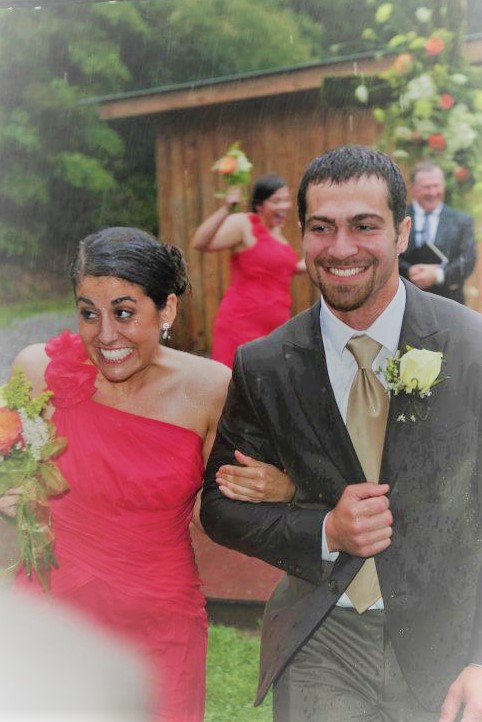
It was two months to the day since we buried him, and his older brother was getting married.  A day we had planned for and looked forward to for a long time.  

It marked a new beginning, a new life, but the specter of death veiled my eyes and whispered in my ears.

Standing there, smiling and holding back the tears, my heart cried,”One of us is missing!” and I wanted to shout, “Don’t take the photo.  Don’t memorialize the absence of my son.”

I swallowed the words and have an album full of evidence that he wasn’t there.

Our family usually sends New Year’s cards instead of Christmas cards but I haven’t sent one in years because they always included a family picture.  I don’t know how to send them if Dominic isn’t in the frame.

And what to do with all the pictures that already exist?

We had a video montage at his funeral and I have it tucked safely away. There are hundreds of snapshots, digital photos on computers and phones, all the images on his Facebook page and the pages of friends…

C.S. Lewis notes in A Grief Observed:

“Today I had to meet a man I haven’t seen for ten years.  And all that time I had thought I was remembering him well–how he looked and spoke and the sort of things he said.  The first five minutes of the real man shattered the image completely.  Not that he had changed.  On the contrary…I had known all these things once and recognized them the moment I met them again.  But they had all faded out of my mental picture of him, and when they were all replaced by his actual presence the total effect was quite astonishingly different from the image I had carried about with me for those ten years.  How can I hope that this will not happen to my memory of H.[his wife]?  That it is not happening already?”

And that’s the thing–the pictures aren’t my son.  

They were a moment in time, and bring a smile of remembrance, but they are only a shallow representation of the vibrant life that was Dominic.  As the months progress and his siblings and friends age, the pictures document that he is further and further out of step with our current reality.  

We are leaving him behind.

I decided early on that our walls would not become a shrine to the one child missing.  So I have incorporated photos of Dominic with those of his siblings and other family members. I do have more pictures on display than I used to–they are all I have left of my son.

It’s easy to honor his memory but I want to honor him.  

Who he was, what he represents and who he remains as part of who I am.

I don’t know how to combat the slow fade of the experience of my living, breathing son in all his complexity to the two-dimensional representation hanging on my wall.

I wish I did.

Weary, but Still Fighting

These thoughts first came to me a few months ago–and since then I felt like I had “progressed” in my grief journey and left anxiety behind.  But for a number of reasons, this past week found me crushed beneath the weight of sorrow and pain and I felt vulnerable and defeated.  

I had to redouble my efforts to resist the enemy and stand firm in the truth that Christ is victorious.

And I was reminded again that this will be a battle I fight as long as I live…

Grief doesn’t travel alone, it brings anxiety along for the ride.

I live by the mantra, “Don’t borrow trouble from tomorrow!” and I don’t struggle to fend off worry.

But this vague feeling of impending doom that follows grief is invasive and pervasive and relentless.  I can’t stop it, find its edges or outrun it.

If I could just pin it down, I’d toss it out…

I have never been in combat but I am daily doing battle.  The enemy of my soul wants me to give in and give up.  So I push back, dig in and soldier on.

I am worn out and worn down.  

This is the hardest work I have ever done.  No breaks, no vacations, no time-outs or pauses.  And no forward progress.

BUT I REFUSE TO GIVE UP GROUND.

My struggle is not against flesh and blood and my weapons are not physical.  The only hope I have is to remain rooted in the Word of God and to cling to this truth:

Therefore, put on the complete armor of God,

so that you will be able to [successfully] resist and stand your ground in the evil day [of danger],

and having done everything [that the crisis demands],

to stand firm [in our place, fully prepared, immovable, victorious].

Ephesians 6:13 AMP

Worn

I used to think the expression, “the straw that broke the camel’s back” was an exaggeration meant to paint a comical picture of someone who didn’t have sense enough to remove pounds of heavy bricks but buckled under the tiniest extra weight of a single straw.

Now I think it accurately describes those of us with no control over the baggage we have to carry and who find that it really is the small things that force us to the ground.

Just when I’m convinced I have this grief load well-balanced so that the weight, though heavy, is bearable, along comes LIFE and throws the whole rig out of kilter.

Grieving my son means that while I can usually get through the day, I have no extra emotional, psychological, physical or spiritual energy to draw on when things get just a little more challenging:

  • I mean to encourage, but miscommunicate my heart to a friend and hurt her feelings.
  • Family members have needs I can’t meet.
  • People I expected to lend a listening ear spend our time together unloading on me instead.
  • My rheumatoid arthritis flares and moving around just plain hurts.

And I realize that the load I thought I was managing is much too heavy and threatens to crush the wind right out of my lungs.

With my strength gone, the sorrow and the missing and the unanswerable questions dog-pile on my prostrate spirit.

The song “Worn” by Tenth Avenue North describes perfectly how I felt last night:

I’m tired
I’m worn
My heart is heavy
From the work it takes to keep on breathing

I’ve made mistakes
I’ve let my hope fail
My soul feels crushed
By the weight of this world
And I know that you can give me rest
So I cry out with all that I have left

Let me see redemption win…Let me know the struggle ends…That you can mend a heart that’s frail and torn.

I want to know a song can rise…From the ashes of a broken life…And all that’s dead inside can be reborn…‘Cause I’m worn…

I know I need
To lift my eyes up
But I’m too weak
Life just won’t let up
And I know that You can give me rest
So I cry out with all that I have left

Let me see redemption win…Let me know the struggle ends…That you can mend a heart that’s frail and torn

I want to know a song can rise…From the ashes of a broken life…And all that’s dead inside can be reborn…Cause I’m worn…

And my prayers are wearing thin, I’m worn even before the day begins.
I’m worn I’ve lost my will to fight, I’m worn so heaven so come and flood my eyes.

Let me see redemption win… Let me know the struggle ends…That you can mend a heart that’s frail and torn.

I want to know a song can rise…From the ashes of a broken life…And all that’s dead inside can be reborn…

Repost: Loving a Grieving Heart

If you love someone who has lost a child, perhaps these thoughts might help you understand a bit of their pain and how completely it changes the way we who have encounter the world.

Please be patient.  Please don’t try to “fix” us.  Please be present and compassionate.  And if you don’t know what to say, feel free to say nothing–a hug, a smile, an understanding look–they mean so very much.

A bereaved parent’s grief doesn’t fit an easy-to-understand narrative. And it flies in the face of the American “pull yourself up by your bootstraps” mentality.

You can’t beat it–it’s not a football game-there is no winning team.

You can’t lose it–it’s not the extra 10 pounds you’ve been carrying since last Christmas.

You can’t get over it–it’s not a teenage love affair that will pale in comparison when the real thing comes along.

You can only survive it.  You can heal from it, but it will take a lifetime and require very special care.

I have a young friend whose first child was born with a life-threatening heart defect.  At just a few months of age, her little girl received a heart transplant.  Without it, she would have died.  With her new heart, this sweet baby will live-but her parents must observe careful protocols to protect that heart and she will never outgrow the scar from the surgery that saved her life.

Burying Dominic wounded my heart so deeply that while I know it will heal–it is beginning to, I think–it will bear the scars and require special handling as long as I walk this earth.

So when I thank you for an invitation, but choose not to go…I’m not rejecting you, I’m protecting my heart.  Please ask again–tomorrow might be a better day, and going somewhere or being with someone could be just what I need.

If you call and I don’t pick up…I might be crying, or about to, and I choose not to burden you with my grief.  Call in a day or two or next week–keep trying.

A text or email or card is so helpful.  I can read these when I’m ready and respond when it’s easier for me to think.

And please, please, please don’t look for the moment or day or year when I will be “back to my old self”.  My old self was buried with my son.  I am still “me”–but a different me than I would have chosen.

I know it makes you uncomfortable–it makes me uncomfortable too.

But because I trust in the finished work of Christ, I know that one day my heart will be completely healed.

I hurt but I have hope. This pain will be redeemed and my scars will be beautiful.

“For just as Christ’s sufferings are ours in abundance [as they overflow to His followers], so also our comfort [our reassurance, our encouragement, our consolation] is abundant through Christ [it is truly more than enough to endure what we must]”  2 Corinthians 1:5.


When it Doesn’t Feel Like Grace

It’s been said that everything this side of hell is the grace of God.

But burying my child doesn’t feel like grace, it feels like punishment.

Or abandonment.

Or forgetfulness.

I cannot add my voice to the modern Christian chorus of “Everything happens for a reason”.

Is this my tree, set in the midst of my garden?  The one about which God says, “Trust Me”?

I am tempted to argue, tempted to try to frame the meaning of my test in terms my human heart can understand.

“God must not love me.”

“He must be hiding something.”

I am faced with the same question that mocked my first mother, “Did God really say?”

And, like Eve, I am tempted to give in to the fear that draws my soul to doubt the wisdom and goodness of God.

Why would He bring me to this place where I am forced to walk obediently in trust and without light?

But these are whispers of the enemy of my soul, luring me away from the only Source of hope and comfort that there is.

And he is skilled at turning my feelings against the truth.

I am powerless to fight the serpent in my own strength, too weak to answer what seem like reasonable questions.

So I throw myself on the mercy of Him Who made me, of Him Who brought me to this point of testing.

In my weakness I rest in His strength.

and finally He said to me, “My grace is enough to cover and sustain you. My power is made perfect in weakness.” So ask me about my thorn, inquire about my weaknesses, and I will gladly go on and on—I would rather stake my claim in these and have the power of the Anointed One at home within me.

2 Corinthians 12:9 VOICE


Sparrows DO Fall

I have never subscribed to the theory that the Christian life is free of pain and suffering.

But there are some who do.

Christian bookstores are filled with titles touting the path to joy and happiness, the way to wealth and material success.

And some of the claims of these authors and preachers rest on Jesus’ own words in the Sermon on the Mount:

But seek ye first the Kingdom of God and His righteousness, and all these things shall be added unto you.

Matthew 6:33 KJV

They interpret this verse to mean that if your heart is set on God and His Kingdom, then He will give you the things that will make you happy and healthy.

I would argue that they have it all wrong.

My own experience and that of many other faithful followers of Jesus makes plain that loving Christ does not protect you from the evil in this world.  It doesn’t guarantee that you won’t get cancer, that you won’t lose your job, or that you won’t suffer persecution from the enemies of God.

And it doesn’t spare you from burying your child.  

Just a few chapters later, Jesus instructs His disciples as they go out to minister and encourages them with these words:

” Are not two little sparrows sold for a [a]copper coin? And yet not one of them falls to the ground apart from your Father’s will. But even the very hairs of your head are all numbered [for the Father is sovereign and has complete knowledge]. So do not fear; you are more valuable than many sparrows.” 

Matthew 10:29-31 AMP

More than one song has been written to include the phrase, “His eye is on the sparrow”–meant to bring comfort in moments of fear.

And it is true.  His eye IS on the sparrow.

But read the whole verse: “not one of them falls to the ground apart from your Father’s will.” 

God knows when a sparrow falls, but He doesn’t always stop it from happening.

‘For my thoughts are not your thoughts, neither are your ways my ways,’ declares the Lord. ‘As the heavens are higher than the earth, so are my ways higher than your ways and my thoughts than your thoughts.’

Isaiah 55:8-9

Since Dominic died, I have found an unusual number of bird’s nests knocked down from trees by the wind.

Intact and beautiful, but empty.

I’ve wondered about whether God is trying to encourage me, or simply reinforce the truth that I now carry in my heart:  

Even though He is watching, sparrows do fall.  

Repost: What Grieving Parents Want Others to Know

I’m sharing this post again because based on response, it continues to speak to grieving parents and to their family and friends.

If you know someone who has lost a child, I hope these words give you insight into how very hard it is to keep going while carrying that burden.

If you are a bereaved parent, you might find sharing this post helps your circle of friends and family get a glimpse inside your own heart.


People say, “I can’t imagine.“

But then they do.

They think that missing a dead child is like missing your kid at college or on the mission field but harder and longer.

That’s not it at all.

It isn’t nostalgia for a time when things were different or better or you talked more: it’s a gut-wrenching, breath-robbing, knee-buckling, aching groan that lives inside you begging to be released.

There is no smooth transition up the ladder of grief recovery so that you emerge at the top, better for the experience and able to put it behind you.

We’ve all heard the much touted theory that grief proceeds in the following stages:

  • denial
  • anger
  • bargaining
  • depression
  • acceptance

And people (who haven’t experienced grief) tend to think it’s a straight line from one stage to another, gradually going from bottom to top and then on with life.

But it just isn’t true.

Reality is, these “stages” coexist and fluctuate back and forth from day to day and even hour to hour.

Grief remakes you from the inside out.

Losing a child has made me rethink everything I believe and everything I am.  It has changed and is changing my relationship with myself and with others in ways I couldn’t imagine and often don’t anticipate.

And it is hard, hard work.

Life around us doesn’t stop.  Grieving parents return to work, continue to nurture their surviving children, keep getting up in the morning and taking care of daily details.

We are doing all the things others do, but we are doing them with an added weight of sorrow and pain that makes each step feel like wading through quicksand.

We want you to know we are doing the best we can.

Life without my child is like having a leg amputated–I am forced to learn to manage without it, but everything will always be harder and different. And it will be this way for the rest of my life.

The one thing a grieving parent DOESN’T want you to know is how it feels to bury your child.

I don’t want anyone else to know what it means to leave part of your heart and a chunk of your life beneath the ground.

“But please: Don’t say it’s not really so bad. Because it is. Death is awful, demonic. If you think your task as a comforter is to tell me that really, all things considered, it’s not so bad, you do not sit with me in my grief but place yourself off in the distance away from me. Over there, you are of no help. What I need to hear from you is that you recognize how painful it is. I need to hear from you that you are with me in my desperation. To comfort me, you have to come close. Come sit beside me on my mourning bench.”

Nicholas Wolterstorff   LAMENT FOR A SON

The Silent Joy of Memory

We live in a noisy world.

Music, television, voices and the hum of electricity tunnel into our brains and distract us from hard questions and painful circumstances.

We live in a busy world.

If I’m not in motion, I am getting ready to be.

It is tempting in my grief to try to stuff life full of noise and busyness so I can ignore the pain and emptiness of missing my son.

But there is quiet beauty in the unfilled space of my heart–the spot once brimming with the living essence of the son I love.

In the silence I can hear his voice and see his smile.

So I will guard the noiseless place that still belongs to Dominic and keep it as a treasure,  a comfort, and a tribute to him until we are together again.

There is nothing that can replace the absence of someone dear to us, and one should not even attempt to do so. One must simply hold out and endure it. At first that sounds very hard, but at the same time it is also a great comfort. For to the extent the emptiness truly remains unfilled one remains connected to the other person through it. It is wrong to say that God fills the emptiness. God in no way fills it but much more leaves it precisely unfilled and thus helps us preserve — even in pain — the authentic relationship. Further more, the more beautiful and full the remembrances, the more difficult the separation. But gratitude transforms the torment of memory into silent joy. One bears what was lovely in the past not as a thorn but as a precious gift deep within, a hidden treasure of which one can always be certain.

― Dietrich Bonhoeffer