It’s Been Years-What’s Wrong With You?

If you think that time makes a difference to a mama missing a child who ran ahead to Heaven without her, you don’t know as much as you think you know.

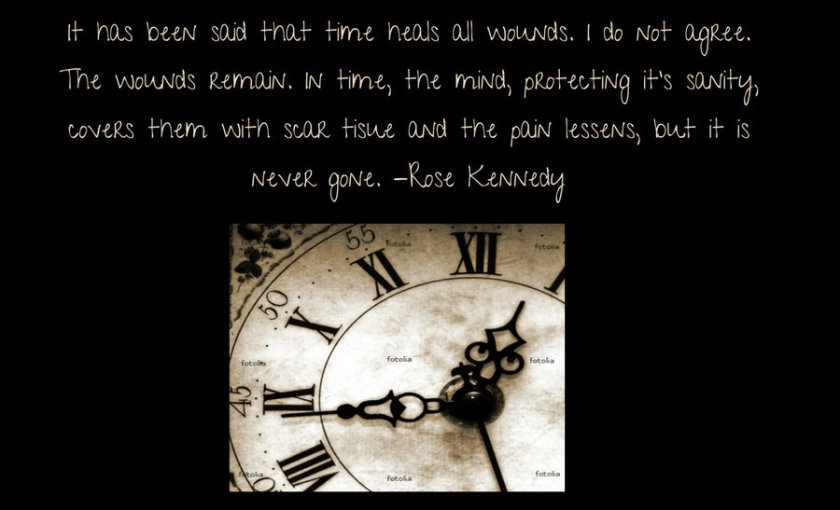
Time does not heal all wounds-especially the kind that shatter a heart into a million pieces.

It takes time for the wound to scar over, but it doesn’t undo the damage.

So if you are wondering why your coworker still takes the day off on his child’s birthday or the anniversary of her child’s homegoing, I’ll let you in on a little secret: Years disappear when those milestones loom large.

It’s just as painful today as it was on THAT day when a bereaved parent has to face an unavoidable reminder that his or her child is gone, gone, gone.

I’m not diminishing anyone’s loss when I say this but child loss is unique.

If we lose a spouse, we cannot replace that person, but we can enjoy the same type of relationship with another one.

When we lose a parent, we cannot replace that individual or that relationship, but we all know age eventually makes a claim on every life. We anticipate (even if subconsciously) that younger folks will outlive the older ones.

A parent’s heart is not equipped to outlive their child.

And yet, some of us do.

“IT’S so WRONG, so profoundly wrong, for a child to die before its parents. It’s hard enough to bury our parents. But that we expect. Our parents belong to our past, our children belong to our future. We do not visualize our future without them. How can I bury my son, my future, one of the next in line? He was meant to bury me!”

Nicholas Wolterstorff, Lament for a Son

So if the bereaved parents in your life need extra space, extra grace, extra accommodation on those days when the loss is unavoidable don’t be surprised.

What SHOULD astonish folks is that we are able to function as well as we do on all the other days of the year without additional help.

We get up.

We go on.

That’s the real surprise.

World Suicide Prevention Day

I’m always torn between sharing about suicide awareness and just offering a listening ear to survivors of suicide.

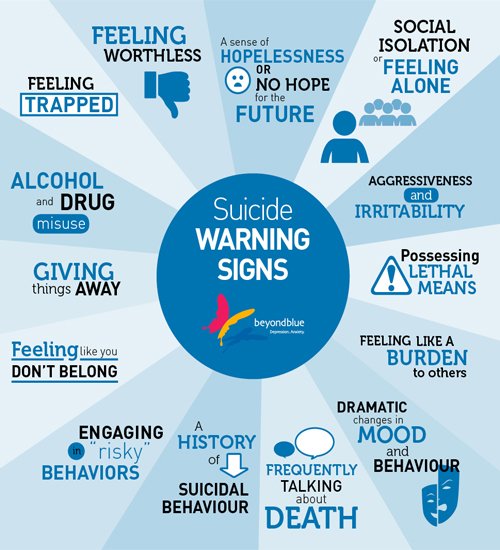
On the one hand, I don’t want a single person who may be shouting warning signals to end up completing suicide because no one listened.

On the other, I want to protect bereaved parents and siblings from any additional guilt they may feel because they “missed” such signals.

But since suicide is at epidemic proportions in our country-especially among young people and veterans-I’m going to try to navigate the middle ground.

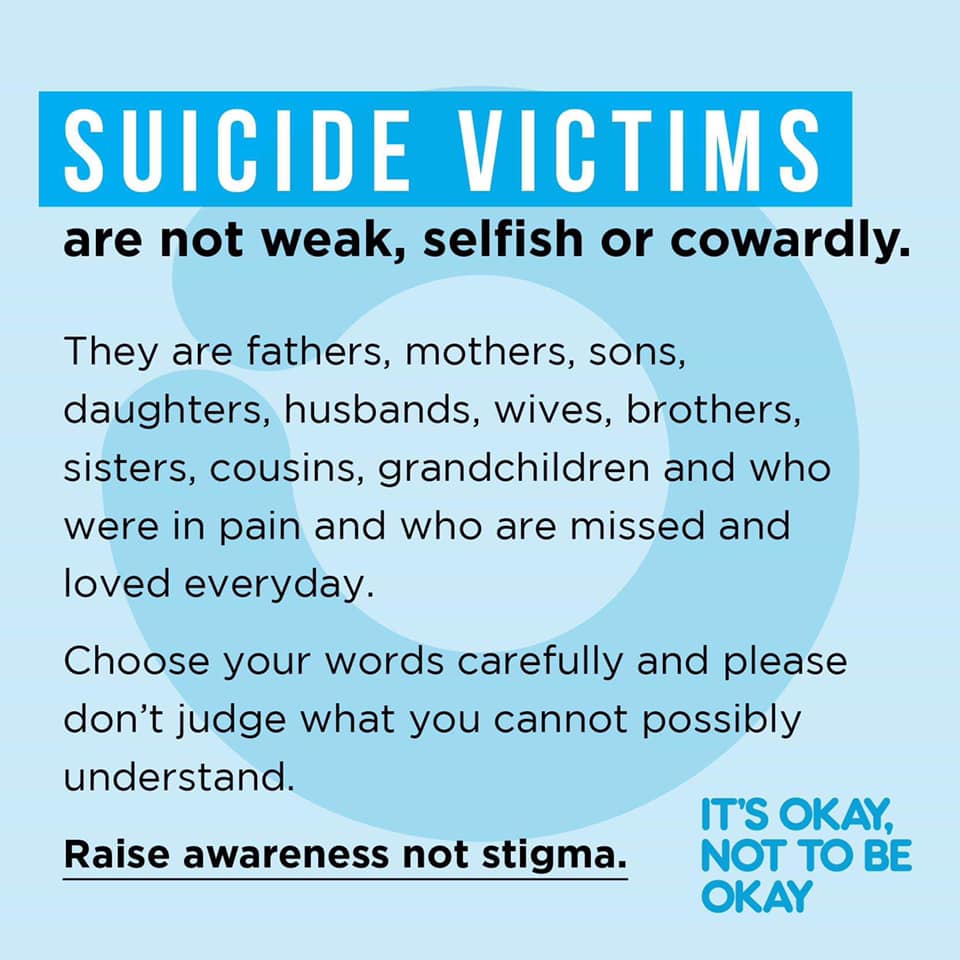
To anyone whose loved one left this life by suicide let me say this: You are not responsible! Even if in hindsight you feel like you missed cues or didn’t notice tell-tale signs, in the end it was their own action that led to death.

I do not believe suicide is selfish.

I believe suicide results from pain so unbearable a heart simply thinks there is no other way to end it. It’s not a conscious act as such, it’s a reflexive response to intense pain.

I also know that mental illness-often untreated because it is undiagnosed-wrecks havoc with the logical, reasoning part of a brain.

To those who may be contemplating suicide (something I know many, many bereaved parents think about) let me say this: If you are considering it, reach out.

You are a unique creation and cannot be replaced.

There are resources available and people not only willing, but LONGING, to help you hold onto hope.

As you fall deeper and deeper into the pit of despair, it’s easy to lose sight of the truth that darkness is not all that exists. Trust me, I’ve been there and it’s nearly impossible of your own volition to will yourself out of the funk.

This is where suicide prevention has a role to play.

If someone seems “off”, don’t ignore it, dismiss it or excuse yourself from asking hard questions (even at the risk of being rebuffed or worse).

Often a single person extending a hand and listening ear at just the right moment grants space for a hurting heart to reconsider suicide as the only way out of pain. If they won’t respond in spite of your best efforts, enlist allies.

And walk gently among your fellow humans!

You may never know when your smile, opened door, random encouraging word or knowing glance is the difference between a stranger going home to end it all and going home and making a phone call to get help.

Suicide is tragic.

Be alert.

Be a friend.

Compassion is a choice.

Be the one who cares, calls and comforts.

Christmas In July: What The Bereaved Need From Family and Friends During the Holidays

What began as a cute marketing ploy to encourage folks to spend some of those December dollars mid-year is now a full blown movement.

From the Hallmark channel to Little Debbie’s snack cakes, retailers and media outlets are promoting Christmas like it’s nearly here.

For some of us, that’s welcome relief from sweltering days. But for many bereaved parents, it’s an unwelcome reminder that faster than we would like, we’ll be right back in the thick of one of the most difficult seasons of the year.

So I’m taking the opportunity during July to re-post this article that has been popular and helpful in the past.  

One of the most trying seasons for grieving parents extends from November through the first week of January. 

The holidays are hard for so many people, but especially for parents trying to navigate these family  focused holidays without the presence of a child that they love.

I know it’s still several months away, but once school starts it seems the weeks roll past faster and faster until suddenly there’s no time to plan and the day is upon us.

I highly recommend speaking to family and friends NOW.  Make plans NOW.  When folks have plenty of time to make adjustments, it is much more likely they will accommodate a grieving heart’s need for change.  

https://thelifeididntchoose.com/2016/09/03/grief-and-holidayswhat-the-bereaved-need-from-friends-and-family/

Repost: Should I DO Something? Yes! Absolutely.

It’s possible to stand frozen at the corner of good intentions and helpful action.

I’ve done it dozens of times.

And every time I’ve allowed myself to swallow “but I don’t know what to do” and done nothing I’ve regretted it.

Every. Single. Time.

So I’m here to tell you that when you get that urge, feel that itch, hear that still, small voice that says, “DO something“, then do it.

You may already have a good idea of what it is you need to do, but in case you don’t know exactly how to make a difference in the life of a heart hanging on by a thread, here are some things to get you started:

Read the rest here:

Should I DO Something? Yes. Absolutely.

Companioning The Bereaved

I’ve learned so much in this journey.

I’ve had to unlearn some things too.

One of the things I’ve had to unlearn is that the medical model of “identify, treat, cure” is not applicable to grieving hearts.

Grief is not a disease. It’s not an abnormality. It doesn’t need to be treated and cured so that it “goes away”.

It’s the perfectly normal and appropriate response to loss.

A more helpful model is compassionate companionship.

What grievers need is faithful friends and family who choose to come alongside and refuse to be frightened away when the process seems long, tortuous and challenging. We need others to be present, to truly listen and to bear witness to our wounds.

Recently I found this list from Dr. Alan Wolfelt, founder of the Center for Loss (http://www.centerforloss.com) and I love it!

It’s an elegant synopsis of what compassionate companionship looks like in practice:

  1. Being present to another person’s pain; it is not about taking away the pain.
  2. Going to the wilderness of the soul with another human being; it is not about thinking you are responsible for finding the way out.
  3. Honoring the spirit; it is not about focusing on the intellect.
  4. Listening with the heart; it is not about analyzing with the head.
  5. Bearing witness to the struggles of others; it is not about judging or directing these struggles.
  6. Walking alongside; it is not about leading.
  7. Discovering the gifts of sacred silence; it is not about filling up every moment with words.
  8. Being still; it is not about frantic movement forward.
  9. Respecting disorder and confusion; it is not about imposing order and logic.
  10. Learning from others; it is not about teaching them.
  11. Compassionate curiosity; it is not about expertise.

~Dr. Alan Wolfelt, Eleven Tenets of Companioning the Bereaved

At one time or another each of us need someone to be present, to truly listen and to bear witness to our wounds.

When your world is profoundly dark, an outstretched hand is often the only way a heart can hold onto hope. 

`

To The Friends I Haven’t Met Yet

I’m not blind to the danger social media poses to in-person friendship.

For lots of people with busy lives and messy houses it’s a no brainer to choose online companionship over face-to-face lunches, brunches or book clubs.

If I can curate my online presence to reflect only my brightest, funniest and most enviable moments (all from the comfort of home in my pajamas!), why not?

But social media isn’t all bad.

In fact, it can be very, very GOOD for lots of people.

It’s been a godsend for my heart.

I live in a rural area and didn’t have WiFi until late in 2011 and there’s no cell phone reception in the little valley where my home is situated. So before then I wasn’t on social media very much. In fact, I used to get irritated with folks who ONLY posted important things on Facebook (remember this was years ago!) because I often missed them.

By the time Dominic left for Heaven, I was in the habit of checking in at least once a day. That changed to several times a day when I discovered online groups for bereaved parents.

All of a sudden I was not alone in my grief, my experience, my questions, my tears, my tiny victories nor my setbacks.

It’s no cause for celebration that there are so many of us. But it IS cause for celebration that we’ve found one another.

So here’s to all the friends I haven’t met yet from another town, state or country.

You know who you are.

You speak kindness, grace and wisdom over my heart and into my life. You listen when I need to “say” something aloud no one who hasn’t walked our path can understand. You don’t care how many times I talk about my missing son or post his picture. You share encouraging memes, quotes, songs and Scripture verses.

When you wonder if you are making a difference sitting in your living room or at your desk or kitchen table and sharing on Facebook, don’t you believe it.

I am so, so thankful for each of you. ❤

Ask. Don’t Assume.

I’ll confess right here on the world wide web that I tend to go along to get along.

It’s a terrible and odd twist that the son who always encouraged me to speak up for myself has accomplished his goal by his absence.

Since Dominic left for Heaven I’m learning to ask questions I’d never dare ask before.

When someone does something or doesn’t do something, instead of assuming motives or assigning blame, I ask them why. It doesn’t always end well, but it’s worth the risk.

Most of the time I find the person has anticipated (often mistakenly) that his or her behavior, choices or words are helpful. Truly, family and friends are not usually out to hurt my heart.

Now, I admit in the beginning I didn’t care whether it was accidental or purposeful. I was already so burdened that any additional stress or strain was more than I could bear. I wanted people to put themselves in my shoes.

Truth is, they can’t.

All the times I IMAGINED what it might feel like to have a child run ahead to Heaven didn’t even come close to how it actually felt. All the scripts that played in my head when someone was late checking in, coming home or assuring me of safe arrival when traveling can’t hold a candle to the REALITY of a son never ever coming home again.

It’s not fair (but what about child loss IS fair?) that I have to educate others as I’m learning myself.

It’s simply reality.

I liken it to being forced to lead in a dance I don’t know to music I can’t stand to hear.

So I ask.

And I’m often surprised by the answers.

In utter innocence and genuine sympathy some friends and family make decisions they honestly think are good ones.

None of us has a road map for this journey-neither we who travel the road nor those who walk alongside us. It’s uncharted territory.

I would rather err on the side of love and grace then build walls between my heart and the ones I have left here on earth.

Sure it hurts.

But most things this side of child loss do.

I refuse to sacrifice relationship on the altar of grief.

Bereaved Parents Month Post: How Am I Doing? That’s A Hard Question To Answer.

I promise I’m not being evasive.

But when you ask me how I’m doing I never know exactly what to say.

Do I give the conventional, anticipated answer so we can each get on with our day or do I give you the answer that reflects the state of my heart right now?

Either way is risky.

question

When I go along with convention and answer, “fine”, I let others off the hook.  I assure them the card they wrote or the meal they brought or the flowers they sent have staying power to convince my heart they care.

Depending on my relationship with them, sometimes it’s all (or more than) I expected.  So we’re good.

But sometimes I thought they’d stick around, check in more often or offer some kind of ongoing support.  Then I battle the temptation to reveal the actual state of my heart as a kind of retribution for being abandoned.

When I bravely offer an honest answer, I may catch someone by surprise, or make them supremely uncomfortable, or put them on the defensive as they scramble for some kind of response.

As a society we are simply unequipped to deal with the ongoing impact grief and loss has on a heart.  We want all things to fit into the medical model of “wound-treatment-healing”. 

But they don’t.  

So, so many sad, heartbreaking, life-changing blows are never healed this side of Heaven. 

Child loss is one of them.  

So some days (or moments) I’m doing pretty well.

Some days (or weeks) I’m not well at all.

How am I?

That’s a hard question to answer.  ❤

how are you fine words in letters


Bereaved Parents Month Post: Grace and Space

It didn’t take long after Dominic’s leaving for life to ramp up and obligations to pour in. We had two graduations and a wedding within two months of his funeral.

Then there were thank-you notes to write, dishes to return and every day chores necessary to manage a home and family.

No escaping what must be done.

It took me a little while to realize that if I was going to survive this lifelong journey I had to make some changes in how and when I responded to requests to do something, be somewhere or participate in outside events.   Because no matter how worthy the request, there was only so much of me to go around and I was forced to spend nearly all my energy and time and effort on figuring out how this great wound was impacting me and my family.

I cannot overemphasize how much strength and energy is needed to do the work grief requires.

At first, turning down a request or asking someone to reschedule was relatively easy-the loss was fresh in their minds and they were gracious and understanding.  As the weeks and months and now YEARS have passed, it is harder…

Read the rest here:  Grace and Space

Child Loss: Friends and Family Can Anchor a Heart

Child loss rips through a life like a tornado-wild, unpredictable, viciously destructive.

It drops from the sky like a meteorite-no warning, no defense, just crushing weight.

It wrecks havoc in absolutely every corner of a bereaved parents’ heart and life.

And there is no safe space to escape from nor insurance policy to cover THAT damage. 

When Dominic was killed, his sudden death instantly untethered me from the world as I knew it.  I needed friends and family to anchor my heart in love and support so I didn’t float away.  ❤

loss makes people feel out of control