The Power of Listening: Supporting Grieving Hearts

Listening is love in action.

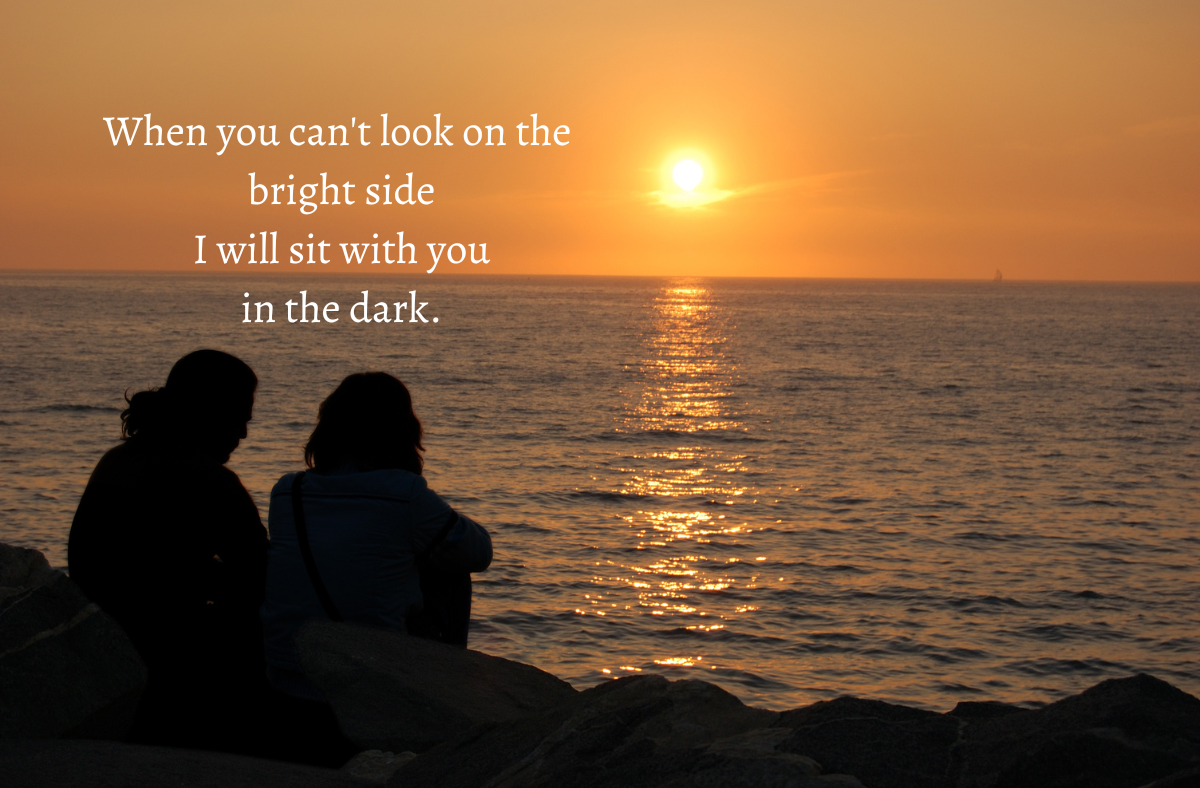
If you know someone whose heart carries great grief-and child loss is not the only hard journey hearts are makingoffer to listen. 

Give up a few minutes to hear how they are really doing, what is really hard, what they really need to say but may be afraid to speak aloud.  Leave spaces in conversation so a heart can work up the courage to share.  Don’t be quick to offer platitudes that shut down deep discussion.  

It often takes many, many repetitions of traumatic events for a heart to begin to heal. 

Read the rest here: Why I Have To Talk It Out

Bereaved Parent Month 2025: Hardly the Time for Being Taught

It seems to be the nature of humans to listen with an ear to respond rather than an ear to hear.

I’ve done it myself.

Jumped right in with all kinds of suggestions designed to “fix” someone else’s problem.

Or worse, heaped my own experience with something more or less (often less) similar onto an already overburdened heart.

I hate that tendency in myself and I’m working hard to try to change it.

Those who feel compelled to just say SOMETHING often bombard grievers with platitudes, comparisons to their own grief or just empty, frivolous words that require we either stand there dumbfounded or find a gracious way to exit the conversation.

It’s especially painful for a broken heart when a well-meaning someone decides THIS is the moment for a theology lesson.

“God has something planned for you in this” or “God will use this for good”. (Romans 8:28-29)

“We don’t grieve as those without hope!” ( I Thessalonians 4:13)

“All our days are numbered.” (Psalm 139:16)

I get it-death is a heavy subject and the death of a child isn’t something anyone wants to talk about, contemplate or be forced to wrestle with. So it’s often easier to simply say something-anything-do your duty and walk away.

But it is hardly helpful.

Deep grief as a result of unbearable loss is not a teaching moment.

It’s an opportunity to listen well, think carefully about if or when you need to say anything and simply offer compassionate companionship to a broken heart.

Grieving felt hardly like the time for being taught, at least initially. Early grief was my time for pulling out of my past those truths that I had already learned — out of my ‘basement — so that I could begin to assemble them together into something even more meaningful to me than before. It was the time for understanding that even though I had always believed in heaven, it now looked to my perceptions to be more real than this world. It was the time when, even though I already believed in God’s control of the world, I now felt dependent upon him being sovereign over it for all my hopes. It was the time for realizing that even though I already believed that Christ conquered death, I now longed to see death die.Lianna Davis, Made for a Different Land

Lessons In Grief: Trying To Be a Better Listener

I admit it:  I’m a fixer.

It’s probably genetic (won’t mention any names!) but it has been reinforced by training and life experience.

When faced with a difficult or messy situation, my mind instantly rolls through an inventory of available resources and possible solutions.

And I tended to cut people off mid-sentence with my brilliant (?) plan to save the day.

But there are things you just can’t fix.

I knew that before Dominic ran ahead to Heaven but I mostly ignored it.

I can’t do that anymore.

heart leaf torn

So I’m learning to listen better.  Learning to let others express the hard things that can’t be fixed so that their burden is a bit lighter for the sharing.  I’m learning that silent hand holding or hugging or just looking someone in the eye instead of dodging their gaze is a great gift.

I’m learning that lending courage is possible.  One heart can actually beat in synchrony with another and the duet is musical and magical strength.

I’m learning that there are too many voices shouting “solution!” and too few ears listening to the full expression of a problem.

I’m learning that often my rush to remedy is hurtful, not helpful.

I’m learning that time does not heal all wounds-there are many among us bearing injuries that may be decades old but have never been spoken aloud because no one would listen.

we all need people who will listen to our stories

I’m learning that even the spoken stories need to be repeated often and with just as much emotion each time because the telling has a way of releasing pain all it’s own.  

I’m convinced that if we were a society of listeners who slowed down just long enough to really HEAR other people’s stories we’d be a society with much less pent up anger, bitterness and other dark emotions.

sometimes you can hurt yourself more by keeping feelings hidden

I’m embracing the old saying, “God gave us two ears and one mouth so we should listen twice as much as we talk”.  

Sometimes that means literally biting my tongue or placing my hand over my mouth.  

But I’m trying not to waste this hard-bought lesson.  

Need an ear?  

I’m here.  ❤

friends hugging

Grievers REALLY Need Faithful Friends!

We all know how it is-you move, you lose an address or phone number, you lose touch. 

But sometimes friendships end more abruptly-not because lives drifted apart but because one person became so uncomfortable she chose to walk the other way.

That’s what happens so often the other side of child loss.  Friends disappear because loss makes them profoundly uncomfortable.  

Read the rest here: HELP WANTED: Why Grievers Need Faithful Friends

It’s SO Important for Me to Tell My Story. It’s SO Important That You Listen.

Every time I tell the story of Dominic, it helps to keep him real.

It reminds my heart that he lived, that he mattered, that he matters still.

And in the telling, I am giving away a little bit of him for another heart to carry. 

His light is passed to another soul that can pass it to another and another.

Read the rest here: Why We Have to Tell Our Stories & Why We Need Someone to Listen

Ten Years: Trying To Be a Better Listener

I admit it:  I’m a fixer.

It’s probably genetic (won’t mention any names!) but it has been reinforced by training and life experience.

When faced with a difficult or messy situation, my mind instantly rolls through an inventory of available resources and possible solutions.

And I tended to cut people off mid-sentence with my brilliant (?) plan to save the day.

But there are things you just can’t fix.

I knew that before Dominic ran ahead to Heaven but I mostly ignored it.

I can’t do that anymore.

Read the rest here: Lessons in Grief: Learning to Listen

Space To Talk It Out-Such a Gift!

Listening is love in action.

If you know someone whose heart carries great grief-and child loss is not the only hard journey hearts are makingoffer to listen. 

Give up a few minutes to hear how they are really doing, what is really hard, what they really need to say but may be afraid to speak aloud.  Leave spaces in conversation so a heart can work up the courage to share.  Don’t be quick to offer platitudes that shut down deep discussion.  

It often takes many, many repetitions of traumatic events for a heart to begin to heal. 

Read the rest here: Why I Have To Talk It Out

Thank You For Seven Years of Faithful Listening!

Seven (!) years ago today I shared my first post in this space.

It was a timid foray into the wider world just a year and a half after Dominic ran ahead to Heaven.

I was truly frightened that once I began sharing my intimate thoughts, good (and not-so-good) experiences and things I was learning in this Valley of the Shadow of Death I would either: (1) find out no one really cared and/or; (2) offend friends and family.

But what motivated me to overcome that fear was a sense that for all the information out there on grief in general, I couldn’t find nearly enough first-person experience written in bite-sized chunks on child loss in particular.

After Dom ran ahead, it was difficult for me to sit down and read a whole book. I needed bits I could read on a single computer screen.

I also needed someone to be upfront and honest about what it meant to continue to cling to faith even when it was hard and even when it meant acknowledging doubts and living with unanswered questions.

It’s difficult to believe now with the plethora of popular books (both secular and religious) on “open broken” but seven years ago, there weren’t many around.

So I decided I’d just say what I had to say and let it fall on the ears that might need to hear it regardless of who didn’t like it or chose to ignore it.

And here we are seven years later.

I don’t know how long I’ll keep writing-probably as long as I feel like I have something to say, people are listening and my fingers can still tap-tap-tap the keyboard.

For now, writing is what I do.

Even when life interrupts almost everything else I will find a few moments to jot down thoughts and hit “publish”.

I know some posts are much thinner than others-maybe just a meme or two and an encouraging word. Some are just reworked posts from years gone by.

But I want to show up in case THIS morning someone’s having an especially rotten one.

I want you to know that there IS life after child loss.

A very different life.

A harder life.

A life you didn’t want and wouldn’t ever choose, but life nonetheless.

And I appreciate every. single. heart. who joins me here and cheers me (and others!) along.

Trying Hard to Be a Better Listener!

I admit it:  I’m a fixer.

It’s probably genetic (won’t mention any names!) but it has been reinforced by training and life experience.

When faced with a difficult or messy situation, my mind instantly rolls through an inventory of available resources and possible solutions.

And I tended to cut people off mid-sentence with my brilliant (?) plan to save the day.

But there are things you just can’t fix.

I knew that before Dominic ran ahead to Heaven but I mostly ignored it.

I can’t do that anymore.

Read the rest here: Lessons in Grief: Learning to Listen

Christmas and Grief: Surviving Siblings

Life is complicated, isn’t it?

Even if I could erase loss from our family’s story, we’d still be muddling through the holidays trying to meet needs, expectations and holiday hopes all while juggling schedules and unwanted surprises.

Add child loss and sibling loss to the mix and there’s potential for a real mess!

So one of the things I’ve learned on this journey is I have to ask-and ask again-what my surviving children want and need for the holidays.

And then I have to LISTEN well.

We certainly haven’t managed holidays since Dom left us with grace and aplomb. In fact, some have been downright awful.

But we are still trying to make space and give grace so they are less stressful and more joy-filled.

❤ Melanie

I have never wanted to make my life journey with blinders on.  I realized young that MY perspective is not the only one.  I understand that more clearly now. 

So I try hard to think about, acknowledge and accommodate the feelings and needs of others.

But it’s especially challenging since Dominic left us.  And doubly so this time of year when every sight, smell and song screams, “It’s the holidays and HE IS NOT HERE!

I may not be as thoughtful to some in my circle as want to be, but I will expend every ounce of energy and effort I can muster to make space for my living children’s needs during this season.  

Read the rest here: Holidays and Grief: Surviving Siblings