The Absence of His Presence is Everywhere

Something I’ve been learning in this grief journey is that loss is an ongoing event.

It’s not confined to the moment of death, the funeral, the burial or even the boxing up of belongings.  

I suffer loss every time there is a moment when Dominic would have been present, should have been present and isn’t here.

It happens when I need to ask him a question, get his opinion, long for his help or just want to hear his voice.   

It happens when I look at myself in the mirror and realize that the living mirror that was Dominic is gone.

There is so much more to his absence than just the hole in my heart.

I shared some of these feelings a few months ago:

A family isn’t just the sum of its parts.  It isn’t a simple equation that can be worked out on a chalkboard or around a dinner table-this person plus that person equals two persons.

A family is an organic mixture of personalities, relationships, strengths and weaknesses that exponentially influence one another. I always joked that our family was a ready-made committee.  Wherever we went we brought a fully staffed, action-ready army of six that spread out and triumphed over whatever challenge we faced.

You can read the rest here:  Minus More Than One

You Just Never Know

Just last week another mother in my community joined the ranks of those who bury a child. Suddenly, unexpectedly, and without warning, her son was gone.

It happens every day.  

We toss a casual “see you later” to the person heading out the door without thinking it might be the last thing we say to them.

matters how you liv


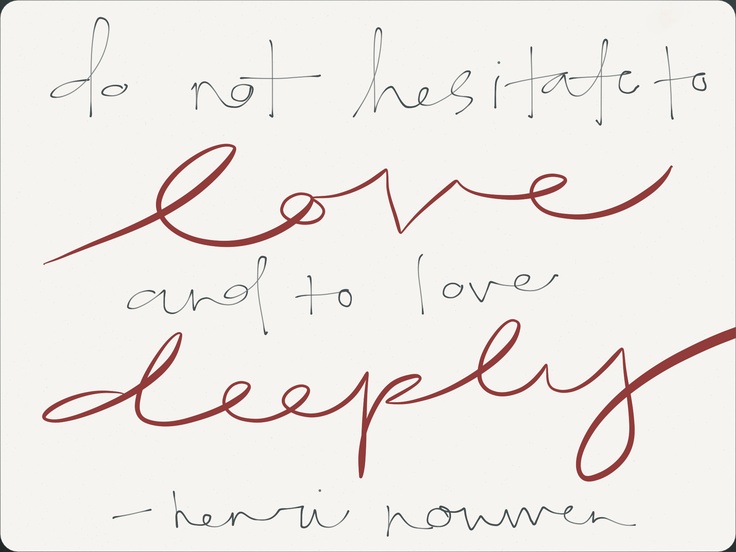
I am determined not to live in fear of loss-even though I have experienced it first hand.

But I am also determined to live so that should I lose someone else, they will be assured of this:

 I love them and I value them.


I don’t take things for granted anymore-What if Tomorrow Never Came?

A Strong Tower


In the  days when battle was conducted face-to-face, before missiles were guided from planes and ships and game consoles continents away-a fortified tower, a castle or a deep cave were places of refuge and safety.

Death could be imminent, but if a harried combatant could make it to one of these places he could catch his breath, regroup, plan a counter-attack.

Grief feels like a battle.

And I often find myself looking for refuge.  I need a safe place to find my strength again.

Praying is still very hard for me.

I know my Father is listening, I know Jesus is with me but I don’t really have much to say. The one great cry of my heart cannot be answered, my son will not return.

So I run to the promise that is His Name.

When I can’t even whisper a prayer, I speak peace to my soul by declaring  Who He is.  

Years ago I memorized this verse:

The name of the Lord is a fortified tower; the righteous run to it and are safe.  Proverbs 18:10 NIV

And it has been a light in the darkest nights of this dark, dark journey.

I know many who read my blog are fellow bereaved parents and they are battling too. They are struggling to find a way to face another day without their beloved child.  They hurt and they long for the comfort of hearing God’s voice in the Valley of the Shadow of Death.

Prayer might be hard for them too.

I want to speak courage to your heart.

I want to whisper hope to your battered soul.  

When you can’t speak, when you feel defeated, when you are running for your life from the enemy who would have you believe that there is no safe place, remember that God sees you. He is your refuge.  

His name is powerful and He is mighty to save.

Many of us have memorized the twenty-third psalm.  We don’t see it in English, but these verses contain several names of God.

shepherd 2

At the start of this passage, God reveals Himself as Jehovah-Roi: “The Lord my Shepherd”.

He is the God Who sees, He is the God Who is present, He is the God Who guides me even here in this awful valley.

So I declare the truth that God is my Shepherd to whoever and whatever is chasing me.

I declare that God is with me to my weary soul even when I cannot feel His Presence.

I shout, “God is my Shepherd” to the darkness and run for safety to His arms.  


A Daily Struggle

I despise the platitude plastered across social media memes:  “Hard times either make you bitter or better”.

It makes it sound so simple.

As if all I have to do is make a single choice between two equally available paths.

Enduring deep pain and unchangeable circumstances requires continued commitment to face the fork in the road over and over, and to choose well each time.

Every day I am forced to confront my heart’s tendency to turn inward and embrace loneliness and isolation in an attempt to protect myself from further and perhaps greater pain.

Each moment I have to choose whether I will lean into despair or hold onto hope.

And I just don’t agree that there are only two possible outcomes of a life that endures hardship or grief.

Bitterness is certainly an option.

If I allow myself to rehearse the reasons why my son should not have died, why my family doesn’t deserve this grief, why my life is so much harder than it should be–then the case for bitterness grows strong and becomes attractive.  I can pack my briefcase full of evidence and pull it out at every opportunity when confronted with yet another “happy moment” splashed on Facebook.

Bitterness is always a temptation, and I must refuse it everyday.

But “better” implies that I lacked something that I have now gained.

Better diminishes my grief and gives the impression that I’d do it all over again because my painful experience has wrought amazing results.

Losing my son, regardless of what I have learned, is not the same as sticking to a diet or working up to a marathon run or getting a master’s degree.

The subtle danger in declaring myself “better” is that I can decide I’m a measuring rod for others to judge their grief journey.  Or I can become like the reformed smoker who forgets how many tries it took to quit or how hard it was to finally stop smoking and instead mocks those who are still struggling.

I am not “better”.

I am broken.  

I am bankrupt of any illusion that I am the captain of my ship.  I understand by very, very painful experience that there are no earthly guarantees life will turn out according to plan. I embrace with both hands the notion that the most precious gift is people we love and no matter how long we have with them, it will never be enough.

I can’t claim a final victory of faith over doubt, of good out of bad, of lessons learned from effort expended.

Instead I extend my empty hands and hurting heart to be filled with grace and mercy.

I choose love and refuse hate.

I continue to engage this broken world from my broken perspective and offer compassion and understanding to those who are broken too.

Blessed [be] the God and Father of our Lord Jesus Christ, the Father of compassions, and God of all encouragement; who encourages us in all our tribulation, that we may be able to encourage those who are in any tribulation whatever, through the encouragement with which we ourselves are encouraged of God.

2 Corinthians 1:3-4 DARBY


Dragging Grief into the Light

During the course of my lifetime I have seen many topics dragged from behind closed doors out onto the stage and under the public spotlight.

Frankly, some of them could have remained in darkness as far as I’m concerned.

But there is something still taboo in polite conversation–something hushed with awkward silence should it ever be spoken aloud in a crowded room–mention GRIEF and eyes drop to the floor or someone hastily throws an arm around you and says, “There, there–it’s going to be alright.”

I don’t blame them.

In my growing up years I don’t remember anyone speaking about death and grief for longer than the time it took to go to a funeral home visitation and stand by the grave as the casket was lowered in the ground.  People were designated by their loss:  He was a widower; she lost a child; her mother died when she was young.

But what came AFTER the loss–not a word.

We need to talk about it.  We need to educate ourselves about it.  Because, like my EMT son says, “No one gets out of here alive.”

You WILL experience grief in your lifetime.

I pray that the people you lose are full of years and ready to go–that you get to say “good-bye” and that all the important things have been said and done so that you aren’t left with extra emotional baggage in addition to the sorrow and missing.

But you never know.  Neither you nor I are in control.

And even in the one place where it would seem most natural to talk about life and death and grief and pain–our churches–it still makes those who are not experiencing it uncomfortable.

Yes, there are grief support groups.  And, yes, they are helpful in ways that only a group made up of people who understand by experience what you are going through can be.

But much of life is spent rubbing elbows with folks unlike ourselves, with parents who know the fear of losing a child but not the awful reality.  And just a little bit of openness, a little bit of education and a little bit of understanding would make such a difference.

So for the next few days I am going to be posting about the grief process itself.  About what grieving parents experience and how friends, family, co-workers and churches can support them.

If you are a grieving parent, I hope these posts will serve as a launchpad for you to have conversations with your own friends and extended family.  If you aren’t a bereaved parent, please commit just the few minutes it takes and consider how you might support someone in your circle of influence who has lost a child.

We don’t want pity.

We aren’t looking for special accomodations that single us out and mark us as “needy”.  But we long for understanding and compassion and the opportunity to tell our stories.


The Silent Joy of Memory

We live in a noisy world.

Music, television, voices and the hum of electricity tunnel into our brains and distract us from hard questions and painful circumstances.

We live in a busy world.

If I’m not in motion, I am getting ready to be.

It is tempting in my grief to try to stuff life full of noise and busyness so I can ignore the pain and emptiness of missing my son.

But there is quiet beauty in the unfilled space of my heart–the spot once brimming with the living essence of the son I love.

In the silence I can hear his voice and see his smile.

So I will guard the noiseless place that still belongs to Dominic and keep it as a treasure,  a comfort, and a tribute to him until we are together again.

There is nothing that can replace the absence of someone dear to us, and one should not even attempt to do so. One must simply hold out and endure it. At first that sounds very hard, but at the same time it is also a great comfort. For to the extent the emptiness truly remains unfilled one remains connected to the other person through it. It is wrong to say that God fills the emptiness. God in no way fills it but much more leaves it precisely unfilled and thus helps us preserve — even in pain — the authentic relationship. Further more, the more beautiful and full the remembrances, the more difficult the separation. But gratitude transforms the torment of memory into silent joy. One bears what was lovely in the past not as a thorn but as a precious gift deep within, a hidden treasure of which one can always be certain.

― Dietrich Bonhoeffer

[Context]

At my house, I’m the keeper of the calendar, the one who sends family greetings for birthdays, holidays and get well cards.

The first time I had to write a note and sign our family names, my heart stopped and air refused to fill my lungs.

Moving down the family line from my husband through me and each of our children, how was I going to mark the place where Dominic SHOULD be but no longer is?  Or, better said, how do I represent the space he continues to hold in our hearts and lives but can no longer be easily seen by others?

You ADD children to your family, you don’t subtract them. 

I have struggled with this for many months.  I tried signing just the family name but that has always seemed impersonal to me–quick and easy and kind of lazy.  I tried including only our living children and our new daughter-in-love which meant that there were still six names but my heart knew one was missing.  

Dominic is a living, breathing heartbeat within my own chest.

You can’t know me without knowing him.  My story, my family’s story includes him even though his physical presence is no longer with us.

So I have decided that I will list his name with ours on traditional family greetings.

[Dominic] will appear in the proper place on my family signature line.

Brackets are used in quotes to indicate that a direct quote has been edited–that something must be added to understand the context or to fit the quote into the surrounding information.

I will honor my son and let others know that although my life has been edited, the full text can only be understood by including  him.


curating grief

Most of us have taken a class or two in literature–we read other people’s writing and sit around discussing “what it really means”.  My husband has always scoffed at the notion that anyone but the author knows that.

Me–I love books, plays and poetry so I’ve spent a lifetime reading and trying to interpret the meaning of others’ words.

But now I find I’m leaning more toward my husband’s point of view.

One of the challenges I face as a grieving parent is finding that other people want to interpret my experience for me.

They want to curate my mourning like a museum exhibit–arrange and highlight and sift through the days before and after burying my child and lay my experience out in some way that makes sense to them.

Sometimes it is subtle and involves mentioning memories that cast the missing child in a positive light–extolling his virtues and highlighting his achievements–as if noting how wonderful he was when walking this earth makes it easier to let him go.

Other times it is direct and forceful–“Everything happens for a reason.” Or, “He wouldn’t want you to be sad.”  Or, my personal favorite, “You know he’s safe with Jesus and you will be together again one day.”

While my theology rests firmly on the finished work of Christ, my heart longs for the physical presence of my son.  So none of these platitudes are helpful and they only draw a sharper contrast between my hope and my experience.

Let me just be blunt:  unless you have buried a child, you do not know how it feels. 

Full stop.

No debate.

I am grateful for your support, for your prayers, for your kindness, compassion and love.

But please do not tell me how this all makes sense or fits together in God’s plan or will someday “make a difference”.

I  invite you to travel with me, to share stories (good and bad) of my son with me, to sit with me and look at the memories, feel the sorrow and experience the missing.

And, if you are brave, you can ask me what it means.


No Perfect Formula

Everyone loves a formula.

We spend millions (billions?) of dollars seeking the perfect, easy way to whittle our waistlines.  We spend hours (days?) googling tips on reducing clutter, improving relationships, decorating our homes (Pinterest, anyone?).

Christian bookstores are filled with tantalizing titles that promise a quick and effortless method for happiness and holiness.

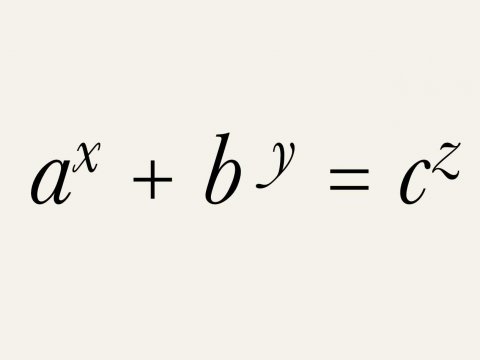
We just want someone to tell us what to do, when to do it and exactly how to do it–we want life to work like a math problem: 2+2=4.

Sometimes, for a season, it looks like a formula might work.

But there is nothing predictable about life. And as long as people are involved, there’s no reliable method to accurately predict outcomes.

It’s just not that simple.

Looking for the perfect equation to balance life’s challenges distracts me from the life I’m actually living.  It offers false hope that one day, some way and somewhere, things will be “perfect”.

It seduces me into thinking that people behave like numbers and that I can size them up, put them in the math machine and turn out identical and predictable products.

Burying a child rips that notion right out of your head.

Nothing predictable about that.

There are no shortcuts.  No pat answers.  No perfect formulas.

Life is relationship.

With God,

with people,

with ourselves.

In light of all this, here’s what I want you to do. While I’m locked up here, a prisoner for the Master, I want you to get out there and walk—better yet, run!—on the road God called you to travel. I don’t want any of you sitting around on your hands. I don’t want anyone strolling off, down some path that goes nowhere. And mark that you do this with humility and discipline—not in fits and starts, but steadily, pouring yourselves out for each other in acts of love, alert at noticing differences and quick at mending fences.

Ephesians 4:2-3 MSG